


We may not have the course you’re looking for. If you enquire or give us a call on 01344203999 and speak to our training experts, we may still be able to help with your training requirements.
How to Choose a Career: A Step-by-Step Approach
ByThe Knowledge AcademyLast updated on: 29 October 2026
Learn how to choose a career based on your skills, interests, values and long-term goals. Explore practical steps to compare career options and make informed professional decisions.

The Gist
1. Identifying your interests, skills and values helps narrow down suitable career options.2. Research industries, job responsibilities and entry requirements before choosing a path.3. Internships, volunteering and job shadowing can help you understand different professions.4. Consider salary, work-life balance, job opportunities and career progression before making a decision.5. Set achievable goals, develop relevant skills and review your career direction as your priorities change.
"Should I choose a career that pays well?"
"Or should I follow something I'm genuinely interested in?"
"What if I make the wrong choice?"
If these questions sound familiar, you're not alone. Choosing a career can feel challenging when you're balancing personal interests, financial needs, skills and future opportunities. With so many career paths available, knowing where to begin is often the hardest part.
However, choosing a career doesn't have to depend on guesswork. By understanding your strengths, researching different professions and evaluating your priorities, you can make a more informed decision. This blog explains how to choose a career in practical steps, helping you explore opportunities and build a career path that suits your goals. Read on!
How to Choose the Right Career?
Choosing a career involves understanding yourself, exploring opportunities and deciding which path best matches your interests and circumstances. The following eight steps can help you make an informed career choice:
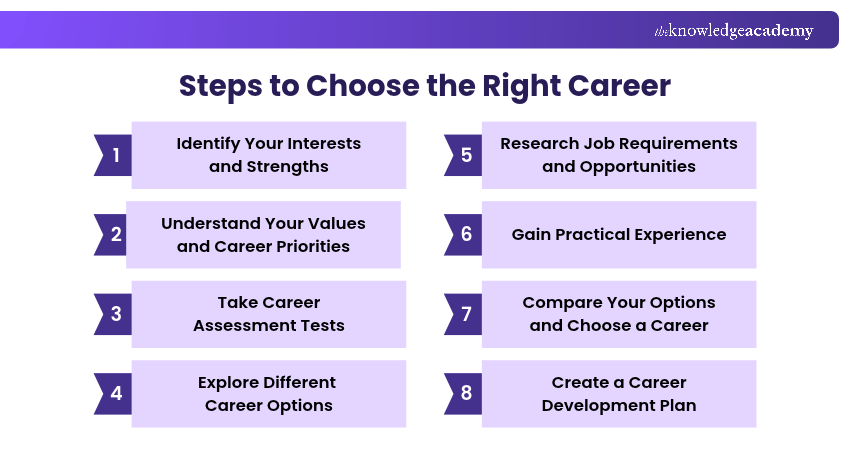
1) Identify Your Interests and Strengths
The first step in choosing a career is understanding what you enjoy doing and where your strengths lie. Your interests can help identify work that you may find engaging, while your skills provide a starting point for assessing potential career opportunities. Consider the activities, subjects and responsibilities that you naturally enjoy. Also reflect on your achievements, previous experiences and areas where others recognise your abilities.
Ask yourself the following questions:
a) Interests: Which subjects or activities do I enjoy learning about?
b) Strengths: What tasks do I perform confidently and effectively?
c) Skills: What technical, creative or interpersonal abilities have I developed?
d) Work Preferences: Do I prefer working independently or collaborating with others?
e) Development Areas: Which skills would I like to improve?
For example, someone who enjoys analysing information, solving problems and working with numbers might explore careers in finance, data analytics or business analysis.

2) Understand Your Values and Career Priorities
Your career values influence what makes a job satisfying and sustainable over time. While some people prioritise financial stability and advancement, others value flexibility, independence or meaningful work. Understanding these preferences can help you identify careers that suit your lifestyle and long-term expectations.
Some important career priorities include:
a) Compensation: The salary and financial benefits you expect from employment.
b) Work-life Balance: The amount of time and flexibility available for personal responsibilities.
c) Career Growth: Opportunities to develop skills, gain responsibilities and progress professionally.
d) Job Stability: The level of employment security you need.
e) Independence: The freedom to make decisions and manage your work.
f) Personal Fulfilment: The satisfaction you gain from your responsibilities and contribution.
For example, someone who values flexibility may explore roles offering remote or hybrid working arrangements. Meanwhile, someone interested in leadership might prioritise professions with opportunities for management progression.
3) Take Career Assessment Tests
Career assessment tests provide a structured way to explore the interests, strengths and preferences you identified through self-reflection. These assessments typically use questions about activities, working styles and personal characteristics to suggest career areas worth exploring. Although they cannot determine your ideal career with certainty, they can provide useful starting points for further research, particularly when their results are considered alongside your experience, abilities and personal circumstances.
Common types of career assessments include:
a) Interest Assessments: Explore activities and subjects you may enjoy.
b) Skills Assessments: Help identify existing abilities and possible development areas.
c) Work Values Assessments: Examine what you consider important in a professional environment.
d) Personality Assessments: Explore personal preferences and behavioural tendencies, although their usefulness depends on the assessment.
Try This: Career Assessment Reality Check
Choose one career suggested by your assessment and complete the following:
a) Suggested Career: __________b) Why the Result Makes Sense: __________c) What Surprised Me: __________d) What I Still Need to Know: __________e) My Next Research Step: __________
Use this exercise to decide whether the recommended career deserves further exploration.
Remember that assessment results should support your decision-making rather than restrict your options.
4) Explore Different Career Options
Once you have a clearer understanding of your strengths and interests, explore the career paths available to you. Different industries offer opportunities with varying responsibilities, qualifications and working conditions. Learning about these fields can help you discover occupations you may not have considered before.
Some career fields worth exploring include:
a) Technology: Software development, cyber security, IT support and data analytics.
b) Business and Management: Project management, human resources, marketing and business administration.
c) Healthcare: Nursing, physiotherapy, healthcare administration and other clinical or support professions.
d) Engineering and Architecture: Civil engineering, mechanical engineering, architecture and related disciplines.
e) Education: Teaching, training, educational support and learning and development.
f) Creative Industries: Graphic design, writing, media production and content creation.
g) Finance: Accounting, financial analysis, auditing and financial planning.
h) Social and Community Services: Social work, counselling, community development and charitable services.
You can also explore employment opportunities across the private, public and voluntary sectors. Each offers different organisational structures, career pathways and working environments.
Learn how to stand out, reach the right employers and land opportunities faster with the Job Search Course – Sign up now!
5) Research Job Requirements and Opportunities
Choosing a career becomes easier when you understand what employers expect and what opportunities are available. Researching job requirements helps you identify the qualifications, technical skills, experience and professional capabilities needed for particular roles.
Focus on the following areas:
a) Job Responsibilities: Understand the main tasks and daily activities associated with the profession.
b) Educational Requirements: Check whether degrees, certifications, licences or professional qualifications are necessary.
c) Required Skills: Identify the technical and interpersonal abilities employers commonly request.
d) Salary Expectations: Research typical earnings by experience level and location.
e) Employment Opportunities: Examine demand for the profession in your preferred location.
f) Career Progression: Explore opportunities for specialisation, promotion and further development.
Trainer's Tip
Review five to ten job advertisements for a career that interests you. Identify recurring qualifications, skills and responsibilities. This can help you understand employer expectations and recognise areas where you may need further development. Use reliable job profiles, employer websites and professional bodies to verify career requirements.
6) Gain Practical Experience
Reading about a profession can provide useful information, but practical experience often reveals what the work actually involves. Before committing to a career path, look for opportunities to observe professionals, complete relevant projects or participate in activities related to your chosen field.
Consider the following approaches:
a) Internships: Gain practical exposure to workplace responsibilities and professional expectations.
b) Volunteering: Develop transferable skills while contributing to an organisation or community.
c) Job Shadowing: Observe a professional to understand their daily activities and working environment.
d) Informational Interviews: Speak with people working in your preferred industry about their responsibilities and experiences.
e) Personal Projects: Complete activities that allow you to practise relevant technical or creative skills.
f) Short Courses: Explore introductory training to understand the knowledge required in a profession.
For example, someone interested in digital marketing might create a small content campaign or analyse website traffic to gain experience with common marketing activities.
Career Exploration Checklist
Before finalising your preferred career, consider which of the following activities you have completed or could explore:
□ Understood the typical responsibilities and working environment□ Identified the qualifications and skills required□ Gathered insights from professionals or practical experiences□ Recognised the aspects of the career you find interesting or challenging□ Considered whether the role suits your strengths and preferences□ Identified any remaining questions about the profession
7) Compare Your Options and Choose a Career
After exploring several career paths, compare them against your interests, abilities and practical requirements. Avoid making a decision based on only one factor, such as salary or perceived prestige. Instead, consider whether the role offers a reasonable balance between professional opportunities and personal priorities.
Compare each career using the following questions:
a) Does the work genuinely interest me?
b) Do my existing skills match the role's requirements?
c) Can I realistically meet the necessary qualifications?
d) Does the expected salary support my financial needs?
e) Are there suitable employment opportunities in my preferred location?
f) Does the profession offer the working conditions and progression I value?
8) Create a Career Development Plan
Once you have identified a suitable career path, create an achievable plan for developing the qualifications, skills and experience you need. Your career development plan should include clear actions and realistic milestones. Breaking a larger goal down into smaller steps can make progress easier to monitor.
Consider the following stages:
a) Set Short-term Goals: Identify actions you can complete within the next few months, such as researching qualifications or improving your CV.
b) Build Relevant Skills: Develop the technical and interpersonal abilities required for your chosen role.
c) Gain Experience: Look for projects, internships, volunteering or entry-level positions.
d) Set Medium-term Goals: Plan how you will gain qualifications, build professional connections or secure relevant employment.
e) Review Long-term Objectives: Consider possible specialisations, career advancement and future professional development.
For example, someone interested in business analysis might begin by improving their analytical and communication skills, learning relevant software, completing practical projects and exploring entry-level analyst opportunities.
Trainer's Insight
Your first career choice does not have to define your entire working life. As your skills, interests and circumstances change, you can build on existing experience, develop transferable skills and explore new opportunities.
Common Mistakes to Avoid When Choosing a Career
Career decisions can become more difficult when they are based on assumptions or incomplete information. Understanding common mistakes can help you evaluate your options more carefully.
a) Choosing a Career Based Only on Salary: A high salary may be attractive, but it does not automatically guarantee job satisfaction. Consider whether the work, responsibilities and professional environment also suit your interests and priorities.
b) Ignoring Your Strengths and Interests: Selecting a career without considering your abilities and preferences may create unnecessary challenges. Identify what you enjoy and where you can realistically develop the skills required.
c) Following Other People's Expectations: Advice from family, friends and teachers can be valuable, but your career decision should also reflect your own goals and circumstances.
d) Overlooking Job Requirements: Failing to research qualifications, experience or professional requirements can create unexpected difficulties. Understand the entry pathway before committing significant time or money.
e) Making a Decision Without Exploring Alternatives: Focusing on a single profession too early may prevent you from discovering other suitable opportunities. Compare several career paths before narrowing your options.
f) Expecting Your First Career Choice to Be Permanent: Career interests, skills and opportunities can change over time. Remaining open to learning and professional development can help you adapt when new possibilities emerge.
Career Comparison Scorecard
If you are deciding between two career paths, try rating each option from 1 to 5 across the following factors. Use 1 for a poor fit and 5 for a strong fit with your personal needs and circumstances.
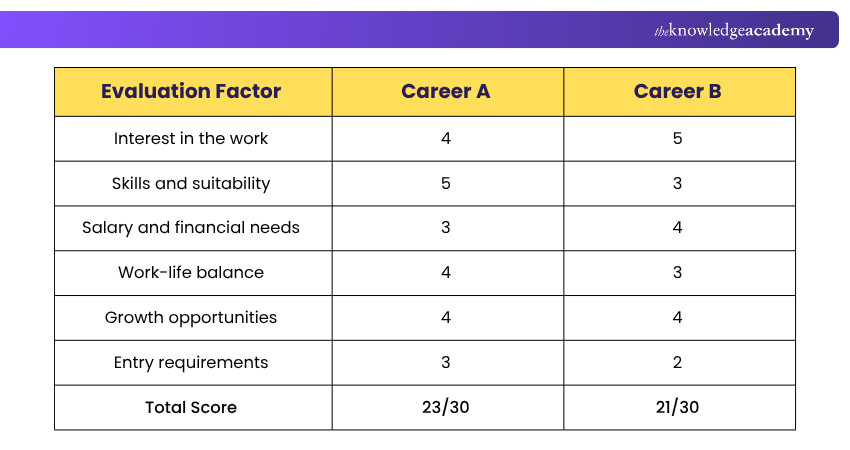
So, choosing a career is not about finding one perfect job that guarantees lifelong satisfaction. It is about making an informed decision using what you know about yourself and the opportunities available. You can continue learning, developing new skills and adjusting your direction throughout your professional life.
Develop powerful techniques to stay inspired and overcome obstacles. Sign up for the Motivation and Goal Setting Training and keep moving forward!

The Knowledge Academy develops accessible learning content across Project Management, IT, Cybersecurity, Data Science, Business Analysis, HR, Accounting and Finance, Leadership and Health and Safety. Its resources combine subject research with clear explanations to help professionals build practical knowledge across a wide range of disciplines.
View Detail

 If you wish to make any changes to your course, please


