


We may not have the course you’re looking for. If you enquire or give us a call on 01344203999 and speak to our training experts, we may still be able to help with your training requirements.
Event Manager Job Description: Responsibilities, Skills and Salary
ByNilotpal SarmahLast updated on: 27 October 2026
Explore the Event Manager job description, including key responsibilities, essential skills, qualifications and salary expectations. Discover how Event Managers plan, organise and coordinate events, manage budgets, work with vendors and ensure successful event delivery across different industries.
A Quick Overview
1. Event Managers plan, organise and coordinate events from start to finish.2. Their key duties include budgeting, venue selection, logistics and risk management.3. Communication, organisation, creativity and problem-solving are essential skills.4. Relevant qualifications, practical experience and industry knowledge support career growth.5. Event Manager salaries vary based on experience, location and job responsibilities.
Ever been to a wedding, concert or corporate event where everything felt perfect? The lights, the food and the atmosphere all came together. Behind that smooth experience is an Event Manager, coordinating multiple activities, managing suppliers and preparing for unexpected challenges. Their work helps turn event plans into memorable experiences for attendees.
But what does an Event Manager do, and which qualifications and skills do employers look for? In this blog, we'll explore what an Event Manager job description includes. Let's get started!
Who is an Event Manager?
Event Managers plan and organise different types of events, like conferences, product launches, networking sessions and promotional campaigns. They take care of important event activities, including managing budgets, coordinating suppliers, arranging venues, overseeing logistics and communicating with clients.
Event Managers work across corporate organisations, hotels, event agencies, exhibition centres, charities and entertainment businesses. Their responsibilities vary depending on the event's size, complexity and purpose.

Key Responsibilities of an Event Manager
The following are some key responsibilities of an Event Manager:
a) Event Planning and Design: Develop event concepts, themes and schedules that align with client requirements and objectives.
b) Budget Management: Prepare budgets, track expenses, negotiate supplier costs and allocate resources effectively.
c) Venue Selection: Choose suitable venues based on capacity, accessibility, facilities, budget and event requirements.
d) Client Liaison: Understand client expectations, provide regular updates and coordinate requirements with relevant teams.
e) Team and Supplier Coordination: Assign responsibilities, manage suppliers and ensure teams work towards shared event objectives.
f) Logistics Planning: Coordinate transport, equipment, catering, accommodation and schedules for smooth event delivery.
g) Quality Management and Event Evaluation: Monitor service standards, collect feedback, evaluate event outcomes and identify improvements for future events.
h) Risk Management: Identify potential risks, assess their impact, coordinate appropriate safety measures and prepare contingency plans for unexpected situations.
Trainer's Insight
Event risks should be assessed before activities begin. Identify potential disruptions, establish suitable control measures and prepare contingency arrangements. Clearly assigned responsibilities can help teams respond effectively if something goes wrong.
Requirements to Become an Event Manager
Becoming an Event Manager does not require a specific qualification in every case, but employers usually look for a mix of relevant skills, practical experience and industry knowledge.
The following are three common areas of consideration when applying for event management roles:
1) Educational Qualifications
You can have a bachelor's degree in event management, hospitality, tourism, marketing, business administration or another related field.
However, a degree is not universally required. Depending on the employer, candidates may enter the field through relevant vocational courses, apprenticeships, or practical industry experience. Professional event management training can also help individuals develop knowledge of planning, budgeting, supplier coordination and event delivery.
2) Practical Experience
Relevant experience is valuable because Event Managers must coordinate multiple activities and respond to real operational challenges.
Many begin as Event Assistants, Event Coordinators or interns with event companies, hotels, wedding planners or marketing agencies. Other opportunities include volunteering at conferences, exhibitions, community events and festivals. These experiences can help individuals understand how events are planned, delivered and evaluated.
Pro Tip
Volunteer at conferences, exhibitions or community events to gain experience. Record the tasks you managed, challenges you handled and results achieved to demonstrate your abilities during interviews.
Plan smarter conferences and deliver exceptional attendee experiences with the Conference Management Course now!
3) Technical and Industry Knowledge
Modern event management often involves using digital tools to manage registrations, schedules, budgets, suppliers and attendee communication. Depending on the role, employers may look for familiarity with:
a) Event Planning Software: Tools used to coordinate schedules, tasks and event activities.
b) Registration and Ticketing Systems: Platforms for managing bookings, attendee information and check-in processes.
c) Budgeting and Reporting Tools: Spreadsheets and other applications used to monitor costs and analyse event results.
d) Marketing and Communication Tools: Applications supporting invitations, updates, promotional activities and attendee engagement.
e) Supplier and Contract Management: Knowledge of supplier selection, quotations, agreements and service requirements.
Essential Skills of an Event Manager
An Event Manager needs a wide range of skills because the job is not only about planning an event, but also about managing people, time, money and unexpected situations. The following skills are commonly valuable in event management roles:
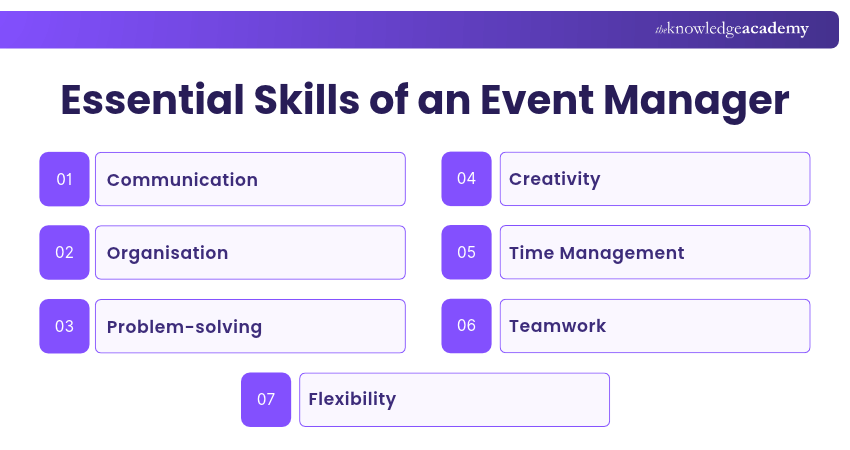
1) Communication: Event Managers communicate with clients, vendors, team members and guests. Strong communication skills help them understand requirements, share updates, give clear instructions and resolve misunderstandings.
2) Organisation: Event Managers coordinate multiple activities, including venue bookings, catering, invitations and schedules. Organisational skills help them manage responsibilities, track progress and ensure arrangements stay on schedule.
3) Problem-solving: Unexpected challenges, such as vendor delays or technical failures, require quick decisions. Event Managers must identify practical solutions while considering safety, resources and event requirements.
4) Creativity: Creativity helps Event Managers develop engaging themes, layouts and guest experiences. It also supports innovative solutions when managing limited budgets or changing requirements.
5) Time Management: Event Managers must prioritise tasks, set realistic deadlines and monitor schedules. Strong time management helps ensure activities are completed on time and the event runs smoothly.
6) Teamwork: Event Managers collaborate with suppliers, staff and specialist teams to deliver successful events. Effective teamwork involves sharing information, respecting expertise and coordinating responsibilities.
7) Flexibility: Event plans may change due to client requests, weather or operational issues. Flexibility helps Event Managers adjust schedules, explore alternatives and communicate changes effectively.
Trainer's Insight
Flexibility does not mean changing every plan immediately. Assess the situation, consider safety and operational requirements and communicate approved adjustments to the relevant teams.
Develop effective productivity habits that help you work smarter with Productivity and Time Management Training – Join now!
Event Manager Salary
The average annual salary of an Event Manager can vary depending on experience, industry and location. The following table presents reported average base salaries for Event Managers in the UK, US and India. Let's look at it below:
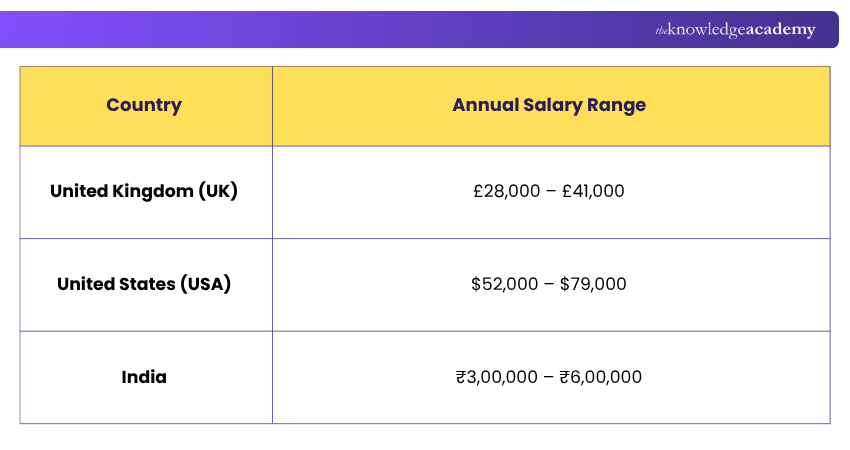
Source: Glassdoor
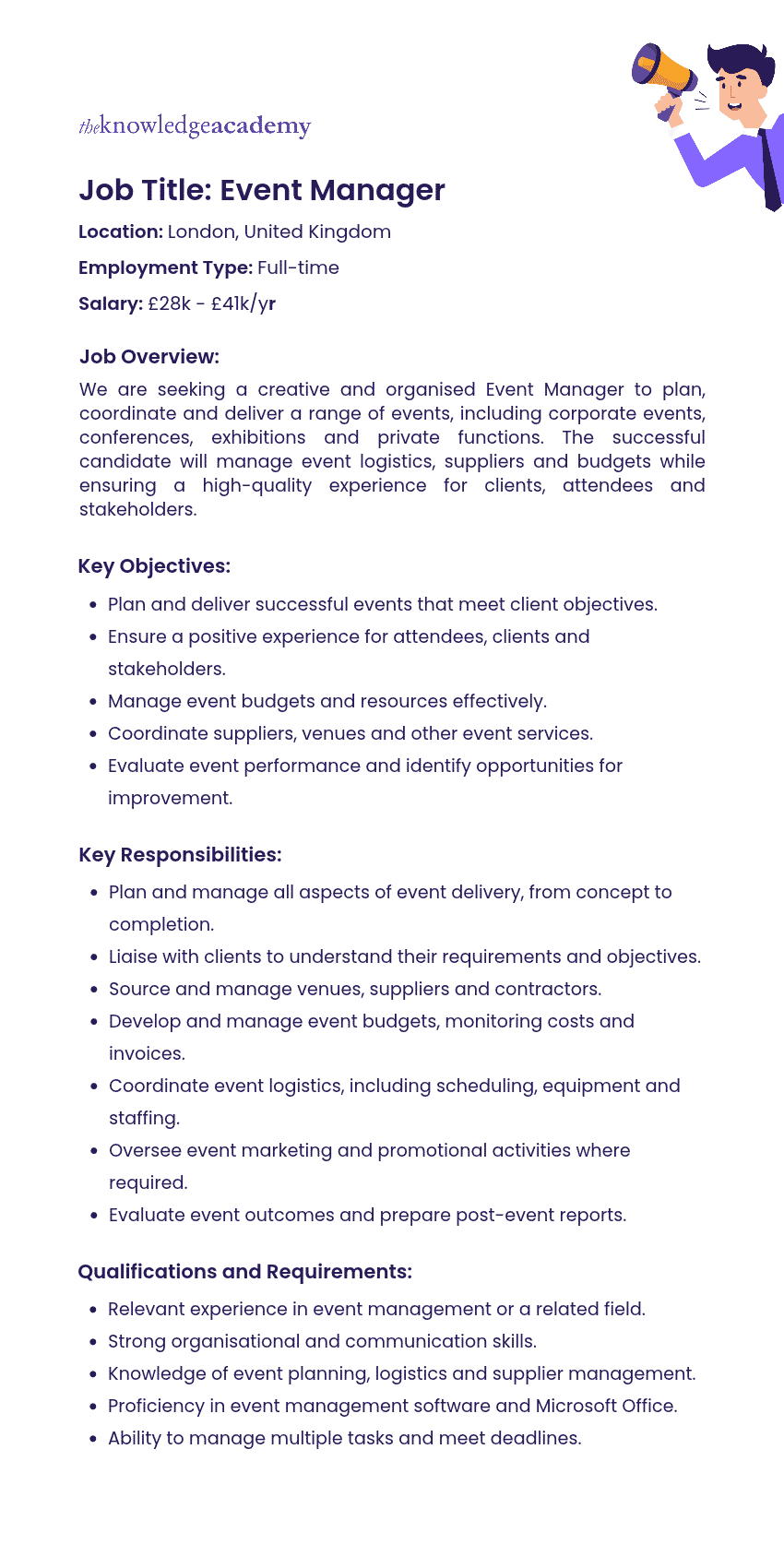
Event Manager Job Description Example
Here is an example of an Event Manager job description:

Nilotpal Sarmah is a Senior Content Writer with 11+ years of overall experience spanning engineering, operations and content development. His technical knowledge and extensive writing experience enable him to simplify specialised topics across IT and Tech, Business Skills, Project Management, Health and Safety, and ISO and Compliance.
View Detail

 If you wish to make any changes to your course, please


