


 Top Rated Course

We may not have the course you’re looking for. If you enquire or give us a call on 01344203999 and speak to our training experts, we may still be able to help with your training requirements.
Cyber Security Roles: Essential Skills and Career Paths
John Davies 01 September 2026Cyber Security Roles cover diverse responsibilities across analysis, engineering, investigation, testing, consulting and leadership. This blog explores key roles, required skills, salaries and career pathways where Cyber Security professionals can build their careers.
Home
 Resources
IT Security & Data Protection
Cyber Security Roles: Essential Skills and Career Paths
Resources
IT Security & Data Protection
Cyber Security Roles: Essential Skills and Career Paths
Resources
IT Security & Data Protection
Cyber Security Roles: Essential Skills and Career Paths

Training Outcomes Within Your Budget!
We ensure quality, budget-alignment, and timely delivery by our expert instructors.
Table of Contents
Key Takeaways
1. Cyber Security careers cover areas such as threat analysis, engineering, digital forensics, penetration testing, consulting and leadership.2. Technical, operational, advisory and leadership roles provide varied career directions.3. Skills such as networking, security analysis, problem-solving and communication are valuable across multiple roles.4. Career progression can involve deeper technical specialisation or progression into consulting, management or leadership.5. Professionals can move between Cyber Security specialisms as their skills, experience and interests develop.
You search for "Cyber Security jobs" and suddenly the screen fills with titles:
Security Analyst. Security Engineer. Forensic Analyst. Security Consultant. Network Security Engineer.
They all sound related. But what does each person actually do, and which role could suit you?
That is where understanding Cyber Security Roles becomes important. Each role tackles a different security challenge and requires a different mix of skills. This blog breaks down the major roles, their responsibilities and career paths, so you can see where you might fit. Let's dive in!
What are Cyber Security Roles?
Cyber Security Roles describe different areas of responsibility involved in protecting an organisation's systems, networks, applications and information from cyber threats. Depending on the organisation, a job may combine responsibilities from more than one security role.
These roles contribute to protecting the Confidentiality, Integrity and Availability (CIA) of information. However, their responsibilities vary considerably. Some professionals specialise in networks or investigations, while others focus on engineering, consulting, management or emerging technologies.
Quick Insight
Cyber Security is not a single career path. It contains multiple areas of expertise, so the right role depends on what you enjoy doing and the skills you want to develop.

Top Cyber Security Roles and Responsibilities
Cyber Security Roles and responsibilities can vary between organisations. However, the following roles represent common career directions and areas of responsibility within the field:
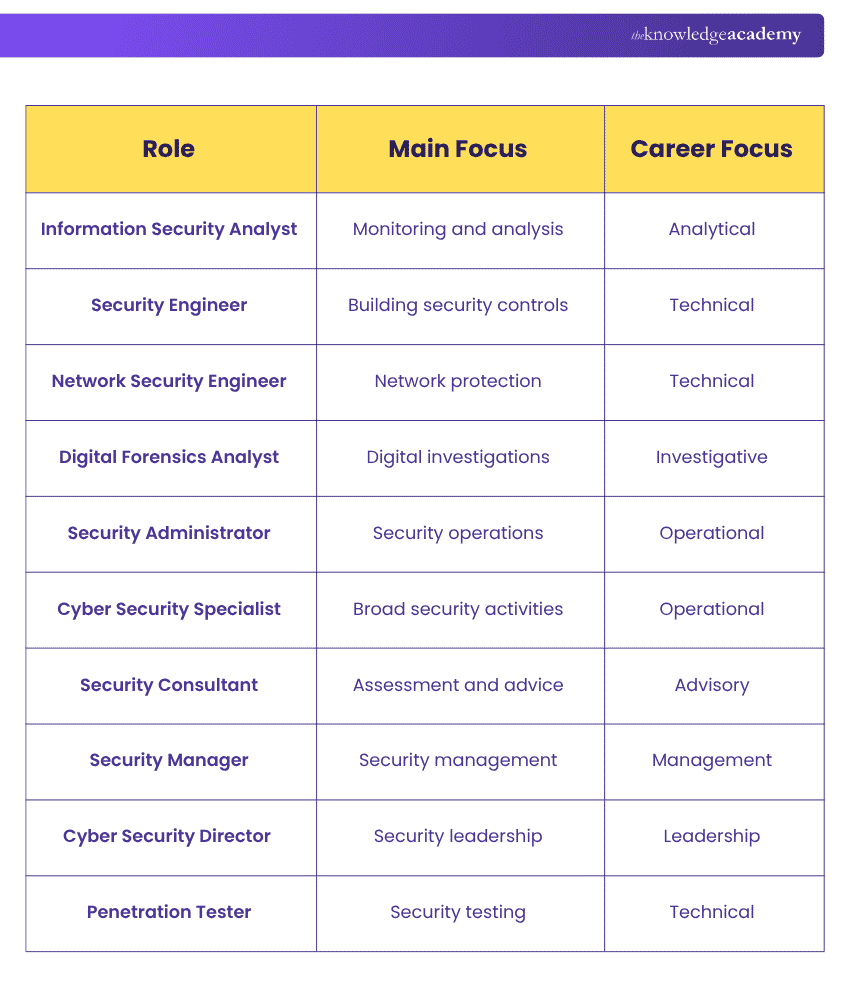
1) Information Security Analyst
An Information Security Analyst monitors and evaluates an organisation's security environment to identify potential risks and suspicious activity. They may analyse security information, implement or support security controls and assess whether existing protection measures are working effectively.
Key Responsibilities:
a) Monitor and analyse security activity
b) Identify potential security risks, threats and suspicious activity
c) Support security controls and incident response
d) Help assess the effectiveness of security measures
Best Suited to: People who enjoy analysis, investigation and problem-solving.
2) Security Engineer
A Security Engineer helps design, implement and maintain technical security measures across an organisation's systems and infrastructure. They may evaluate vulnerabilities, strengthen security controls and help reduce the likelihood or impact of future security incidents.
Key Responsibilities:
a) Design and implement security controls
b) Assess vulnerabilities
c) Strengthen systems against attacks
d) Support technical responses to security incidents
Best Suited to: Technically minded professionals who enjoy building and improving secure systems.
3) Network Security Engineer
A Network Security Engineer specialises in protecting networks and the information travelling through them. They analyse network vulnerabilities and implement controls designed to protect connections, devices and data from unauthorised access.
Key Responsibilities:
a) Secure network infrastructure
b) Monitor network activity and assess vulnerabilities
c) Implement network security controls
d) Help protect data transmitted across networks
Best Suited to: Professionals interested in networking, infrastructure and technical security.
4) Digital Forensics Analyst
A Digital Forensics Analyst examines devices, systems and digital information to identify, preserve and analyse evidence related to cyber incidents or investigations. Their work can help determine what happened, how an incident occurred and what digital evidence may support further investigation.
Key Responsibilities:
a) Examine digital devices and systems
b) Collect and recover relevant digital data
c) Preserve and analyse digital evidence
d) Support cyber incident and cybercrime investigations
Best Suited to: People interested in investigation, evidence, and understanding how incidents occurred.
Understand digital evidence collection, analysis and forensic processes with our Digital Forensics Training – Register now!
5) Security Administrator
A Security Administrator supports the day-to-day operation and maintenance of an organisation's security systems and controls. They may manage security configurations, user access, security tools and updates while helping ensure systems follow organisational security requirements.
Key Responsibilities:
a) Maintain security systems and controls
b) Support implementation of security measures
c) Apply security updates and address operational issues
d) Support security awareness and policy compliance
Best Suited to: Professionals who enjoy hands-on security administration and operational work.
Career Reality Check
You do not need your entire Cyber Security career mapped out from the beginning. Your first role can help you discover the security problems, technologies and responsibilities you want to explore further.
6) Cyber Security Specialist
A Cyber Security Specialist is a broad job title that can cover different operational security responsibilities depending on the organisation. Professionals in these positions may maintain security controls, monitor threats, respond to incidents and recommend security improvements.
Key Responsibilities:
a) Maintain and monitor security controls
b) Identify potential threats and weaknesses
c) Respond to security issues
d) Recommend security improvements
Best Suited to: Professionals who want broad involvement in operational Cyber Security.
7) Security Consultant
A Security Consultant assesses an organisation's existing security environment and recommends ways to strengthen it. The role often combines technical understanding with the ability to explain risks and solutions to stakeholders.
Key Responsibilities:
a) Assess security environments
b) Identify security risks, weaknesses and improvement opportunities
c) Recommend appropriate security measures
d) Communicate security findings to stakeholders
Best Suited to: Professionals who enjoy solving different security problems and advising others.
8) Security Manager
A Security Manager oversees security activities, teams and initiatives within an organisation. They may help establish security policies and priorities, coordinate security programmes and support decision-making around Cyber Security risks and initiatives.
Key Responsibilities:
a) Manage security teams and activities
b) Coordinate Cyber Security initiatives
c) Help establish security policies and priorities
d) Support security planning and decision-making
Best Suited to: Experienced professionals interested in combining Cyber Security knowledge with leadership.
9) Cyber Security Director
A Cyber Security Director provides senior leadership for an organisation's Cyber Security activities. Responsibilities can include overseeing security teams, guiding security strategy and policies and working with executives on Cyber Security priorities.
Key Responsibilities:
a) Provide strategic security leadership
b) Oversee security managers and teams
c) Guide security strategy, policies and governance
d) Advise senior leadership on security matters
Best Suited to: Experienced security professionals seeking strategic and leadership responsibilities.
10) Penetration Tester
A Penetration Tester assesses systems, applications or networks by simulating authorised attacks to identify and assess vulnerabilities that could be exploited by malicious actors. Their findings help organisations understand weaknesses and prioritise security improvements.
Key Responsibilities:
a) Conduct authorised security testing
b) Identify and validate vulnerabilities
c) Document findings and potential impact
d) Recommend security improvements
Best Suited to: Professionals who enjoy technical problem-solving, security testing and understanding how systems can be compromised.
Cyber Security Roles and Salaries
Cyber Security salaries can vary considerably depending on the role, experience, location, employer and level of responsibility. The table below provides an overview of typical salaries for the Cyber Security Roles discussed above:
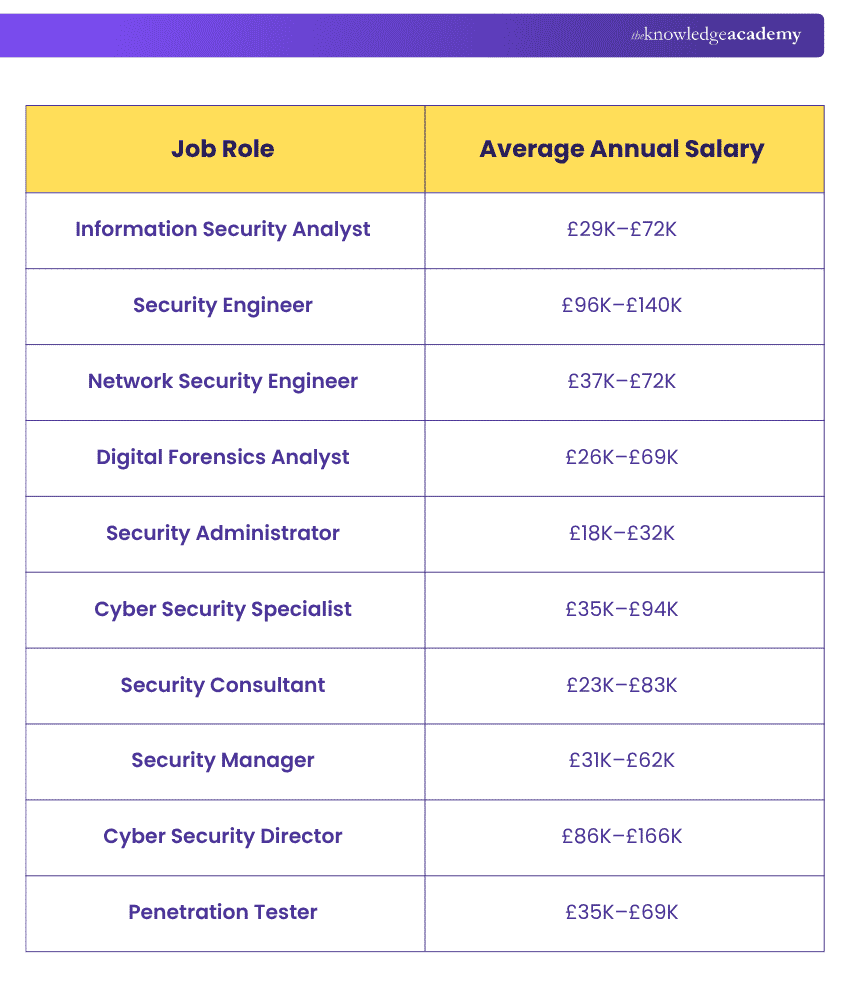
Source: Glassdoor
How to Choose the Right Cyber Security Role?
With different expertise available, choosing a Cyber Security Role becomes easier when you start with the type of work you enjoy rather than simply looking at job titles.
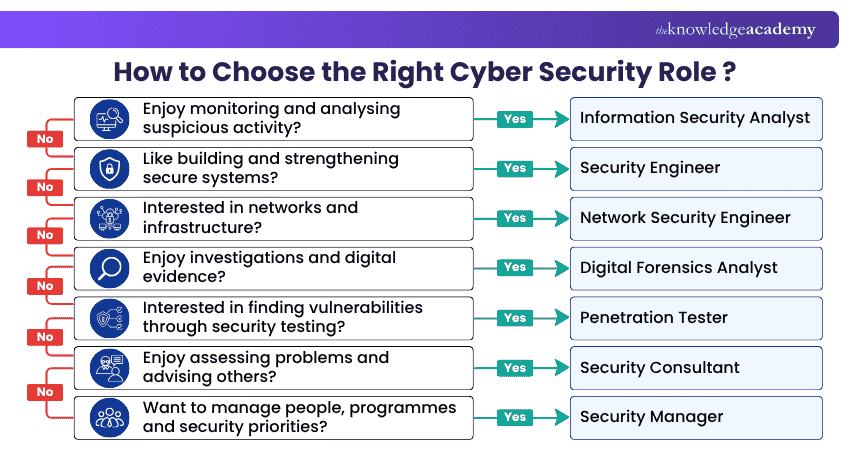
When comparing roles, consider your technical interests, preferred work and career goals. Analytical thinkers may prefer threat analysis, while others may be drawn to security engineering, digital forensics, consulting or management.
Trainer's Insight
Look beyond the job title when comparing roles. Pay attention to the day-to-day responsibilities, technologies involved and skills expected, as these can reveal whether a role genuinely matches your strengths and career interests.
Learn best practices for password security, safe browsing and data protection with our Cyber Security Awareness Training – Join today!
Skills Needed for Cyber Security Careers
Cyber Security professionals require a combination of technical and transferable skills. The exact requirements vary by role, but several capabilities are useful across the field.
Technical Skills
1) Networking: Understanding how networks, protocols and connected systems operate.
2) Operating Systems: Familiarity with different operating environments and their security controls.
3) Threat and Vulnerability Analysis: Ability to recognise weaknesses and understand potential threats.
4) Security Controls: Knowledge of measures used to protect systems, networks and information.
5) Incident Response: Understanding how security incidents are identified, investigated and addressed.
6) Data and Security Analysis: Ability to interpret security information and recognise unusual patterns.
7) Scripting and Automation: Basic scripting knowledge can help professionals automate repetitive security tasks, process information and support security analysis.
Transferable Skills
1) Problem-solving: Security professionals regularly investigate complex and changing problems.
2) Analytical Thinking: Careful analysis helps identify threats, vulnerabilities and potential causes.
3) Communication: Professionals need to explain risks and recommendations to technical and non-technical stakeholders.
4) Attention to Detail: Small anomalies can sometimes indicate larger security problems.
5) Continuous Learning: Technologies, threats and security practices continue to evolve.
Pro Tip
Do not try to master every Cyber Security skill at once. Develop strong fundamentals first, then deepen the skills most relevant to your chosen specialism.
Cyber Security Career Path
Cyber Security career progression depends on experience, skills, interests and organisational opportunities. Professionals may deepen their technical expertise, move into another specialism or progress towards advisory, management and leadership roles.
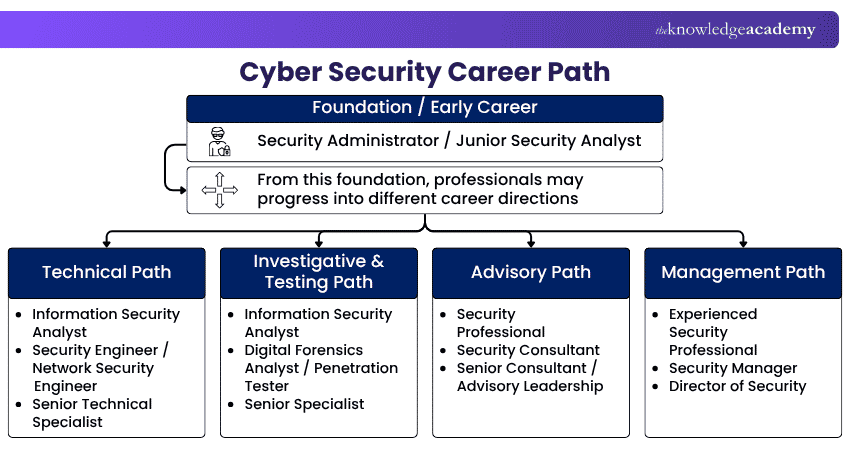
Career paths can develop in different directions. Some professionals build deeper expertise in areas such as security engineering, digital forensics or penetration testing, while others move towards consulting or security leadership. The right direction depends on your strengths, experience and career goals.
Remember
Cyber Security careers do not always progress vertically. Moving between security specialisms can also help professionals broaden their expertise and discover the area that best matches their strengths.
Conclusion
Cyber Security Roles offer different career directions based on your skills, interests and preferred way of solving problems. Whether you are drawn to analysis, engineering, digital forensics, testing, consulting or leadership, understanding the responsibilities behind each role can help you identify a suitable career direction and the skills you need to develop next.
Learn global security standards and compliance with our Cyber Security Risk Management Training – Join now!
Frequently Asked Questions
Which Cyber Security Roles Involve the Most Investigation?

Roles such as Digital Forensics Analyst, Information Security Analyst and incident-focused security positions can involve significant investigation, although responsibilities vary between organisations.
Do Cyber Security Roles Require Coding Skills?
Not every Cyber Security Role requires advanced coding. However, basic scripting and programming knowledge can be valuable for technical roles involving security engineering, automation, penetration testing and threat analysis.
Can You Work in Cyber Security Without an IT Background?
Yes. People can enter Cyber Security from different professional backgrounds, although they usually need to build foundational knowledge in areas such as networks, operating systems, security principles and risk.
Can Cyber Security Roles be Remote?
Some Cyber Security Roles can be performed remotely or in hybrid arrangements, but this depends on the employer, responsibilities, security requirements and access needed to systems or facilities.
Are Cyber Security Roles Only Technical?
No. While many roles require technical expertise, Cyber Security also includes governance, risk, compliance, consulting, awareness and management positions where communication, business understanding and decision-making are important.

John Davies


Cyber Security Governance & Assurance Specialist
John Davies is a cybersecurity expert specialising in governance, risk management, and compliance. With over 15 years in the field, he has led enterprise-wide security programmes across finance, healthcare and public sector organisations. His content provides practical guidance on building secure environments, managing risk and aligning with regulatory frameworks.


 If you wish to make any changes to your course, please


