


We may not have the course you’re looking for. If you enquire or give us a call on 01344203999 and speak to our training experts, we may still be able to help with your training requirements.
Company Secretary Job Description: Responsibilities and Skills
ByNaveena VenkatesanLast updated on: 02 November 2026
Discover the role of a Company Secretary in corporate governance, including their key responsibilities, essential skills and career requirements.
A Quick Look
1. A Company Secretary supports corporate governance and helps organisations meet their statutory obligations.2. Core responsibilities include board administration, statutory filings, shareholder communication and record-keeping.3. Essential skills include legal awareness, attention to detail, communication and discretion.4. Qualifications and experience requirements can vary depending on the jurisdiction, company type and seniority of the position.5. A well-written job description clearly outlines the role's responsibilities, required skills and candidate expectations.
Picture a dynamic boardroom where important decisions are being made, and the individual ensuring everything is in order is the Company Secretary. Have you ever considered what it takes to thrive in this crucial role? The Company Secretary job description goes beyond a mere list of duties; it offers insight into the core of corporate governance.
In this blog, we'll explore the Company Secretary job description, determining the key responsibilities that ensure a company remains compliant and efficient. By the end of this blog, you'll understand the diverse nature of this profession and its importance to any business's success. Let's get started!
Who is a Company Secretary?
A Company Secretary is a governance professional responsible for helping an organisation comply with applicable company laws, regulations and governance procedures. They work closely with directors, senior management, shareholders and other stakeholders to facilitate effective corporate administration.
The role goes beyond arranging meetings and maintaining statutory records. Company Secretaries act as trusted advisers to the board, advising on governance matters, supporting board operations and helping organisations maintain transparent and accountable practices. Their exact responsibilities depend on the company’s size, structure and legal requirements.

Roles and Responsibilities of a Company Secretary
A Company Secretary performs several responsibilities that contribute to the smooth functioning of an organisation. Although the precise duties vary, the following are among the most common:
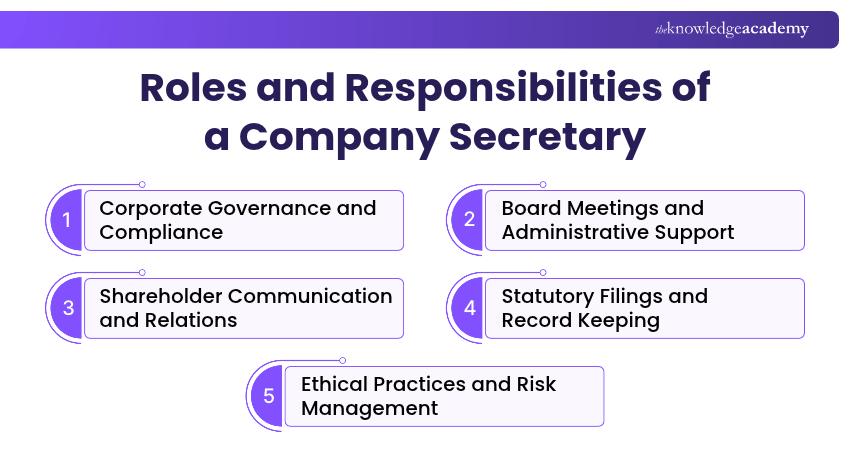
1) Corporate Governance and Compliance
Company Secretaries support the organisation in following applicable laws, governance frameworks and internal policies. They provide guidance to the board on governance procedures and monitor regulatory developments that may affect the company.
Their responsibilities can include reviewing compliance requirements, coordinating policy updates and helping directors understand their governance obligations. This supports responsible decision-making and reduces the risk of procedural failures.
2) Board Meetings and Administrative Support
Supporting the board of directors is a central part of the Company Secretary's role. This involves organising meetings, preparing agendas, distributing relevant documents and ensuring that proceedings are properly documented.
Company Secretaries may also maintain meeting minutes, communicate approved decisions and track agreed follow-up actions. These activities help the board work efficiently and maintain proper records of its proceedings.
3) Shareholder Communication and Relations
Company Secretaries help maintain effective communication between companies and their shareholders. They may coordinate general meetings, prepare shareholder notices and support voting procedures.
Depending on the organisation, they may also assist with share transfers, shareholder registers and dividend-related administration. These responsibilities help ensure that shareholder matters are handled in accordance with applicable requirements.
4) Statutory Filings and Record Keeping
Accurate documentation is essential for corporate compliance. Company Secretaries help maintain statutory registers, meeting minutes and other important company records.
They may also coordinate the preparation and submission of confirmation statements, annual accounts and other required documents to the relevant authorities, while directors retain ultimate legal responsibility for ensuring that required filings are completed. Keeping these records accurate and up to date supports audits, regulatory compliance and effective corporate administration.
5) Ethical Practices and Risk Management
Company Secretaries promote good governance by supporting ethical decision-making, transparency and accountability. They may advise on conflicts of interest, help maintain governance policies and support procedures for handling sensitive information.
They can also assist the board in identifying and overseeing governance-related risks and monitoring whether appropriate procedures are followed. Although wider risk management responsibilities may be shared with other teams, the Company Secretary plays an important coordinating role.
Trainer’s Tip
Maintaining a central compliance calendar can help Company Secretaries monitor filing deadlines, board meetings and recurring statutory obligations. Regular reviews can also reduce the risk of missed deadlines and incomplete documentation.
Master the skills that keep offices running smoothly in the Secretarial Course – Sign up now!
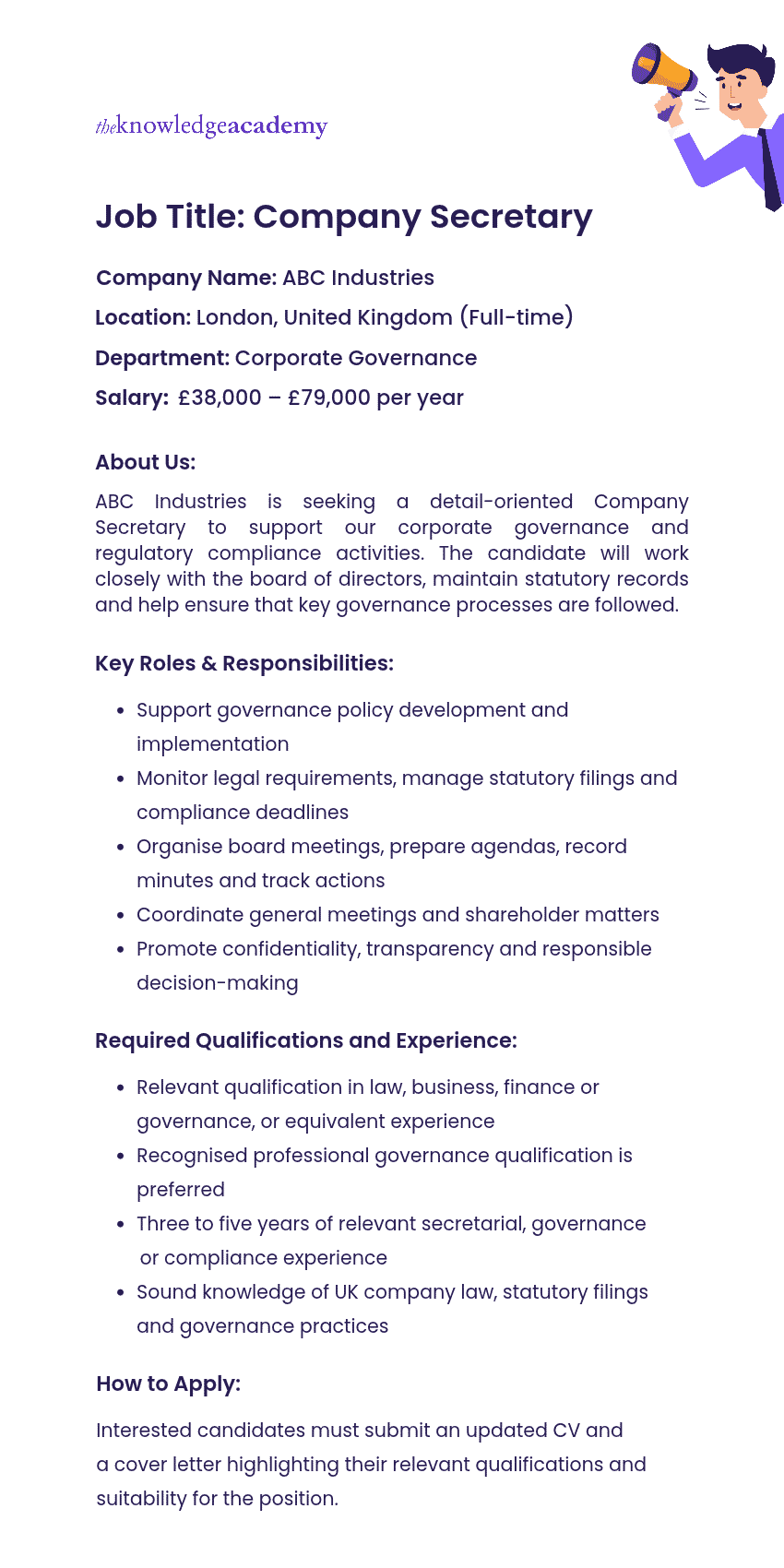
Company Secretary Job Description Example
A well-structured Company Secretary job description helps employers communicate their expectations and enables individuals to understand the role before applying. The following is an illustrative job description for the Company Secretary role:
Essential Skills for a Company Secretary
Company Secretaries need a combination of technical knowledge, organisational abilities and interpersonal skills. The following competencies help them perform their duties effectively:
1) Organisational and Administrative Skills
Company Secretaries must coordinate meetings, maintain documentation and manage multiple deadlines. Strong organisational skills help them prioritise responsibilities, track important activities and ensure that administrative tasks are completed efficiently.
2) Attention to Detail
Accuracy is essential when preparing statutory filings, reviewing governance documents and maintaining meeting minutes. Even small errors can create compliance or administrative problems. Attention to detail helps Company Secretaries identify mistakes and maintain reliable records.
3) Knowledge of Company Law and Governance
A sound understanding of applicable company law and corporate governance principles helps Company Secretaries recognise compliance requirements and support the board effectively. Staying informed about regulatory developments is equally important because legal obligations and governance expectations can change.
4) Communication and Interpersonal Skills
Company Secretaries regularly interact with directors, shareholders, employees and external advisers. Clear communication enables them to explain complex governance matters, coordinate discussions and maintain productive professional relationships.
5) Discretion and Decision-making
Company Secretaries frequently handle confidential board information and sensitive corporate documents. They must exercise sound judgement, maintain confidentiality and handle sensitive and challenging situations with professionalism and discretion.
How to Become a Company Secretary?
Building a career as a Company Secretary requires developing relevant knowledge, gaining practical experience and understanding the requirements of the roles you intend to pursue. Let's check how you can become a Company Secretary:
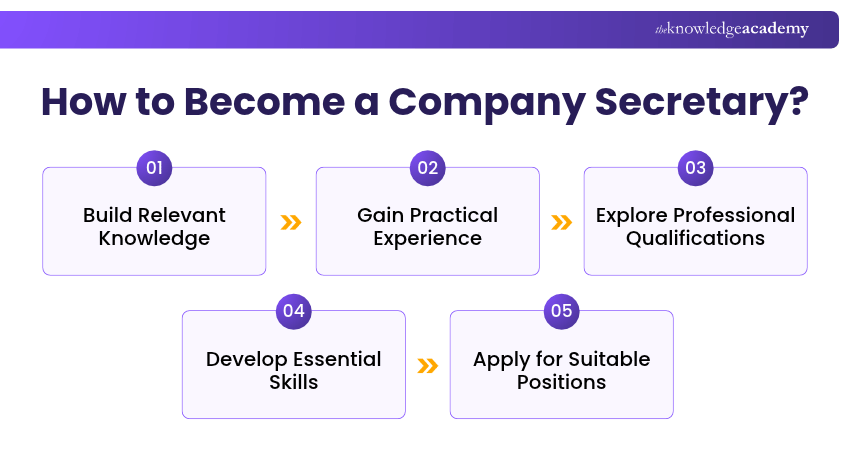
Step 1: Build Relevant Knowledge
Start by learning the fundamentals of company law, corporate governance, business administration and compliance. Academic courses, professional training and introductory governance programmes can help develop this foundation.
Step 2: Gain Practical Experience
Look for opportunities in company administration, governance support, compliance or legal teams. These roles can provide exposure to board processes, documentation and regulatory responsibilities.
Step 3: Explore Professional Qualifications
Consider pursuing professional qualifications in corporate governance or company secretarial practice to strengthen your knowledge and skills. These qualifications can help you understand industry standards, develop relevant expertise and improve your career opportunities.
Step 4: Develop Essential Skills
Strengthen your communication, organisational, analytical and decision-making abilities. Learning to prepare accurate documents, manage deadlines and communicate with stakeholders can help you handle professional responsibilities confidently.
Step 5: Apply for Suitable Positions
Explore Governance Assistant, Assistant Company Secretary and other company secretarial roles that match your experience. As your expertise develops, you may become eligible for more senior positions.
Elevate your administrative performance and make a lasting impact in the workplace with PA and Secretarial Courses – Join now!

Naveena Venkatesan is a Content Editor with 2+ years of experience in content writing, editing and linguistic quality assurance. Her research, fact-checking and editorial experience enable her to develop accurate, accessible resources across Business Skills, Human Resources, and Accounting and Finance.
View Detail

 If you wish to make any changes to your course, please


