


We may not have the course you’re looking for. If you enquire or give us a call on +1 7204454674 and speak to our training experts, we may still be able to help with your training requirements.
Bookkeeper Job Description: Roles, Skills and Salary
ByNaveena VenkatesanLast updated on: 31 October 2026
Explore the Bookkeeper job description, covering key duties, skills and qualifications. Discover a practical job description example, salary ranges across the UK, USA and India, and the essential requirements for maintaining accurate financial records.

Key Highlights
1. Bookkeepers manage transactions, reconciliations and financial records.2. Key skills include accounting knowledge, accuracy and software proficiency.3. Job descriptions outline duties, qualifications and employer expectations.4. Bookkeeper salaries vary by country, experience and responsibilities.
Behind every well-organised set of financial records is someone ensuring the numbers add up. From tracking payments to reconciling accounts, Bookkeepers help organisations maintain financial accuracy and keep daily operations running smoothly.
Their contribution, however, extends beyond keeping financial records in order. Understanding the broader scope of bookkeeping can help both aspiring professionals and employers recognise what the role involves. This blog offers a closer look at the profession and its place in everyday business operations.
Who is a Bookkeeper?
A Bookkeeper is a professional responsible for recording, organising and maintaining a business's financial transactions and records. Their work may involve tracking income and expenses, processing invoices, reconciling bank accounts and supporting routine accounting activities.
Bookkeepers help organisations maintain reliable financial information and support informed business decisions. Their responsibilities may vary depending on the size of the business, its accounting processes and the requirements of the position.

Bookkeeper Roles and Responsibilities
Bookkeepers manage everyday financial transactions and maintain accurate records that support business operations. Their responsibilities vary depending on the size of the organisation, industry and level of experience. The main duties of a Bookkeeper include:
1) Recording Financial Transactions: Record daily income, expenditure, purchases, sales and payments to maintain accurate and up-to-date financial records.
2) Managing Accounts Payable and Receivable: Process supplier invoices, monitor customer payments and maintain records of outstanding balances.
3) Reconciling Bank Accounts: Compare bank statements with accounting records, investigate discrepancies and ensure transactions are recorded correctly.
4) Maintaining Financial Records: Organise and securely store invoices, receipts and supporting financial documents using appropriate recordkeeping systems.
5) Supporting Financial Reporting: Prepare or assist with financial reports, including trial balances, profit and loss statements and other financial summaries.
6) Assisting With VAT Returns: Maintain accurate VAT records and assist with preparing VAT returns for VAT-registered businesses, where the role requires it.
7) Supporting Payroll Processing: Assist with pay calculations, employee expense records, payroll documentation and related administrative tasks where payroll forms part of the role.
8) Assisting With Period-end Accounting: Support Accountants with account reconciliations, financial documentation and other tasks involved in preparing monthly or annual accounts.
Quick Bookkeeping Quiz
Which task involves matching bank statements with accounting records?1. Payroll Processing2. Bank Reconciliation3. Invoice Processing
Bookkeeper Skills and Qualifications
Becoming a Bookkeeper requires a combination of accounting knowledge, technical proficiency and organisational ability. Although employers' expectations vary, the following skills and qualifications are commonly relevant to the role.
1) Basic Accounting Knowledge: Understand financial transactions, double-entry bookkeeping, ledgers and the principles of maintaining accurate accounts.
2) Numerical and Analytical Skills: Work confidently with financial figures, identify discrepancies and check calculations for accuracy.
3) Accounting Software Proficiency: Use applications such as Sage, Xero or QuickBooks, along with spreadsheets, to manage records and support reporting.
4) Attention to Detail: Review transactions, invoices and account balances carefully to minimise recording errors.
5) Organisational and Time Management Skills: Manage financial documents, recurring tasks and reporting deadlines efficiently.
6) Communication Skills: Communicate clearly with colleagues, Accountants, suppliers and customers when resolving financial enquiries.
7) Confidentiality and Professional Integrity: Handle sensitive financial information responsibly and maintain appropriate data security.
8) Relevant Qualifications: A university degree is not generally essential. Employers may value GCSEs, AAT bookkeeping qualifications, apprenticeships or practical finance experience.
9) Understanding of Financial Requirements: Understand relevant financial recordkeeping requirements, including VAT and payroll procedures where applicable to the role.
Build your knowledge of accounting principles, financial reporting and recordkeeping with our Accounting Course – Register today!
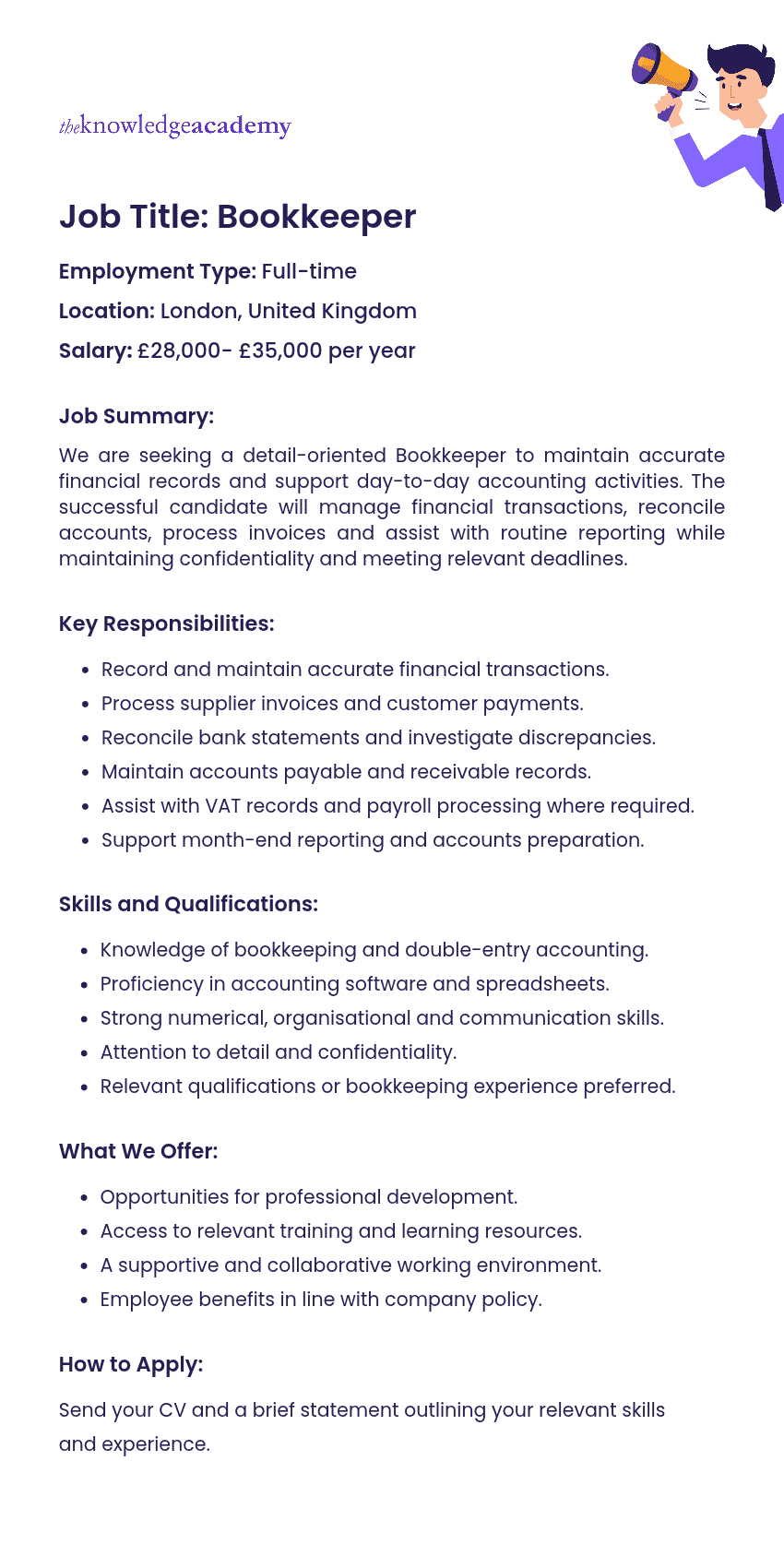
Bookkeeper Job Description Example
A well-written Bookkeeper job description helps employers clearly communicate the role's responsibilities, required skills and qualifications. It also allows candidates to understand what is expected of them. The following example illustrates how a business can structure a bookkeeping vacancy.
Bookkeeper Salary by Country
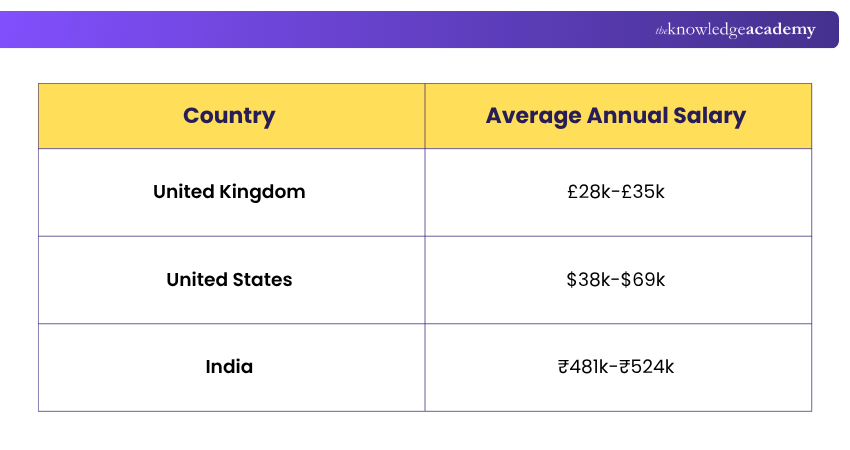
Bookkeeper salaries vary depending on experience, qualifications, location and employer requirements. According to Glassdoor, estimated annual salary ranges differ across the UK, USA and India, reflecting variations in local employment markets.
The following table presents the estimated annual salary ranges for Bookkeepers in these three countries:
Source: Glassdoor
These figures represent estimated salary ranges rather than guaranteed earnings. Actual salaries may vary based on experience, professional qualifications, additional responsibilities and proficiency in accounting software.
Gain skills to prepare trial balances and understand extended trial balances with our Bookkeeping Course – Join now!

Naveena Venkatesan is a Content Editor with 2+ years of experience in content writing, editing and linguistic quality assurance. Her research, fact-checking and editorial experience enable her to develop accurate, accessible resources across Business Skills, Human Resources, and Accounting and Finance.
View Detail

 If you wish to make any changes to your course, please


