


We may not have the course you’re looking for. If you enquire or give us a call on 800600725 and speak to our training experts, we may still be able to help with your training requirements.
Home
 Resources
Business Skills
Administrative Assistant Job Description: Responsibilities, Skills and Example
Resources
Business Skills
Administrative Assistant Job Description: Responsibilities, Skills and Example
Administrative Assistant Job Description: Responsibilities, Skills and Example
ByThe Knowledge AcademyLast updated on: 30 October 2026
Explore the Administrative Assistant job description, including daily responsibilities, required skills and workplace expectations. Discover what employers look for through a practical job description example.

A Quick Look
1. Administrative Assistants support daily office operations by coordinating schedules, managing correspondence and maintaining records.2. Key responsibilities include preparing documents, arranging meetings, processing administrative requests and organising office resources.3. Communication, time management, technical proficiency and interpersonal skills are essential for handling workplace responsibilities.4. Entry requirements vary by employer, with relevant administrative experience and qualifications potentially supporting career opportunities.5. A well-structured job description outlines responsibilities, required skills, working arrangements and application procedures.
An important meeting is approaching. Several emails need attention. A document needs updating and someone is looking for a missing record.
Who helps keep everything organised?
Often, it's the Administrative Assistant.
From coordinating schedules to supporting everyday office activities, this role involves much more than routine paperwork. But what exactly does an employer expect from an Administrative Assistant? This blog explores the Administrative Assistant job description, outlining the key duties and must-have skills to grow in this dynamic role. Let's dive in!
Who is an Administrative Assistant?
An Administrative Assistant is a professional who provides organisational, clerical and administrative support to individuals, teams or departments. They help coordinate daily activities, maintain records, manage correspondence and ensure that routine office tasks are completed efficiently.
Administrative Assistants work across industries such as healthcare, education, finance, technology and professional services. Their responsibilities depend on the organisation's size, structure and operational needs.
Responsibilities of an Administrative Assistant
Administrative Assistants perform a range of tasks that help maintain organised and efficient office operations. Although specific responsibilities vary by organisation, the following duties are commonly associated with the role:
1) Managing Communication: Respond to telephone calls, emails and general enquiries from clients, suppliers and colleagues. Communicate important messages to the relevant individuals or departments.
2) Scheduling Meetings: Arrange appointments, book meeting rooms, coordinate calendars and prepare meeting agendas. Assist with meeting documents and taking minutes when required.
3) Maintaining Office Records: Organise digital and physical filing systems, update databases and maintain accurate information. Handle confidential documents according to organisational procedures.
4) Processing Financial Documents: Assist with invoices, receipts, expense claims and basic financial records where these tasks form part of the role. Refer more complex financial matters to the appropriate team.
5) Coordinating Travel Arrangements: Organise business travel by booking flights, train tickets, accommodation and local transport. Prepare travel itineraries, confirm reservations and share booking details with employees.
6) Managing Office Supplies: Monitor stationery and equipment requirements, place approved orders and maintain stock records. Help ensure essential office resources remain available.
7) Preparing Administrative Documents: Draft, format and proofread letters, reports, presentations and other business documents. Ensure information is accurate and follows organisational formatting requirements.
8) Coordinating Visitor Appointments: Inform relevant staff of expected visitors, organise necessary access arrangements and ensure meeting rooms are prepared for scheduled visits.
Trainer’s Insight
Administrative Assistant duties can vary significantly between workplaces. In a small organisation, one person may handle reception, scheduling and office supplies. In a larger organisation, the role may focus on supporting a particular department or management team.
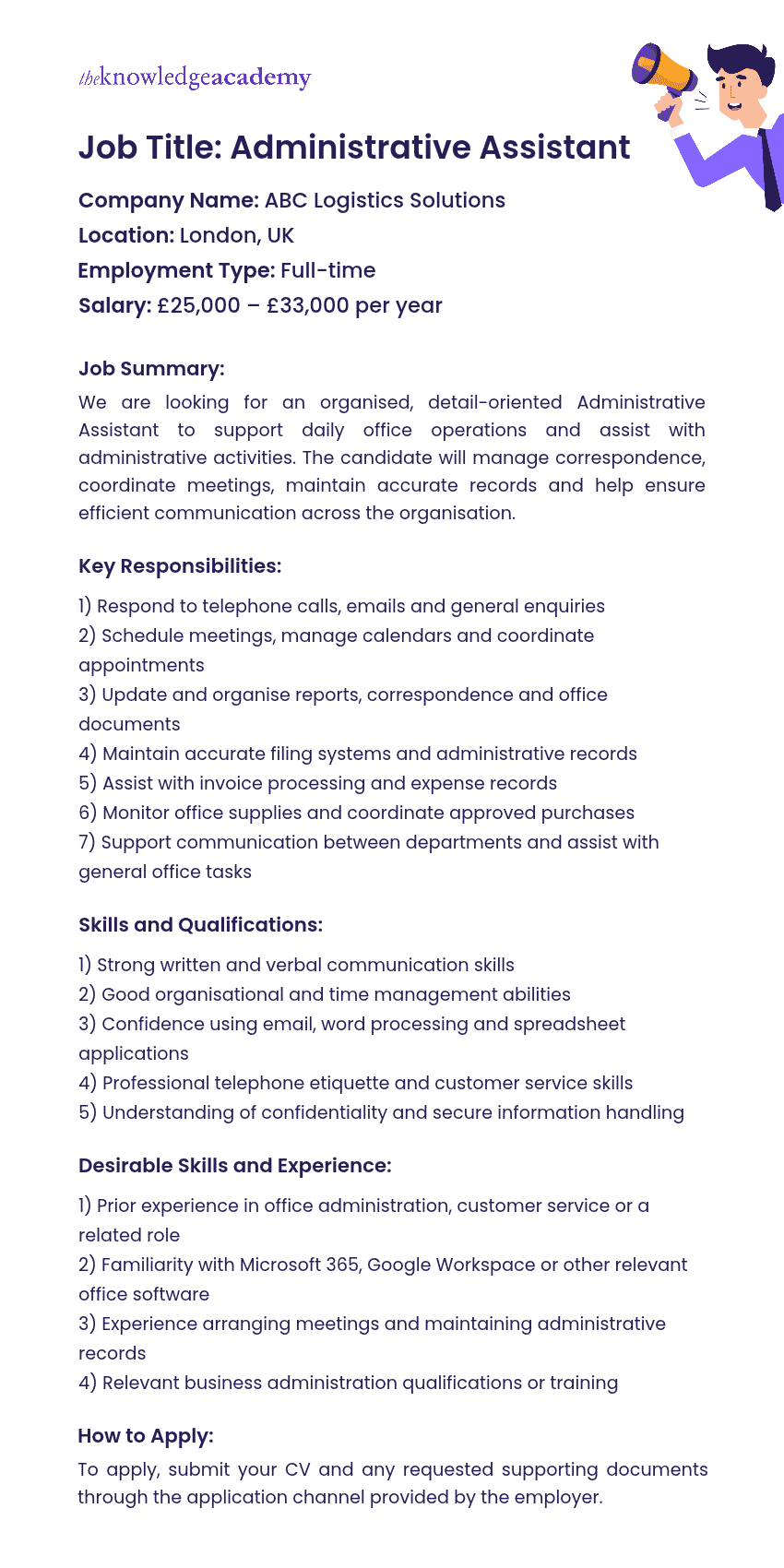
Administrative Assistant Job Description Example
Knowing the responsibilities of an Administrative Assistant is one thing, but seeing how employers present them in a job posting offers a clearer picture. A well-structured example brings together the role's daily expectations, essential skills and qualifications. Here's a sample job description to illustrate how these elements fit together.
Essential Skills of an Administrative Assistant
Administrative Assistants need a combination of technical, organisational and interpersonal abilities to perform their responsibilities effectively. The following skills are particularly important:
1) Communication Skills
Administrative Assistants communicate regularly with managers, colleagues, clients, suppliers and visitors. They must convey information clearly through emails, telephone calls, meetings and written correspondence.
Good communication also involves active listening, professional telephone etiquette and the ability to respond appropriately to different enquiries. These skills help prevent misunderstandings and maintain effective workplace relationships.
2) Organisational and Time Management Skills
Administrative Assistants often manage several tasks simultaneously, including meeting arrangements, document preparation, scheduling and office coordination. Strong organisational skills help them maintain accurate records, follow procedures and prioritise activities. Effective time management also enables them to meet deadlines and respond to changing workplace requirements.
3) Technical Skills
Administrative Assistants use digital applications to manage information, prepare documents and communicate with colleagues. Common technical requirements include proficiency in:
a) Microsoft 365: Using applications such as Word, Excel, Outlook and PowerPoint.
b) Google Workspace: Working with Gmail, Google Docs, Sheets, Calendar and Drive.
c) Data Entry: Updating databases and maintaining accurate records.
d) Document Management: Creating, formatting and organising business correspondence and reports.
e) Office Systems: Using scheduling, communication and other administrative applications.
Some roles may also require familiarity with invoicing or basic accounting software.
4) Interpersonal Skills
Administrative Assistants work with individuals across different teams and organisational levels. They need to build professional relationships, collaborate effectively and respond respectfully to colleagues and customers.
Interpersonal skills also include adaptability, teamwork, patience and the ability to resolve routine problems constructively. These qualities help maintain a cooperative working environment.
5) Attention to Detail and Confidentiality
Administrative Assistants frequently handle important documents, contact information and organisational records. Small errors in these activities can create confusion, delays or inaccurate information.
Attention to detail helps maintain accuracy, while confidentiality helps protect sensitive information from unauthorised access or disclosure. Administrative Assistants should follow relevant data protection requirements and workplace policies when managing records.
Gain the confidence to transform workplace challenges into lasting solutions with the Office Management Course – Sign up now!

The Knowledge Academy develops accessible learning content across Project Management, IT, Cybersecurity, Data Science, Business Analysis, HR, Accounting and Finance, Leadership and Health and Safety. Its resources combine subject research with clear explanations to help professionals build practical knowledge across a wide range of disciplines.
View Detail

 If you wish to make any changes to your course, please


