




We may not have the course you’re looking for. If you enquire or give us a call on +44 1344 203 999 and speak to our training experts, we may still be able to help with your training requirements.
What is Script Writing: Definition, Types, and Process
ByJames SmithLast updated on: 10 October 2026
Wondering what is script writing? It involves creating scripts for films, TV, and media, using dialogue and actions to shape the story and guide production. It is about bringing stories to life in a way that feels real and engaging. A good script keeps the audience hooked, whether it is a movie, a TV show, or even a short video.

At a Glance
1. Scripts use format-specific conventions to communicate scenes, dialogue, action and production information clearly.2. The conventions used in a script vary according to its medium, audience and intended production.3. Effective Script Writing involves developing an idea, planning the story, writing drafts, receiving feedback, and revising the script.4. Script Writers need creative, storytelling, communication, research, and collaboration skills.5. Screenwriting is a form of script writing specifically focused on screen-based productions such as films and television.
Ever watched a movie and felt completely lost in the story, as if you were right there with the characters? That experience begins with the choices made before filming, from shaping the characters and planning each scene to refining dialogue, pacing, and dramatic moments. Understanding what is script writing helps explain how these choices work together to create a compelling story.
Whether it is for a film, TV show or short video, Script Writers use these elements to build stories that audiences can follow and connect with. Want to learn more about what is script writing and how it shapes the world of storytelling? This blog has all the answers.
What is Script Writing?
Script writing uses dialogue, action, scene direction, and other production cues to shape a story for a specific medium. Visual storytelling is especially important for film, television and digital video, while theatre and audio scripts use conventions suited to performance or sound.
Unlike books or poems, scripts must show a character's emotions, not just tell them. Instead of saying, "It reminded her of childhood," a script might use a flashback or a meaningful action.

Types of Script Writing
Script writing can be categorised by the medium it is written for, such as film, television, theatre, radio, games and digital video. Scripts can also be developed in different ways, including speculative writing, commissioned work, assignments and rewrites. Common types include:
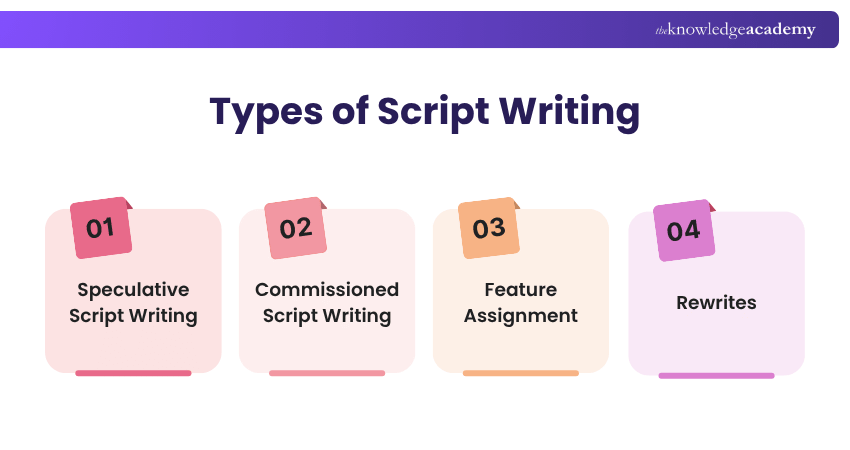
1) Speculative Script Writing
A speculative script is written independently without a writer being hired by a studio or producer. The writer creates a story, though it doesn't always have to be original. It can be based on public domain stories or real events. However, only a small percentage of spec scripts get converted into movies.
2) Commissioned Script Writing
Commissioned scripts are created when a writer is hired to develop an existing idea. They may be based on books, games, other Intellectual Property (IP), or an original brief from a producer or client. Often, multiple writers work on the same project over time.
3) Feature Assignment
In a feature assignment, a writer is contracted by a studio or producer to create a feature-film script, often based on an existing idea or IP. These assignments are often offered to writers with relevant experience, a strong portfolio or an established relationship with producers or studios.
4) Rewrites
Movie scripts commonly go through rewrites during development. These revisions may be completed by the original writer, co-writers, or additional writers brought in to improve, polish, or rework the script.
Grow your skills and shape your future with the Personal Development Courses now!
Script Writing Process
Writing a script includes several key steps. Here is how it all comes together:
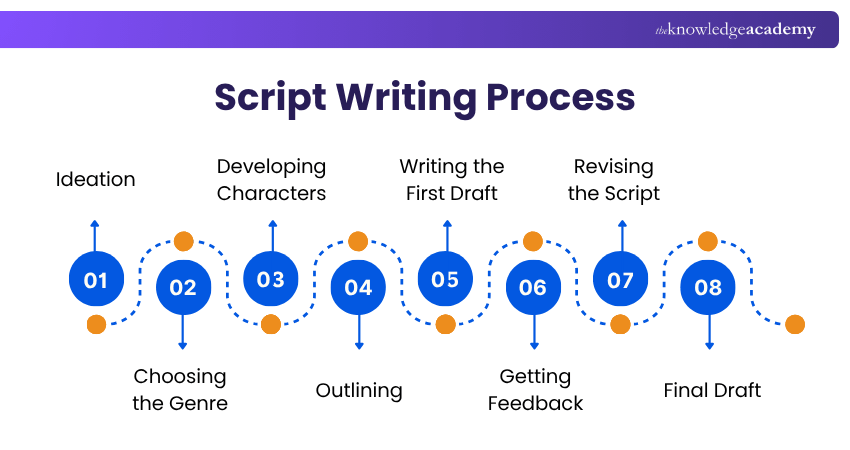
1) Ideation
Every script starts with an idea. Writers brainstorm characters, themes, and stories that connect with their target audience.
2) Choosing the Genre
The writer decides the best genre for their story. It can be a comedy, thriller, drama, or something else. This helps shape the tone and style of the script.
3) Developing Characters
Strong characters make a great story. Writers develop and refine their personalities, goals, and backstories throughout the planning and drafting process to make them feel real.
4) Outlining
Every writer must create a roadmap before writing their dream story. They can outline key scenes, character journeys, and the overall story structure.
5) Writing the First Draft
Now, the script takes shape! Writers bring their outlines to life by adding scenes, dialogue, and character interactions.
6) Getting Feedback
Sharing the script with mentors or industry professionals is a great idea. It helps identify what is working and what needs improvement.
7) Revising the Script
Based on feedback, writers go through multiple drafts. They refine the story, improve dialogue, and make everything flow better.
8) Final Draft
After several rounds of revision, the script is polished and ready to be pitched, submitted to a client, or prepared for the next stage of development.
Script writing is all about creativity and persistence. The more you refine your work, the stronger your script will be!
Trainer's Tip
Before writing the first draft, clarify the story's central idea, target audience, characters, and overall structure. A clear plan can make the drafting and revision stages more focused.
Tips for Script Writing
If you are looking to start a career in script writing, here are some useful tips to help you along the way:
1) Read a Diverse Range of Scripts
Reading scripts from different genres and formats can help you understand various writing styles. Check out scripts for movies, TV shows, and theatre plays to see how professional writers structure their work.
2) Seek Mentorship
Many new writers start by assisting experienced scriptwriters. You can help with research or small tasks while learning from their experience. Talking to seasoned writers and getting their advice can give you valuable insights into the industry.
3) Participate in Workshops
Workshops are a great way to improve your skills and meet others in the industry. They also help you get used to working with a team, which is important in script writing.
4) Identify Your Preferred Genres
Different genres have different writing styles. Figure out which ones interest you the most so you can focus on developing your skills in that area.
5) Consider the Tone of the Script
The tone of your script should match the type of story you are telling. For example, an action film needs an energetic tone, while a slow drama might have a more serious, emotional feel.
Bonus Tip
Read scripts from different genres and formats to understand how dialogue, pacing, scene descriptions, and structure change according to the intended medium.
6) Practice Perseverance
Script writing takes patience, practice, and persistence. Be prepared to revise your work based on constructive feedback and make multiple changes before the script is ready for production. Treating each draft as an opportunity to improve can help you develop your writing skills and strengthen your final script.
Create memorable characters and bring every scene to life by joining the Fiction Writing Course now!
Script Writer Roles & Responsibilities
As a Script Writer, you will have several responsibilities to fulfil. Want to know what they are? Let's explore them below:
a) Turn stories into scripts for different formats.
b) Write interesting dialogue and action scenes.
c) Collaborate with directors, producers and creative contributors during development or production.
d) Research details to make the story feel real.

Source: Glassdoor
What are Script Writing Skills?
A great Script Writer needs creative, storytelling and technical skills. These include character development, dialogue, research, formatting, editing and collaboration. Depending on the medium, writers may also use visual storytelling, non-linear structures for interactive media, or work with technical teams to ensure the script fits the final production.
Myth vs Fact
Myth: Script Writers only need creativity to produce a good script.Fact: Creativity is important, but effective script writing also requires storytelling, research, formatting, communication, editing, and collaboration skills.
What are the Key Differences Between Screenwriting and Script Writing?
Script writing is a broader term for creating scripts for different media, including film, television, theatre, radio, games, and digital content. In contrast, screenwriting specifically refers to writing scripts for screen-based productions such as films and television. While both require strong storytelling and dialogue, screenplays follow conventions designed for visual storytelling and production.
Refine every sentence and make your writing stand out with the Proofreading Course– Join today!

James Smith produces results-focused content that helps marketers plan, evaluate and improve their online activities. His writing connects channel selection, audience behaviour and performance data with measurable marketing objectives.
View Detail

 If you wish to make any changes to your course, please


