




We may not have the course you’re looking for. If you enquire or give us a call on 01344203999 and speak to our training experts, we may still be able to help with your training requirements.
What are Project Controls: A Quick Guide
ByGrace MitchellLast updated on: 18 August 2026
Discover what Project Controls are, why they matter, their key components, common challenges and how they support successful project delivery.
Key Takeaways
1. Project Controls help teams compare planned performance with actual progress.2. They bring together areas such as planning, scheduling, cost control, risk management and performance reporting.3. Regular monitoring helps teams identify deviations before they become major problems.4. Project Controls support Project Managers by providing reliable information for better decision-making.5. They are useful throughout the project lifecycle, from initial planning to final review.
Imagine opening your project dashboard and seeing this:
1) Schedule: 9 days behind
2) Cost: £18,000 above plan
3) Risk Level: Increasing
4) Completion Forecast: Delayed
You know there is a problem.
But knowing that a project is behind schedule is only the beginning. The real challenge is understanding why it happened, what it could affect and what needs to change.
That is where Project Controls come in. They help teams turn project data into meaningful insights so they can monitor performance, forecast possible outcomes and make informed decisions throughout delivery.
What are Project Controls?
Project Controls are the processes, methods and tools used to plan, monitor and manage project performance. They help teams understand whether a project is progressing according to its approved schedule, budget and objectives.
Project Controls typically involve planning and scheduling, cost monitoring, risk management, resource tracking and performance reporting. By comparing actual results with what was originally planned, teams can identify deviations and decide whether corrective action is needed.
Why are Project Controls Important?
Project Controls provide teams with reliable information about how a project is performing against its plan. This helps them identify problems early and respond before deviations become more difficult to manage.
1) Identify Problems Early: Regular monitoring helps teams spot schedule delays, cost increases and other deviations before they escalate.
2) Support Better Decisions: Reliable performance data and forecasts help Project Managers understand the current situation and decide what action is required.
3) Improve Project Visibility: Regular reporting gives teams and stakeholders a clearer picture of progress, deviations and areas requiring attention.
4) Support Predictable Delivery: By monitoring performance and forecasting likely outcomes, Project Controls help teams respond to changes and keep delivery aligned with project objectives.
How do Project Controls Work?
Project Controls are not a single activity performed once during planning. They form an ongoing cycle throughout project delivery. Here is how the process generally works: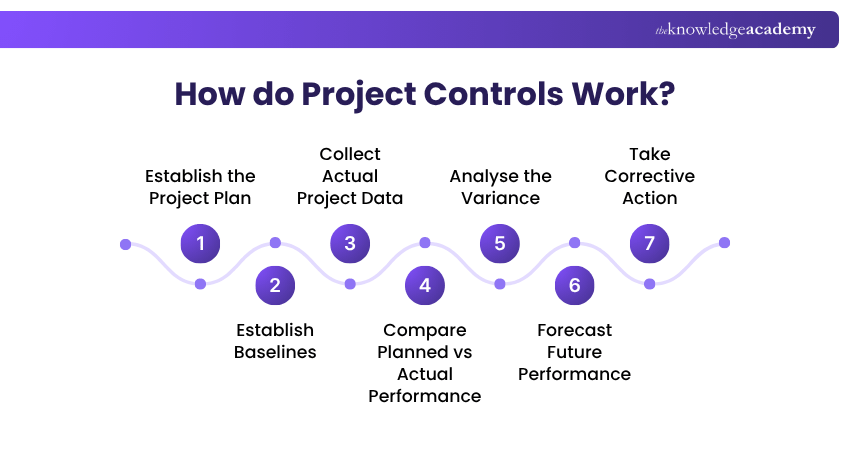
Step 1: Establish the Project Plan
The team begins by defining what the project is expected to achieve. This includes establishing areas such as:
1) Scope
2) Activities
3) Milestones
4) Schedule
5) Budget
6) Resource requirements
7) Key risks
These expectations provide a reference point against which future performance can be measured.
Step 2: Establish Baselines
Once the project plan has been approved, key elements such as cost and schedule can be used as performance baselines.
A baseline represents the agreed plan.
Without a clear baseline, it becomes difficult to answer a simple question:
Are we ahead, behind or exactly where we expected to be?
Step 3: Collect Actual Project Data
During execution, teams collect information about what is actually happening. This may include:
a) Work completed
b) Costs incurred
c) Milestones achieved
d) Resource usage
e) Delays
f) Risks and issues
g) Approved changes
Accurate and timely data is essential because poor-quality information can lead to incorrect conclusions.
Step 4: Compare Planned vs Actual Performance
Next, teams compare actual project performance with the established plan.
For example:
Planned completion: 60%
Actual completion: 48%
The 12% difference shows that performance has deviated from the plan.
However, identifying the difference is only the first step. Teams then need to determine why it happened.
Step 5: Analyse the Variance
Variance analysis helps teams investigate the reasons behind differences between planned and actual performance. For example, a project may be behind schedule because of:
1) Supplier delays
2) Resource shortages
3) Unexpected technical problems
4) Changes in project scope
5) Inaccurate original estimates
Understanding the root cause makes it easier to select an appropriate response.
Step 6: Forecast Future Performance
Current performance can also provide clues about what may happen later.
If delays continue, for example, the expected completion date may need to be revised.
Forecasting helps teams look beyond:
“Where are we now?”
and consider:
“Where are we likely to finish if nothing changes?”
Step 7: Take Corrective Action
If performance is moving away from the plan, the team may need to take action. Depending on the situation, this could involve:
1) Reallocating resources
2) Revising activity sequences
3) Addressing risks
4) Controlling changes
5) Updating estimates
6) Adjusting priorities
The results should then be monitored to determine whether the action has improved performance.
Build strong foundations in project planning and control principles by signing up for the Project Planning and Control™ (PPC) Foundation Course now!
Key Components of Project Controls
Several components work together to help teams plan, monitor and manage project performance effectively.
1) Planning and Scheduling: Planning defines the work required, while scheduling sets timelines, dependencies and milestones. Together, they help teams track progress and identify potential delays.
2) Cost Control: Cost Control compares actual spending with the approved budget. It helps teams identify cost variances and assess whether the project is likely to remain within budget.
3) Risk Management: Risk Management identifies, assesses and monitors uncertainties that could affect project objectives. This helps teams prepare suitable responses in advance.
4) Resource Management: Resource Management tracks the availability and use of people, equipment and materials. It helps prevent shortages, over-allocation and bottlenecks.
5) Performance Monitoring: Performance Monitoring compares actual progress with planned performance to identify trends, delays and other deviations.
6) Reporting and Forecasting: Reports and dashboards provide visibility into current project performance, while forecasts help teams understand possible future outcomes.
Common Project Controls Techniques
Different projects use different approaches, but several techniques are commonly associated with Project Controls.
1) Critical Path Analysis
Critical Path Analysis helps teams identify the sequence of activities that directly influences the project's completion time. Delays affecting these activities may have a greater effect on the overall project schedule.
2) Performance Dashboards
Dashboards present important project information in a visual format. They can show progress, costs, milestones, risks and other measures, helping stakeholders understand performance more quickly.
3) Earned Value Management (EVM)
Earned Value Management combines scope, schedule and cost information to assess project performance. It can help teams understand whether work is progressing in line with the approved plan and budget.
4) Trend Analysis
Trend Analysis examines performance patterns over time to identify whether indicators such as cost, schedule or productivity are improving or deteriorating.
Master advanced planning and control techniques for project success by registering for the Project Planning and Control™ (PPC) Practitioner Course – Register now!
Common Challenges in Project Controls and How to Overcome Them
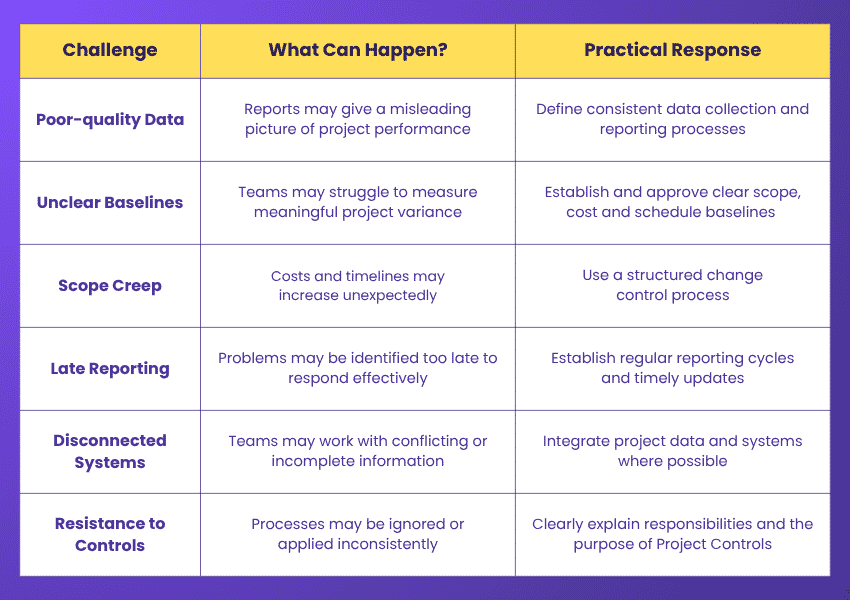
Project Controls can face several challenges that affect accuracy, visibility and decision-making. The table below highlights common issues and practical ways to overcome them.
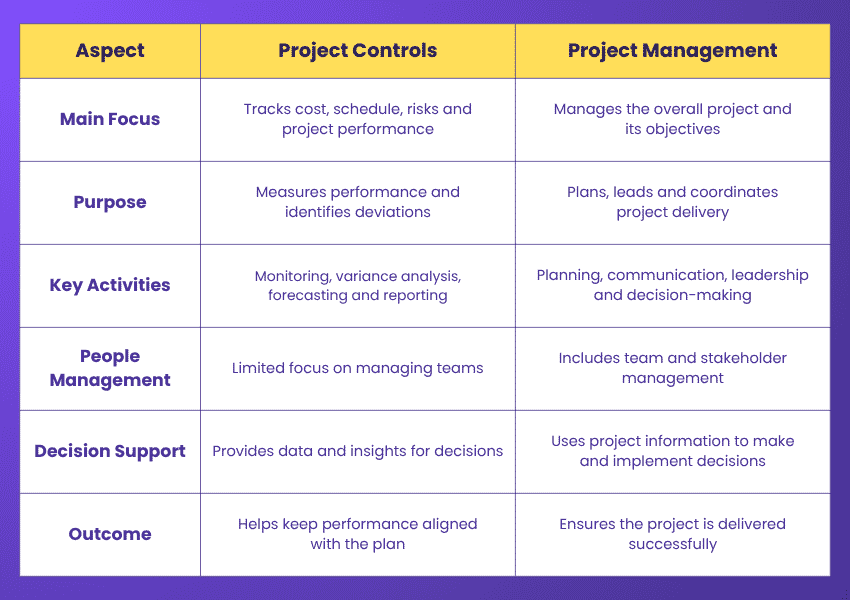
Project Controls vs Project Management
Project Controls and Project Management are closely connected, but they are not the same. Now, we’ll discuss the difference in detail:
Conclusion
Understanding Project Controls is important for anyone involved in planning or delivering projects. They connect plans with actual performance, helping teams track costs, schedules, risks and resources. By spotting deviations early and forecasting their impact, Project Controls help teams take timely action and stay aligned with project objectives.
Develop expertise in planning, scheduling, monitoring, and project control by registering in Project Planning and Control™ Course now!

Grace Mitchell creates practical Project Management content covering project delivery, governance, stakeholde engagement and programme coordination. Her knowledge of established methodologies helps readers understand complex project environments and approach project delivery with greater structure and confidence.
View Detail

 If you wish to make any changes to your course, please


