


 Top Rated Course

We may not have the course you’re looking for. If you enquire or give us a call on 01344203999 and speak to our training experts, we may still be able to help with your training requirements.
What is Parametric Modelling? A Comprehensive Overview
The Knowledge Academy 16 July 2026Parametric Modelling uses rules and parameters to create flexible digital designs, automatically updating models, applied in Engineering and Architecture. It uses parameters like dimensions and constraints to define a model’s geometry and create customisable designs. It is broadly used in Computer-aided Design (CAD) Software.

Training Outcomes Within Your Budget!
We ensure quality, budget-alignment, and timely delivery by our expert instructors.
Table of Contents

Ever wished your design could just adapt when you changed one tiny detail; without redoing everything from scratch? That’s exactly the kind of magic Parametric Modelling brings to the table. Whether you're designing products, buildings, or complex systems, it helps you work smarter, not harder. But What is Parametric Modelling really, and why is everyone talking about it?
In this blog, we’ll walk you through exactly What is Parametric Modelling, how it works behind the scenes, and why it’s become a go-to tool for engineers, architects, and designers alike. If you're after precision, flexibility, and a bit of creative control; you're in the right place.
Table of Contents
1) What is Parametric Modelling?
2) How Does Parametric Modelling Functions?
3) Core Concepts of Parametric Modelling
4) Key Features of Parametric Modelling Software
5) Who Uses Parametric Modelling Software?
6) Advantages of Parametric Modelling Software
7) Limitations of Parametric Modelling
8) What is a Parametric Family in BIM?
9) Future Scope and Trends in Parametric Modelling
10) Conclusion
What is Parametric Modelling?
Parametric Modelling is a computer-aided Design approach that uses parameters such as dimensions, constraints, and relationships to define a model's geometry. Instead of drawing fixed shapes, Designers build flexible models that automatically adjust when key parameters are changed. For instance, changing the length of a component will update connected parts to maintain design intent.
This method is widely used in Engineering, Architecture, and product design because it enhances accuracy, consistency, and efficiency. Parametric models are ideal for iterative design processes, as they allow quick modifications and what-if analyses without starting from scratch.

How Does Parametric Modelling Function?
Parametric Modelling works by placing variables and rules directly into digital design. Let’s dig deep into how it is done:
1) Editable Parameters: Parameters like height, width, and curvature can be easily modified. These inputs directly control the model's shape and dimensions.
2) Automatic Updates: Any change to a parameter automatically updates the entire design. This ensures consistency across all related components.
3) Constraint-based Relationships: Constraints maintain logical relationships between elements in the model. They enable accurate and predictable design adjustments.
4) Design Regulation and Consistency: The software manages changes behind the scenes to preserve design intent. This ensures safe, reliable revisions throughout development.
Core Concepts of Parametric Modelling
Core concepts of Parametric Modelling are discussed below:
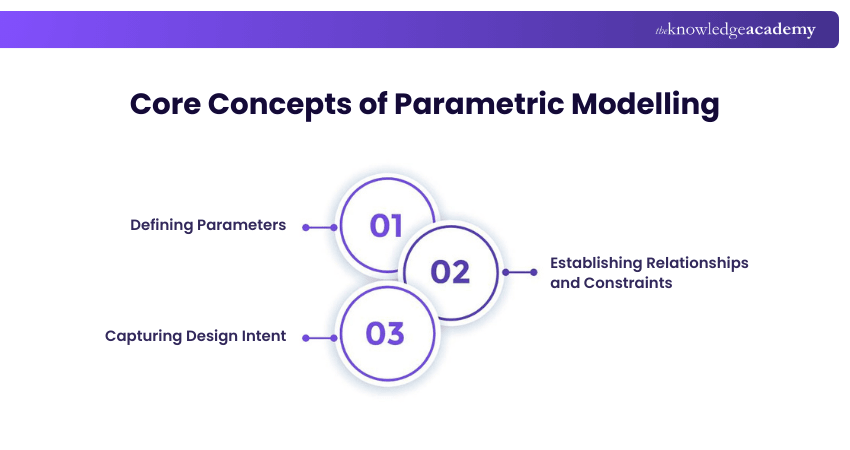
1) Defining Parameters
Parameters are variable units that represents attributes such as hight, length, angle, and material type. Using these units, designers create models where a single unit can affect multiple features. For instance, if you're designing a gear, you might assign a parameter to define the number of teeth. That single parameter could then affect the overall diameter, spacing, and pitch of the gear.
2) Establishing Relationships and Constraints
Relationship and constraints define how different components interact with each other. Constraints act as rules that instructs the geometry behaviour. Common constraints include making two edges equal in length, fixing a line to be vertical, or keeping a hole centre within a face. These interconnections maintain the complete structure during the detail changes.
3) Capturing Design Intent
Capturing design intent refers to embedding the design purpose directly into the model. It is more than creating shapes and structures. The design needs to behave logically with each modification. Parametric Modelling allows designers to plan the evolution of the model. For instance, the hinge is the model.
Key Features of Parametric Modelling Software
Parametric Modelling Software provides several features that go beyond creating shapes and structures. Some of them are mentioned below:
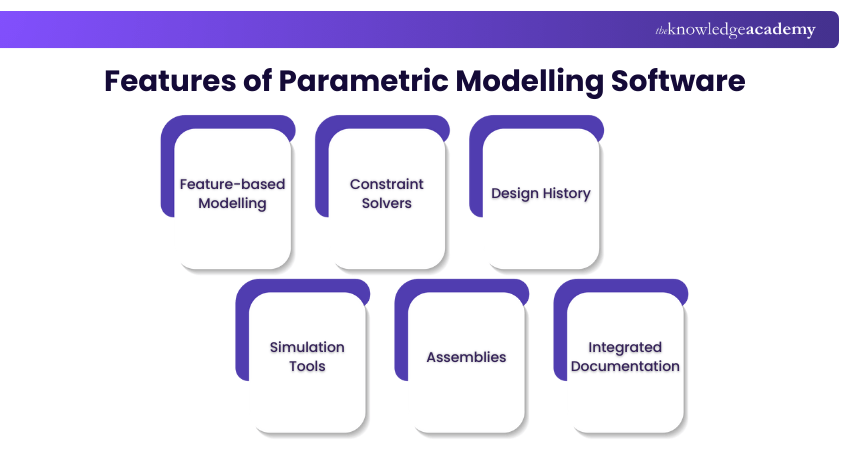
1) Feature-based Modelling
Feature-based modelling allows users to build geometry by adding and editing individual features such as extrudes, revolves, and lofts. These operations define the shape of a part and can be modified at any time.
2) Constraint Solvers
Constraint solvers are built into the software to automatically handle the relationships between geometric elements. They ensure that changes in one area are correctly reflected throughout the model based on predefined constraints.
3) Design History
Design history enables users to view and revisit previous steps in the modelling process. This makes it easy to track changes, correct errors, or experiment with alternative approaches without starting from scratch.
4) Simulation Tools
Simulation tools allow users to test how a model behaves under real-world conditions. You can analyse aspects like material strength, thermal response, and mechanical stress, helping refine the design before physical prototyping.
5) Assemblies
Assemblies make it possible to model multiple components together and control how they fit, move, or interact within a complete system. This is essential for understanding the behaviour of complex products.
6) Integrated Documentation
Integrated documentation tools streamline the process of generating technical drawings, bills of materials, and part lists. These can be produced directly from the model and kept up to date automatically as changes are made.
Unlock your potential and enhance your new skills with our Maxon Cinema 4D Training - Today!
Who Uses Parametric Modelling Software?
There are several kinds of professionals who use Parametric Modelling Software. We discuss them below:
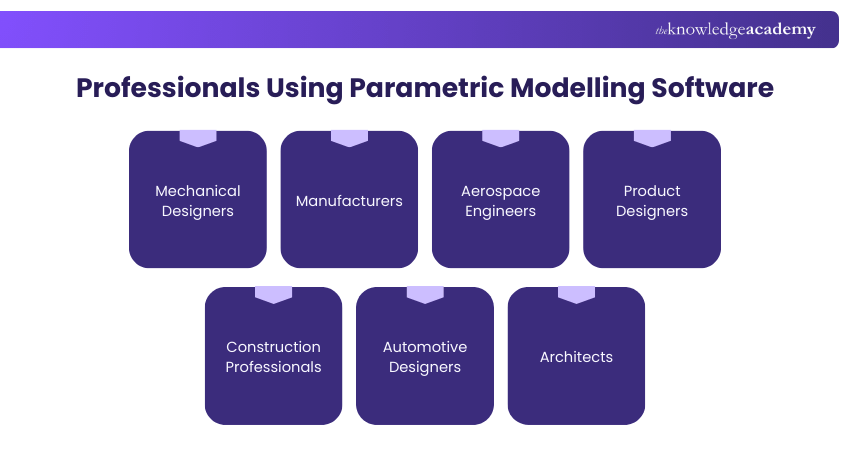
1) Mechanical Designers
Mechanical Designers depend upon Parametric Modelling Software to design precise and functional components. The ability to create fine-tuned adjustments while keeping the elements aligned is valuable to design engine part, gear systems, or enclosures.
2) Manufacturers
Manufacturing requires repetition and accuracy. Parametric Modelling Softwires can be directly integrated with Computer Numerical Control (CNC) and Computer Aided Manufacturing (CAM) Software. This ensures the manufactured item is exactly the copy of the design.
3) Aerospace Engineers
Aerospace industry demands highest precision otherwise things can get dangerous. Aerospace Engineering use Parametric Modelling Software to induce aerodynamic forces, ensure part compatibility, and manage strict regulatory needs. The software allows precision and balance of weight, strength, and aerodynamics.
4) Product Designers
In product design, functionality and aesthetics must work together seamlessly. The software allows the designers to adjust shapes quickly in accordance with user feedback. The software’s agility is especially useful for electronics and household items.
5) Automotive Designers
Automotive Designers use parametric modelling software to simulate vehicle performance and components. This helps them test and optimise design options quickly and accurately during vehicle development. The software supports the complex modelling needs of the automotive industry.
7) Architects
Architects use parametric modelling software to create detailed projections of their architectural designs. This helps them clearly communicate complex ideas to clients and colleagues and explore design variations.
Advantages of Parametric Modelling Software
Here are the advantages of Parametric Modelling Software:
1) Flexible Design Exploration
One of the biggest advantages is the ability to experiment freely. Designers can explore a variety of design directions simply by adjusting parameters. This speeds up the concept phase and helps teams quickly identify the most promising ideas.
2) Design Optimisation
By embedding performance goals into the model such as weight limits, airflow targets, or stress tolerances. Parametric tools can support optimisation workflows. Designers can tweak parameters to improve performance without altering the underlying intent.
3) Time and Cost Efficiency
Parametric design significantly reduces the time spent on manual adjustments. If a product requires a different size, you simply change a parameter and regenerate the model; no need for a complete redesign. This accelerates development and reduces labour costs.
4) Design Integrity
Because constraints and relationships are built-in models that are less prone to errors when changes are made. The logic of the design is preserved, even as individual elements evolve. This improves quality control and reduces the risk of design flaws making it into production.
Limitations of Parametric Modelling
There are certain limitations of Parametric Modelling which are mentioned below:
1) Requires Extensive Learning
Parametric Modelling tools are complex and powerful. Using them requires high skills. New users often experience a steep learning curve. Working with advanced assemblies and trying to capture nuanced design intent requires even more skills.
2) Restricted Design Flexibility
Not all designs lend themselves well to parametric control. Organic, sculptural, or artistic forms may feel constrained by rules and relationships. In such cases, direct modelling or surface modelling approaches may be better suited.
Bring your most intricate imagination to life with our comprehensive range of Animation and Design Courses – Sign up now!
What is a Parametric Family in BIM?
In Building Information Modelling (BIM), a Parametric family is a digital representation of a building component. It includes intelligent properties and parameters controlling its shape, size and behaviour. These families form the basic building blocks in BIM models and adjust dynamically when parameters change. This enables flexible design and efficient updates throughout a project.
Future Scope and Trends in Parametric Modelling
The future scope and trends in Parametric Modelling will be affected by the following factors:
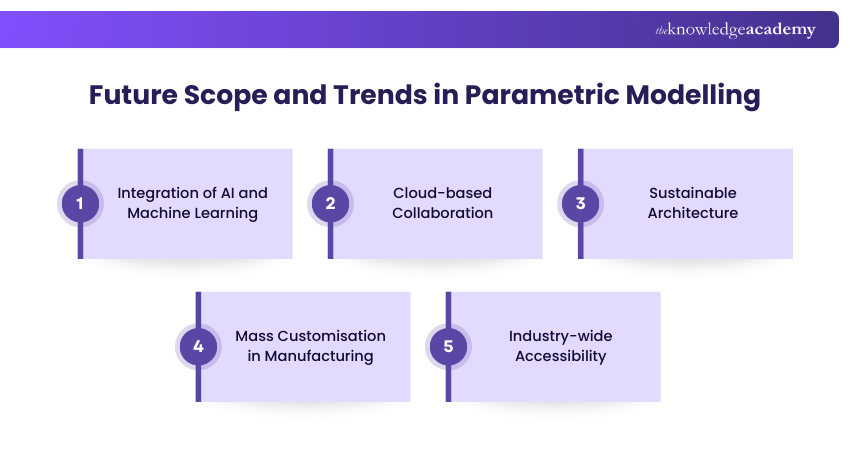
1) Integration of AI and Machine Learning: Emerging tools now use Artificial Intelligence (AI) to suggest optimal parameter values based on performance targets or historical design data, helping designers make faster and smarter decisions.
2) Cloud-based Collaboration: Designers across different locations can work on the same model in real time. Modern platforms support shared access, version control, and integrated communication tools.
3) Sustainable Architecture: In the built environment, Parametric Modelling is being used to optimise factors like sunlight exposure, natural ventilation, and thermal efficiency. These are key for designing greener, smarter cities.
4) Mass Customisation in Manufacturing: Manufacturers are using parametric design to offer product variations at scale, tailoring each item to specific needs without sacrificing efficiency or increasing costs.
5) Industry-wide Accessibility: These innovations are making Parametric Modelling more user-friendly, powerful, and widespread. It is cementing its role as a critical design tool across sectors.
Conclusion
Parametric Modelling has revolutionised the design process by introducing a flexible, intelligent approach to shaping digital geometry. Whether in engineering, construction, or product development, its ability to link geometry with logic allows for smarter design decisions, faster iterations, and reduced errors. Though it requires a degree of technical knowledge and planning, the long-term benefits of understanding What is Parametric Modelling make it an invaluable asset.
Kickstart Your 3D Journey with our Blender Creator Training - Today and start modelling like a professional!
Frequently Asked Questions
Does SOLIDWORKS Use Parametric Modelling?

Yes, SOLIDWORKS uses Parametric Modelling. It allows users to create designs using parameters like dimensions and constraints. Any change to one part of the model automatically updates the related features, ensuring design consistency and easy modifications.
What is the Opposite of Parametric Modelling?
The opposite of Parametric Modelling is direct modelling. It doesn’t rely on predefined parameters or constraints. Instead, designers edit geometry directly, making quick changes without adjusting formulas or relationships between features.

The Knowledge Academy


Global Training Provider
The Knowledge Academy is a world-leading provider of professional training courses, offering globally recognised qualifications across a wide range of subjects. With expert trainers, up-to-date course material, and flexible learning options, we aim to empower professionals and organisations to achieve their goals through continuous learning.


 If you wish to make any changes to your course, please


