




We may not have the course you’re looking for. If you enquire or give us a call on 01344203999 and speak to our training experts, we may still be able to help with your training requirements.
Home
 Resources
Business Skills
What is Fashion Designing: Understanding the Basics of Fashion Design
Resources
Business Skills
What is Fashion Designing: Understanding the Basics of Fashion Design
Resources
Business Skills
What is Fashion Designing: Understanding the Basics of Fashion Design
What is Fashion Designing: Understanding the Basics of Fashion Design
ByAishwarya UnniLast updated on: 03 October 2026
Fashion designing is the art of creating clothing and accessories that reflect individual styles and trends. This field blends creativity and technical expertise to craft garments that express personality and cultural influences. This blog explores the field of fashion designing, where innovation and aesthetics come together.
Quick Overview
1. Fashion is a form of self-expression influenced by culture, society, and changing trends.2. Key design elements include colour, silhouette, texture, line, and pattern.3. The design process moves from research and sketching to prototyping and production.4. Fabric choice, fit, functionality, and construction all influence the final garment.5. Fashion offers career paths such as Designer, Stylist, Buyer, Illustrator, Merchandiser, and Garment Technologist.
A blank page, a pencil stroke, a swatch of fabric, and suddenly an idea begins to take shape. Fashion design is where imagination becomes something you can see, touch, and wear, turning simple concepts into carefully considered garments and accessories.
What makes it fascinating is the journey from possibility to finished design. Every choice, from shape and texture to construction and detail, helps transform an initial spark into a complete creation. Read on to discover how fashion design turns creative concepts into wearable designs and what goes into bringing those ideas to life!
Understanding the World of Fashion
Fashion is more than just clothing. It's a language, a form of self-expression. Every garment tells a story. Some evoke memories of historical eras; others embody future visions. Fashion transcends borders, connecting diverse cultures and identities. It mirrors society's evolution, reflecting its moods, ideals, and revolutions.
The digital age has also changed how fashion develops and spreads. Social media influencers, local boutiques, independent designers, and Do It Yourself (DIY) creators now contribute to shaping and sharing fashion trends alongside established fashion houses.
Fashion can also communicate social and cultural ideas. For example, the Flapper style of the 1920s reflected changing attitudes towards women, while Punk Fashion in the 1970s became associated with anti-establishment culture.

The Essence of Fashion Design
Fashion design plays a central role in the apparel industry. It combines vision, creativity, and practicality. Every garment begins as an idea. This idea is translated into sketches and prototypes. It's not just about aesthetics; it's about functionality, too.
Fashion Designers consider body shape, movement, fit, comfort, and how different fabrics behave when developing garments. They create pieces that flatter, comfort, and make a statement. They anticipate how fabric moves, drapes, and feels against the skin. Cultural nuances also influence designs. Designers weave stories, memories, and emotions into their creations.
While trends change, Fashion Designers continue to balance creativity with function, audience needs, and practical considerations. They challenge norms, setting new fashion directions. They make art wearable.
Fashion Designers turn creative ideas into practical, wearable outcomes by combining design thinking, material knowledge, construction techniques, and attention to detail. Their work connects imagination with functionality, helping transform an initial concept into a finished garment or accessory.
Trainer’s Insight
A strong Fashion Designer does not only ask, “Does this look good?” They also ask, “Can this idea be constructed consistently, altered easily, and communicated clearly to everyone involved in making it?” Thinking beyond the sketch can make a design far more practical.
Key Elements of Fashion Design
Fashion design, often seen as merely an aesthetic pursuit, is actually an intricate blend of various defining elements. A closer look at these elements, including types of lines in fashion design, unveils the nuances and depth of this captivating art form.
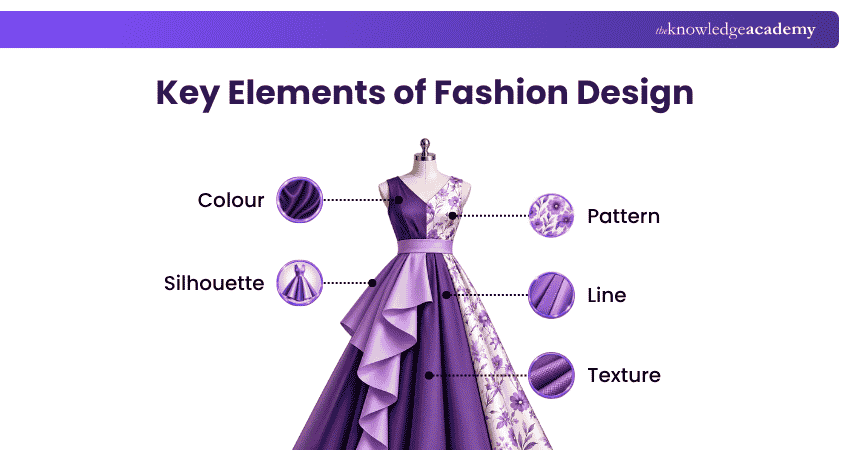
1. Colour
Colour sets the mood, weaving emotions into every stitch and silhouette. Let us discover how it influences fashion design:
a) It's more than just a hue; it's a statement
b) Colour can influence mood, emphasis, and visual impact
c) By contrasts or complements, it steers the design's narrative
d) An essential tool for seasonal and trend predictions
2. Silhouette
Silhouette shapes perception, defining the dance between body and fabric. It helps fashion design in the following ways:
a) Defines fashion's shadow and essence
b) Ranges from slender contours to voluminous outlines
c) Echoes eras, be it the Flapper or Victorian Periods
d) Influences the garment’s overall proportion, fit, movement, and visual character
3. Texture
Texture speaks silently, adding depth and touch to the visual tale. Let us understand how depth plays a vital role in fashion:
a) Affects how a garment looks, feels, drapes, and interacts with light
b) From rugged tweeds to liquid-like satins, it offers diverse tactile experiences
c) Influences the drape and kinetic appeal of garments
d) Often dictates care instructions and garment longevity
4. Line
Line directs the eye, charting the design journey from simplicity to complexity. Let us understand how this complexity influences fashion:
a) Directs and captivates the viewer's gaze
b) Vertical lines create length; horizontal ones suggest width
c) Curves and asymmetry infuse dynamism and unexpected flair
d) Essential for creating harmony within designs
5. Pattern
Pattern weaves stories, injecting rhythm and personality into every drape. The following points will help you understand the role of patterns in fashion design.
a) Serves as the visual voice of design
b) Whether checks, florals, or abstracts, each narrates a distinct tale
c) Layering patterns can yield depth and multidimensionality
d) Used for brand signatures and cultural references
Understanding and mastering these elements is vital for any Fashion Designer. Their palette and toolkit allow them to create garments that not only please the eye but resonate on deeper emotional and cultural levels.
Gain practical experience in animation and design tools through Animation and Design Training – Register now!
The Process of Fashion Designing
Diving into fashion designing is akin to embarking on a transformative journey. Each phase holds its significance, and collectively, they craft masterpieces that define eras, cultures, and individual identities. Further, we will explore the process of fashion design:
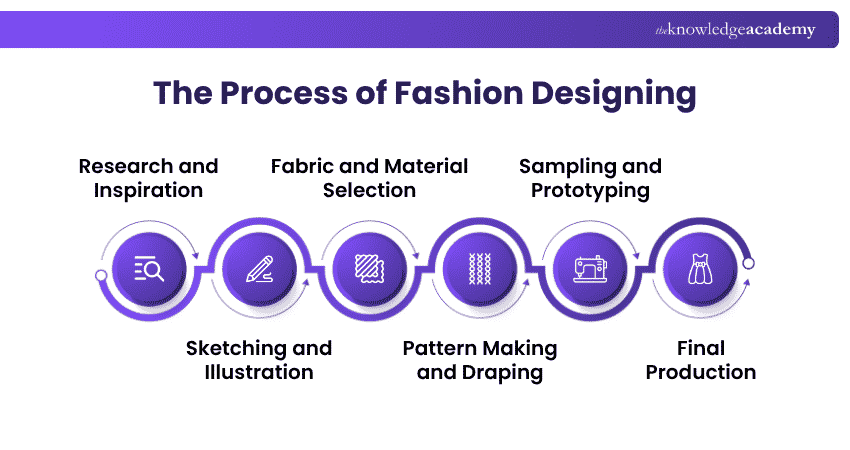
1) Research and Inspiration
Design starts with a spark. Designers often become researchers, hunting for that unique muse. Museums, historical archives, contemporary events, or even street styles can fan this spark into a flame. This explorative journey lays the foundation for the ensuing creative process.
2) Sketching and Illustration
Once inspired, the designer's hand moves to give shape to thoughts. Designers develop ideas through hand sketches or digital illustration tools, turning initial concepts into visual designs that can be refined and communicated. Detailed and annotated sketches serve as the preliminary roadmap to the envisioned garment.
3) Fabric and Material Selection
Selecting the right fabric is akin to choosing a canvas for a painting. The fabric's weight, sheen, stretch, and texture determine the garment's ultimate look and feel. Eco-conscious designers also weigh in on sustainability, ensuring a reduced environmental footprint.
Did You Know?
Fabric grain direction can noticeably affect how a garment hangs, stretches, and holds its shape, which is why pattern pieces normally include grainline markings.
4) Pattern Making and Draping
A designer's vision starts taking a tangible form in this phase. Custom patterns are crafted, dictating how pieces of fabric will come together. Through draping, fabric meets form, letting designers tweak and perfect before finalisation.
5) Sampling and Prototyping
This is design's first real-world encounter. Prototype or sample garments are created to test the design, fit, construction, materials, and overall appearance before final production. These prototypes undergo rigorous evaluations, ensuring they meet desired standards in terms of both aesthetics and functionality.
6) Final Production
This stage is where ideas, now fully formed, multiply. Once the design and samples are approved, the garment moves into production. Manufacturers follow technical specifications, construction methods, and quality requirements to produce the final pieces consistently
Every step in the fashion design process is a delicate dance between art and practicality, passion and precision. The result? Timeless garments that leave an indelible mark on the world of fashion, beautifully captured through the lens with the help of photography ideas.
Careers in Fashion Designing
The realm of fashion designing is vast, encompassing a range of professions that cater to various facets of the industry.
a) Fashion Designers: They are the originators of style. They conceptualise, draft, and bring new garments to life. To become a Fashion Designer, one must possess the creativity and technical skills to turn visionary ideas into reality. Their vision often dictates fashion trends.
b) Pattern Makers: They are the unsung heroes of fit. They create templates for designs. Their precision ensures consistency and quality in production.
c) Fashion Illustrators: They are the visualisers of concepts. They sketch and paint design ideas, making them palpable before they're physically produced.
d) Textile Designers: They are the masters of fabric artistry. They innovate patterns and colours on fabrics, defining a garment's first impression.
e) Fashion Stylists: They are the curators of appearance. They mix and match, creating iconic looks. Their touch elevates photoshoots and runway shows.
f) Fashion Merchandisers: They are the strategists of the sales floor. They analyse market trends, ensuring retail offerings align with consumer appetites.
g) Fashion Journalists: They are the narrators of the style world. They spotlight trends, critique collections, and give insights into industry happenings.
h) Fashion Buyers: They are the gatekeepers of retail. Their keen eye selects which designs make it to store racks, influencing shopping trends.
i) Fashion Photographers: They are visual storytellers. They capture garments in evocative settings, producing images that captivate and sell.
j) Fashion Consultants: They guide the sartorial world. Their expertise shapes brand identities and ensures market relevance.
h) Garment Technologists: They focus on garment fit, construction, quality, and fabric performance, working with designers and production teams to ensure products meet required standards.
Therefore, fashion designing turns imagination into something the world can wear, blending creativity with purpose in every detail. With the right skills and vision, even a simple idea can become a design that leaves a lasting impression.
Unlock new opportunities for self-development through our Hobbies & Interests Training – Join now!

Aishwarya Unni is a Copywriter with 2+ years of experience in reporting, web content, blogs, email marketing, and case studies. Her journalism background, combined with her research and writing experience across Business Skills and Human Resources, helps her create clear, engaging content for different audiences.
View Detail

 If you wish to make any changes to your course, please


