




We may not have the course you’re looking for. If you enquire or give us a call on 01344203999 and speak to our training experts, we may still be able to help with your training requirements.
What is Digital Literacy? Principles, Skills and Benefits
ByCharlotte WilsonLast updated on: 16 July 2026
Digital literacy is the ability to use digital tools, devices, and platforms effectively, safely, and responsibly for communication, learning, and work. It helps people access information and take part in activities like learning, working, and community events. Without these skills, they may struggle to keep up with the digital world.
We live in a world where navigating the internet is as essential, if not more important, than reading or basic arithmetic skills. This is where digital literacy comes in. It’s the art of understanding, using and creating digital content confidently and purposefully. From online communication and data analysis to cybersecurity awareness, digital literacy gives you the power to thrive in a tech-driven world.
This blog explores What is Digital Literacy, the key principles that shape it, the benefits of mastering it in everyday life and the workplace and more. So read on and learn how mastering it can open doors to endless possibilities in an ever-digitising world!
Table of Contents
1) What is Digital Literacy?
2) The Core Principles of Digital Literacy
3) Essential Digital Literacy Skills
4) The Importance of Digital Literacy Skills
5) How to Develop Digital Literacy Skills?
6) Educational Benefits of Using Technology
7) Conclusion
What is Digital Literacy?
Digital literacy is the ability to find, evaluate, use, share, and create Content Creation Tools, and the internet. Unlike traditional literacy, which focuses on reading and writing offline, digital literacy involves skills like navigating websites, using smartphones, and sharing content on Social Media. Today, digital literacy includes a broad range of skills, from uploading videos on YouTube to posting updates on Facebook.
It’s essential in our connected world, especially in education. Students need to learn how to read, interpret, and interact with online content, including links, audio, and visuals. Additionally, they’re expected to create, collaborate, and share content responsibly. Educators must understand its importance and incorporate it into classroom learning to prepare students for the digital world.
The Core Principles of Digital Literacy
As implied above, digital literacy isn’t just about using technology; it’s about knowing how to understand, analyse and create content online in a safe and responsible way. Here are the core principles of digital literacy:
Comprehension
A digitally literate person can understand and make sense of digital information. They can effectively interpret data, articles, videos, and other online content to extract relevant meaning and apply it in real-world contexts.
Curation
This skill involves finding, organising, and managing online content effectively. As digital literacy grows, individuals become better at selecting valuable information and filtering out unnecessary content to stay focused and informed.
Interdependence
Digital literacy includes recognising how digital content connects across various sources. Digitally savvy people understand how different data, content, and platforms are linked, allowing them to navigate the digital landscape more effectively.
Social Contexts
This involves understanding the impact of online communities and learning how to engage responsibly. It also includes building self-awareness, protecting personal data, and maintaining a positive online presence.
Deliver engaging slides and stories that stick! Sign up for our comprehensive Presentation Skills Course now!
Essential Digital Literacy Skills
The following skills will help you embrace digital literacy and help you navigate the crowded digital landscape with ease:

Information Literacy
It's the skill of finding, assessing, and using information from digital sources. It helps identify reliable information and spot misinformation.
Technical Proficiency
This refers to the ability to use software, hardware, and digital tools effectively. These skills are essential for managing devices and applications in everyday tasks and work.
Cybersecurity Awareness
It’s important to know how to protect personal and work-related information from risks like hacking or data breaches. This skill is vital for staying safe online.
Digital Communication
It involves using online platforms to share ideas, collaborate and express yourself clearly. Good digital communication is important for building connections and staying productive.
Critical Thinking
The ability to analyse digital content, question its accuracy, and make smart decisions is important. This skill is key in a world filled with digital information.
AI and Automation Literacy
Understanding the basics of AI and automation is essential because this tech changing how we work and live. These skills help people keep up with new technologies and adapt to changes.
Turn numbers into unforgettable narratives! Learn how in our Data Analysis Skills Course - Sign up now!
The Importance of Digital Literacy Skills
Here are some substantial benefits of digital literacy:
1) Efficient Work: Digital literacy helps students complete written assignments and research projects more accurately and quickly. Being skilled in using technology allows them to navigate the curriculum more smoothly and make the most of educational resources.
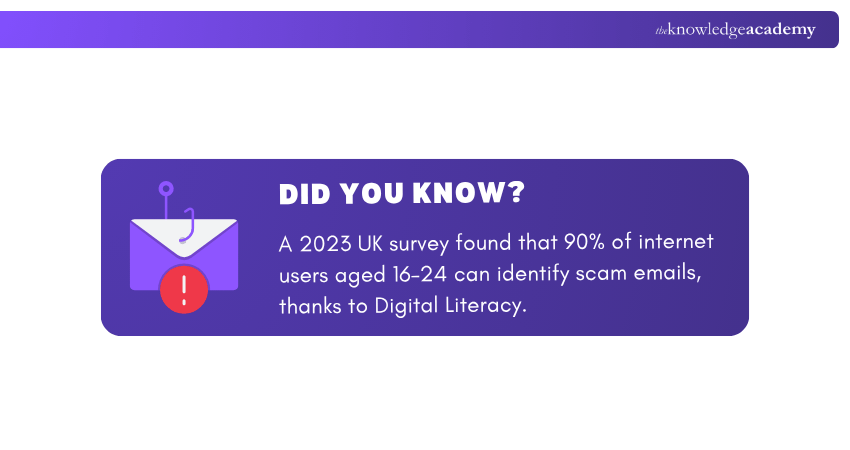
2) Safety: Learning digital literacy in a safe classroom setting prepares children to explore the internet responsibly. It teaches them how to protect personal information, avoid online scams, and recognise the signs of cyberbullying.
3) Self-awareness: Every Social Media post or online comment contributes to a digital footprint. Digital literacy helps kids understand how to create a positive online reputation and avoid content they might regret later.
4) Emotional Health: Digital literacy provides students with safe platforms to express their thoughts and feelings through text, email, or blogging. It encourages healthy self-expression while emphasising the importance of privacy settings.
How to Develop Digital Literacy Skills?
Building your skills to learn, share, and manage media using digital technology can unlock many new opportunities. Here are some practical tips to improve your digital literacy:
1) Explore different digital tools and try using them.
2) Stay updated on the current tech trends and the latest upgrades.
3) Focus on the platforms and tools that are most useful to you.
4) Embrace a lifelong learning mindset to keep growing your skills.
5) Take online courses to learn about various digital technologies and how to use them effectively.
6) Don’t hesitate to ask for guidance when using new tech tools.
Educational Benefits of Using Technology

Technology is rapidly transforming how students learn in the classroom. Here are some key advantages of harnessing technology for learning at home or in school:
Promotes Self-directed Learning
Technology helps every student learn at their own pace. They can revisit difficult topics, skip ahead, or go over lessons as needed, making learning more personalised and effective.
Enhances Retention and Recall
Engaging and interactive learning through technology can help students remember information better. Active participation using digital tools keeps them interested, leading to better knowledge retention.
Enables Adaptive Teaching Methods
Digital lesson plans, grading tools, and online assessments save a lot of time for Teachers and allows them to focus on helping struggling students. Virtual learning environments also promote sharing resources and collaborating with fellow Educators.
Strengthens Collaboration and Communication
Technology encourages students to work together on projects, whether through online forums, shared documents, or virtual classrooms. It also connects them with peers in other schools or even different countries, enhancing collaboration skills.
Conclusion
Digital literacy goes beyond mere technology usage because it’s about understanding and creating content safely and responsibly. After all, technology connects us all in a way that our physical selves cannot. Understanding What is Digital Literacy can help you stay safe online, think clearly and connect with others. Embracing digital literacy can lead to better learning and more opportunities in the digital world.
Combine tech and teaching for smarter, flexible learning! Sign up for our Blended Learning Essentials Training now!

Charlotte Wilson is an expert in soft skills development, with over 14 years of experience helping individuals and teams improve communication, productivity and emotional intelligence in the workplace. Her training content is focused on enhancing interpersonal effectiveness and fostering positive, collaborative environments across all levels of an organisation.
View Detail

 If you wish to make any changes to your course, please


