




We may not have the course you’re looking for. If you enquire or give us a call on +44 1344 203 999 and speak to our training experts, we may still be able to help with your training requirements.
What is Digital Technology: Definition, Types, and Benefits
ByThe Knowledge AcademyLast updated on: 02 October 2026
Digital technology uses electronic systems and devices to create, process, store and transmit digital information. Explore its major types, benefits, and everyday examples to understand how it shapes the way we live, work, learn and communicate.
The Main Idea
1. Digital technology creates, processes, stores, and shares digital information.2. It includes AI, networks, blockchain, IT, hardware, and business systems.3. Digital tools can improve communication, efficiency, security, and innovation.4. Key challenges include cyber risks, digital inequality, overload, and environmental impact.5. Smartphones, ATMs, smart appliances, and adaptive traffic systems are common examples.
A video call,
A contactless payment,
A smart thermostat,
and an AI assistant may seem unrelated,
but they all rely on digital technology.
These tools show how digital systems support communication, automation, decision-making, and access to information. As digital technology continues to influence business, education, industry, and daily life, understanding its role becomes increasingly useful. This blog explains what is digital technology, its major types, benefits, challenges, and real-world applications.
What is Digital Technology?
Digital technology refers to electronic devices, systems and applications that create, process, store or transmit information in digital form. Digital systems represent information using discrete values, commonly binary digits such as 0 and 1.
Examples range from computers and smartphones to cloud platforms, digital networks, Artificial Intelligence (AI) systems and industrial control technologies. These technologies support communication, automation, data processing and digital services across areas such as business, healthcare, education and entertainment.

Types of Digital Technology
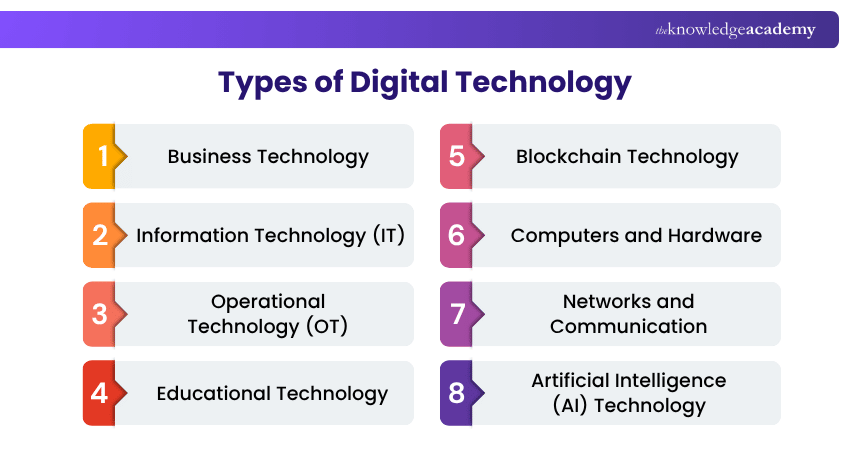
Digital technology includes a wide range of technologies, systems, infrastructure, and application areas. The following are some common types used across business, education, communication, industry, and everyday life.
1) Business Technology
Business technology encompasses tools and systems designed to enhance efficiency and productivity in organisations. These include:
a) Customer Relationship Management (CRM): Helping businesses understand and connect with customers.
b) Enterprise Resource Planning (ERP): Streamlining processes like inventory, finance, and HR.
c) Digital Marketing Platforms: Revolutionising how businesses reach and engage audiences.
2) Information Technology (IT)
IT is the foundation of modern digital operations, responsible for managing, storing, and securing data. Its components include:
a) Cloud Computing: Offering scalable storage and processing power.
b) Cybersecurity: Protecting sensitive data from digital threats.
c) IT Infrastructure: The servers, databases, and networks powering organisations.
3) Operational Technology (OT)
Operational Technology (OT) includes systems and devices used to monitor or control physical equipment, processes and environments. Examples include:
a) Smart Factories: Where machines communicate to optimise production.
b) Utility Systems: Managing water, energy, and waste services efficiently.
c) Internet of Things (IoT) Sensors: Monitoring real-world conditions in real time.
4) Educational Technology
EdTech transforms education by making knowledge more accessible and interactive:
a) Virtual Classrooms: Breaking geographical barriers to education.
b) Gamified Learning Platforms: Making learning fun and engaging.
c) AI Tutors: Personalising learning experiences for students.
5) Blockchain Technology
Blockchain is a distributed digital ledger technology that records transactions or other data in a way designed to make unauthorised changes detectable and difficult.
a) Cryptocurrencies: Bitcoin and Ethereum revolutionising finance.
b) Smart Contracts: Automating agreements without intermediaries.
c) Supply Chain Tracking: Supporting traceability and shared record-keeping.
6) Computers and Hardware
Computers and hardware are the tangible elements of digital technology. It includes:
a) Laptops and Desktops: Workhorses for professionals and students alike.
b) Wearable Tech: Devices like smartwatches blending health and connectivity.
c) Gaming Consoles: Delivering immersive digital entertainment.
7) Networks and Communication
Digital networks are the lifelines of modern communication, enabling global connectivity:
a) 5G Networks: Supercharging internet speeds for a connected future.
b) Video Conferencing Tools: Revolutionising remote work and collaboration.
c) Social Media Platforms: Creating communities and driving digital engagement.
Did You Know?
Digital technology is not limited to computers and smartphones. It also powers industrial control systems, connected infrastructure, ATMs, smart appliances, and adaptive transport systems.
8) Artificial Intelligence (AI) Technology
Artificial Intelligence enables computer systems to perform tasks associated with capabilities such as learning, reasoning, prediction, language processing and decision-making.
a) Machine Learning (ML): Uses data and algorithms to identify patterns and make predictions.
b) Natural Language Processing (NLP): Enables voice assistants like Siri and Alexa.
c) Autonomous Systems: From self-driving cars to delivery drones.
Quick Tech Check:
Which of these is an example of Operational Technology (OT)?A) CRM softwareB) Smart factory control systemC) Video conferencing platformD) Social media applicationAnswer: B) Smart factory control systems monitor or control physical industrial processes.
Become a 5G expert with comprehensive 5G Wireless Training - Sign up today and stay ahead!
Benefits of Digital Technology
Digital technology's true potential is in its transformative ability. Here are some of the ways it's making an impact:
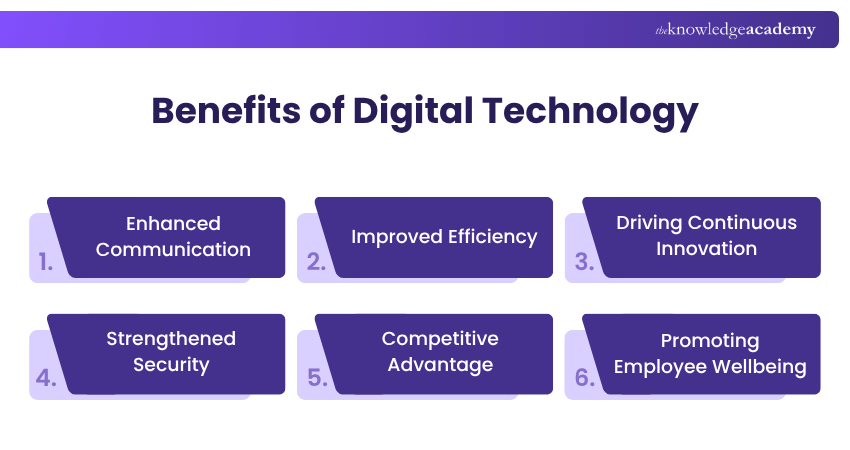
1) Enhanced Communication: From WhatsApp chats to virtual meetings, digital technology removes barriers, making global communication seamless.
2) Improved Efficiency: Digital tools can automate repetitive activities, streamline workflows and reduce some forms of manual processing when implemented effectively.
3) Driving Continuous Innovation: Digital technologies such as AI, cloud computing and data analytics can support innovation by enabling new products, services and ways of working.
4) Strengthened Security: Digital technologies can support security through encryption, access controls, multi-factor authentication and monitoring tools. However, greater digital dependence can also introduce new cybersecurity and privacy risks.
5) Competitive Advantage: Early adopters of digital tech often outshine their competitors. Companies that embrace digital transformation are more agile, responsive, and in tune with customer needs.
6) Promoting Employee Wellbeing: Digital tools can support flexible working, remote collaboration and access to wellbeing resources, which may help some employees achieve a better work-life balance.
Pro Tip:
Before adopting a new digital tool, identify the problem it needs to solve. Useful digital technology should improve a specific process or outcome rather than simply adding more software.
Challenges of Digital Technology
Despite its many benefits, digital technology also presents several challenges that individuals and organisations need to manage.
a) Dependence on Digital Systems: Picture a day without Wi-Fi or electricity. Scary, right? Over-reliance on digital systems makes us vulnerable to outages and cyberattacks.
b) Security and Privacy Concerns: In the race to digitise, protecting personal and organisational data is a constant struggle. Data breaches can shake trust and cause irreparable harm.
c) Widening the Digital Divide: While urban centres thrive with high-speed internet and advanced tech, rural areas and underprivileged communities often get left behind. Bridging this divide is crucial.
d) Information Overload Risks: We're drowning in a sea of data in emails, notifications, and updates. Managing this overload without losing focus is an ongoing battle.
e) Environmental Impacts: Digital technologies have environmental impacts through electricity consumption, resource use and electronic waste. Data centres, in particular, require substantial amounts of electricity.
f) Increased Distractions and Stress: Constant pings, social media updates, and the pressure to stay "connected" can lead to burnout. Mindful tech usage is the need of the hour.
Examples of Digital Technology
Digital technology has become an invisible thread weaving through the fabric of our modern existence, transforming ordinary moments into seamless experiences. Here's how digital innovation shapes our everyday world:
1) Smartphones
Gone are the days when phones were just for calls. Today's smartphones function as personal digital hubs, integrating everything from precise GPS navigation to sophisticated AI assistants.
They've become our photographers, entertainment centres, personal shoppers, and productivity tools - all housed in a pocket-sized device. Whether you're video chatting with family across the globe or managing your smart home devices, these devices exemplify how digital technology can enhance human capability.
2) Contactless Payments
Contactless payment systems use digital communication technologies to exchange payment information between cards, smartphones or wearable devices and payment terminals, enabling fast electronic transactions.
3) ATMs
The evolution of banking through ATMs demonstrates how digital technology can democratise essential services. These machines have transformed financial transactions from a schedule-bound activity into an on-demand service. Beyond basic cash operations, modern ATMs handle everything from bill payments to currency exchange, functioning as round-the-clock digital bank branches in virtually every neighbourhood.
4) Traffic Lights
Some adaptive traffic-control systems use sensors and real-time data to adjust signal timings according to traffic conditions. More advanced connected systems may also exchange information with other transport infrastructure.
5) Household Appliance
Our homes have become testing grounds for digital innovation. Smart appliances now offer capabilities that once belonged in science fiction stories. Modern refrigerators can track your groceries and suggest recipes based on what's inside.
Smart washing machines optimise water usage while letting you control them from your phone. Dishwashers now use sensors to adjust cleaning cycles based on each load's needs. These advances go beyond convenience, changing how we manage our homes. They're transforming our approach to energy use and daily household tasks.
Unlock new career opportunities in the rapidly evolving field of AI with our Artificial Intelligence Courses – Join now!

The Knowledge Academy develops accessible learning content across Project Management, IT, Cybersecurity, Data Science, Business Analysis, HR, Accounting and Finance, Leadership and Health and Safety. Its resources combine subject research with clear explanations to help professionals build practical knowledge across a wide range of disciplines.
View Detail

 If you wish to make any changes to your course, please


