




We may not have the course you’re looking for. If you enquire or give us a call on 01344203999 and speak to our training experts, we may still be able to help with your training requirements.
What is Asynchronous Learning: An Overview
ByCharlotte WilsonLast updated on: 19 August 2026
Discover how Asynchronous Learning makes education more flexible and accessible. Explore its meaning, how it works, benefits and examples to understand how learners can study at different times and manage learning around their schedules.
Key Takeaways
1. Asynchronous Learning allows learners to participate at different times rather than attending the same live session.2. Recorded lessons, readings, discussion forums, and online assessments are common Asynchronous Learning activities.3. It offers greater scheduling flexibility and gives learners more control over how they organise their studies.4. Effective Asynchronous Learning still requires structure, communication, feedback, and learner motivation.
Imagine three people taking the same course.
Learner A watches a recorded lesson before work.
Learner B completes an activity during the afternoon.
Learner C studies the same material later that evening.
Different locations. Different schedules. The same learning experience.
This is the basic idea behind Asynchronous Learning. Learners do not have to participate at the same moment. Instead, learning materials remain available for them to access within the structure and deadlines of the course.
So, how exactly does it work, and when is the right approach? Let's find out.
Understanding the Concept of Asynchronous Learning
Asynchronous Learning is an educational approach where learners access learning materials and complete activities at different times rather than participating together in a scheduled session.
For example, learners may watch recorded lectures, read course materials, complete assignments, participate in discussion forums, or take online assessments whenever their schedule allows.
However, asynchronous does not always mean completely self-paced. A course may still include deadlines, learning milestones, instructor feedback, or scheduled assessment dates. The main difference is that learners do not need to participate in the learning activity at the same time.

How Does Asynchronous Learning Work?
Asynchronous Learning works by giving learners access to course materials and activities that they can complete at different times. Instead of joining a live class, learners typically follow a structured online learning journey.
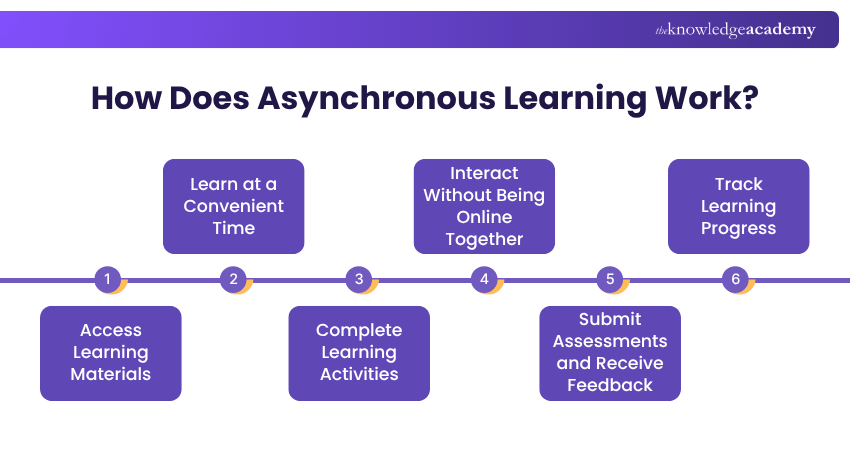
A typical Asynchronous Learning process includes:
1) Access Learning Materials
Learners log into an online learning platform to access recorded lessons, videos, presentations, reading materials, and other resources.
2) Learn at a Convenient Time
Learners study the available content according to their schedule, while following any course deadlines or milestones. They can pause, replay or revisit materials when they need additional time to understand a topic.
3) Complete Learning Activities
Quizzes, assignments, exercises and other activities help learners apply what they have studied and check their understanding.
4) Interact Without Being Online Together
Learners can ask questions, share ideas and communicate with instructors or peers through discussion forums, email or messaging tools. This interaction does not require everyone to be online at the same time.
5) Submit Assessments and Receive Feedback
Learners submit assignments or complete online assessments within the specified timeframe. Instructors can review their work and provide feedback later.
6) Track Learning Progress
Depending on the course platform, learners can monitor completed activities, upcoming deadlines and overall progress towards their learning goals.
In Short
Asynchronous Learning means learning that does not require learners and instructors to participate at the same time.
Understand the significance of effective coaching with our Coaching Skills Training - Register now!
Benefits of Asynchronous Learning
Asynchronous Learning offers several benefits, particularly for learners who require greater flexibility in how they organise their studies.
1) Greater Flexibility
Learners are not required to attend every lesson at a specific time. This can make learning easier to manage alongside professional, academic or personal commitments.
2) More Control Over Learning
Learners can decide when to study and, where course design permits, how quickly they progress through different learning activities.
3) Opportunity to Revisit Learning Materials
Recorded videos and digital resources can often be reviewed multiple times, allowing learners to revisit difficult topics or refresh their knowledge.
4) Wider Access to Learning
Asynchronous courses can connect learners across different locations and time zones without requiring everyone to be available simultaneously.
5) Supports Independent Learning Skills
Managing study schedules, deadlines and activities can help learners develop skills such as time management, organisation and independent learning.
6) Scalable Learning Delivery
For organisations and education providers, digital asynchronous content can support learners across multiple locations without depending entirely on physical classroom capacity.
Master coaching techniques to inspire growth and improve performance by registering for Coaching and Mentoring Training – Register today!
Common Challenges of Asynchronous Learning and How to Overcome Them
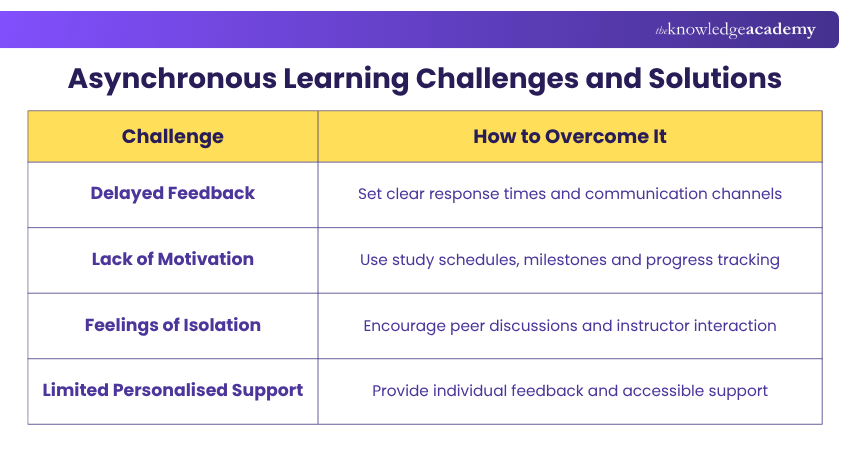
While Asynchronous Learning offers greater flexibility, learners may still face challenges related to communication, motivation and support. The table below highlights some common challenges and practical ways to address them.
Examples of Asynchronous Learning
Asynchronous Learning can appear in many forms depending on the learning objective. Here are examples of Asynchronous Learning:
1) Pre-recorded Lessons
Learners can watch recorded lectures, presentations or training sessions whenever convenient and replay sections they need to review.
2) Demonstration Videos
Recorded demonstrations can explain how to perform a process or complete a particular task. Learners can pause and replay individual steps when needed.
3) Reading and Written Assignments
Learners can independently study textbooks, articles, research papers or digital resources before completing written activities based on what they have learned.
4) Independent Research Activities
Digital libraries, databases and online resources allow learners to investigate topics independently and explore subjects in greater depth.
5) Online Discussion Forums
Discussion boards allow learners to ask questions, share perspectives and respond to other participants without everyone being online at the same time.
6) Online Assessments
Quizzes, assignments and other assessments can be completed and submitted through an online learning platform within the required timeframe.
Asynchronous Learning vs Synchronous Learning
Choosing between Asynchronous and Synchronous Learning depends on factors such as timing, pace, interaction and flexibility. The table below compares both approaches to show how they differ in practice.
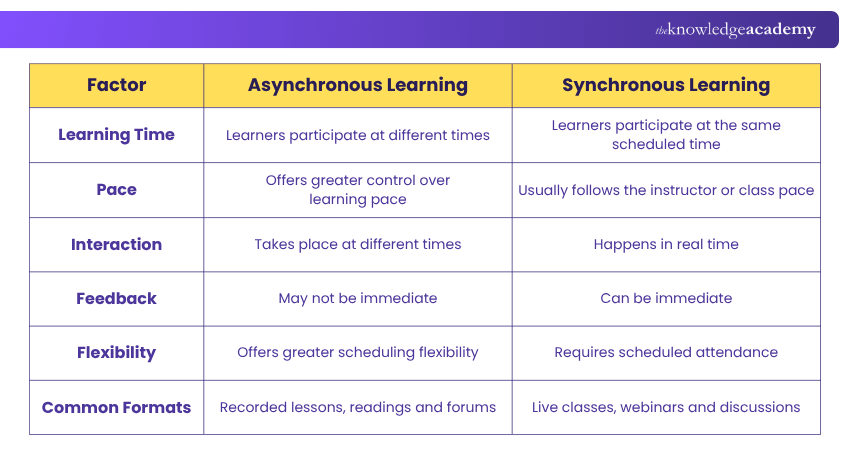
Neither approach is automatically better. The right choice depends on learning objectives, learner preferences, schedules and the type of interaction required.
Which Learning Approach Fits Your Situation?
Use this quick decision guide:
Do you need to learn around work or other commitments?→ Asynchronous Learning may offer greater flexibility.Do you prefer scheduled sessions and immediate interaction?→ Synchronous Learning may be more suitable.Do you want flexibility but still value regular live interaction?→ A blended approach combining asynchronous and synchronous activities may work well.
Conclusion
Asynchronous Learning gives learners the flexibility to study at different times while still following a structured learning journey. With accessible resources, clear communication, regular feedback, and effective progress tracking, it can support independent learning without limiting engagement. When designed well, it offers a practical and adaptable approach for today’s diverse learning needs.
Develop the skills and confidence to deliver engaging, impactful training sessions with our Train the Trainer Course now!

Charlotte Wilson creates Business Skills content that helps professionals communicate more effectively, manage workplace pressures and collaborate with others. Her practical resources support stronger professional relationships, individual effectiveness and positive team behaviour.
View Detail

 If you wish to make any changes to your course, please


