




We may not have the course you’re looking for. If you enquire or give us a call on 01344203999 and speak to our training experts, we may still be able to help with your training requirements.
What is a Blog: Definition, Types, Purpose, and Steps
ByThe Knowledge AcademyLast updated on: 03 October 2026
A blog is an online platform for sharing content, insights, and updates, serving purposes like storytelling, education, marketing, and audience engagement. Consisting of text, images, videos, and interactive elements, blogs bring variety, with some becoming major information sources and others serving as personal online journals.

In a Nutshell
1. Blog posts are commonly displayed with newer content appearing before older posts.2. Blogs can be managed by individuals, teams, businesses or organisations.3. Posts can be organised using categories, tags, archives and internal links.4. A blog can exist independently or as a section within a larger website.5. Blogs can focus on one specialised subject or cover several related topics.
A blog is about the digital bridge between the timeless essence of a diary and the cutting-edge touch of the internet. It's your own corner on the internet where creativity and individual perspectives can take shape. A good blog can hook you from the first word, pull you into its world and keep you coming back for more. Whether it’s business insights, travel adventures, poetry or expert tips, each blog can offer readers a different experience.
The first step towards understanding blogs is to explore the craft that goes into creating one. We are here to help you with the same and guide you towards unlocking your own blogging skills. So read on, chronicle your best thoughts, and empower the online landscape with your words.
What is a Blog?
Blogs are online journals where content on specific or general topics is published regularly for a community of readers. Blogs may be run by an individual Blogger, a team of Authors or an organisation and are typically hosted on a blogging platform or website. They can also serve as powerful tools for sharing expertise, opinions, and personal experiences.
A team of Authors manages other blogs, and posts are written by different Bloggers each time. This structure allows for diverse perspectives and consistent content flow, keeping readers engaged. They can be personal diaries, news outlets, or promotional platforms. Blogs often include multimedia elements like images, videos, and links to other content, making them visually appealing and informative.

How Does a Blog Work?
These points illustrate how a blog works:
1) Blogs are organised chronologically, with new posts appearing at the top and older content moving down or stored in monthly archives.
2) Unlike books, blog posts don’t have to be related to one another and can independently cover different topics.
3) Blogs are similar to online news magazines but typically focus on a single topic and are written in the first person.
4) Common blog topics include fashion, lifestyle, culture, food, science, technology, health, fitness, politics, religion, and spirituality.
5) Blogs can be categorised into personal blogs, run by individuals and targeting a broad audience, and business blogs, targeting niche audiences that align with specific products or services.
6) The primary purpose of blogs is to create a personal connection between Bloggers and the readers or potential customers.
7) Blogs are more accessible and flexible than paid publications. They use hyperlinks and trackbacks to connect similar content and expand their reach.

Purpose and Uses of a Blog
Here are the main uses of a blog:
1) Sharing Personal Experiences and Building an Online Identity
Initially, blogs served as digital diaries where individuals shared personal stories, hobbies, and reflections. Over time, many Bloggers have expanded their content to
educate others and establish a professional online presence.
Example: James Clear began his blog to share insights on habit formation and personal development. His consistent, research-backed posts resonated with readers, leading to the bestselling book Atomic Habits and a substantial online following.
2) Improving Brand Visibility and Customer Engagement
Businesses utilise blogs to boost brand awareness, engage with their Target Audience, and drive conversions. These Content Marketing blogs often feature industry insights, product updates, and helpful tips relevant to their target market.
Example: The productivity app Notion maintains a blog that offers tutorials, user stories, and workflow ideas. This helps users maximise the tool's potential while reinforcing the brand's value proposition.
3) Promoting Programs and Attracting Prospective Participants
Organisations, including educational institutions, use blogs to showcase their programs, share success stories, and provide insights into their community, aiming to attract and inform potential participants.
Example: The Massachusetts Institute of Technology (MIT) Admissions blog features posts by current students and staff. It offers a glimpse into campus life, academic experiences and the admissions process. This goes a long way to engage prospective students.
Quick Blog Assessment
How strong is your blog idea?Answer Yes or No to each question:1. Does the topic solve a clear reader problem or answer a specific question?2. Can the main idea be explained in one sentence?3. Does the blog offer something more useful than a basic definition?4. Are the sections arranged in a logical order?5. Does each section add new value rather than repeat an earlier point?6. Would the article still be useful if promotional references were removed?7. Can the reader take away at least one practical action or insight?Score Guide:6–7 Yes: Your blog idea is focused and reader-ready.4–5 Yes: The idea is promising but may need sharper structure or depth.0–3 Yes: Revisit the topic angle before writing further.
Become a champion in the search engine hierarchy with SEO-friendly content! Sign up for our SEO Training now.
Different Types of Blogs
There are many different kinds of blogs depending on the topic or Target Audience. Let’s explore some of the most common types:
1) Personal Blogs
Personal blogs are like online diaries where people share their thoughts, experiences, and life stories. Topics can range from daily life and hobbies to travel and parenting. Some personal blogs gain popularity by focusing on a specific theme, offering helpful tips, or creating a sense of community.
2) Business Blogs
Business blogs aim to promote a company’s products or services. They provide useful content related to the business, helping attract new customers and build brand awareness. Topics often include industry insights, how-to guides, and product updates.
3) Niche Blogs
Niche blogs put their focus on a specific topic, like gardening, finance or tech. They target a particular audience, allowing the Blogger to become an expert in that area. These blogs can attract a loyal following by consistently providing valuable content on the chosen subject.
4) Multimedia Blog
Multimedia blogs use videos, podcasts or images instead of written content. They often include summaries, key quotes or a table of contents to guide viewers or listeners through the content.
5) News Blog
News blogs share the latest updates and announcements in a particular industry. Unlike other blogs, they focus on facts and recent happenings without adding personal opinions.
Pro Tip
Keep a question bank instead of only a topic list. Questions naturally lead to clearer, more useful blog ideas because they start from reader intent rather than a generic subject.
6) Affiliate Blog
Affiliate blogs are used to promote products or services from other companies. Bloggers earn commissions when the readers make purchases through special links. Content typically includes product reviews and recommendation lists.
7) Reverse Blog
Reverse blogs, also called group blogs, are managed by multiple Authors who write on similar topics. The blog owner reviews and posts the content, creating a diverse range of articles.
Five Key Steps to Starting a Blog
Once you’ve picked a hosting platform and a proper domain name, and purchased a web space, you can kickstart your journey as a Blogger. Here are the steps you can follow:
1) Choose a Niche
Decide on a specific topic or focus for your blog, whether it’s personal or business-related. Think about what information your target audience is looking for. Consider what problem you want to solve and what unique perspective you can offer to stand out.
2) Add a Personal Touch
Make your blog memorable with a catchy name, engaging writing style and eye-catching design. You must pay attention to fonts, colours and layout because these elements help attract new readers and keep loyal ones coming back.
3) Plan Your Content
Prepare blog posts in advance so you can maintain a consistent publishing schedule. Regular posting is just as crucial as creating valuable content. It's what keeps your audience engaged and coming back for more.
Bonus Tip
Before writing, create a one-line reader outcome: “By the end of this post, the reader should be able to…” If the article does not deliver that outcome, the topic may be too broad
4) Optimise Your Blog
Make your blog easy to navigate and discover by using clear headings, descriptive URLs, relevant internal links and well-organised categories. Ensure the content is also easy to read across different devices.
5) Build Audience Trust
To turn casual readers into regular followers, you must focus on delivering quality content as consistently as possible. Stick to your chosen topics and address common questions. Being reliable and consistent helps readers know what to expect from your blog.
Make your brand speak loud and clear! Learn how in our comprehensive Digital Marketing Courses - Register now!
Effective Ways to Promote Your Blog
Search engines can be an essential source of blog traffic when your content is useful, relevant and optimised for search. However, readers may also discover your blog through social media, referrals, email and other channels. Here are some effective ways to promote your blog:

Most visitors will discover your blog through Google if your SEO is SEO-optimised. However, as mentioned earlier, a blog is also a powerful tool for crafting brand awareness and promotion. Here’s how you can use it:
1) Share on Social Media
Use eye-catching images or videos to share your blog on Social Media. Also, add a link to your blog in your Social Media bios to drive even better traffic.
2) Add Links from Your Website
Make sure your blog is easy to find on your website. Add a noticeable call-to-action (CTA) or place it in a prominent spot on the homepage.
3) Partner with Influencers
Partnering with influencers is a great way to promote your blog and build credibility. Establish a relationship first, then ask them to share your content with their followers.
4) Consider Paid Promotion
If you are not short on budget, consider boosted posts or paid ads on platforms like Facebook to get more visibility for your blog.
5) Repurpose Your Blog Content
You can save time by turning blog posts into videos, podcasts or Social Media content. This way, you can share your message across different platforms and reach more people.
6) Use Internal Linking Strategically
As you create more blog posts, link every related article within your content. This helps readers find more relevant information and boosts your SEO ranking.
7) Explore Guest Blogging Opportunities
Write for other industry-related blogs to introduce your brand to new audiences. It’s a great way to connect with potential customers and also network with other professionals.
Blog vs Website: Key Differences
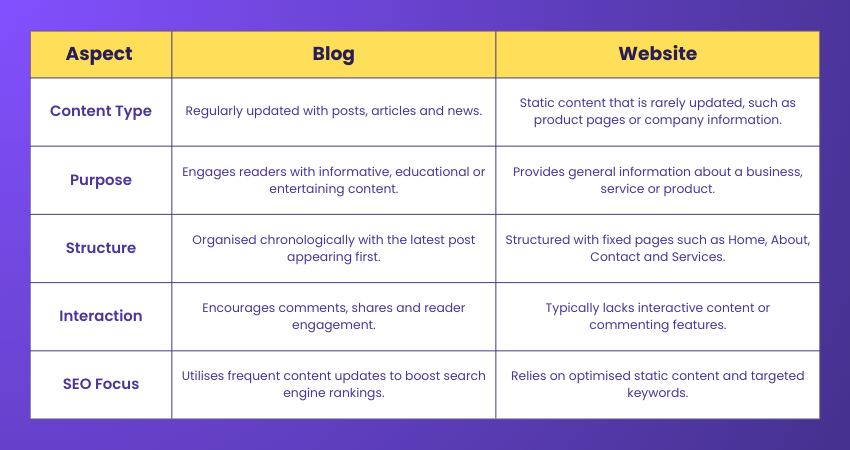
A blog is typically a regularly updated section or type of website that publishes posts, often in reverse chronological order. A website is a broader collection of web pages that may contain relatively static information, services, products or other resources. A blog can therefore exist as an entire website or as one section within a larger website.
From Idea to Impact: A blog may begin with a simple idea, but its real value comes from how clearly that idea is shaped for the reader. Whether used to share expertise, support a brand, document experiences, or build a community, blogging works best when every post has a clear purpose. The next step is simple: choose a topic worth exploring, give it a useful angle, and turn it into something readers will want to return to.
Put your mastery of storytelling, tone and structure to good use! We’ll show you how through our Creative Writing Course – Sign up now!

The Knowledge Academy develops accessible learning content across Project Management, IT, Cybersecurity, Data Science, Business Analysis, HR, Accounting and Finance, Leadership and Health and Safety. Its resources combine subject research with clear explanations to help professionals build practical knowledge across a wide range of disciplines.
View Detail

 If you wish to make any changes to your course, please


