


 Top Rated Course

We may not have the course you’re looking for. If you enquire or give us a call on 01344203999 and speak to our training experts, we may still be able to help with your training requirements.
What is a Barista? Everything You Should Know
The Knowledge Academy 13 July 2026Curious about What is a Barista? A Barista is a coffee expert skilled in crafting espresso-based drinks, frothing milk, and even creating latte art. They ensure high-quality coffee experiences while engaging with customers. Read this blog to explore their key skills, responsibilities, and how to become a pro in the coffee industry.

Training Outcomes Within Your Budget!
We ensure quality, budget-alignment, and timely delivery by our expert instructors.
Table of Contents
Ever wondered why your home-brewed coffee doesn't taste as magical as the one from your favourite café? You're not alone! Many coffee lovers struggle to replicate that perfect cup at home, often asking, "What is a Barista doing differently?"
Imagine starting your day with a cup of coffee that's just... okay. No latte art, no rich aroma, no delightful sip that makes you go "ahh." It's like having a day without its spark. The difference often lies in the skills and techniques of a Barista.
Barista is your friendly neighbourhood coffee magician! These Coffee Artists have mastered the art of brewing, frothing, and decorating coffee. With their expert touch, they turn simple coffee beans into a delightful experience. Curious about their secrets? Find out What is a Barista in this blog.
Table of Contents
1) What is a Barista?
2) Barista: Origins
3) Roles of a Barista
4) Key Skills of a Barista
5) How to Become a Barista
6) Importance of a Barista in the Coffee Industry
7) Difference Between a Barista and Coffee Maker
8) Signs of a Good Barista
9) Future Scope of Barista
10) How Much do Most Baristas Make?
11) What is Latte Art, and do all Baristas Learn it?
12) Conclusion
What is a Barista?
A Barista is a skilled person responsible for preparing and serving coffee and other beverages in a coffee shop, café, or similar establishments. Such individuals are also known as coffee professionals. This person needs to possess knowledge of the various types of coffees, brewing methods, and flavour profiles. In addition, such a professional should also be skilled at operating different kinds of coffee machines and equipment. Having excellent customer service skills can also be beneficial to make a career as a Barista.
The coffee professional operates equipment like a grinder, brewer, and espresso machines daily. Besides, they also have to interact with the customers to take their orders and give recommendations. The coffee professionals are sometimes responsible for maintaining the establishment's cleanliness and maintaining and keeping the coffee shop organised.

Barista: Origins
Coffee reached the European borders for the first time in the 16th century through Armenian, Turkish, and Greek vendors. At this time, coffee was considered a luxury product and, therefore, was limited only to the upper class as it was an exotic indulgence. However, by the 18th century, the status of coffee started to change, becoming more accessible to the general population. This shift laid the foundation for evolving Coffee Trends, influencing how coffee is consumed, prepared, and enjoyed across different cultures worldwide.
It resulted from the development of several coffeehouses and the transformation of social dynamics around beverages and their consumption. The term ‘Barista’ was coined under the reign of Mussolini. Until the 19th century, coffee houses were luxury places, but it all changed by 1935 as workers started frequenting them in search of a caffeine hit.Until 1938 the term ‘barman’ was used to represent a person serving alcoholic and non-alcoholic beverages. Mussolini's success gave birth to fascism, which resulted in a campaign to “Italianise” several words, including Barista.
Roles of a Barista
A Barista’s role is dynamic and customer-focused, blending beverage craftsmanship with operational efficiency. Core responsibilities include:

1) Beverage Preparation & Service: Skillfully prepare and serve a variety of hot and cold drinks such as coffee, tea, artisan and speciality beverages with precision and consistency.
2) Cleaning & Sanitisation: Maintain a clean, hygienic workspace by sanitising equipment, utensils, service areas, and seating while upholding food safety and presentation standards.
3) Customer Engagement & Sales: Greet customers warmly, take orders accurately, describe menu items, suggest beverages or promotions, and process payments efficiently for a positive service experience.
4) Stock Management: Receive, organise, monitor, and replenish supplies including coffee beans, milk, syrups, cups, and other consumables to ensure smooth operation.
5) Cash Handling & Transactions: Process customer payments accurately, manage till operations, and ensure the cash drawer is balanced at the end of the shift.
Learn the basics of coffee beans and roasting with our beginner-friendly Barista course.
Key Skills of a Barista
Working as a barista goes far beyond making coffee. It demands a blend of technical know-how, interpersonal skills, and the ability to stay calm under pressure. Below are the key skills every successful barista should master.
Customer Service
Delivering exceptional customer service is essential. Baristas must be polite and helpful, build rapport with regulars, resolve concerns swiftly even under pressure, and maintain friendliness to encourage repeat business and positive experiences.
Coffee Knowledge
A strong grasp of coffee types and preparation methods is vital. Entry-level baristas should distinguish espresso-based drinks such as lattes, Americanos, cappuccinos, flat whites, and cold brews. Experienced baristas also understand grinding, roasting, bean sourcing, flavour profiles, and brewing techniques.
Attention to detail
Precision matters when crafting drinks, whether it's remembering special orders, cleaning equipment correctly, or adjusting recipes for allergies or preferences. Attention to detail reduces mistakes and boosts consistency, enhancing customer satisfaction.
Multitasking
Baristas frequently juggle tasks such as taking orders, making drinks, using the POS, communicating with team members, and serving customers simultaneously, especially during busy periods. Strong multitasking skills help reduce wait times and keep service smooth.
Cash management
Working confidently with POS systems and cash registers is important. Baristas handle payments, count change, and balance the till efficiently using both simple registers and advanced systems suited for custom orders.
How to Become a Barista?
Embarking on a career as a barista involves hands-on experience, targeted qualifications, and a proactive job search. Here's a step-by-step pathway to launching your journey:
Complete Work Experience
Gain practical experience by working or volunteering in a coffee shop environment. Shadowing experienced baristas and handling real customer interactions provides essential on‑the‑job training and demonstrates your capability in a live café setting.
Earn Qualifications
Enhance your employability by obtaining relevant certifications. Consider qualifications such as:
1) Level 2 Award in Food Safety in Catering or Food Safety Level 2
2) Level 2 Award in Barista Skills
3) Specialty Coffee Association (SCA) certification
These credentials showcase your commitment to food hygiene and professional brewing standards.
Start Applying for Jobs
Once you've built experience and gathered qualifications, it’s time to apply. Use online job platforms to find barista vacancies in your area and consider submitting your CV in person at cafés you're passionate about. This can set you apart and demonstrate initiative.
Join our Reliability Engineering Training and take your engineering career to the next level
Importance of a Barista in the Coffee Industry
Every great cup of coffee starts with a skilled Barista. They are more than just servers—they represent the coffee industry, shaping how we experience and enjoy our drinks. Like a window into the world of coffee, they bring knowledge, passion, and skill to every cup.
A great Barista isn’t just about pouring fancy latte art. It’s about telling the story behind the coffee, connecting us to its origins, and making each cup a memorable experience. Here is why Baristas Matters a lot:
a) They are the Face of Coffee: Baristas are the first point of contact. They help customers understand different drinks, recommend blends, and make coffee enjoyable.
b) They are Educators: They know about beans, brewing, and flavours, sharing their knowledge to help people appreciate coffee even more. This keeps the industry growing.
c) They are Skilled Professionals: Making great coffee takes more than just pressing a button. Baristas master the science of extraction, the art of presentation, and the warmth of hospitality.
Their work goes beyond making drinks, they bring coffee culture to life!
Difference Between a Barista and Coffee Maker
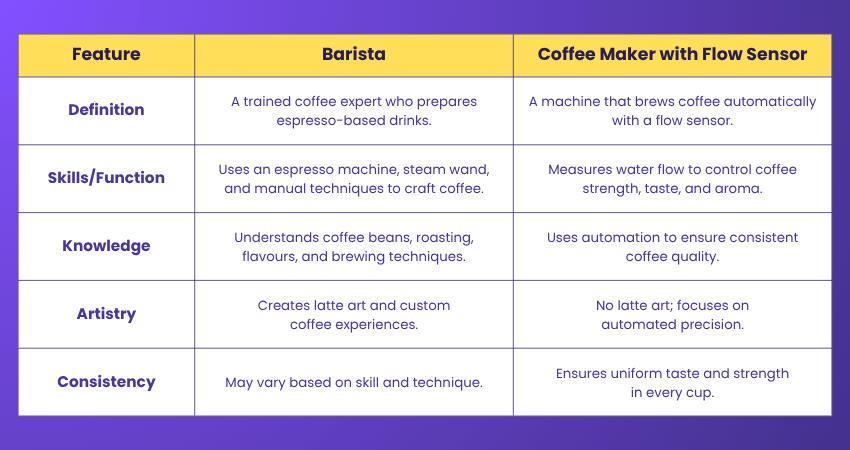
A Barista is a coffee expert trained to make espresso drinks using special equipment like an espresso machine and steam wand. They know all about coffee beans, roasting, and flavours. Many Baristas also create latte art, making beautiful designs on cappuccinos and lattes.
A coffee maker with a flow sensor is a machine that brews coffee automatically. The flow sensor measures the water used, helping control the coffee’s strength, taste, and aroma. This ensures each cup is consistent and well-balanced.
Learn how to identify and mitigate potential risks in export and trade operations with our Export and Trade Compliance Training – Register today!
Signs of a Good Barista
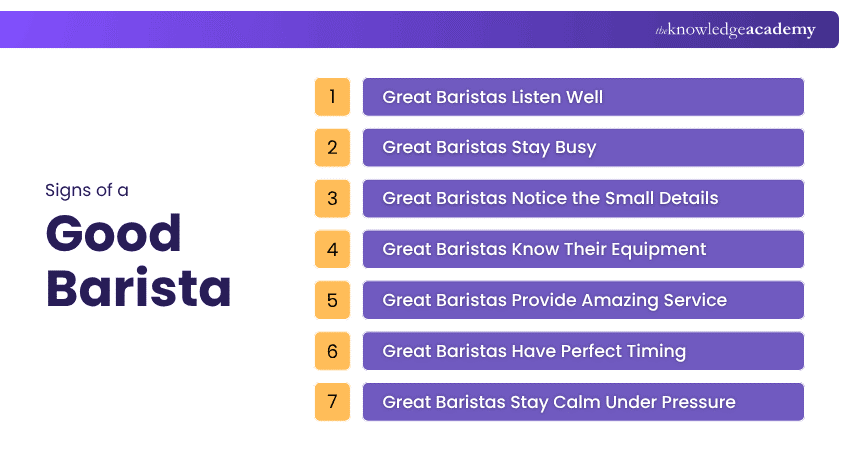
Many Baristas dream of making the perfect espresso shot, often called the ‘God shot’. But instead of chasing perfection, aspiring Baristas should focus on skills they can control. Here are seven important qualities that make a great Barista:
Great Baristas Listen Well
A great Barista truly listens to their customers. With so many coffee options, it’s important to understand exactly what someone wants. Focusing too much on one detail—like perfecting the espresso—can lead to missing the overall request.
Great Baristas Stay Busy
A skilled Barista is always working. They clean their equipment regularly, ensuring that old coffee oils don’t affect the taste. Their strong work ethic and attention to cleanliness help them maintain high standards.
Great Baristas Notice the Small Details
You can often hear a great Barista grinding fresh coffee beans. They know that fresh grounds make the best coffee. Paying attention to small details like this enhances the flavour and quality of each drink.
Great Baristas Know Their Equipment
Baristas don’t just use coffee machines—they master them. Training helps them understand how their equipment works, from adjusting filters to checking pressure gauges. This knowledge helps them make consistently great coffee.
Great Baristas Provide Amazing Service
Making coffee isn’t just about the drink—it’s about the experience. The best Baristas engage with customers, creating a welcoming and friendly atmosphere. A great interaction can turn a simple coffee run into a memorable moment.
Great Baristas Have Perfect Timing
Knowing when to stop the espresso extraction is crucial. If it’s cut too early, the coffee lacks flavour. If it runs too long, it turns bitter. A great Barista understands timing and adjusts accordingly.
Great Baristas Stay Calm Under Pressure
Mistakes happen, but great Baristas don’t panic. If an order changes or something goes wrong, they stay focused and make adjustments smoothly. Rushing after a mistake can cause more errors, so they take their time to get it right.
Being a great Barista isn’t just about making fancy coffee—it’s about skill, patience, and customer care. Mastering these traits will set any Barista apart and make every cup a great one!
Elevate your Logistics Management expertise by joining our Logistics Management Training today!
Future Scope of Barista
The career path of a barista is expanding well beyond the café counter. As hospitality settings diversify, from restaurants and hotels to speciality coffee shops, baristas have numerous opportunities for growth and development. 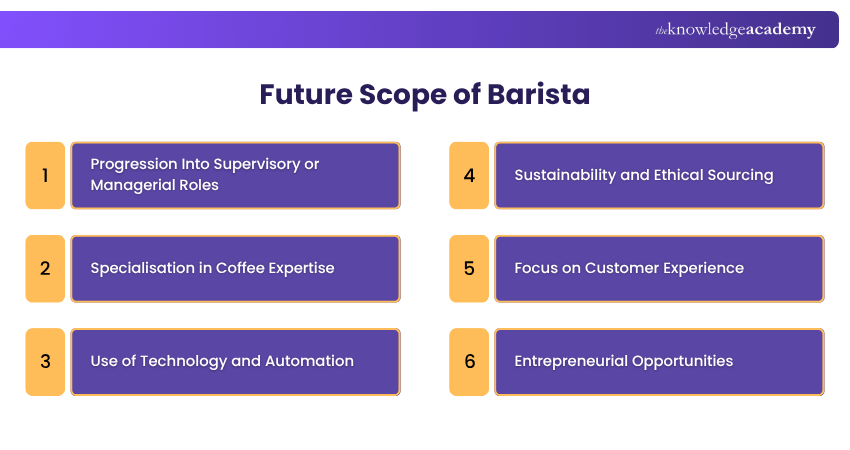
Key trends shaping the future include:
1) Progression Into Supervisory or Managerial Roles: Skilled baristas can advance to positions such as head barista, shift supervisor, or café manager, where they oversee teams and enhance service quality.
2) Specialisation in Coffee Expertise: There is increasing demand for roles like barista trainers, coffee educators, sensory analysts, roasters, and green bean buyers. These positions require deep knowledge of brewing methods, sourcing, roasting profiles, and quality control.
3) Use of Technology and Automation: New tools such as automated espresso machines and milk steamers are supporting rather than replacing baristas. These innovations handle repetitive tasks, giving baristas more time to focus on creativity, consistency, and customer engagement.
4) Sustainability and Ethical Sourcing: With more cafés adopting eco-conscious practices such as using reusable cups and ethically sourced beans, baristas are central to putting these values into practice and raising customer awareness.
5) Focus on Customer Experience: As café culture continues to flourish, baristas are seen as brand ambassadors who help create welcoming environments and build lasting customer relationships.
6) Entrepreneurial Opportunities: Experienced baristas increasingly start their own businesses, from mobile coffee carts to independent roasteries and boutique cafés, combining their passion for coffee with business acumen.
How Much Do Most Baristas Make?
According to Indeed.com, Baristas earn around £12.30 per hour in the UK. This will vary depending on their experience and location. Wages can be higher in busy cities like London. Some coffee shops also offer bonuses, staff discounts, or free drinks. Tips can add extra income, especially in popular cafés with regular customers.
What is Latte Art, and do all Baristas Learn it?
Latte art is the practice of creating patterns using steamed milk over espresso. While it's a popular skill in speciality cafés, not all baristas learn it. Mastery requires consistent practice, but basic techniques are included in most barista training.
Conclusion
Understanding what a Barista is reveals the dedication and skill behind every perfect cup of coffee. A Barista is a trained professional who not only prepares and serves coffee but also masters the art of creating a delightful coffee experience. With their expertise in brewing, frothing, and presentation, Baristas elevate the simple act of drinking coffee into a true art form. To land a role as a Barista, you must be ready to answer key Barista Interview Questions that showcase your passion and skill for the craft.
Gain expertise in cost-effective maintenance with our Facilities Management Training – Register today!
Frequently Asked Questions
Is Barista a Good Profession?

Yes! Being a Barista is a great job if you enjoy coffee, customer service, and a fast-paced environment. It teaches valuable skills like teamwork, attention to detail, and multitasking. Plus, there’s room to grow—from crafting drinks to managing cafes or even starting your own coffee business!
What are the Growth Opportunities for a Barista?
Baristas can grow into roles such as head barista, café supervisor, trainer, or manager. With experience, they may specialise in coffee roasting, quality control, or even start their own coffee business, gaining both technical and leadership opportunities over time.

The Knowledge Academy


Global Training Provider
The Knowledge Academy is a world-leading provider of professional training courses, offering globally recognised qualifications across a wide range of subjects. With expert trainers, up-to-date course material, and flexible learning options, we aim to empower professionals and organisations to achieve their goals through continuous learning.


 If you wish to make any changes to your course, please


