


 Top Rated Course

We may not have the course you’re looking for. If you enquire or give us a call on 01344203999 and speak to our training experts, we may still be able to help with your training requirements.
How to Make Coffee: A Step-by-Step Guide from Beans to Brew
The Knowledge Academy 28 July 2026Make great coffee by using 60g of coffee per litre of water and brewing at 90°C–96°C to achieve a balanced, rich, and flavourful cup every time. Small adjustments to grind size and brewing time can further enhance flavour and aroma. Following these simple guidelines helps you enjoy consistently delicious coffee with every brew.

Training Outcomes Within Your Budget!
We ensure quality, budget-alignment, and timely delivery by our expert instructors.
Table of Contents

Table of Content
1) Essential Steps to Make Coffee
2) Different Brewing Methods for Coffee
3) Expert Tips for Making Better Coffee
4) Common Coffee Brewing Mistakes to Avoid
5) Why Does My Homemade Coffee Taste Bitter or Sour?
6) How Can I Froth Milk Without a Frother?
7) Conclusion
Essential Steps to Make Coffee
Making a great cup of coffee starts with using quality ingredients, the right equipment, and proper brewing techniques. By following a few essential steps, you can improve the flavour, aroma, and consistency of every cup.
Before you begin, keep the following essentials in mind to brew coffee that suits your taste.
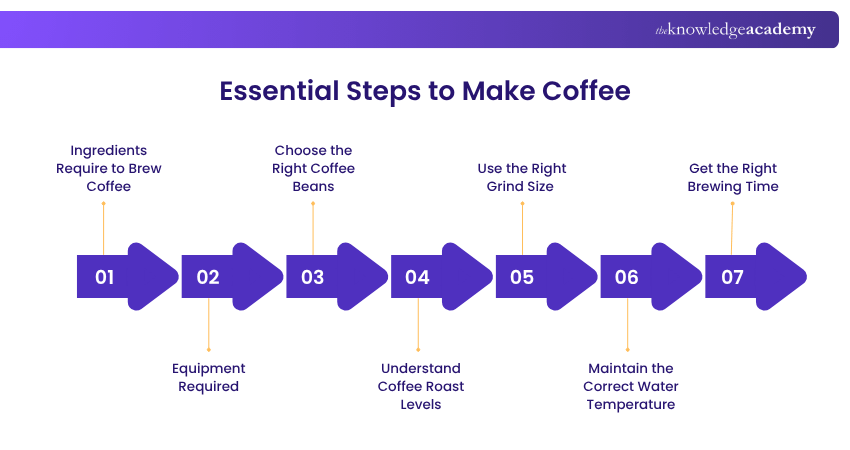
1) Ingredients Require to Brew Coffee
Brewing a good cup of coffee starts with using a few essential ingredients. Choosing quality ingredients helps improve flavour, aroma, and overall consistency.
a) Coffee Beans or Ground Coffee: Use freshly roasted beans or quality ground coffee for the best flavour.
b) Fresh Filtered Water: Clean, filtered water enhances the natural taste of the coffee and reduces unwanted flavours.
c) Optional Additions: Milk, sugar, cream, or sweeteners can be added according to personal preference after brewing.
2) Equipment Required
The right equipment helps you brew coffee consistently and achieve better flavour extraction. The tools you need depend on your preferred brewing method, but a few essentials are suitable for most styles.
a) Coffee Grinder: A burr grinder produces an even grind for more consistent brewing.
b) Brewing Device: Choose equipment such as a French press, pour-over dripper, drip coffee maker, or espresso machine.
c) Gooseneck Kettle: Ideal for controlled pouring, especially when making pour-over coffee.
d) Coffee Scale: Helps measure coffee and water accurately for consistent results.
e) Coffee Mug or Carafe: Use a clean mug or serving vessel to enjoy your freshly brewed coffee.
3) Choose the Right Coffee Beans
If you want to make the perfect cup of coffee, you need to start with the base of it: The coffee beans. Getting your hands on good quality coffee beans is super important. Depending on the quality and the flavour of your coffee beans you can determine the brewing process.
There are different factors which influence the flavour factors of the coffee:
a) The country of origin,
b) The different class of beans it belongs to: Arabica, robusta, or a blend
c) The type of roast that the beans get
d) The texture to which the beans are grinded.

4) Understand Coffee Roast Levels
There's no hard-and-fast rule for when to drink roasted coffee. However, it's wise to go with fresh toast to yield better results. When Making French Press Coffee, you should always question the quality of the roast and its preparation time. When you hunt to find the perfect roast, you will discover that some coffee must be consumed within six days of its roast date, while others can be consumed for a month. Find the proper roast based on your requirements.
5) Use the Right Grind Size
There's no precise grind size to make a good cup of joe. The right grind always depends on your desire and preference. Besides, always ask yourself whether you want a caffeinated or sweetened cup. If you go with the finer grinds, you will have more coffee flavour than the coarse grind.
In addition, if you're using an old roast, make sure to use a finer grind to get the most out of the coffee flavour. If you're thinking of mixing the coffee grinds, be ready to derail your quest for the perfect cup. Also, it's better always to keep cleaning the grinder before accessing it to ensure no filth is left.
6) Maintain the Correct Water Temperature
The flavour of your coffee massively depends on the temperature of the water and to what extent you've agitated the coffee beans. If you add low-temperature water, you will observe that the coffee will turn more bitter.
On the contrary, if you use high-temperature water, you will observe that it results in better extraction from the beans. Also, it's essential to keep in mind the quality of the water. Make sure to use water that has relatively fewer minerals in it.
7) Get the Right Brewing Time
Getting the right brewing type for different Types of Coffee beans is crucial to create the perfect brew for you. There are various brewing methods out of which these are quite popular:
a) In the drip method, the contact time of the beans and the water should be approximately five minutes
b) If you are using a French press to make your coffee, then the contact time should be between two-four minutes
c) If you are planning for an Espresso, you would require a very brief time. The coffee grind should be only 20-30 seconds be in contact with water.
d) If you want a cold brew, then to get the maximum flavour of the beans you need to soak the coffee grind in water for over 12 hours.
However, if you feel that you are still not happy with the final product then you may either have over-extracted or under-extracted your coffee grind.
Learn effective communication strategies with our Facilitation Skills Training – Join now!
Different Brewing Methods for Coffee
There are many different modes of making coffee each contributes its own distinct trait to the flavour, Coffee's Aroma, and body of the product. Let’s look at some different brewing methods for coffee:
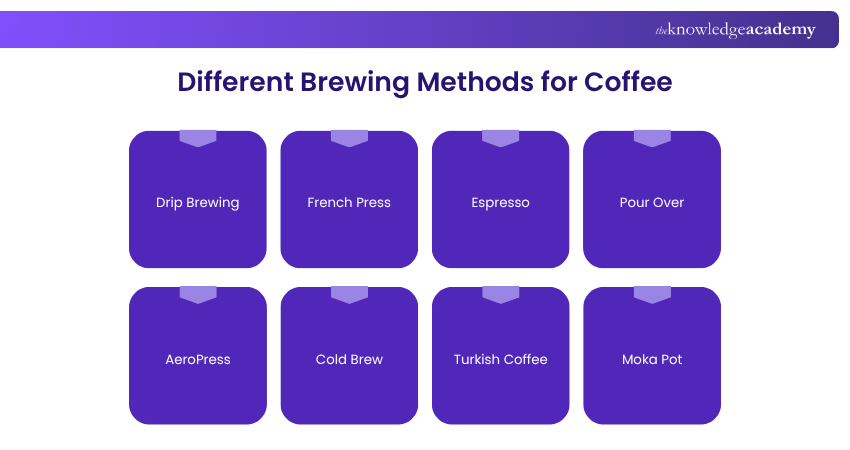
1) Drip Brewing
It means that the coffee is made by hot water dripping onto coffee grounds held in a filter, allowing the brewed coffee to slowly collect in a carafe or pot. Machines can also offer various temperature and time settings. Similarly, Making Arabic Coffee involves a distinct brewing process that enhances its unique flavour.
2) French Press
This method also called using a press pot, is achieved by allowing coarse coffee grounds to steep in hot water for some minutes, before separating the grounds from the water by plunging them away with a plunger. This leads to a robust and full flavour, since the coffee's natural oils and fine particles are not filtered out.
3) Espresso
This method uses a high-pressure espresso machine that forces hot water through very finely ground coffee, resulting in a rich and smooth shot with a layer of cream on top, commonly known as "crema." Since espresso serves as the base for many coffee drinks like lattes and cappuccinos, understanding the Amount of Caffeine in Coffee can help you choose the right brew for your preference.
4) Pour over
This method involves making of coffee in brewing hot water over with the coffee grounds in a filter. The water drips through the coffee and filters into a carafe or a cup. The V60 or Chemex are some of the popular devices for this method, which allows to have the precise control over the brewing time and temperature.
5) AeroPress
The AeroPress is a rather new device, which can brew coffee through applying hot water under high pressure to the coffee grounds by pushing the plunger. This way is highly efficient, as it takes only about two minutes, and the final product is a smooth and rich tasting coffee.
Learn practical skills to oversee operations and maintenance efficiently with our Facilities Management Training – Sign up now!
6) Cold Brew
For making Cold Brew Coffee grounds are soaked in cold or room temperature water for an extended period, typically 12 to 24 hours. This process yields a concentrate that is less pungent and can be served over ice cubes or diluted with water or milk.
7) Turkish Coffee
In this method, the coffee beans ground finely and brewed in water (sometimes with sugar) until the served drink is ready. The grounds settle down in the cup which makes the coffee strong, unfiltered, and has a unique taste.
8) Moka pot
This method is also referred to as a stovetop espresso maker, which is the Moka pot produces espresso coffee by letting the hot water being pressurised by steam flow through the ground coffee. It's less concentrated/intense than an espresso but more robust than Drip Coffee made with water.
Expert Tips for Making Better Coffee
Here are a handful of tips that you can consider to make the best coffee:
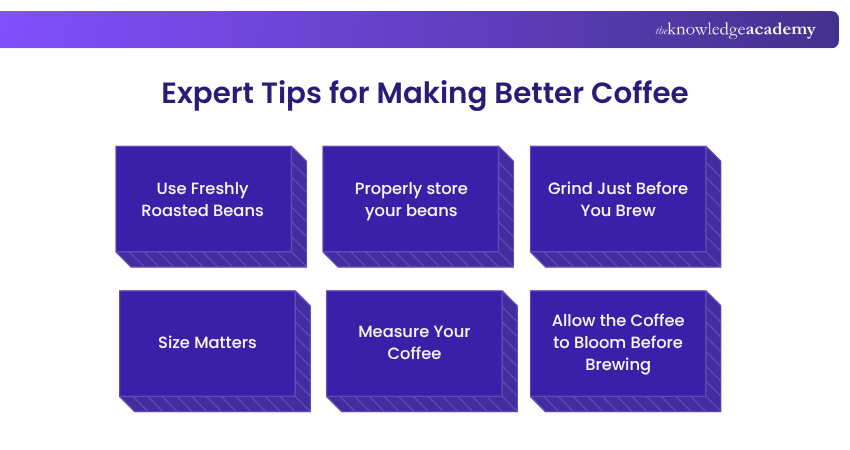
1) Use Freshly Roasted Beans
Fresh beans make a noticeable difference to the taste, aroma, and overall quality of your coffee. For the best results, choose beans that clearly show a roast date and use them while they are still fresh, ideally within a few weeks of roasting.
Avoid buying too much coffee at once, as beans can lose flavour when exposed to air, heat, moisture, and light. Store them in an airtight, opaque container in a cool, dry place to preserve freshness and get better results from different Coffee Brewing Methods.
2) Properly Store Your Beans
Proper storage helps your coffee beans stay fresh for longer. Once opened, keep them in an airtight, opaque container to protect them from air, moisture, heat, and light, as these can quickly affect flavour and aroma.
Store the container in a cool, dry place away from direct sunlight. Also, avoid using a container that is too large, as less air around the beans helps preserve their freshness better.
3) Grind Just Before You Brew
Grinding your coffee just before brewing helps preserve its natural aromas and flavours. Once coffee is ground, it begins to lose freshness more quickly as it is exposed to air.
Choose a grind size that matches your brewing method. A consistent grind improves extraction, helping you achieve a balanced cup without unwanted bitterness or sourness.
4) Size Matters
Using the correct grind size is essential for proper coffee extraction. If the grind is too fine, the coffee can become over-extracted and taste bitter. If it is too coarse, it may be under-extracted and taste weak or sour.
Match the grind size to your brewing method for the best results. A consistent grind helps ensure even extraction, giving you a smoother, richer, and more balanced cup of coffee.
5) Measure Your Coffee
Measuring your coffee and water accurately helps you achieve consistent results every time you brew. Rather than estimating by eye, use a digital scale to maintain the correct coffee-to-water ratio.
A good starting point is 60 g of coffee per litre of water, then adjust slightly to suit your preferred strength. Small changes in the ratio can make a noticeable difference to the flavour and balance of your coffee.
6) Allow the Coffee to Bloom Before Brewing
If you are using a pour-over brewing method, pour a small amount of hot water over the coffee grounds and let them sit for about 30 to 45 seconds before continuing. This process, known as blooming, allows trapped carbon dioxide to escape from freshly roasted coffee.
Blooming helps the water extract flavours more evenly, resulting in a cleaner, smoother, and more balanced cup of coffee.
Learn to optimise logistics, procurement, inventory, and distribution processes with our Supply Chain Management Course – Join now!
Common Coffee Brewing Mistakes to Avoid
Even seasoned coffee lovers fall into these traps. Whether you're new to learning How to Make Coffee or refining your technique, avoiding these common mistakes can help you brew a smoother, richer cup every time.
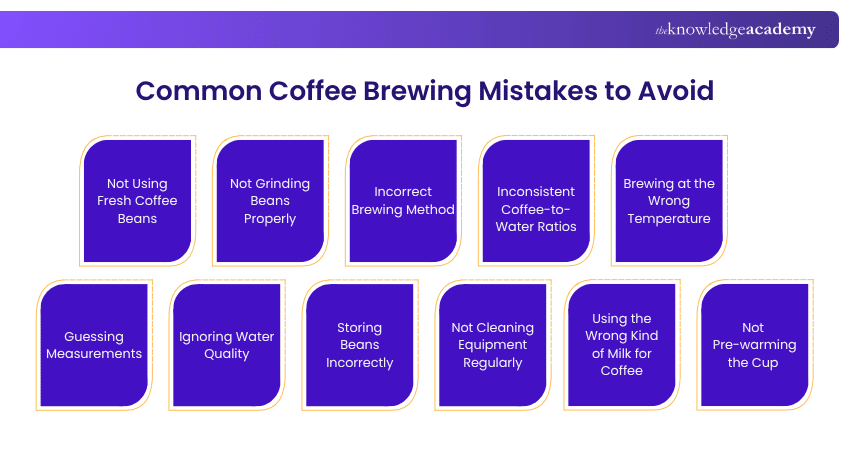
1) Not Using Fresh Coffee Beans
Stale beans make dull coffee. If your brew tastes flat or lifeless, old beans could be the culprit. Buy beans in small batches, store them well, and use them within a couple of weeks for best results.
2) Not Grinding Beans Properly
Grinding your coffee just before brewing is essential but doing it wrong can spoil everything. A grind that’s too fine can clog your filter and lead to bitterness, while a grind that’s too coarse may leave your coffee weak and watery. Use a burr grinder for even, consistent results, and match the grind size to your brewing method.
3) Incorrect Brewing Method
Not all coffee is brewed equally. Using the wrong method for your bean type or roast level can flatten the flavour. For example, dark roasts might shine best in a French press, while light roasts sing in a pour-over. Understanding your brewing method helps highlight the unique character of each bean, delivering a more satisfying coffee experience.
4) Inconsistent Coffee-to-Water Ratios
Winging your measurements might seem convenient, but it often leads to inconsistent results. Too much or too little coffee alters strength and flavour. Stick to a solid coffee-to-water ratio for a balanced brew every time.
5) Brewing at the Wrong Temperature
Water that’s too cold under-extracts coffee, leaving it weak and acidic. Aim for a brewing temperature around 90 to 96 degrees Celsius. Anything lower and you’ll miss out on the richness locked inside those beans.
6) Guessing Measurements
Making coffee isn’t guesswork, it’s a craft. Whether it's the weight of the beans or the water volume, measuring removes uncertainty and leads to better flavour control. Invest in a digital scale and keep your brewing consistent.
7) Ignoring Water Quality
Bad water equals bad coffee. Tap water with too much chlorine or hardness can overpower delicate flavours. Filtered water or bottled spring water can dramatically improve the clarity and balance of your brew.
8) Storing Beans Incorrectly
Exposure to air, light, moisture, and heat quickly degrades beans. Avoid transparent containers or leaving bags open. Store your beans in an airtight, opaque container in a cool, dry place to lock in freshness.
9) Not Cleaning Equipment Regularly
Your coffee machine is only as good as its last rinse. Oils and residue build up quickly, especially in espresso machines. A neglected machine can alter flavour and reduce performance, so give it the regular TLC it deserves.
10) Using the Wrong Kind of Milk for Coffee
Not all milk foams the same. Full-fat milk gives you a creamy texture, while skimmed milk creates larger bubbles and a lighter mouthfeel. If you’re going dairy-free, oat milk is often the best choice for barista-style results.
11) Not Pre-warming the Cup
Pouring hot coffee into a cold cup? That’s a fast way to lose heat and taste. Pre-warming your mug with a splash of hot water helps maintain the ideal temperature and keeps your coffee comforting from the first sip to the last.
Acquire skills to navigate regulations with our Import Export Course – Register today!
Why Does My Homemade Coffee Taste bitter or Sour?
If you're learning How to Make Coffee, the taste of your brew can reveal what needs adjusting. Bitter coffee is often caused by over-extraction, while sour coffee usually results from under-extraction.
To improve the flavour, use a coarser grind or shorten the brewing time for bitter coffee. For sour coffee, use a finer grind or brew a little longer, and keep your water temperature between 90°C and 96°C for a balanced, well-extracted cup.
How Can I Froth Milk Without a Frother?
Knowing How to Make Coffee also means learning how to create smooth, frothy milk without specialised equipment. A few everyday kitchen tools can produce café-style foam with very little effort.
Heat the milk gently, then pour it into a jar and shake it vigorously until it becomes foamy. You can also use a French press by pumping the plunger up and down, or whisk warm milk by hand to create smooth, silky foam in just a few minutes.
Conclusion
Now that you know How to Make Coffee from beans to brew, the perfect cup is just a few steps away. It’s all about picking quality beans, grinding them right, and brewing with care. Master the process, and every sip will feel like a café-quality treat; right from your kitchen.
Sign up for our Industry Training to imbibe insights into coffee brewing, floristry and phone repairing!
Frequently Asked Questions
What Is the Difference Between Cold Brew and Iced Coffee?

Cold brew is made by steeping coarse coffee grounds in cold water for 12–24 hours, resulting in a smooth, naturally sweet, and less acidic drink. Iced coffee, on the other hand, is brewed hot using your preferred brewing method and then cooled or poured over ice, giving it a brighter and more pronounced flavour.
How Do I Know If My Coffee Is Over-Extracted or Under-Extracted?
Over-extracted coffee usually tastes bitter, harsh, or dry because too many compounds have been extracted from the grounds. Under-extracted coffee often tastes sour, weak, or lacking in sweetness. Adjusting the grind size, brewing time, or coffee-to-water ratio can help achieve a more balanced flavour.

The Knowledge Academy


Global Training Provider
The Knowledge Academy is a world-leading provider of professional training courses, offering globally recognised qualifications across a wide range of subjects. With expert trainers, up-to-date course material, and flexible learning options, we aim to empower professionals and organisations to achieve their goals through continuous learning.


 If you wish to make any changes to your course, please


