




We may not have the course you’re looking for. If you enquire or give us a call on 01344203999 and speak to our training experts, we may still be able to help with your training requirements.
Home
 Resources
IT Security & Data Protection
What is Vulnerability in Cyber Security: Types & Causes
Resources
IT Security & Data Protection
What is Vulnerability in Cyber Security: Types & Causes
Resources
IT Security & Data Protection
What is Vulnerability in Cyber Security: Types & Causes
What is Vulnerability in Cyber Security: Types & Causes
ByVishnu SankarLast updated on: 05 October 2026
This blog is focused on understanding vulnerability in cyber security, covering aspects like its causes, types and associated risks.

Quick Snapshot
1. A cyber security vulnerability is a weakness that attackers may exploit.2. Vulnerabilities can arise from software flaws, misconfigurations and weak security controls.3. Different vulnerabilities affect applications, networks, APIs and access controls.4. Regular scanning, testing and monitoring help identify weaknesses.5. Effective vulnerability management involves identifying, assessing, prioritising and remediating vulnerabilities.
Nowadays, technology and the internet have become inseparable. These two have become essential pillars of an organisation and its strategy for success. If an organisation wants to expand its business, it is easier to do so using the power of the internet and technology. But at the same time, they also need to be wary of the current challenges in cyberspace. Any organisation serious about its security must recognise vulnerabilities in cyber security.
Cyber security vulnerabilities are often overlooked, and proper awareness can improve an organisation's security on a vast scale. Not only that, but it can also prevent unnecessary damage to an organisation's reputation and finances. In this blog, we will learn how to identify and safeguard your systems and network from vulnerabilities in cyber security.
What is Vulnerability in Cyber Security?
A cyber security vulnerability is a weakness in software, hardware, system configurations, security controls, or processes that could be exploited or triggered by a threat. Vulnerability in cyber security means any weakness that attackers can use to gain access to your systems.
Cyber security vulnerabilities can act as a gateway or entry point for future cyber-attacks and intrusions. Attackers may actively search for weaknesses that can be exploited to compromise systems or data. However, it’s important to know the difference between vulnerability, threat and risk. Here’s a quick look:
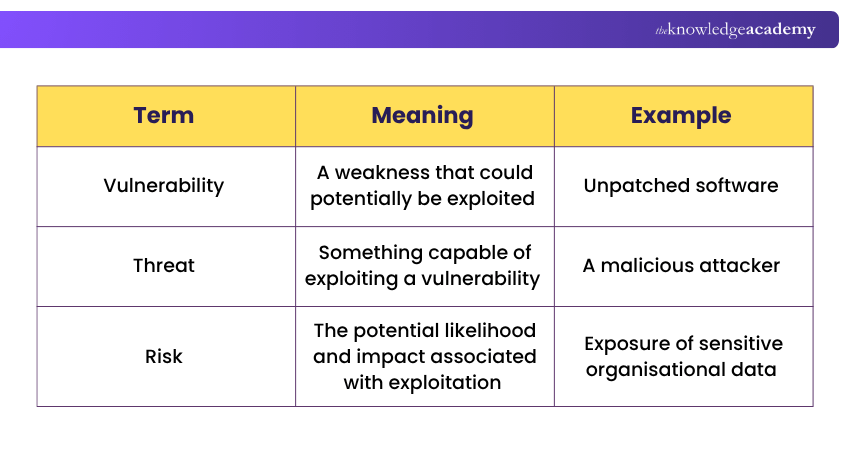
In simple terms, a vulnerability creates an opportunity, a threat may exploit that opportunity and risk represents the potential consequences.

Causes of Vulnerabilities
Cyber security vulnerabilities can arise from technical weaknesses, configuration errors, inadequate security controls and human practices. Understanding these causes can help organisations reduce unnecessary exposure. Here are the key ones:
1) Improper Password Management
Managing your passwords safely and securely is essential to an organisation's security. Password leakage can lead to several threats, such as data exposure. Attackers with malicious intent can use it to gain access and spy on your systems without your knowledge, and by the time you become aware of the incident, the damage is done.
2) Flaws and Glitches in the System
A system riddled with glitches and other technical flaws could lead to vulnerable systems and can be exposed to attacks. To prevent this, report such flaws immediately to your supervisor or system administrator.
3) Bugs
Using software that contains bugs can slow down work and lead to external attacks. Software bugs and coding errors can introduce security weaknesses that attackers may exploit. To avoid this, organisations should apply security updates, follow secure development practices, test software regularly, and address known vulnerabilities promptly.
4) Misconfigurations
Incorrectly configured software, hardware, cloud services, or network settings can expose systems to unnecessary security risks. Default settings, open ports, excessive permissions, and improperly configured security controls are common examples.
5) Weak Access Controls
Providing users with more privileges than they need increases potential security exposure. Appropriate permissions and the Principle of Least Privilege (POLP) can help reduce this risk.
6) Human Error and Lack of Security Awareness
Human mistakes, such as mishandling sensitive information, using weak credentials, or responding to phishing attempts, can contribute to security weaknesses. Regular cyber security awareness training can help employees recognise threats and follow safer security practices.
Sign up for our Cyber Security Risk Management Course to learn about real threats impacting cyber security.
Types of Cyber Security Vulnerabilities with Examples
Let's look at the common types of cyber security vulnerabilities with examples.
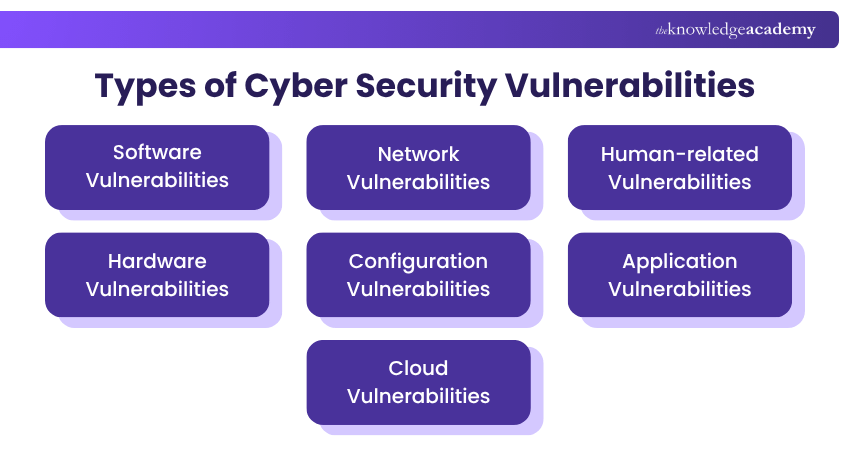
1) Software Vulnerabilities
Software vulnerabilities are flaws, bugs, or weaknesses in software code that attackers may exploit. They can arise from coding errors, insecure design, outdated components, or missing security patches.
Example: An application contains an SQL injection flaw that allows an attacker to manipulate database queries and access sensitive information.
2) Network Vulnerabilities
Network vulnerabilities are weaknesses in network devices, protocols, services, or architecture that may expose systems to attack. Open ports, insecure protocols, poorly configured firewalls, and unprotected wireless networks can all create network-related weaknesses.
Example: A server has an unnecessary port open to the internet, allowing attackers to target an exposed service.
Pro Tip
Avoid treating every vulnerability as equally urgent. Prioritisation should consider technical severity alongside exposure, affected assets and potential business impact.
3) Human-related Vulnerabilities
Human-related vulnerabilities arise when user behaviour, mistakes, or lack of security awareness creates opportunities for attackers. Weak password practices, mishandling sensitive information, or responding to phishing attempts can increase security exposure.
Example: An employee reuses the same weak password across several business accounts, making multiple systems vulnerable if one set of credentials is compromised.
4) Hardware Vulnerabilities
Hardware vulnerabilities are weaknesses in physical devices, firmware, processors, routers, servers, or other equipment. These weaknesses may result from design flaws, outdated firmware, insecure interfaces, or inadequate physical protection.
Example: A router runs outdated firmware containing a known security flaw that allows an attacker to compromise the device.
5) Configuration Vulnerabilities
Configuration vulnerabilities occur when systems, applications, networks, or cloud services are set up incorrectly from a security perspective. Common examples include default credentials, excessive permissions, unnecessary services, and publicly exposed resources.
Example: A cloud storage bucket is accidentally configured for public access, exposing confidential organisational data.
6) Application Vulnerabilities
Application vulnerabilities are weaknesses in the design, development, or implementation of applications. They may include broken access control, authentication failures, injection flaws, insecure APIs, and cryptographic weaknesses.
Example: A web application fails to check whether a user is authorised to access another customer’s account records.
7) Cloud Vulnerabilities
Cloud vulnerabilities are weaknesses arising from insecure cloud configurations, identity and access controls, exposed interfaces, or improperly protected data and services.
Example: A cloud administrator grants users broader permissions than their roles require, increasing the risk of unauthorised access to sensitive resources.
Trainer's Insight
These categories can overlap. For example, an insecure cloud application may involve a configuration vulnerability, application vulnerability, and access-control weakness at the same time.
Risks Associated with Vulnerability in Cyber Security
Vulnerabilities in cyber security could have severe consequences if they are not addressed immediately and could jeopardise an organisation's growth potential. Some of the risks associated with these vulnerabilities are listed below:
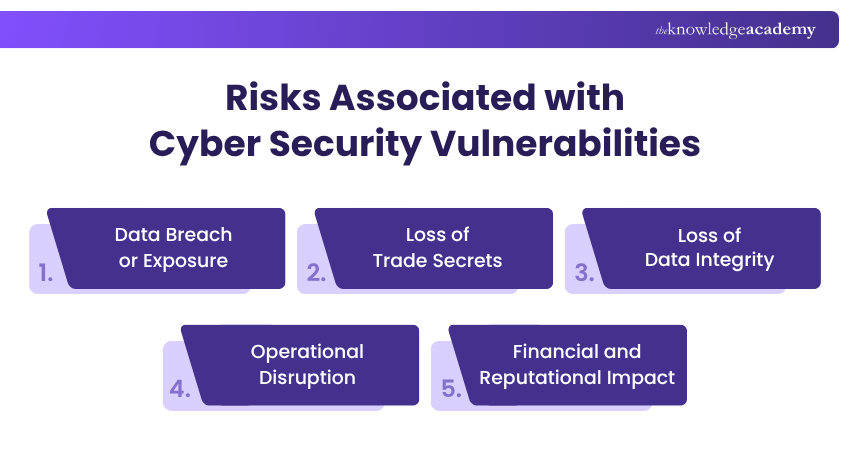
1) Data Breach or Exposure
Hackers can use techniques like SQL injection, spyware, brute-force attacks, and other methods to access a victim's system. Once an attacker gains unauthorised access to an organisation's systems, sensitive data may be accessed, copied, exposed, or stolen. This could include internal communications, customer information, credentials, or other confidential data.
2) Loss of Trade Secrets
Trade secrets can be among a company's most valuable information assets. If they are exposed or stolen, the organisation may lose competitive advantage and could experience financial or commercial harm.
3) Loss of Data Integrity
Attackers may alter, delete or manipulate organisational information after gaining unauthorised access. This can reduce confidence in the accuracy and reliability of affected data.
4) Operational Disruption
Successful exploitation can interrupt systems and services. Depending on the affected environment, this could disrupt internal operations or customer-facing services.
5) Financial and Reputational Impact
Security incidents can create investigation, recovery and remediation costs. They may also affect customer confidence and organisational reputation.
Common MisconceptionMyth: Finding a vulnerability means the organisation has already been breached.Reality: A vulnerability is a weakness that could be exploited. It does not by itself prove that exploitation or a data breach has occurred.
Develop the awareness to spot phishing attempts and suspicious links before they cause damage. Sign up for the Cyber Security Awareness Training now!
How to Identify Cyber Security Vulnerabilities?
Organisations can use different methods to identify weaknesses across their systems, networks and applications. Here is how you can identify those vulnerabilities:
Vulnerability Scanning: Automated vulnerability scanners can identify known weaknesses, missing patches and certain configuration problems across systems.
Security Assessments: Regular assessments can examine security configurations, access controls and other controls to identify potential weaknesses.
Penetration Testing: Penetration testing evaluates whether particular weaknesses can be exploited under controlled conditions. It can help organisations understand potential attack paths and practical security exposure.
Configuration Reviews: Reviewing system, network and cloud configurations can reveal unnecessary services, excessive permissions and insecure settings.
Patch and Asset Monitoring: Maintaining visibility of organisational assets and their software versions can help identify unsupported or outdated systems requiring attention.
Vulnerability Prevention Checklist
□ Keep operating systems and applications updated□ Apply security patches promptly based on risk□ Use strong authentication and Multi-factor Authentication (MFA)□ Follow the Principle of Least Privilege□ Review security and cloud configurations regularly□ Perform appropriate security and penetration testing□ Remove unnecessary or unsupported software□ Monitor systems for security weaknesses

Vishnu Sankar is a Senior Content Writer with 5+ years of experience across content development, software development, web development and system administration. His technical background and professional training support his expertise in IT and Tech, while his extensive research and writing experience covers Project Management and Health and Safety.
View Detail

 If you wish to make any changes to your course, please


