




We may not have the course you’re looking for. If you enquire or give us a call on 01344203999 and speak to our training experts, we may still be able to help with your training requirements.
15 Types of Events You Should Know
ByThe Knowledge AcademyLast updated on: 18 September 2026
Dive into the vibrant world of events with our comprehensive blog on the 15 Types of Events. From the social buzz of gatherings to the professional networking opportunities, and the captivating allure of cultural and entertainment events, this blog explores the diverse spectrum of occasions that shape our experiences. Read more to learn!
Topics Covered
1. The purpose and importance of events in different settings2. How event goals and audiences influence event selection3. Differences between social, professional and cultural occasions4. Practical factors to consider when choosing the right event type
Events are an integral part of our lives, both professionally and personally. They bring people together, foster connections, and create memories that last a lifetime. As events vary in scale and complexity, effective event management plays an important role in planning and coordinating them.
When it comes to planning an event, one of the first decisions you need to make is which type of event you want to host. The type of event you choose will set the tone, dictate the logistics, and determine the overall experience for both you and your guests. However, with so many options available, choosing the suitable event types that align with your goals, audience, and resources is important. Read this blog to learn about various types of events, from social gatherings to corporate functions, helping you make a wise decision for your next event.
Scenario: Choosing an Event for the Right Goal
Imagine an organisation wants to introduce a new idea, educate its audience and create networking opportunities. A conference may suit these goals better than a trade show, while a hands-on workshop may be more appropriate when practical skill development is the priority.

Types of Events
For a successful event, it's essential to choose the right type that aligns with your goals and objectives. For clarity, this blog groups 15 common event types into three broad categories: social events, professional events and cultural and entertainment events. Let’s explore these event types in detail:
Social Events
Social events are gatherings designed to foster social interactions, strengthen relationships, and create memorable moments among individuals, families, or friends. These events often reflect cultural and personal traditions, and they often carry significant emotional weight.
Here are some popular types of social events:
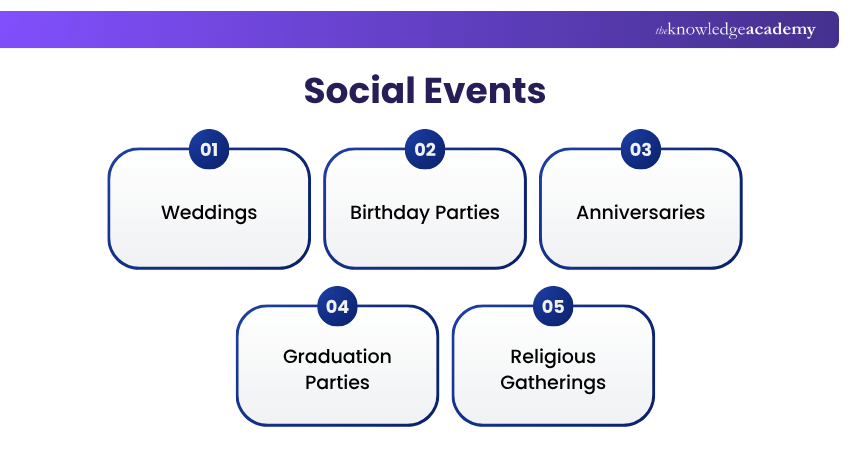
1) Weddings
Weddings mark the formal or ceremonial union of people in marriage, with customs, traditions and meanings varying across cultures, religions and regions.
Common elements in many wedding traditions include ceremonies, vows or other symbolic rituals, followed by celebrations with family and friends. From intimate backyard ceremonies to lavish destination weddings, each wedding can reflect the couple’s preferences, traditions and cultural background.
2) Birthday Parties
Birthday parties celebrate the milestone of another year in a person's life. These types of events can range from small, intimate gatherings with close friends and family to extravagant, themed parties. Birthday celebrations may include games, decorations, themed activities, food, music or live entertainment depending on the age group, preferences and scale of the event.
3) Anniversaries
Anniversaries mark a recurring date associated with an important event or milestone, such as a marriage, partnership, organisational founding or other significant occasion. Couples celebrate their journey together and reflect on their achievements and growth. For wedding anniversaries, the 25th is traditionally known as the silver anniversary, while the 50th is known as the golden anniversary.
4) Graduation Parties
Graduation parties are thrown to celebrate academic achievements. Whether it's completing high school, college, or receiving a postgraduate degree, these events honour the hard work and dedication of the graduate. Graduation parties often include food, speeches, photographs, decorations and celebrations with family and friends.
5) Religious Gatherings
Some religious gatherings can also function as social and community events, bringing people together for worship, festivals, pilgrimages and other shared religious observances. These gatherings hold immense cultural and spiritual significance, fostering a sense of belonging, faith, and communal celebration within religious communities worldwide. They serve as moments of reflection, devotion, and unity in faith.
Professional Events
Professional events are gatherings that serve specific business, educational, or industry-related purposes. They play a crucial role in networking, knowledge sharing, skill development, and business growth. Here are some common types of professional events:
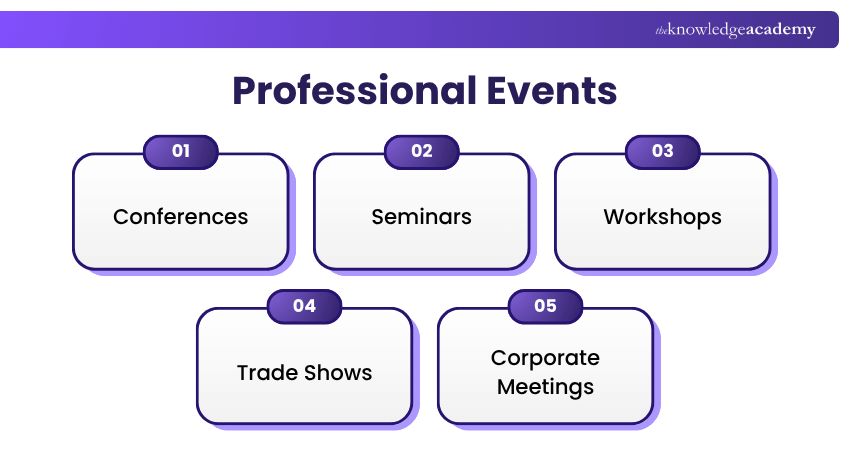
6) Conferences
Conferences bring together participants with shared professional, academic or industry interests to exchange information, discuss developments and build connections. They can range from smaller specialist gatherings to large-scale international events.
Conferences typically feature keynote speakers, panel discussions, workshops, and exhibitions. Attendees gain insights, exchange ideas, and build valuable connections. Conferences can be industry-specific, such as technology or healthcare conferences, or more general, like leadership or innovation conferences.
Get familiar with the role of human resources in event and conference planning with our Conference Management Course – Join now!
7) Seminars
Seminars are educational events focused on a specific topic or subject. They are often shorter in duration compared to conferences and provide an in-depth exploration of a particular subject matter. Experts in the field may conduct seminars, and attendees have the opportunity to engage in discussions, ask questions and develop a deeper understanding of the topic. These events are common in academic settings, professional development, and corporate training.
8) Workshops
Workshops offer hands-on learning and skill development in workplace, educational or industry-related settings. Participants typically engage in practical activities, exercises and group discussions to develop skills in a specific area. These sessions often focus on applying knowledge in realistic scenarios, helping participants strengthen problem-solving and practical abilities.
9) Trade Shows
Trade shows are industry-focused events where businesses showcase products, services and innovations to professional buyers, industry participants and, in some cases, consumers. These events are widely used in industries such as technology, automotive and fashion. They provide a platform for companies to demonstrate their offerings, connect with potential clients, and gather market insights. Trade shows often include booths, product launches, and opportunities for networking.
10) Corporate Meetings
Corporate meetings provide organisations with opportunities to communicate, develop strategies and make decisions. They can range from small, internal team meetings to large-scale shareholder meetings. Common types of corporate meetings include board meetings, Annual General Meetings (AGMs), and project review meetings. These gatherings can help align teams, set goals and support organisational decision-making and operations.
Trainer’s Insight
Event categories can overlap. A conference may include workshops, exhibitions and networking sessions, while a cultural festival may also contain educational or commercial activities. Focus on the event’s primary purpose when deciding how to classify it.
Cultural and Entertainment Events
Cultural and entertainment events serve various purposes, from celebrating cultural traditions to providing entertainment and opportunities for artistic expression. Here are some prominent types of cultural and entertainment events:
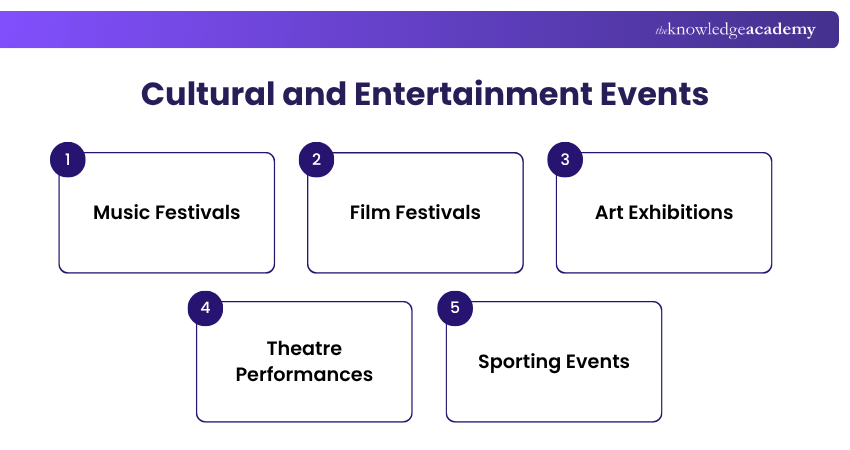
11) Music Festivals
Music festivals feature live performances by multiple artists or acts, often spanning different musical genres. Music festivals can be small, community-based events or large-scale international spectacles. Famous examples include Coachella, Glastonbury, and Tomorrowland. These festivals provide shared live music experiences and can create a sense of community among attendees.
Gain knowledge on how to manage and deal with various kinds of people with our Introduction to Managing People Training – Register now!
12) Film Festivals
Film festivals are dedicated to the art of filmmaking. They showcase a curated selection of films, often with a specific theme, genre, or cultural focus. Renowned film festivals like Cannes, Sundance and the Toronto International Film Festival (TIFF) provide platforms for filmmakers to showcase their work, including premieres, and gain industry recognition. They also attract film enthusiasts, critics, and industry professionals who come to watch, appreciate and discuss selected films and developments in cinema.
13) Art Exhibitions
Art exhibitions provide a space for Visual Artists to display their work to the public. These exhibitions can feature paintings, sculptures, photographs, and various forms of visual art. Museums, galleries, and cultural institutions often host art exhibitions, allowing artists to showcase their creativity and convey messages through their artwork. Art exhibitions serve as a bridge between artists and art enthusiasts, fostering an understanding and appreciation of art.
14) Theatre Performances
Theatre performances include live productions such as plays and musicals, while theatres may also host other performing arts such as ballet and opera. Depending on the production, Actors, Dancers and Musicians may work together on stage to bring stories and performances to life.
Theatre performances offer a unique form of entertainment, allowing the audience to immerse themselves in the emotions, drama, and storytelling of live performances. Broadway in New York City and London's West End are famous theatre districts renowned for their world-class productions.
15) Sporting Events
Sporting events bring audiences together around athletic competition and performance. These events range from local matches and competitions to international tournaments and multi-sport events such as the Olympic Games.
They attract athletes, fans, and spectators from around the world. Sporting events showcase athletic performance and competition, while team-based events can also highlight cooperation and teamwork. Iconic events like the Super Bowl and FIFA World Cup draw massive global audiences.
Event Planning Checklist
Before finalising an event type, check:
☐ Purpose is clearly defined☐ Target audience is identified☐ Suitable event type is selected☐ In-person, virtual or hybrid format is decided☐ Budget and resources are considered☐ Venue or platform suits the expected attendance☐ Accessibility and attendee needs are considered☐ Success measures are established
Learn effective leadership techniques to manage teams and drive results confidently. Register for our Management Courses now!

The Knowledge Academy develops accessible learning content across Project Management, IT, Cybersecurity, Data Science, Business Analysis, HR, Accounting and Finance, Leadership and Health and Safety. Its resources combine subject research with clear explanations to help professionals build practical knowledge across a wide range of disciplines.
View Detail

 If you wish to make any changes to your course, please


