




We may not have the course you’re looking for. If you enquire or give us a call on +1 7204454674 and speak to our training experts, we may still be able to help with your training requirements.
Different Types of Curriculum: A Complete Guide
BySubiksha ArulprakashLast updated on: 03 October 2026
The Types of Curriculum shape how students learn, covering more than just textbooks and lessons. They include everything from written plans to hands-on activities. Each type uniquely shapes knowledge, skills, and values, ensuring a well-rounded, effective educational experience. Together, they define the path to holistic learning.
Quick Preview
1. Understand what curriculum means and how it relates to teaching, learning, and assessment.2. Learn how formal, hidden, learned, assessed, and null curricula differ from one another.3. Compare subject-centred, student-centred, teacher-centred, and activity-centred approaches.4. Understand the purpose and key components of each curriculum type.5. See practical examples of how different curricula appear in educational settings.
Education is more than just textbooks and classrooms. It's a carefully crafted journey guided by a curriculum that shapes how students learn and grow. As the foundation of the learning process, a curriculum outlines the knowledge, skills, and values students should acquire. However, what many don’t realise is that there isn’t just one type of curriculum.
Understanding the types of curriculum helps educators and policymakers create more effective and inclusive learning environments. It’s the blueprint that turns classrooms into spaces of discovery and growth. By recognising these diverse approaches, we can shape education that not only informs but also inspires. So, read on to shape meaningful learning experiences.
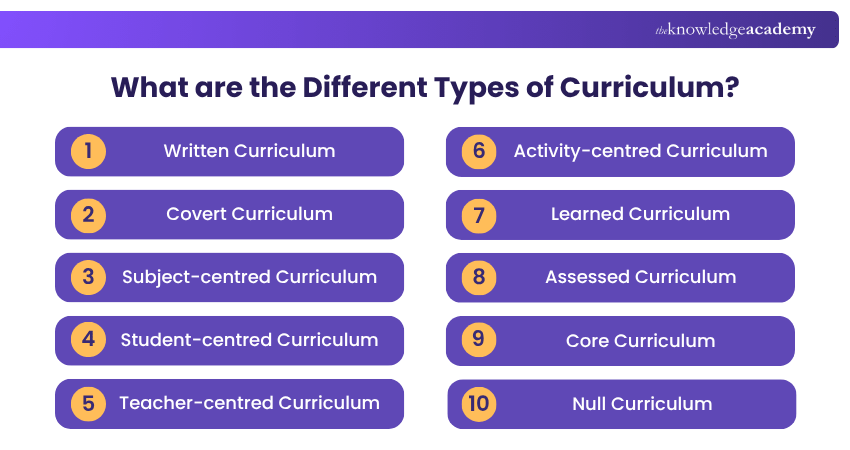
What are the Different Types of Curriculum?
Understanding the various types of curricula is essential for educators and policymakers to create comprehensive educational experiences. The following are some of the commonly used curriculum types and approaches:
1) Written Curriculum
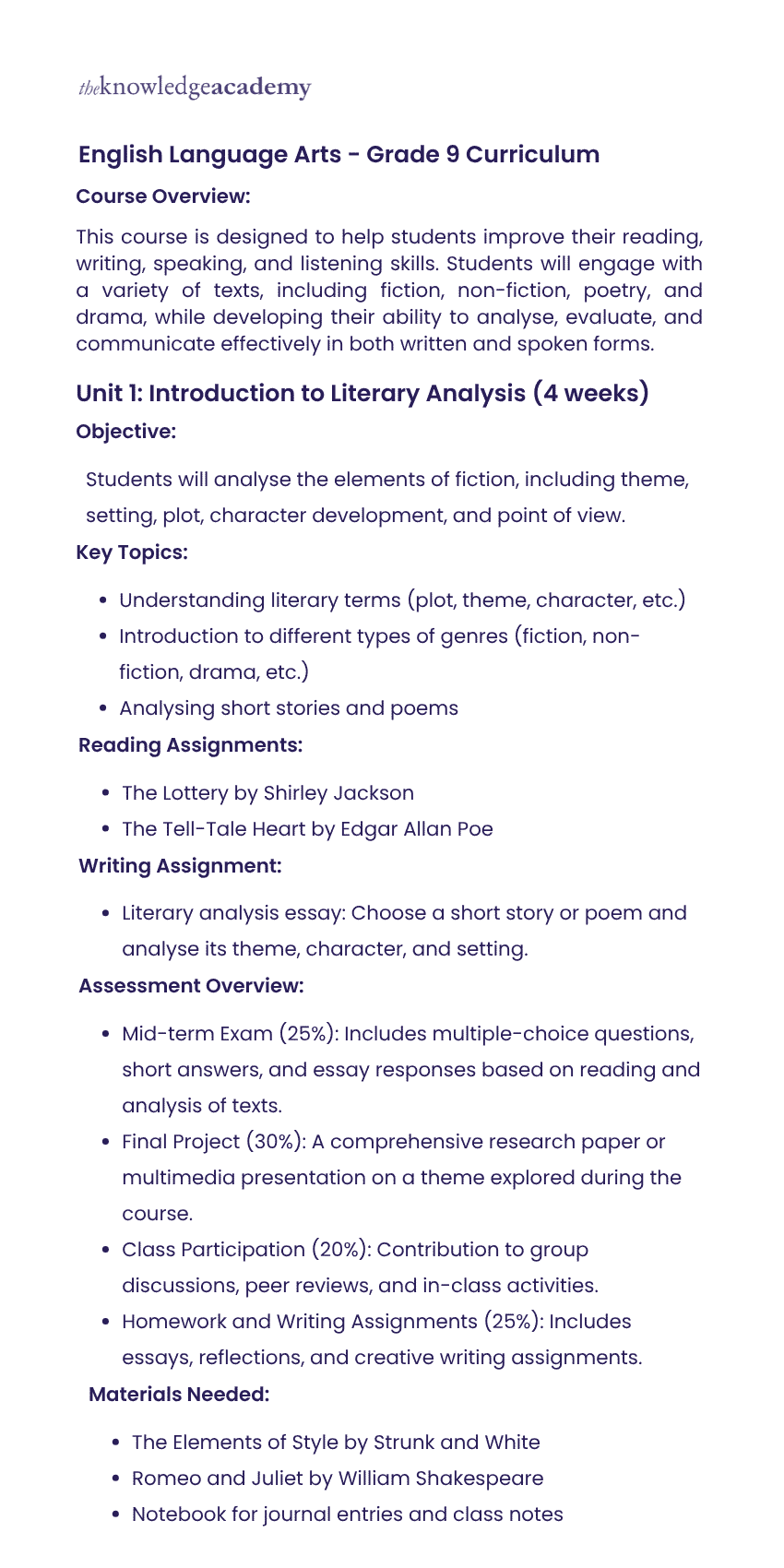
The written curriculum refers to official educational documents that outline what students should learn. It includes syllabi, lesson plans, textbooks, and instructional guides, ensuring a structured approach to teaching and learning.
Purpose
a) Defines clear learning objectives
b) Ensures consistency across classrooms
c) Aligns teaching with assessments
d) Guides resource allocation and planning
Key Components
a) Learning Objectives: Goals for student achievement
b) Content Outline: Topics and concepts covered
c) Teaching Strategies: Suggested instructional methods
d) Assessment Criteria: Evaluation guidelines
e) Instructional Materials: Textbooks and resources
Examples
a) National and school curricula
b) Subject-specific textbooks and guides
c) Online course modules and educational PDFs
2) Covert Curriculum
The covert curriculum, or hidden curriculum, includes unspoken lessons students learn through school culture, teacher attitudes, and peer interactions. It shapes values, beliefs, and social behaviours beyond formal instruction.
Purpose
a) Influences moral and social development
b) Teaches cultural norms and expectations
c) Shapes attitudes towards learning and authority
d) Complements or contradicts the formal curriculum
Key Components
a) Teacher Attitudes: Implicit messages from educators
b) Classroom Environment: Social interactions and behaviour norms
c) School Policies: Rules and traditions influencing student conduct
Examples
a) Encouraging teamwork through group activities
b) Implicit gender roles in classroom interactions
c) Unwritten expectations about discipline and respect
3) Subject-centred Curriculum
The subject-centred curriculum focuses on individual subjects, such as Maths, Science, and History, ensuring mastery of core academic disciplines. It follows a structured, content-heavy approach.
Purpose
a) Provides in-depth knowledge of each subject
b) Standardises education across institutions
c) Prepares students for specialised fields
d) Emphasises theoretical learning over application
Key Components
a) Structured Content: Subject-based knowledge progression
b) Discipline-specific Learning: Focus on academic expertise
c) Discipline-based Organisation: Content is structured around individual subjects or academic fields
Examples
a) Traditional school subjects like Maths and literature
b) University courses focusing on specific disciplines
c) Standardised curriculums mandated by education boards
4) Student-centred Curriculum
The student-centred curriculum prioritises students' interests, needs, and learning styles, promoting active participation and critical thinking rather than passive learning.
Purpose
a) Encourages independent learning and creativity
b) Develops problem-solving and decision-making skills
c) Adapts to students’ diverse abilities and interests
d) Shifts focus from rote memorisation to understanding
Key Components
a) Flexible Learning Paths: Customisable topics and activities
b) Inquiry-based Methods: Encourages exploration and questioning
c) Collaborative Learning: Group projects and discussions
Examples
a) Montessori and progressive education models
b) Project-based Learning (PBL) approaches
c) Student-led research projects and assignments
Enhance your ability to engage, educate, and motivate learners with our Train the Trainer Course – Register today!
5) Teacher-centred Curriculum
The teacher- centred curriculum places educators in control, with students primarily receiving information through direct instruction, lectures, and structured activities.
Purpose
a) Ensures efficient content delivery
b) Maintains discipline and structure
c) Focuses on knowledge retention
d) Aligns with standardised assessments
Key Components
a) Lecture-based Learning: Teacher-led lessons and notes
b) Fixed Content Delivery: Predetermined topics and syllabus
c) Assessment-focused: Exams and quizzes to measure learning
Examples
a) Traditional classroom settings with lectures
b) Teacher-guided lesson plans and textbooks
c) Rigid school schedules based on subjects
6) Activity-centred Curriculum
The activity- centred curriculum promotes experiential learning through hands-on tasks, experiments, and real-world applications, emphasising engagement and skill development.
Purpose
a) Enhances practical knowledge through experience
b) Develops problem-solving and teamwork skills
c) Encourages creativity and independent thinking
d) Links theory with real-life applications
Key Components
a) Project-based Learning: Hands-on activities and experiments
b) Experiential Education: Real-world applications of concepts
c) Interactive Learning: Games, discussions, and simulations
Examples
a) Science lab experiments and field trips
b) Role-playing exercises in social studies
c) Creative arts and design-based learning projects
7) Learned Curriculum
The learned curriculum refers to the actual knowledge, skills, and attitudes that students acquire, which may differ from the intended curriculum due to teaching effectiveness, student engagement, and external influences.
Purpose
a) Evaluates the real impact of education
b) Identifies gaps between teaching and understanding
c) Helps improve instructional strategies
d) Measures student comprehension beyond assessments
Key Components
a) Knowledge Retention: What students remember
b) Skill Development: Practical application of learning
c) Personal Growth: Behavioural and cognitive changes
Examples
a) Students applying concepts outside the classroom
b) Differences in learning outcomes among students
c) Demonstrating a skill that was taught during a course
8) Assessed Curriculum
The assessed curriculum consists of tests, quizzes, projects, and evaluations used to measure student learning and progress in relation to the written curriculum.
Purpose
a) Tracks student academic performance
b) Identifies strengths and weaknesses
c) Provides feedback for curriculum improvement
d) Ensures alignment with learning objectives
Key Components
a) Formative Assessments: Quizzes, assignments, and discussions
b) Summative Assessments: Exams, final projects, and standardised tests
c) Feedback Mechanisms: Teacher feedback, self-assessment and peer assessment
Examples
a) Annual exams and standardised tests
b) Project presentations and case studies
c) Online assessments and coursework evaluations
Empower others to achieve their goals through Coaching and Mentoring Training – Sign up soon!
9) Core Curriculum
A core curriculum consists of required subjects or learning areas that all students within a particular programme are expected to complete. Depending on the education system, this may include areas such as language, Mathematics, Science or Social Studies.
Purpose
a) Provides foundational knowledge
b) Ensures educational consistency
c) Prepares students for higher education and careers
d) Promotes critical thinking and literacy
Key Components
a) Mandatory Subjects: Core academic disciplines
b) Universal Learning Standards: Required competencies
c) Balanced Education: Mix of theory and practical skills
Examples
a) National core subjects like Math and English
b) General education courses in universities
c) Basic life skills programmes in schools
10) Null Curriculum
The null curriculum refers to knowledge, topics, perspectives or learning experiences that are absent from the formal curriculum. These omissions may result from educational priorities, cultural influences, policy decisions or practical constraints.
Purpose
a) Highlights gaps in education
b) Reflects societal values and priorities
c) Influences what students don’t learn
d) Raises awareness of educational biases
Key Components
a) Excluded Knowledge: Subjects omitted from syllabi
b) Cultural & Political Influences: Topics avoided due to controversy
c) Impact on Learning: Knowledge gaps created by omission
Examples
a) A topic omitted from a school's syllabus
b) Limited focus on mental health education
c) Exclusion of certain historical perspectives
Create impactful learning experiences and support career growth with our Learning and Development Courses – Join now!
Keep in Mind
No single curriculum type works independently. In practice, written plans, teaching approaches, assessment methods and learner experiences often interact to shape the overall educational experience.

Subiksha Arulprakash is a Copywriter with 5+ years of experience in content writing, editing, content development and digital marketing. Her experience researching and writing about Business Skills, ISO standards and compliance enables her to produce clear, accessible content for different audiences.
View Detail

 If you wish to make any changes to your course, please


