




We may not have the course you’re looking for. If you enquire or give us a call on 01344203999 and speak to our training experts, we may still be able to help with your training requirements.
Supervisor Responsibilities: A Comprehensive Overview
ByThe Knowledge AcademyLast updated on: 21 September 2026
The role of a Supervisor is pivotal. They serve as the bridge between upper management and frontline employees. Supervisor responsibilities include a wide range of tasks and duties crucial for effective management and leadership within an organisation.

Quick Preview
1. A Supervisor's day-to-day responsibilities include managing workflow, training new employees and creating team schedules.2. Supervisors act as a bridge between frontline employees and senior management, reporting on performance and team needs.3. Assessing performance, giving feedback and resolving conflicts are core parts of the role.4. Effective Supervisors rely on analytical thinking, time management, communication and coaching skills.5. Supporting career growth, taking ownership and fostering a positive team environment help Supervisors excel beyond the basics of the role.
Supervisors are entrusted with many responsibilities. They shoulder multifaceted responsibilities, essential for the smooth functioning of their teams and the organisation's overall success. They oversee workflow, ensuring tasks are completed efficiently and quality standards are upheld. Along with that they also train new employees, imparting necessary skills and knowledge. In this comprehensive blog, we delve into the responsibilities of a Supervisor, key skills required, and tips for succeeding in the role.
What are the Responsibilities of a Supervisor?
Supervisors act as the link between employees and senior management, overseeing daily operations while supporting their team's growth and wellbeing. Here are the responsibilities that define the role:
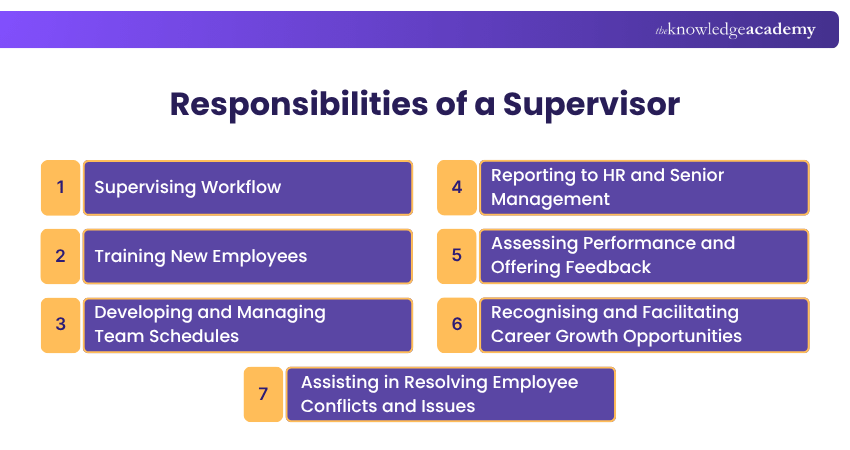
1) Supervising Workflow
Supervisors are responsible for overseeing the day-to-day operations within their department or team. This includes ensuring that tasks are completed efficiently, deadlines are met, and quality standards are upheld.

2) Training New Employees
An important aspect of a Supervisor's role is to support the hiring process and train new employees. This includes making them familiar with company policies, procedures, and job responsibilities. It also involves providing ongoing support and guidance as they adjust to their roles.
3) Developing and Managing Team Schedules
Supervisors are responsible for creating and managing employee schedules to ensure optimal productivity. This involves balancing the distribution of workloads while considering employee availability, skill sets, and adapting to changing business needs. Understanding these responsibilities is crucial, as questions related to schedule management and resource allocation are often asked in Supervisor Interview Questions.
4) Reporting to HR and Senior Management
Supervisors serve as a bridge between upper management and other employees. They are responsible for conveying relevant information, such as team performance metrics, employee needs, and operational challenges, to senior management and, where appropriate, HR.
5) Assessing performance and offering feedback
One of the most critical responsibilities of a Supervisor is to evaluate employee performance and provide constructive feedback. This helps employees understand their strengths and areas for improvement, fostering professional growth and development.
6) Recognising and Facilitating Career Growth Opportunities
Supervisors should actively identify and support career growth opportunities for their team members. Whether through additional training, mentorship courses, or internal promotions, fostering career advancement contributes to employee satisfaction and retention.
7) Assisting in Resolving Employee Conflicts and Issues
Conflict resolution is an inevitable aspect of any workplace. Supervisors are tasked with mediating disputes, addressing grievances, and promoting a harmonious work environment. Effective conflict resolution skills are essential for maintaining team cohesion and morale.
What Would You Do?
Two team members disagree over responsibilities and productivity is being affected. What should a Supervisor do first?
A. Ignore the disagreementB. Immediately report both employeesC. Speak with those involved and understand the issueD. Reassign both employeesCorrect answer: C
Key Skills of a Supervisor
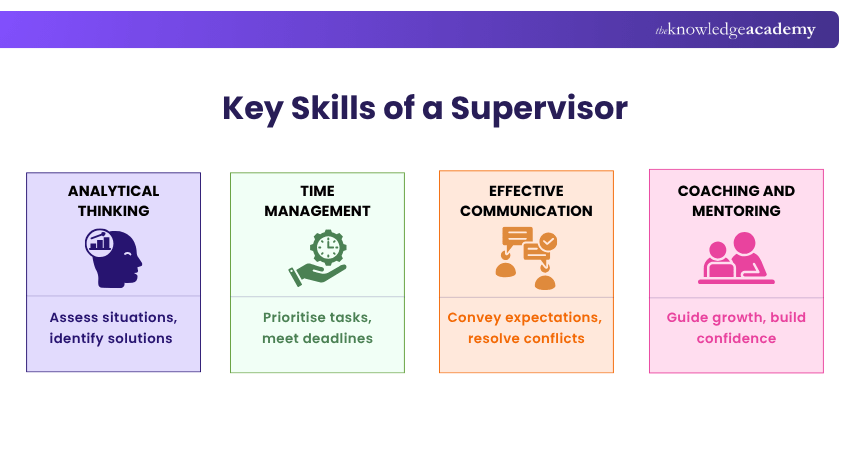
Supervisors must possess qualities like coaching and mentoring expertise, analytical thinking, effective communication, and time management. These skills guide and support their team members' professional development. If carried out efficiently, it helps in recognising individual strengths and providing constructive feedback.
By mastering these key skills, Supervisors can effectively lead their teams, drive performance, and create a positive work environment conducive to growth and success. Let’s discuss in detail:
1) Analytical Thinking
Supervisors need to possess strong analytical skills. It helps in assessing complex situations, identifying underlying issues, and formulating effective solutions. This involves gathering and analysing data, evaluating outcomes, and making proper decisions that drive business success.
2) Time Management
Effective time management is essential for Supervisors to juggle multiple responsibilities and priorities efficiently. This includes prioritising tasks, delegating effectively, and allocating resources wisely to meet deadlines and goals.
3) Effective Communication
Clear and concise communication is paramount for Supervisors to convey expectations. It also assists in providing feedback and facilitating collaboration within their team. Strong communication skills enable Supervisors to articulate ideas, resolve conflicts, and exercise a culture of transparency and openness.
Learn powerful communication techniques with our Communication Skills Course – Join now!
4) Coaching and Mentoring
Supervisors serve as mentors and coaches to their team members. They provide guidance, support, and professional development opportunities. This requires the ability to recognise individual strengths and weaknesses. They provide constructive feedback and empower employees to reach their full potential.
Tips To Become an Effective Supervisor
Doing well in this role takes a proactive, holistic approach to leadership, one centred on supporting team growth and fostering a positive work environment. Here are some practical tips to help you get there:
1) Support Employee Career Growth
Invest in your team's professional development. Provide them with opportunities for learning and growth. Encourage employees to set clear career goals and offer mentorship and training programs. Also, advocate for advancement opportunities within the organisation.
2) Continuously Support Your Team
Demonstrate unwavering support for your team members by advocating for their needs, defending their decisions, and recognising their achievements. Build trust and loyalty by standing behind your team, especially in challenging situations.
Pro Tip:
Schedule a short weekly check-in with each team member to identify blockers early, clarify priorities, and address small issues before they affect performance.
3) Take Ownership of Your Team
As a Supervisor, it is important to take ownership of your team's successes and failures. Take responsibility for actions, lead by example, and demonstrate accountability in all aspects of the role. This builds a sense of unity within the team.
4) Ensure Feedback is Consistent
Provide regular and constructive feedback to your team members. This is to help them improve performance and achieve their goals. Encourage an environment where feedback is valued, both from Supervisors and peers.
5) Foster a Positive Team Environment
Promoting a positive and inclusive work culture is always a win-win idea. Here, team members feel valued, respected, and motivated to succeed. Encourage collaboration, celebrate diversity, and create opportunities for team bonding and camaraderie.
Strengthen your strategic thinking and make better long-term decisions with our Strategic Planning and Thinking Course – Sign up today!

The Knowledge Academy develops accessible learning content across Project Management, IT, Cybersecurity, Data Science, Business Analysis, HR, Accounting and Finance, Leadership and Health and Safety. Its resources combine subject research with clear explanations to help professionals build practical knowledge across a wide range of disciplines.
View Detail

 If you wish to make any changes to your course, please


