


 Top Rated Course

We may not have the course you’re looking for. If you enquire or give us a call on 01344203999 and speak to our training experts, we may still be able to help with your training requirements.
Self Management: A Complete Overview
James Smith 15 July 2026Self-management is the ability to control emotions, thoughts, and actions to achieve goals, improve productivity, and reduce stress. It involves setting clear priorities, managing time effectively, staying disciplined, and adapting to challenges, enabling individuals to maintain focus, make better decisions, and consistently.

Training Outcomes Within Your Budget!
We ensure quality, budget-alignment, and timely delivery by our expert instructors.
Table of Contents

Have you ever looked at someone in your team and wondered, “How do they stay so organised and calm on chaotic days?” It is not luck. It is strong Self-management. In a world full of deadlines and distractions, this skill helps you stay focused, reduce stress and get things done without feeling overwhelmed.
In this blog, you will explore what Self-management is and why it matters. You will also learn the skills that strengthen it, the benefits it brings, and practical examples you can apply in daily work. Let’s get started.
Table of Contents
1) What is Self-management?
2) Why self-management matters at work
3) Seven Skills to Increase Your Self-management Capabilities
4) How to improve your self-management skills
5) Examples of Applications for Self-management
6) What are the Three Keys of Self-management?
7) What is the difference between self-management and self-awareness?
8) Conclusion
What is Self-management?
Learning how to control your thoughts, feelings and behaviours is important in enhancing your performance both in your personal and professional life. Self-management skill will raise your awareness of your response to challenges, and you will learn to control your own health. The key elements of Self-management are emotional intelligence and self-awareness.
1) Prioritise and manage the use of your time in the best way.
2) Learn how to deal with stress efficiently in order to prevent burnout and have a healthy work-life balance.
3) Be adaptable and able to shift when circumstances change or when things go wrong.
4) Be considerate in your choices, which should align with your goals and values.
5) Establish specific, measurable, action-oriented goals and monitor your current state on a regular basis.
6) Be internally driven to work towards something meaningful.
Self-management is a continuous process that needs to be practised and to be truthful to oneself.
Why Self-Management Matters at Work
Self-management is essential for maintaining productivity and achieving professional goals in today’s fast-paced work environments. It enables individuals to stay organised, manage pressure effectively, and remain focused on priorities. Leaders who practise self-management foster a culture of discipline and accountability within their teams.
The benefits of self-management are listed below:
1) For individuals: Increased efficiency, clearer focus, and reduced workplace stress
2) For teams: Better coordination, enhanced communication, and improved overall performance
3) For leaders: A high-performing team culture and improved ability to manage change
Seven Skills to Increase Your Self-management Capabilities
Developing Self-management skills begins with self-awareness, because you need to understand yourself before you can guide your behaviour. Take small steps and allow yourself time to grow, keeping in mind that these skills continue to develop over time.
Transform your strategic vision into impactful results with our Senior Management Training – Secure your spot now!
Skill 1) Time Management
Time Management means choosing how to use your time in the best way. It involves focusing on the most important tasks first and keeping track of your daily work. A leader with strong Time Management skills can organise their day well without depending on others.
Good Time Management keeps you engaged and helps you avoid delaying tasks. For leaders, it creates enough time to manage their own work while also guiding the team.
Skill 2) Self-motivation
Self-motivation is the skill to push yourself to complete tasks on your own. It requires personal responsibility and helps you understand what matters most in your work. It also strengthens your commitment to stay focused even when challenges arise.
It is connected to intrinsic motivation, which comes from within. Enjoying your work keeps you motivated and helps you inspire your team. To build Self-motivation, set goals that excite you and give you purpose.
Skill 3) Stress Management
Stress Management helps leaders stay balanced and avoid burnout. Without it, stress can build up and affect focus and performance. It also helps leaders maintain their energy throughout demanding workdays.
Leaders who manage stress well stay clear about priorities and link their tasks to larger goals. This helps them work calmly and confidently. It allows them to respond to challenges with a steady and positive mindset.
Skill 4) Adaptability
Adaptability means adjusting to changes with confidence. It is important for leaders who work in fast-moving environments where plans can shift quickly. Being adaptable also helps leaders stay steady when unexpected challenges arise.
Adaptable leaders handle changes without frustration and move forward with openness. This mindset helps the team stay flexible and prepared. It encourages a culture where people feel comfortable tackling new situations.
Skill 5) Decision-making
Decision-making is an essential skill for leaders because clear decisions reduce confusion and support team progress. Strong decision-making also builds trust, as teams feel confident in the direction being set.
Leaders can improve this skill by using critical thinking, analysing key information, and relying on data for better choices. Practising this regularly helps leaders make faster and more accurate decisions.
Skill 6) Goal Alignment
Goal Alignment means setting goals that support the most important work of the organisation. It helps leaders stay concentrated on what matters most.
Goal Alignment involves three key areas:
a) Goal Setting: Identify needs, challenges and resources using Specific, Measurable, Achievable, Relevant, Time-bound (SMART) goals.
b) Goal Communication: Understand and clearly explain how individual goals connect to broader objectives.
c) Goal Tracking: Review progress to make sure work is moving in the right direction.
Skill 7) Personal Development
Personal Development helps leaders grow their knowledge and skills. It includes attending workshops, taking courses, and learning from industry experts. Continuous learning also keeps leaders confident and up to date with new trends.
When leaders invest in their own development, they encourage their teams to grow too, supporting long-term success for everyone. This creates a positive culture where improvement becomes a shared goal.
Transform your strategic vision into impactful results with our Senior Management Training – Secure your spot now! – Secure your spot now!
How to Improve Your Self-Management Skills
Enhancing self-management is a continuous process that develops with consistent effort and awareness. The following strategies can help strengthen these skills over time:
1) Recognise when you are most focused and energised during the day. Use techniques such as time blocking to schedule high-priority tasks during these periods for maximum efficiency.
2) Minimise distractions by establishing limits around your time and availability. Communicate these boundaries clearly to colleagues to maintain focus and productivity.
3) Build self-awareness by regularly reflecting on your thoughts and emotions throughout the day. Understanding how these influence your work can help you respond more effectively to challenges.
4) Carry out regular self-assessments and gather input from colleagues or mentors. This helps identify areas for improvement in time management, communication, and handling pressure.
5) Keep work organised by tracking tasks, setting priorities, and monitoring progress in one place. This improves visibility of responsibilities and ensures deadlines are consistently met.
Benefits of Self-management
Self-management inspires individuals to take responsibility for their own actions, decisions and time. By developing these Self management skills, people can improve their workplace performance, reduce stress, and build stronger relationships. It’s a foundational capability for personal growth and team success across any organisation.
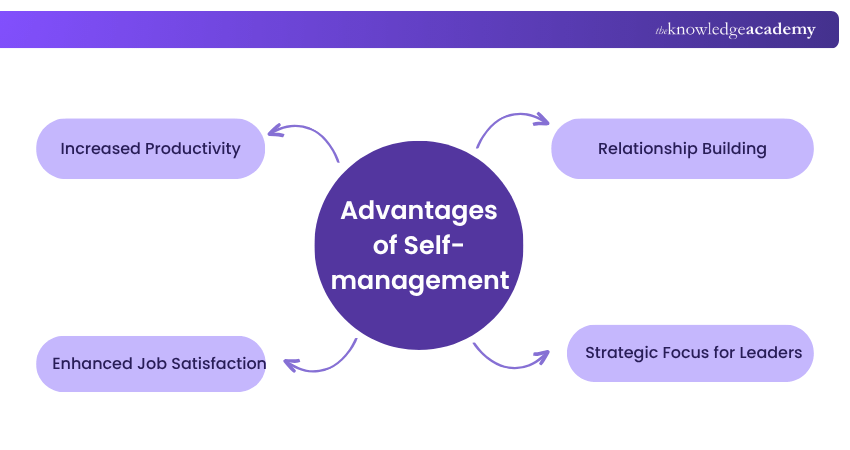
Self-management empowers individuals to take responsibility for their own actions, decisions, and time. By developing these skills, people can improve their workplace performance, reduce stress, and build stronger relationships. It’s a foundational capability for personal growth and team success across any organisation.
1) Increased Productivity
By motivating people to plan their tasks, establish realistic goals, and work independently, Self-management increases productivity. People spend less time on pointless distractions when they are in charge of their schedules and workload. They are able to stay focused and complete more tasks in less time thanks to this autonomy.
2) Enhanced Job Satisfaction
Employees are frequently more involved and motivated when they have more autonomy in managing their work. Self-management makes people feel respected and in control by fostering a sense of trust and autonomy. Greater job satisfaction and general well-being are the results of having more control over daily tasks.
3) Strategic Focus for Leaders
Leaders who practise Self-management can better delegate routine tasks and dedicate more time to big-picture thinking. With clear priorities and structured workflows, they can focus on driving innovation, making informed decisions, and supporting team development rather than being overwhelmed by operational details.
4) Relationship Building
Healthy relationships at work are a result of strong Self-management. People become better collaborators by controlling their emotions, demonstrating empathy, and maintaining accountability. Teams flourish in this polite, open atmosphere where mutual respect and understanding are fostered.
Examples of Applications for Self-management
Self-management isn’t just a professional skill; it’s a life skill that applies in many areas. Whether you're navigating your day-to-day routines or collaborating in a team, mastering Self Management can lead to better focus, improved well-being, and greater productivity. Below are two common areas where this skill truly shines.
Example 1: Setting Goals and Aligning Them to the Larger Picture
A team leader defines a clear objective to enhance organisational performance and ensures that all activities contribute to broader business priorities. By linking everyday tasks to long-term outcomes, they create alignment and ensure efforts deliver meaningful results.
They outline a structured plan, secure stakeholder support, and break the objective into actionable steps. Self-management approach improves clarity, strengthens decision-making, and keeps focus on work that drives strategic success.
Example 2: Stress Management and Time Allocation
A professional starts the day by reviewing responsibilities, identifying key priorities, and assessing workload demands. Rather than becoming overwhelmed, they adjust their schedule to concentrate on high-impact and time-sensitive tasks.
By organising time effectively and managing pressure, they sustain productivity while maintaining wellbeing. Lower-priority tasks are rescheduled, ensuring a balanced approach to work and consistent performance over time.
Improve your procurement processes and ensure seamless Supply Chain Operations – join our Introduction to Supplier Management Course now!
What are the Three Keys of Self-management?
These are the three keys of Self Management:
1) Initiative
Initiative means taking proactive action without waiting for instructions. Individuals with initiative identify opportunities, address problems early and begin tasks independently, contributing to smoother workflows and better outcomes.
2) Organisation
Organisation refers to effectively managing time, tasks, and priorities. When individuals stay organised, work becomes more structured, confusion is reduced and deadlines are met more consistently.
3) Accountability
Accountability means taking responsibility for actions, decisions, and outcomes. Accountable individuals acknowledge mistakes, take corrective action, and remain committed to team and organisational success.
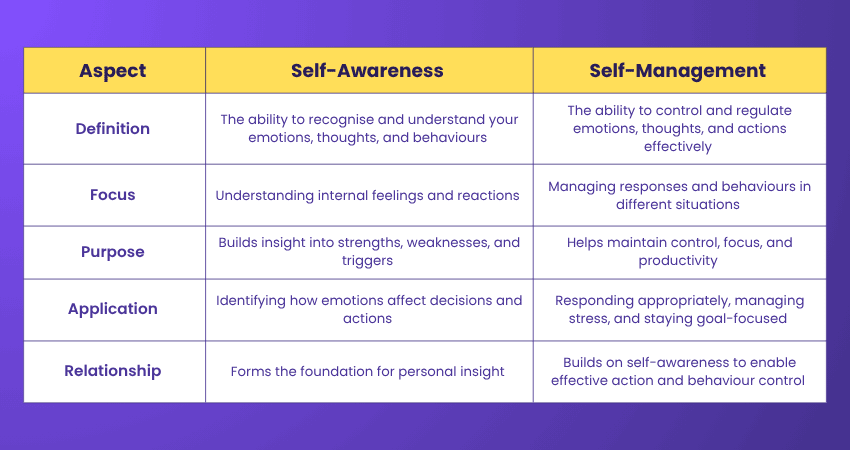
What is the Difference Between Self-Management and Self-Awareness?
Self-awareness and self-management are closely connected skills that drive personal and professional effectiveness. Understanding their differences helps improve decision-making, regulate behaviour, and maintain consistent performance. Below mentioned are the major differences between them:
Conclusion
Strengthening your approach to Self-management helps you stay focused, organised, and confident in handling challenges. By building initiative, organisation, and accountability, you improve your performance and support your team more effectively. Developing these skills leads to steady growth and a more positive, productive workplace for everyone.
Learn to spot and foster talent in your workforce with Performance Management Training – Join now!
Frequently Asked Questions
How Does Self-management Help in Self-motivation?

Self-management boosts self-motivation by helping you set clear goals, manage time effectively, and stay focused without external pressure. By taking control of your actions and progress, you build confidence and discipline. These are the key drivers for staying motivated and achieving long-term success.
Why is Self-management a Good Skill?
Self-management is a valuable skill because it empowers you to take control of your time, behaviour, and goals. It enhances productivity, reduces stress, and builds independence.

James Smith


Digital Marketing Manager and Trainer
James Smith is a digital marketing professional with over a decade of experience in SEO, content strategy, paid media and analytics. He has supported both SMEs and global brands in transforming their digital presence. James’s writing and training are rooted in results-driven tactics and the latest marketing trends.
View Detail

 If you wish to make any changes to your course, please


