


 Top Rated Course

We may not have the course you’re looking for. If you enquire or give us a call on +1 7204454674 and speak to our training experts, we may still be able to help with your training requirements.
What is Risk Management in Healthcare: Process and Importance
David Evans 15 July 2026Risk Management in Healthcare identifies, assesses, and reduces risks to patient safety and operations while preventing medical errors and improving quality. It improves patient outcomes, supports compliance, and reduces financial and legal risks. Effective Risk Management also promotes safer care and continuous improvement.

Training Outcomes Within Your Budget!
We ensure quality, budget-alignment, and timely delivery by our expert instructors.
Table of Contents
In the complex and ever-evolving landscape of Healthcare, the importance of Risk Management cannot be overstated. Risk Management in Healthcare is an organised and proactive approach that helps identify, assess, and control potential risks that could impact patient safety, organisational integrity, and overall quality of care.
Today, enterprises in the Healthcare industry have become aware of the importance of Risk Management. They aim to decrease Healthcare costs and increase focus on research and development proficiencies. This is why, according to Data Bridge Market Research, the global patient Risk Management and safety market was valued at approximately £4.14 billion in 2024 and is projected to reach around £8.50 billion by 2032, growing at a CAGR of 9.40% from 2025 to 2032.
But if you are still unaware of the many benefits of Risk Management, then it’s time to revolutionise your organisation. Read this blog to learn about the importance of Risk Management in Healthcare. Also, know how it contributes to high-quality care and patient safety accordingly.
Table of Contents
1) What is Risk Management in Healthcare?
2) Why is Risk Management in Healthcare Important?
3) Key Components of Healthcare Risk Management
4) Common Risk Areas in Healthcare
5) What is the Future of Risk Management in the Healthcare Sector?
6) Conclusion
What is Risk Management in Healthcare?
Risk Management, in general, is a structured process used to identify, assess and control financial, legal, strategic and security risks to an organisation’s capital and earnings. But What is Risk Management in Healthcare? Let’s find out!
In a Healthcare setting, risks can arise from various sources, including clinical procedures, operational processes, human errors, technology failures, and other external factors such as regulatory requirements and financial uncertainties. The primary objective of Risk Management in Healthcare is to ensure patient safety and well-being. It assists in identifying and addressing risks early on, and Healthcare providers can prevent harm, improve patient outcomes, and foster a safety culture.
This technique takes a multidisciplinary approach, involving Healthcare professionals, administrators, legal experts, and other stakeholders working together to enhance Healthcare Management and create a secure and reliable healthcare environment. Furthermore, with the rise of Artificial Intelligence in Healthcare, Risk Management has evolved into a more dynamic, tech-driven process requiring continuous monitoring, evaluation, and improvement to ensure patient safety and operational excellence. It includes developing and implementing policies, protocols, and procedures, reporting systems, and mitigation strategies to address identified risks and review their effectiveness over time.
Why is Risk Management in Healthcare Important?
The significance of Healthcare Risk Management extends beyond patient safety. It also encompasses the management of legal and financial risks, making it an important approach. Let’s delve into the detailed importance of Risk Management in the Healthcare sector:
a) Ensuring Patient Safety: In Healthcare, the primary objective of Risk Management is to ensure the safety and well-being of patients. By recognising potential risks before they escalate, healthcare providers can minimise harm, prevent adverse events, and maintain a secure care environment.
b) Prevention of Adverse Events: Effective Risk Management helps prevent adverse events such as medication errors, falls, infections, and surgical complications. By identifying possible risks and implementing preventive measures, healthcare organisations can significantly improve patient safety. This leads to improved patient outcomes and experiences.
c) Minimisation of Medical Errors: Medical errors can severely affect patient health and well-being. Risk Management strategies, including checklists, standardised protocols, and technology solutions, help minimise medical errors. It also ensures consistency, accuracy, and adherence to best practices.
d) Mitigation of Legal and Financial Risks: Healthcare organisations face various legal and financial risks, including malpractice claims, regulatory non-compliance, and data breaches. Effective Risk Management practices help mitigate these risks by implementing strong policies and protocols, adhering to regulatory requirements, and ensuring data security.
e) Cultivating a Culture of Safety: Risk Management promotes a culture of safety within Healthcare organisations. It encourages healthcare professionals to remain vigilant, proactive, and committed to patient safety. By fostering an environment where staff are encouraged to report near misses and adverse events without fear of reprisal. These organisations can learn from incidents, improve processes, and foster a culture centred on patient well-being.
f) Optimising Organisational Efficiency: Identifying and addressing risks early on can minimise potential disruptions and inefficiencies. This leads to improved workflow, enhanced resource allocation, and better staff utilisation, ultimately enhancing overall organisational efficiency and effectiveness.
g) Cost Savings: Implementing robust Risk Management practices can result in significant savings for Healthcare organisations. Preventing side effects, medical errors, and legal disputes can reduce Healthcare costs associated with litigation, compensation, and penalties. Moreover, Risk Management helps identify waste or unnecessary expenditure areas, allowing for cost optimisation and efficient resource allocation.
h) Regulatory Compliance: Risk Management is closely linked to regulatory compliance in Healthcare. Implementing Risk Management strategies supports regulatory compliance and helps healthcare organisations adhere to recognised standards and guidelines. This helps avoid penalties, sanctions, and reputational damage associated with non-compliance.
Gain a comprehensive framework for Risk Management and a structured approach with the MoR® Management of Risk Training – Join now!
Key Components of Healthcare Risk Management
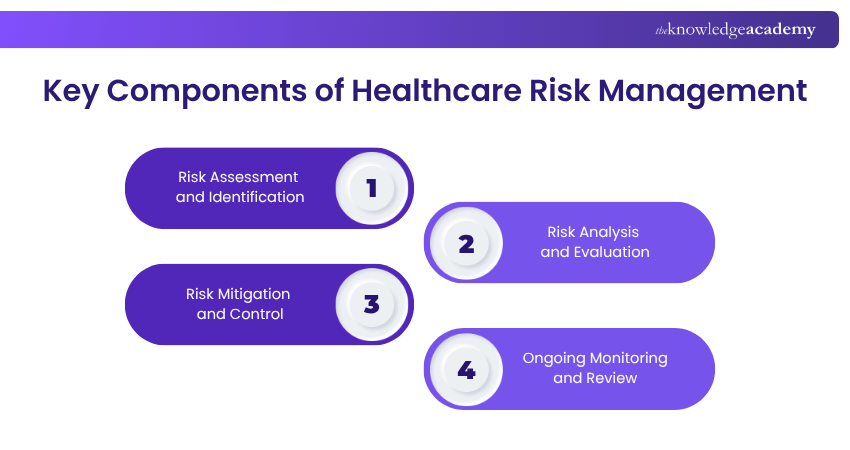
Healthcare Risk Management comprises several key components that work together to identify, assess, and manage risks effectively. Understanding these components is crucial for implementing a comprehensive Risk Management strategy. Here are the key components of Risk Management in Healthcare:
Risk Assessment and Identification
The first step is the systematic assessment and identification of potential risks. This process evaluates key areas of healthcare operations, such as clinical practices, operational workflows, technology usage, and external influences. These further drive Healthcare organisations to identify and prioritise potential risks based on their severity, likelihood, and potential impact on patient safety and organisational integrity.
Risk Analysis and Evaluation
Once risks are identified, a thorough analysis and evaluation are conducted to assess their potential impact. This involves examining the probability of occurrence, its potential consequences, and the effectiveness of the existing control measures.
Risk analysis and evaluation can help Healthcare organisations in determining the level of risk tolerance and allocating resources strategically to minimise the impact of identified risks.
Risk Mitigation and Control
The next component of Risk Management is the implementation of strategies to mitigate and control identified risks. This involves developing and implementing preventive measures, control mechanisms, and protocols to reduce the likelihood and impact of risks. This includes:
a) Implementing safety protocols
b) Conducting regular staff training
c) Enhancing operational processes
d) Utilising technology solutions to enhance patient safety and minimise risks
Ongoing Monitoring and Review
Risk Management is an iterative process that requires continuous monitoring and review. Regular monitoring allows Healthcare organisations to monitor the effectiveness of Risk Management strategies, identify new risks, and make necessary adjustments.
Implementing clear processes for recording and reporting incidents and adverse events helps improve patient safety. Therefore, Healthcare organisations can identify areas for improvement and implement necessary changes to improve Risk Management practices.
Common Risk Areas in Healthcare
Healthcare organisations face a range of risks that can affect patient safety, service quality, and operational performance. Understanding these key risk areas helps organisations identify vulnerabilities strengthen risk controls and support the delivery of safe and effective care. Common risk areas include:
1) Clinical Safety: Risks related to patient care, medical errors, and treatment outcomes.
2) Operational Efficiency: Risks arising from inefficient processes, staffing issues, and resource management.
3) Technology and Cyber Security: Risks involving data breaches, system failures, and cyber threats.
4) Regulatory Compliance: Risks associated with failing to meet healthcare laws, standards, and regulations.
5) Financial Management: Risks linked to budgeting, fraud, revenue loss, and financial sustainability.
Managing these risk areas helps protect patients, safeguard organisational assets, and reduce legal and financial liabilities.
Gain practical Risk Management knowledge with the Management of Risk (MoR®) Foundation V3 Course – Join today!
What is the Future of Risk Management in the Healthcare Sector?
The Healthcare sector is rapidly changing, driven by technological advancements, changing demographics, and shifting patient expectations. As Healthcare continues to transform, the role of Risk Management becomes increasingly critical. The following key developments are shaping the future of Risk Management in Healthcare:
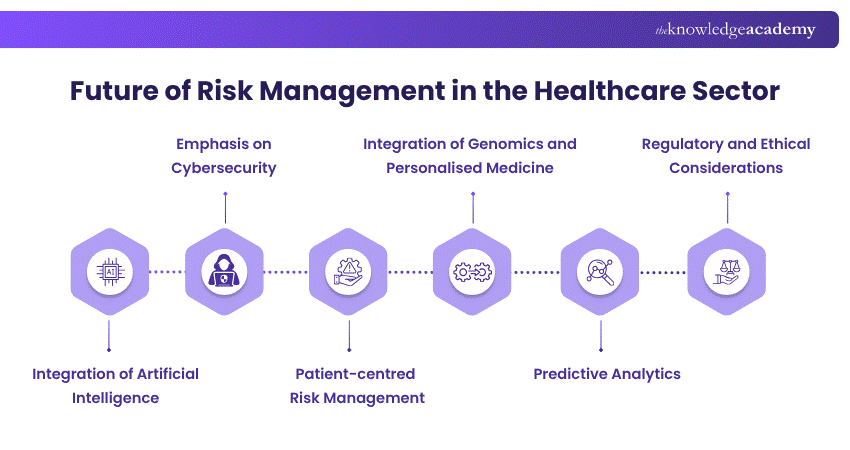
a) Integration of Artificial Intelligence: Artificial Intelligence (AI) algorithms can analyse large amounts of patient data, identify patterns, and predict potential risks. This enables proactive risk mitigation strategies, personalised interventions, and improved decision-making.
b) Emphasis on Cyber Security: As Healthcare becomes more digitised, the risk of cyber-attacks and data breaches also rises. Future Risk Management strategies will prioritise robust Cyber Security measures to safeguard patient information, maintain data reliability, and prevent unauthorised access.
c) Patient-centred Risk Management: The future of Healthcare Risk Management focuses increasingly on patient-centred approaches. Patient engagement will be key, with patients playing an active role in risk identification, reporting, and decision-making. This will further help in promoting patient safety.
d) Integration of Genomics and Personalised Medicine: Advancements in Genomics and personalised medicine are expected to shape Risk Management strategies. By leveraging genomic data, Healthcare providers can identify genetic predispositions to diseases and tailor interventions to individual patients.
e) Predictive Analytics: Integrating predictive analytics into Risk Management practices is also expected to enable early identification and intervention. By optimising historical data and real-time monitoring, predictive analytics helps healthcare organisations anticipate potential complications by identifying at-risk patients early. This allows Healthcare providers to implement preventive measures and reduce the likelihood of adverse outcomes.
f) Regulatory and Ethical Considerations: Risk Management in the future will be influenced by evolving regulatory frameworks and ethical considerations. Ethical considerations around data usage, AI algorithms, and patient autonomy will shape Risk Management practices, requiring a careful balancing of innovation and ethical responsibilities.
Conclusion
Risk Management in Healthcare is of paramount importance. By implementing comprehensive Risk Management strategies, organisations in the Healthcare industry can enhance patient safety, minimise medical errors, mitigate legal and financial risks, and improve organisational efficiency. For those preparing for a career in this field, reviewing Risk Management Interview Questions can help you better understand key concepts and prepare for potential job interviews in healthcare organisations.
Learn about governance principles to shape good governance expectations with the MoR® 4 Practitioner Risk Management Certification Training – Join now!
Frequently Asked Questions
What are the Five Principles of Risk Management in Healthcare?

The five principles of Risk Management in Healthcare are risk identification, analysis, treatment, monitoring, and communication. Together, they help reduce patient harm, prevent errors, and support safe, high-quality care.
What are the 6 C's of Healthcare?
The 6 C’s of Healthcare are care, compassion, competence, communication, courage, and commitment. These values help professionals deliver safe, patient-centred care, build trust, and improve outcomes.

David Evans


Certified Project Trainer and Agile Delivery Expert
David Evans brings over a decade of hands-on experience in project delivery, Agile transformation, and team leadership. With a background in technology and business consulting, David has led cross-functional teams through Agile and Waterfall projects in both public and private sectors. He combines technical knowledge with practical insights to help readers navigate the challenges of modern project environments.


 If you wish to make any changes to your course, please


