




We may not have the course you’re looking for. If you enquire or give us a call on +49 8000101090 and speak to our training experts, we may still be able to help with your training requirements.
Phases of Compiler: An Overview
ByNilotpal SarmahLast updated on: 05 October 2026
The phases of the compiler include multiple steps, such as lexical analysis, syntax analysis, semantic analysis, code generation, code optimisation and Generation. This blog will explore every stage, breaking down the complexities of Compiler design. By the end, you’ll see how code comes to life through the art of compilation!
Quick Preview
1. Compilation transforms source code through multiple stages before producing target code.2. Lexical, Syntax and Semantic Analysis progressively examine tokens, structure and meaning.3. Intermediate Code Generation creates a representation that can be processed further.4. Code Optimisation improves the generated representation while preserving program behaviour.5. Code Generation produces instructions for the target architecture.
Have you ever wondered how your Python, C, or Java code transforms into something your computer can execute? The secret lies in the phases of compiler; a meticulously designed process that takes your code on a journey from high-level language to machine-readable instructions.
If you’ve ever been curious about the inner workings of compilers, understanding the phases of compiler will open up a fascinating new perspective. From lexical analysis to code generation, each phase plays a vital role in ensuring your code is error-free, efficient, and ready to run. Let’s dive deeper into this process and uncover the magic that turns your code into reality!
What are the Phases of Compiler Design?
The process of compilation is divided into multiple stages, each contributing to the transformation of source code into machine code. Let’s explore these phases one by one:
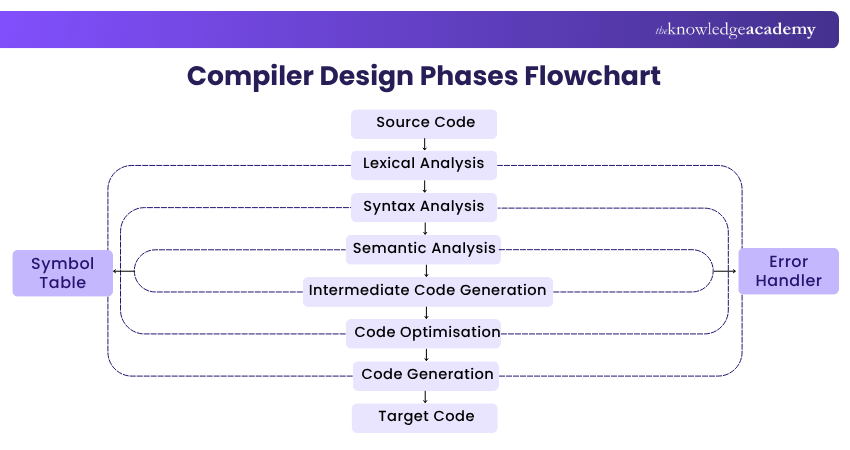
1) Lexical Analysis
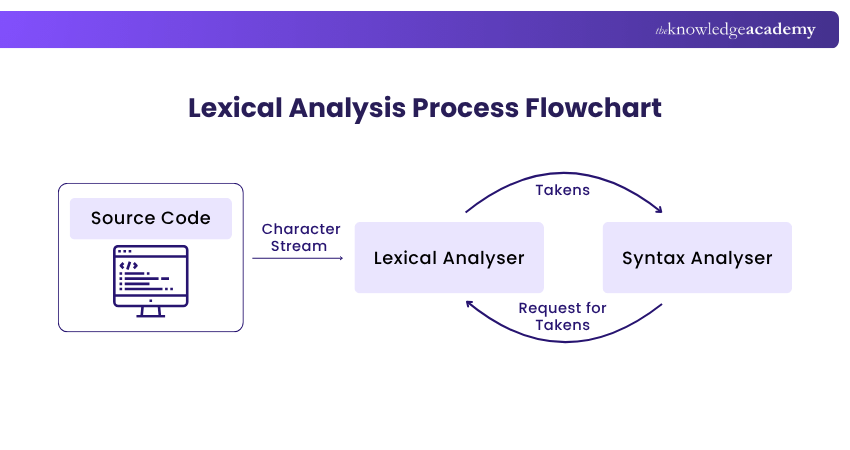
a) Initial Phase: Lexical analysis is the first phase in the compiler process.
b) Source Code Scanning: It reads the entire source code character by character.
c) Token Generation: This breaks the code into smaller units called tokens (keywords, operators, variables, etc.).
d) Simplification: Converts complex source code into a more manageable form.
e) Error Detection: Identifies lexical errors, such as invalid characters or unrecognised symbols.
f) Output: The tokens are passed to the syntax analysis phase for further processing.
Token vs Lexeme
A lexeme is the actual character sequence found in the source code, while a token represents the category assigned to that sequence during Lexical Analysis.

2) Syntax Analysis
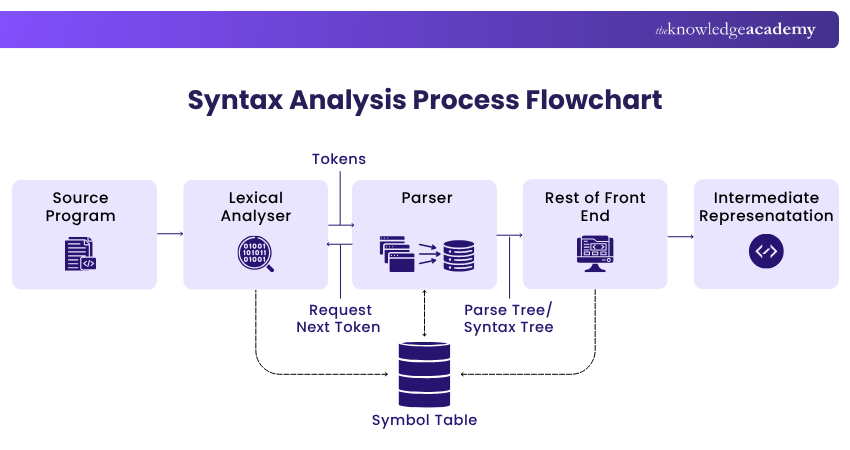
a) Second Phase: Syntax analysis is the second phase in the compilation process.
b) Token Structure Checking: It checks the token sequence generated by lexical analysis for proper grammatical structure in compliance with the Programming Language's guidelines.
c) Syntax Tree Creation: Organises tokens into a hierarchical structure called a syntax tree (or parse tree) that represents the program’s syntax.
d) Error Detection: Identifies syntax errors, such as missing brackets or misplacement of statements.
e) Ensures Correct Structure: Verifies the code follows the correct syntax, allowing smooth progression to the next phases.
f) Output: Passes the syntax tree to the semantic analysis phase.
Quick Example
Consider:total = price + tax;Lexical Analysis first identifies individual tokens. Syntax Analysis then determines whether those tokens form a valid assignment expression according to the language grammar.
Join our C Programming Courses and transform your programming skills into professional-level expertise – Register now!
3) Semantic Analysis
a) Third Phase: Semantic analysis is the third phase of compilation.
b) Meaning Check: Ensures the code makes logical sense, verifying the meaning behind statements.
c) Type Consistency: Checks for type matching (e.g., integer to integer), ensuring variables and function calls are used correctly.
d) Logical Errors Detection: Identifies logical errors such as type mismatches or invalid function calls.
e) Scope Verification: Ensures that variables and functions are used within their appropriate scope.
f) Output: Produces an annotated syntax tree for the next phase, intermediate code generation.
4) Intermediate Code Generation
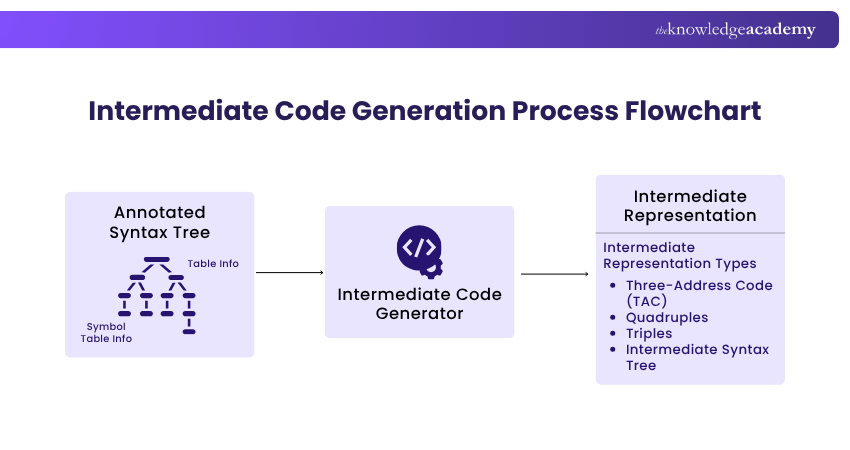
a) Fourth Phase: Intermediate code generation follows semantic analysis.
b) Platform-independent Code: Transforms the syntax tree into an intermediate code, which is easier to optimise and platform-independent.
c) Bridge Between High-level and Machine Code: Acts as a middle layer between the source code and final machine code.
d) Simplifies Code: This makes code representation simpler than the high-level code but not yet specific to a machine.
e) Output: Passes the intermediate code to the optimisation phase for further refinement.
Trainer’s Insight
Correct syntax does not guarantee correct meaning. A statement may follow the grammar of a language but still fail Semantic Analysis because of incompatible types, invalid identifier use or scope-related problems.
5) Code Optimisation
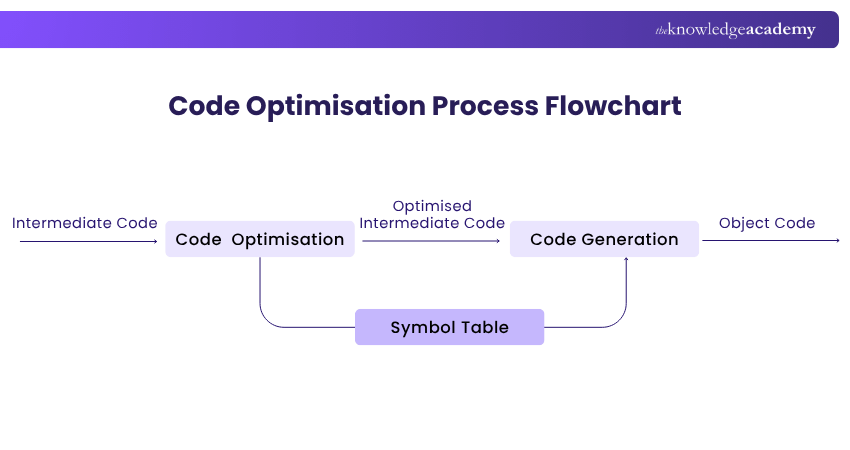
a) Optional but Important Phase: Code optimisation is an optional but significant phase in compiler design.
b) Performance Improvement: Reduces execution time and memory usage by optimising loops, eliminating redundant code, and reorganising instructions.
c) Code Efficiency: Ensures that the compiled code runs faster and consumes fewer resources.
d) No Change to Output: Maintains the original functionality of the code while enhancing its performance.
e) Output: Optimised intermediate code is passed to the final phase, code generation.
Start coding with JavaScript For Beginners Course and gain the skills to build interactive, modern web applications!
6) Code Generation
a) Final Phase: Code generation is the last phase in the compilation process.
b) Machine Code Translation: Converts the optimised intermediate code into machine-level code that the computer can execute.
c) Instruction Selection: Chooses the appropriate machine instructions based on the target architecture.
d) Register Allocation: Manages the use of CPU registers for storing intermediate results during program execution.
e) Output: Produces the final executable machine code, ready to run on the system.
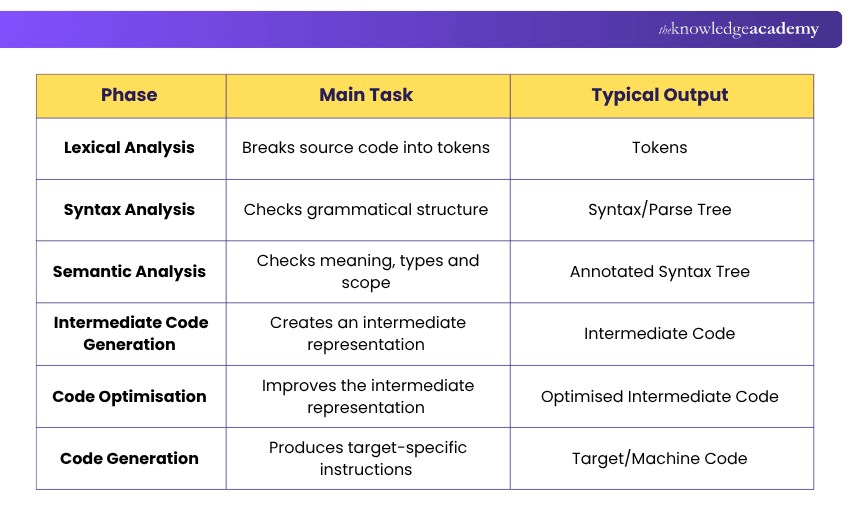
Here's a quick look at these phases' differences:
Discover the world of coding, learn essential skills, and become a proficient programmer with our Coding Training Course – Join now!
Example of Compiler Phases
Consider the simple statement:
result = price + tax;
Here is a simplified view of how it can move through the phases.
1) Lexical Analysis
The statement is broken into tokens representing:
result → identifier
= → assignment operator
price → identifier
+ → addition operator
tax → identifier
; → delimiter
2) Syntax Analysis
The compiler checks whether these tokens form a grammatically valid assignment of expression and construct an appropriate syntax representation.
3) Semantic Analysis
The compiler checks information such as whether result, price and tax are valid identifiers in the relevant context and whether the operation uses compatible types.
4) Intermediate Code Generation
The valid expression is transformed into an intermediate representation that can be processed by later phases.
5) Code Optimisation
Where applicable, the intermediate representation can be transformed to improve efficiency while retaining the same intended behaviour.
6) Code Generation
Finally, the processed representation is translated into instructions appropriate for the target architecture.
Importance of Compiler
Here are some key reasons why compilers are indispensable in software development:
a) Code Translation: Converts high-level source code into machine-executable code, making it usable by computers.
b) Error Checking: Detects and flags syntax and semantic errors in the code, aiding in debugging.
c) Code Optimisation: Enhances efficiency by removing unnecessary elements and optimising resource usage.
d) Portability: Generates platform-independent intermediate code, enabling cross-platform development.
e) Resource Management: Allocates system resources effectively, improving program performance.
f) Automation: Automates the translation process, reducing human effort in converting code manually.
g) Efficiency in Execution: Ensures the compiled program runs smoothly and efficiently on the target machine.
Compiler Phase Checklist
Before moving from one compilation stage to the next, check:
☐ Tokens identified: Has the source code been correctly broken into valid tokens?☐ Syntax validated: Does the token sequence follow the language’s grammatical rules?☐ Semantics checked: Are data types, identifiers and scopes used correctly?☐ Intermediate code generated: Has a suitable intermediate representation been created?☐ Optimisation verified: Have suitable improvements been made without changing the program’s intended behaviour?☐ Target code generated: Has the final representation been translated into instructions for the target architecture?☐ Errors handled: Have errors detected across the relevant phases been identified and reported appropriately?

Nilotpal Sarmah is a Senior Content Writer with 11+ years of overall experience spanning engineering, operations and content development. His technical knowledge and extensive writing experience enable him to simplify specialised topics across IT and Tech, Business Skills, Project Management, Health and Safety, and ISO and Compliance.
View Detail

 If you wish to make any changes to your course, please


