


 Top Rated Course

We may not have the course you’re looking for. If you enquire or give us a call on 01344203999 and speak to our training experts, we may still be able to help with your training requirements.
Top 15 Organisational Skills Every Professional Needs
Scarlett Adams 20 December 2025Organisational Skills refer to the ability to efficiently manage tasks, time and resources, ensuring productivity and effective execution of responsibilities. These skills include time management, attention to detail, task delegation, interpersonal skills, self-motivation, self-management, strategic thinking and prioritising.

Training Outcomes Within Your Budget!
We ensure quality, budget-alignment, and timely delivery by our expert instructors.
Table of Contents
Success isn’t just about talent; it’s about organisation. Imagine juggling deadlines, meetings and projects without dropping the ball. Sounds tough, right? That’s where strong Organisational Skills come in. They are the fuel that transforms workplace chaos into profit-garnering clarity, helping you stay productive and stress-free. From effective Time Management to clear prioritisation, these Organisational Skills form the backbone of every thriving career.
If you are ready to sharpen yours, you’re in the right place. This blog explores the top 15 Organisational Skills every professional needs to stay ahead and deliver results that truly matter. Let’s get started!
Table of Contents
1) What are Organisational Skills?
2) Why are Organisational Skills Important?
3) Top Organisational Skills to Boost Your Career
4) Tips to Improve Your Organisational Skills
5) How to Present Your Organisational Skills?
6) Conclusion
What are Organisational Skills?
Organisational Skills refer to the abilities that help you manage your time, tasks, and resources effectively. These skills include meeting deadlines, staying punctual, and accessing information quickly when needed. Strong Organisational Skills help you work efficiently and focus on prioritising important tasks in the workplace. They also support clear communication, strategic thinking, goal setting, and effective delegation, all of which contribute to productive teamwork.

Why are Organisational Skills Important?
Organisational Skills are important because they help professionals manage time, tasks, and resources more effectively in fast-paced work environments. They improve productivity by enabling better planning, prioritisation, and deadline management. Strong organisational abilities also reduce stress, enhance focus, and support clearer decision-making.
In addition, they improve teamwork by ensuring smooth coordination, clear communication, and accountability. Together, these skills help individuals deliver consistent results, adapt to change, and achieve long-term career success.
Top Organisational Skills to Boost Your Career
These are some of the key Organisational Skills, that'll help you work more efficiently in the workplace. They will enable you to manage tasks and responsibilities with greater confidence:
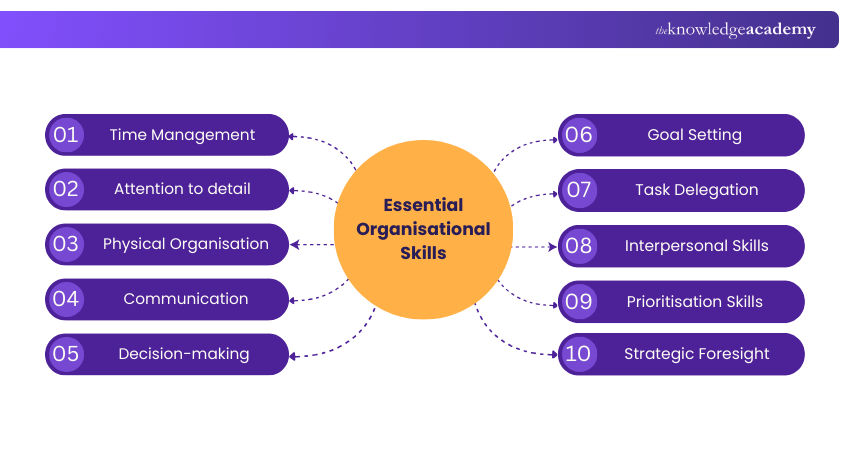
1) Time Management
1) Time Management helps you plan your daily and weekly tasks properly.
2) Using time efficiently improves workflow and keeps your responsibilities organised.
3) It lets you prioritise your tasks by identifying which parts of a project require more time and which can be completed quickly.
4) Proper planning ensures much smoother progress and more timely completion of work.
2) Attention to Detail
1) Attention to detail is about completing tasks with accuracy, care and precision.
2) It’s crucial in high-risk professions like surgery or aviation. However, its impact matters across all roles and industries.
3) Poor attention to detail can reduce productivity, lower work quality and lead to costly mistakes.
4) Strong attention to detail ensures tasks are completed the first time correctly, thus improving efficiency and reliability.
Effective change is all about strategy. Hone your skills to make it happen in our Managing Organisational Change Effectively Course - Sign up now!
3) Physical Organisation
1) Physical organisation is about maintaining a tidy and structured workspace.
2) An organised environment reduces distractions and allows for better concentration.
3) It saves time by making documents and resources easy to locate.
4) A well-arranged workspace promotes smoother workflows and overall productivity.
4) Communication
1) Communication is about clearly sharing ideas and updates with colleagues.
2) It ensures everyone in the team stays informed about important changes.
3) Strong communication includes both giving and receiving information effectively.
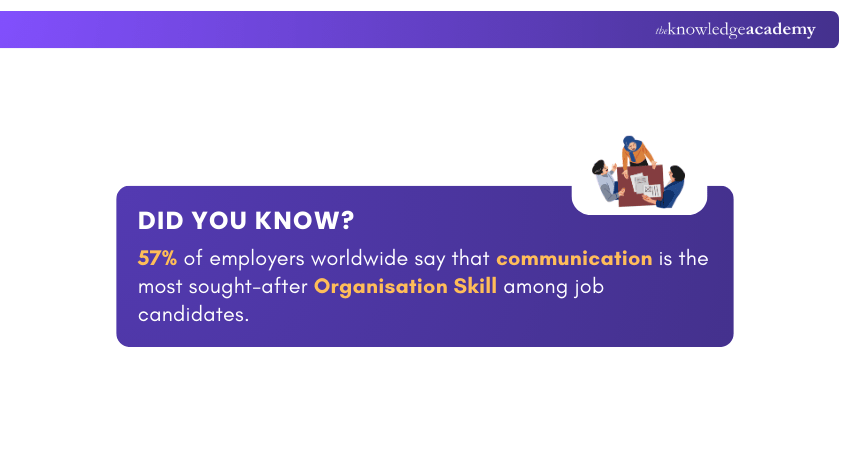
4) Good communication skills support prioritising tasks, delegating responsibilities and addressing urgent issues promptly.
5) Decision-making
1) Decision-making is a key organisational skill that is about making thoughtful, informed choices.
2) Organised employees use critical thinking and rational analysis to gauge situations.
3) They explore problems carefully and narrow down the most effective solutions.
4) Strong decision-making helps keep workloads structured and deliverables on schedule.
6) Goal Setting
1) Goal setting is about defining clear and achievable objectives.
2) It helps you stay focused, motivated and aligned with deadlines.
3) Planning the steps required to reach each goal is important to ensure steady progress.
4) Strong goal-setting skills provide direction and help with effective performance tracking.
7) Task Delegation
1) Delegation involves distributing tasks among team members based on their strengths and skills.
2) It ensures that responsibilities are assigned to the people best equipped to complete them.
3) Delegation allows you to maintain high-quality work and improve team efficiency.
4) It also prevents overworking by recognising your limits and sharing workload appropriately.
Your expertise deserves recognition. Sign up for our Certified Training and Development Manager Course now and turn learning into leadership!
8) Interpersonal Skills
1) Interpersonal skills help you properly interact with colleagues and maintain smooth communication.
2) They involve empathy, cooperation and understanding different perspectives in the workplace.
3) Strong interpersonal skills help resolve conflicts, encourage collaboration and build trust within teams.
4) These skills help build positive working relationships, thus contributing to a well-organised workplace.
9) Prioritisation Skills
1) Prioritisation means identifying the most important tasks and handling them first.
2) It helps you manage your workload more effectively and meet deadlines.
3) Focusing on high-impact tasks reduces stress and improves productivity.
4) Efficient prioritisation ensures time and energy are used wisely.
10) Strategic Planning
1) Strategic thinking is about analysing complex situations to make well-judged decisions.
2) It involves evaluating options, recognising patterns, and understanding long-term implications.
3) This skill helps professionals align daily actions with broader organisational objectives.
4) Strong strategic thinking enables adaptability and informed decision-making in changing environments.
11) Collaboration
1) Collaboration involves working productively with colleagues and sharing a range of responsibilities.
2) It ensures everyone contributes toward the shared team goals.
3) Strong Organisational Skills help coordinate tasks and maintain a smooth flow of information.
4) Proper collaboration strengthens professional relationships and workplace cohesion.
12) Self-motivation
1) Self-motivated employees are always ready to take initiative and stay productive without relying on external pressure.
2) This motivation helps them stay organised and keep important tasks under control.
3) Strong self-motivation supports consistent focus and responsibility at work.
4) Reflecting on how the organisation contributes to personal goals can help secure long-term motivation.
13) Self-management
1) Self-management involves controlling your actions, emotions and workload to stay productive.
2) It includes maintaining discipline and avoiding procrastination.
3) Strong self-management helps you stay organised.
4) It helps with effective handling of challenges and pressures at work.
5) Consistent self-management leads to reliable, high-quality performance.
14) Strategic Thinking
1) Strategic thinking involves analysing situations and anticipating future challenges.
2) It focuses on planning long-term, effective solutions.
3) This skill supports informed decision-making and better judgment.
4) It helps you align your daily work with overarching organisational goals.
5) Strong strategic thinking allows you to adapt proactively to change and drive meaningful impact.
15) Workload Balancing
1) Workload balancing focuses on distributing tasks evenly to maintain efficiency and prevent burnout.
2) It helps professionals manage capacity by adjusting priorities based on urgency and effort.
3) Balanced workloads support consistent productivity and better time control.
4) This skill ensures sustainable performance without compromising work quality.
Transform the culture, transform the future. Sign up for our Organisational Culture Change Training now!
Tips to Improve Your Organisational Skills
Here are some easy and proven ways to build your Organisational Skills:
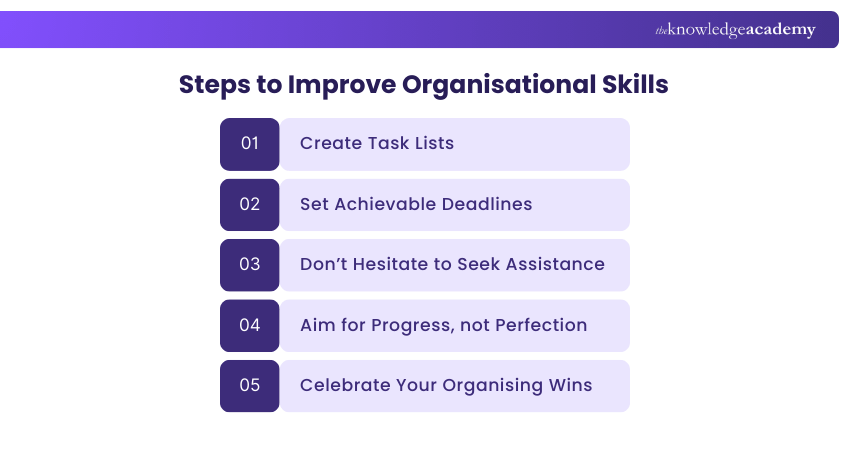
1) Create Task Lists
Creating lists is a great way to organise tasks and stay on track. Ticking items off helps you see your progress and keeps your work structured so you always know what to do next.
2) Set Achievable Deadlines
Ambitious goals can sometimes lead to overworking. Break big tasks into smaller steps with mini deadlines. This makes work easier to manage and helps you stay organised without feeling overwhelmed.
3) Don’t Hesitate to Seek Assistance
If you're unsure how to complete a task, ask a coworker or Manager for guidance. Getting help early prevents delays and keeps you on schedule.
4) Aim for Progress, not Perfection
Aiming for perfection can often lead to procrastination. Instead, focus on steady progress and completing tasks efficiently, even if small mistakes pop up. This helps you maintain momentum and keeps you organised.
5) Celebrate Your Organising Wins
If rewards motivate you, use them to build good habits. Treat yourself after finishing your tasks or meeting a deadline. Enjoying relaxing activities can help you recharge and stay productive.
How to Present Your Organisational Skills?
Being organised is not limited to the workplace. It can come in handy during the recruitment process. Here are some tips on highlighting your Organisational Skills when applying for your dream job:
1) On a CV
1) Review the job description to understand the Organisational Skills the employer expects.
2) Check whether your strengths match the qualities listed for the role.
3) Choose a CV template that includes a clear skills section.
4) List your key Organisational Skills in bullet points for easy visibility.
5) Highlight these skills in your work experience and professional summary as well.
6) Use relevant keywords such as 'task-oriented', 'reliable', and 'goal-oriented' to strengthen your CV.
2) In a Job Interview
1) Share real examples of how you stayed organised in previous roles.
2) Explain situations where you prioritised tasks or delegated effectively to meet deadlines.
3) If asked about personal strengths, mention how you organise activities in your daily life, such as planning trips or events.
4) Use these examples to show consistency between your personal habits and professional behaviour.
5) Demonstrating organisation in both work and personal life helps present you as reliable, honest, and well-aligned with the role.
Conclusion
Mastering Organisational Skills is more than a workplace advantage; it’s a career superpower. When you manage time well and prioritise wisely, you create space for creativity and real progress. The 15 skills outlined in this blog help you work smarter, stress less and shine brighter in any role. Start building them today and watch your professional journey soar.
Our Learning and Development Courses are the stepping stones to your next big career win - Sign up now!
Frequently Asked Questions
What are Key Skills in a CV?

Key skills in a CV refer to the core abilities that show your suitability for a role. They often include:
1) Communication
2) Teamwork
3) Problem-solving
4) Time Management
5) Organisational Skills
6) Adaptability
7) Leadership
8) Digital literacy
Listing the relevant skills helps employers quickly see your strengths.
How do You Demonstrate Organisational Savvy?
You can demonstrate organisational savvy by understanding workplace environments and building positive relationships. This includes:
1) Communicating clearly and professionally
2) Adapting to team dynamics and organisational change
3) Anticipating challenges and planning responses in advance
4) Aligning your actions with organisational goals
What are the Other Resources and Offers Provided by The Knowledge Academy?
The Knowledge Academy takes global learning to new heights, offering over 3,000+ online courses across 490+ locations in 190+ countries. This expansive reach ensures accessibility and convenience for learners worldwide.
Alongside our diverse Online Course Catalogue, encompassing 19 major categories, we go the extra mile by providing a plethora of free educational Online Resources like Blogs, eBooks, Interview Questions and Videos. Tailoring learning experiences further, professionals can unlock greater value through a wide range of special discounts, seasonal deals, and Exclusive Offers.
What is The Knowledge Pass, and How Does it Work?
The Knowledge Academy’s Knowledge Pass, a prepaid voucher, adds another layer of flexibility, allowing course bookings over a 12-month period. Join us on a journey where education knows no bounds.
What are the Related Courses and Blogs Provided by The Knowledge Academy?
The Knowledge Academy offers various Learning and Development Courses, including the Training Needs Analysis Course, Organisational Skills Course and the Organisational Culture Change Training. These courses cater to different skill levels, providing comprehensive insights into Organisational Culture.
Our HR Blogs cover a range of topics related to Organisational Skills, offering valuable resources, best practices, and industry insights. Whether you are a beginner or looking to advance your Organisational Skills, The Knowledge Academy's diverse courses and informative blogs have got you covered.
Upcoming HR Resources – Learn about Human Resources Batches & Dates
Date
 Organisational Skills
Organisational Skills
Fri 17th Apr 2026
Organisational Skills
Fri 17th Jul 2026
Organisational Skills
Fri 16th Oct 2026

 If you wish to make any changes to your course, please


