


We may not have the course you’re looking for. If you enquire or give us a call on 01344203999 and speak to our training experts, we may still be able to help with your training requirements.
Top 11 Journalism Skills to Strengthen Your Media Career
ByGaurav KalitaLast updated on: 09 October 2026
Explore our blog on journalism skills and develop your storytelling, writing, and interviewing skills for working in media and communications.

Key Highlights
1. Journalism combines research, communication and storytelling skills2. Strong interviewing and writing help create clear, engaging stories3. Critical thinking and verification support accurate and reliable reporting4. Digital literacy helps Journalists navigate modern tools and platforms5. Ethics, adaptability and resilience are essential in an evolving media landscape
Journalism is a dynamic field that plays an essential role in shaping our world by transforming mere information into captivating stories. From the precision of writing to the depth of research, the acuity of critical thinking to the prowess of multimedia, these journalism skills shape the essence of the discipline in more ways than one.
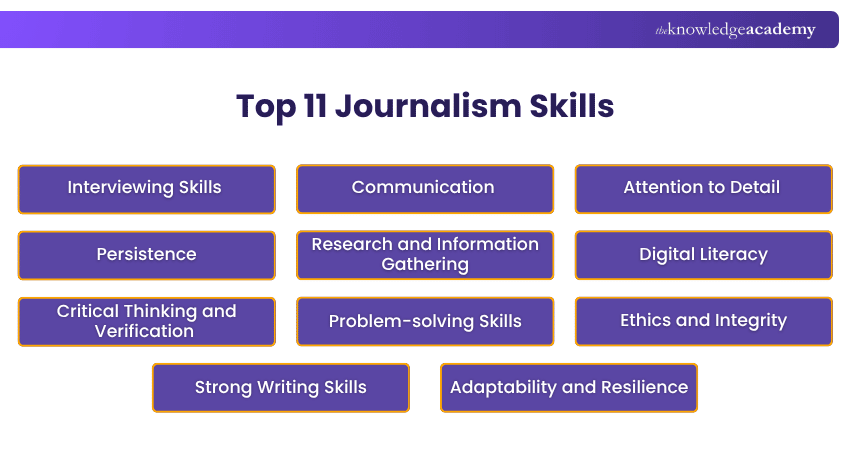
Journalism requires a combination of skills that enable individuals to effectively gather, analyse, and communicate news and information to the public. Continue reading below to gain insights on the top 11 journalism skills that illuminate the path to journalistic excellence.
Top 11 Journalism Skills
To excel in the field of journalism and stand out in a crowded digital world, aspiring Journalists need to possess a diverse set of abilities. Whether you are a seasoned Journalist or just starting your career, the following are the top 11 journalism skills that can pave the way to success.
1) Interviewing Skills
A Journalist's ability to conduct compelling interviews is a cornerstone of storytelling, enabling them to draw out personal narratives, expert opinions, and firsthand accounts that lend depth and authenticity to their work. Through artful conversations, Journalists illuminate the human experiences behind the headlines and provide their audience with a window into the world's complexities.
Interviewing skills include the art of inquiry, which is the ability to ask thoughtful and probing questions that elicit meaningful responses. The questions a Journalist asks serve as a compass, guiding the direction of the conversation and shaping the narrative that emerges. Effective questioning requires a balance between open-ended inquiries, encouraging expansive responses and focused questions extracting specific details.

2) Communication
A Journalist's central responsibility is communicating news through writing or speech. Irrespective of proficiency in other skills, being a Journalist hinges on excellent communication abilities. The role encompasses interviewing sources, reporting news, and crafting articles or scripts.
Enhancing communication skills by fostering friendliness, empathy, and confidence is imperative. These attributes are crucial when presenting news or information. Developing these skills ensures effective engagement with audiences. It establishes credibility in journalism, underlining the significance of a well-rounded communication approach in the multifaceted role of a Journalist.
3) Attention to Detail
Journalists bear the responsibility of disseminating accurate and verified information. In an era where information derives from various sources, distinguishing credible from dubious outlets is imperative. Meticulous attention to detail is essential for a Journalist to ascertain the accuracy of the news they present to the public.
Thorough research on a given topic is essential for developing a comprehensive understanding and checking relevant facts before publication. By maintaining accuracy and attention to detail, Journalists can strengthen the reliability of their reporting and the trust of their audiences.
4) Persistence
In journalism, obtaining relevant information may require persistence, particularly when sources are unavailable or information is difficult to verify. Journalists may need to explore alternative sources, follow new leads and continue researching while respecting ethical and professional boundaries.
Persistence also involves following up on unanswered questions, revisiting sources and exploring different ways to obtain reliable information. This helps Journalists investigate complex stories without giving up when they encounter obstacles.
5) Research and Information Gathering
The essence of journalism lies in its commitment to truth and its responsibility to provide a factual account of events and issues. A Journalist's ability to navigate the labyrinth of information, sift through the noise, and unearth verified facts sets credible journalism apart from the misinformation that pervades the digital age.
Effective research involves gathering information from interviews, public records, official reports and other credible sources. Journalists must compare evidence, understand the context and identify gaps in the available information before developing a news story.
Develop clear, impactful, and meaningful communication skills with Communication Skills Courses – Register today!
6) Digital Literacy
Digital literacy is not just about mastering tools and platforms; it's about understanding the nuances of the digital landscape, harnessing its potential, and effectively communicating stories to a global audience. As Journalists traverse this digital frontier, they must wield digital literacy as a compass, guiding them through the complexities of the modern journalism landscape.
Digital literacy extends beyond basic computer skills; it encompasses a deep understanding of the technologies that underpin modern journalism. From Content Management Systems (CMS) to data visualisation tools, Journalists use various digital technologies to create, edit and share content across different platforms. This technological fluency enhances efficiency, allowing Journalists to produce quality work in a fast-paced environment.
Modern digital literacy also involves evaluating online sources, verifying digital content and understanding the opportunities and risks associated with emerging technologies such as AI. These skills can help Journalists identify misleading or manipulated content and use digital tools responsibly.
7) Critical Thinking and Verification
Critical thinking helps Journalists evaluate information, question assumptions and assess the credibility of sources before drawing conclusions. Rather than accepting information at face value, Journalists should examine evidence, identify inconsistencies and consider relevant context.
Verification complements critical thinking by checking facts, sources, documents, images and other evidence before publication. Together, these skills help Journalists reduce errors, challenge misinformation and produce more reliable reporting.
8) Problem-solving Skills
Problem-solving skills for a Journalist involve swiftly navigating complex situations, identifying key issues, and devising practical solutions. A Journalist must adeptly analyse information, discern patterns, and synthesise details to craft insightful narratives. This skill extends beyond uncovering stories, encompassing the ability to address ethical dilemmas and unexpected obstacles in the news-gathering process.
For example, when a source becomes unavailable or important information is missing, Journalists must find alternative ways to gather evidence. Effective problem-solving helps them overcome reporting challenges, make sound decisions and meet deadlines without compromising accuracy.
Real-world Scenario
Imagine breaking news develops shortly before a deadline. A Journalist receives conflicting information from different sources. Instead of publishing immediately, they compare evidence, verify key details and communicate with additional sources. Here, critical thinking, persistence, verification and problem-solving work together to support responsible reporting.
9) Ethics and Integrity
A Journalist's commitment to truth, accuracy, and responsible reporting is a moral imperative and a fundamental obligation to the audience. Ethics and integrity help journalism remain reliable and accountable, fostering trust between Journalists and their communities.
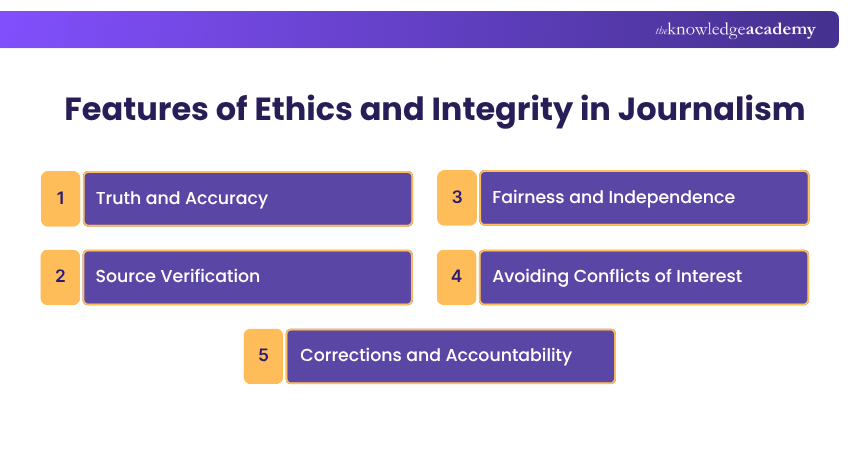
Ethics in journalism encompasses guiding principles that influence how Journalists gather, verify and present information. These principles help Journalists navigate complex reporting situations while promoting accuracy, fairness, independence and transparency. Upholding ethical standards demonstrates a commitment to responsible reporting and accountability to the public.
10) Strong Writing Skills
Writing transcends the role of mere communication; it becomes a form of artistry that engages readers, imparts knowledge, and shapes public discourse. In journalism, it is more than just a mechanical process of stringing words together; it's an alchemical blend of creativity, precision, and insight. Words have the potency to evoke emotions, provoke thoughts, and even drive societal change.
Strong writing skills help Journalists present complex information in a clear, accurate and engaging manner. They must know how to structure news reports, write effective headlines, organise important details and adapt their writing style for different audiences and media platforms.
Trainer’s Tip
Write for clarity before complexity. Lead with the most important information, remove unnecessary wording and make sure every paragraph helps the reader understand the story.
11) Adaptability and Resilience
The traditional paradigms of media are shifting, influenced by technological advancements, changing audience behaviours, and evolving storytelling formats. Journalists who embody adaptability and resilience not only thrive in this fluid landscape but also contribute to shaping the future of journalism itself.
Adaptability is embracing change with an open mind and a willingness to evolve. In an industry where platforms, tools, and trends are constantly in flux, Journalists who cultivate this skill are better equipped to navigate shifting currents.
Resilience is the strength to recover from setbacks that are bound to occur in a Journalist's career. Whether dealing with tight deadlines, criticism, or unforeseen challenges, resilient Journalists stay composed and adjust their approach to rise above adversity.
Keep This in Mind
Strong journalism is not built on one skill alone. Research, verification, communication, ethical judgement and adaptability work together to help Journalists produce accurate, responsible and engaging stories.
Elevate your writing skills and produce high-quality content with the Writing and Editing Course – Join now!

Gaurav Kalita is a Content Writer with 2+ years of experience in content development, research and storytelling. His background in English literature and teaching, combined with his growing interest in AI and Machine Learning, supports his writing across Business Skills and IT and Tech.
View Detail

 If you wish to make any changes to your course, please


