




We may not have the course you’re looking for. If you enquire or give us a call on 01344203999 and speak to our training experts, we may still be able to help with your training requirements.
Importance of PCI DSS: An Overview
ByThe Knowledge AcademyLast updated on: 18 September 2026
PCI DSS is vital for safeguarding cardholder data, preventing payment fraud, and maintaining trust for businesses that process card payments. It reduces the risk of data breaches and strengthens data security across systems and networks. It also supports regulatory compliance and long-term customer trust worldwide.
Digital payments have become a part and parcel of business operations nowadays. It is in this convenience that comes the obligation of ensuring that sensitive cardholder data is secured, and compliance requirements are met.
This is the reason why the importance of PCI DSS compliance should not be overlooked. It assists organisations to minimise security risks, comply with regulatory provisions, as well as sustain consumer confidence in the long term. Let’s dive in and find out more!
What is PCI DSS?
The Payment Card Industry Data Security Standard (PCI DSS) is a comprehensive set of security standards established by major credit card companies to safeguard sensitive cardholder data. PCI DSS provides guidelines and best practices for organisations that process or store payment card information. It ensures businesses maintain a secure environment to protect against data breaches and unauthorised access.

Who Needs to be PCI DSS Compliant?
Following PCI DSS compliance is important because it helps protect customer data and keep your business safe from hackers, fraud, and fines. Let’s look at some of its key reasons:
1) Protects Customers’ Card Data: The main goal of PCI DSS is to protect customers’ card data from hackers. PCI DSS gives clear rules to help protect customer data and keep it away from cyberattacks.
2) Builds Customers’ Trust: When customers see that you care about keeping their card details safe, they’re more likely to trust your business. This makes them feel more comfortable buying from you and can help build long-term loyalty.
3) Strong Security System: PCI DSS helps you create a strong plan to protect your systems. It includes steps like using firewalls and encryption, protecting against viruses and malware, and making clear security rules.
4) Low Risk of Data Breaches: PCI DSS tells businesses to take steps like checking for weak spots, using encryption, and tracking system activity. This makes it harder for hackers to steal data and reduces the risk of major losses or damage to your business.
Who Needs to Be PCI DSS Compliant?
Any business or organisation that handles payment card transactions must follow PCI DSS rules. This includes:
1) Merchants of online shops and E-commerce businesses
2) Retail stores with card payment machines
3) Banks and card issuers
4) Restaurants, hotels, and cafes
5) Doctors’ offices and clinics that process card payments
6) Third-party service providers that store or transmit card data
Learn the best practices for Compliance and Data Protection by registering for our PCI DSS Foundation Course immediately!
Importance of PCI DSS
PCI DSS is a set of rules that helps businesses keep their customers’ card information safe. Following these rules isn’t just about ticking boxes; it brings real benefits to businesses. Here's why PCI DSS compliance is important:
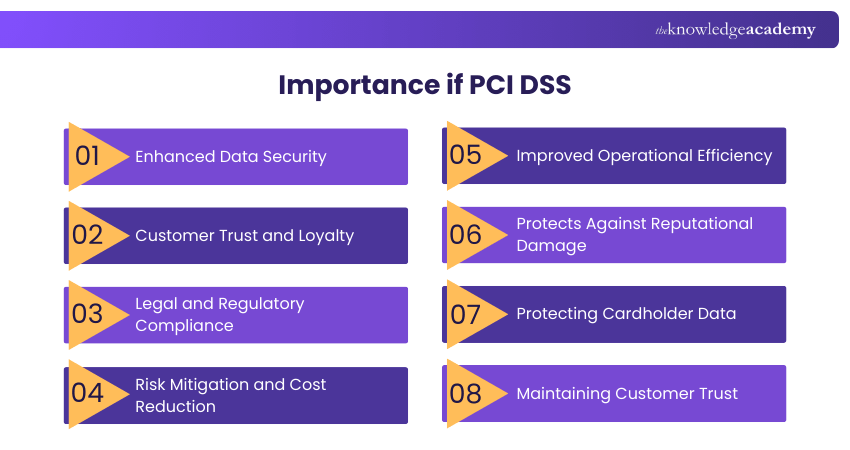
1) Enhanced Data Security
When a business follows PCI DSS, it creates a safer system for handling card payments. This includes using things like the Data Encryption Standard, password protection, and monitoring tools. These steps lower the chances of a data breach or unauthorised access.
2) Customer Trust and Loyalty
Customers always want to be assured that their card details are safe. When they see a business that takes security seriously, they’re more likely to trust it. This trust helps build long-term relationships and keeps customers coming back.
Protect your customers and your business now with our Consumer Protection Training – Sign up anytime soon!
3) Legal and Regulatory Compliance
Many countries have laws about protecting personal and payment data. PCI DSS compliance can help you follow these laws, which means there are fewer legal problems and the absence of big fines.
4) Risk Mitigation and Cost Reduction
A data breach can cost a lot, which might include fines, lawsuits, and fixing the damage. By following PCI DSS compliance, you can avoid these expenses by catching issues early and staying secure.
5) Competitive Advantage
When you are PCI DSS compliant, it shows your customers and partners that you really take security concerns seriously. This can set the business apart from competitors and attract people who care about privacy.
6) Improved Operational Efficiency
To meet PCI DSS requirements, you must have clear rules and systems in place. This leads to better processes, improved organisation, and stronger control over who can access data. In short, it helps you become more smoother and secure.
7) Protects Against Reputational Damage
If customer data gets stolen, the damage isn’t just financial. In turn, it can directly ruin your business's reputation among people. Following the compliance of PCI DSS shows you care about protecting customer data and helps maintain your brand's good name.
8) International Business Expansion
If you plan to grow internationally or work with global partners, being PCI DSS compliant would be a win. Many countries accept PCI DSS as an eligibility criterion. So, compliance makes it easier to meet different regional security rules and expand with confidence.
Discover the importance of adherence to legal requirements with our Effective Compliance Training – Join today!
Consequences of Non-compliance with PCI DSS
While it is not required by law to be compliant with PCI DSS, not being compliant can have its own consequences. Let's check what those consequences are:

1) Financial Penalties and Liabilities
If your business isn’t PCI compliant and there is a data breach, you may have to pay back stolen money, reimburse banks and customers, and face large fines. These costs can be so high that they could seriously hurt or even shut down your business.
2) Reputation Damage
Customers trust you to protect their card and personal information. If there is a breach, they will hesitate to do business with you. Once trust is lost, it is hard to regain or get it back, which can affect your brand’s reputation and future sales.
3) Legal and Regulatory Ramifications
Even though PCI DSS isn’t like an official law, ignoring it can still get you in trouble. Card companies can fine you, cancel your service, or even suspend your account. You might also have to pay for security improvements and monitoring after a breach.
4) Increased Transaction Fees
Non-compliance with PCI DSS may increase transaction fees imposed by card companies. These fees can be a consequence of breaches or a penalty for not adhering to the required security standards. Higher transaction fees can impact profitability and financial stability.
5) Limited Business Opportunities
Many partnerships and collaborations require PCI compliance as a prerequisite. Failing to meet these compliance requirements may hinder business expansion, limit potential partnerships, and prevent access to new markets that prioritise data security.
6) Higher Risk of Data Breaches
Non-compliance increases the chance of data breaches and security problems. Not implementing the necessary security measures and controls make businesses vulnerable to cyberattacks and unauthorised access, leading to significant financial and reputational damage.
Enhance the adequacy of compliance systems with our Security Governance and Compliance Training – Register today!
What is the Primary Goal of PCI DSS Compliance?
The key primary goal of PCI DSS is to keep cardholder data like credit card numbers, expiration dates, and security codes safe. That means making sure no one can see, steal, or misuse it. It does this by setting up strong rules for how to:
1) Protect data during storage and transfer
2) Control who can access card data
3) Fix any weaknesses before they lead to big issues
4) Monitor systems for problems or suspicious activity
Overall, PCI DSS helps reduce card fraud around the world by making sure every business that handles card payments takes security seriously.
How Often Should an Organisation Validate PCI DSS Compliance?
The organisations are expected to validate the compliance of PCI DSS at least once a year, and continuous monitoring and assessment is also recommended. Depending on the volume of transaction, the frequency may change, and top-level merchants will have to be audited externally by qualified assessors.

The Knowledge Academy develops accessible learning content across Project Management, IT, Cybersecurity, Data Science, Business Analysis, HR, Accounting and Finance, Leadership and Health and Safety. Its resources combine subject research with clear explanations to help professionals build practical knowledge across a wide range of disciplines.
View Detail

 If you wish to make any changes to your course, please


