





We may not have the course you’re looking for. If you enquire or give us a call on 01344203999 and speak to our training experts, we may still be able to help with your training requirements.
Top 20 Import Export Business Ideas to Start Today
ByAishwarya UnniLast updated on: 03 October 2026
This blog covers 20 promising import export business ideas across spices, textiles, food, industrial goods and more, along with the market, cost and compliance factors worth checking before choosing one.
The world has become more interconnected than ever, dramatically increasing the opportunities for new import export business ideas. People are no longer confined to purchasing from their own countries. A buyer from Liverpool, UK, can order from anywhere in the world through the various e-commerce websites available today. As a result, the trading sector has grown significantly in recent years.
If you want to engage in trading, you must learn about some amazing ideas that can bolster your business in no time. So, read this blog to learn about the top import export business ideas that you can start on your own and improve your business efficiency. Let's begin!
Best Import Export Business Ideas
Starting an import and export business can be a profitable venture, but it requires thorough planning and market research. Let’s look at some of the top import export business ideas for potential success:
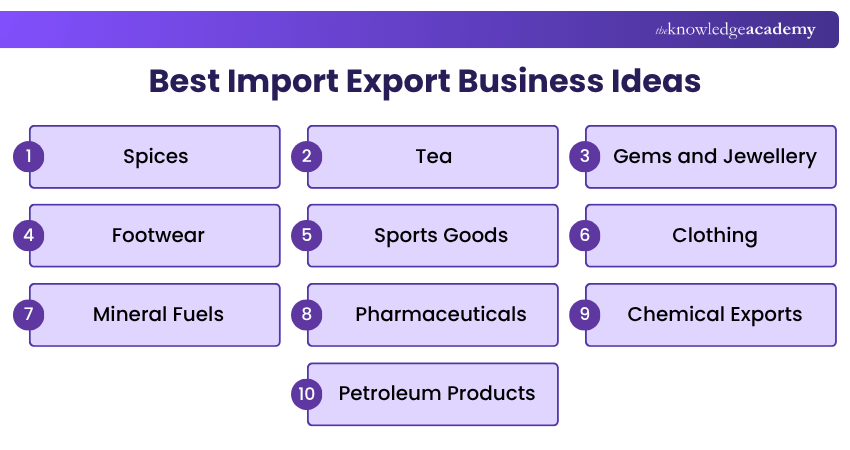
1) Spices
India is one of the biggest exporters and producers of spices in the entire world. From cardamom, cinnamon, and turmeric to cumin, dried chillies and star anise, Indian Exporters have widened their horizons in terms of business.
They have a great demand in the international markets, mostly in the UK, Canada, the Middle East, Egypt, and the US. You can analyse the spice demand in your region and then prepare a detailed report on the product and market to work on the spice trading business ideas that you have.
2) Tea
Monetise the global demand for tea with this import export business Idea. The demand for diverse tea varieties can be capitalised by sourcing high-quality tea leaves from local producers. By building partnerships, you can ensure quality control and better understand international regulations. With such a strategic approach, your tea import export business can potentially thrive in the ever-growing international market.
Trainer’s Insight
When comparing opportunities, consider not only whether customers will buy the product, but how frequently they may need to buy it again. Products with recurring demand can create different commercial opportunities from products purchased only occasionally.
3) Gems and Jewellery
This import export business Idea emphasises on trading gemstones, precious metals and crafted jewellery across borders. You can source these precious stones and metals like gold, silver, and platinum from one country and sell them in another country based on various market demands internationally.
This sector can offer trading opportunities where businesses can identify suitable demand, source products responsibly and meet the relevant customs, product and precious-metal or gemstone requirements of the markets involved.
4) Footwear
Footwear import and export business ideas involve the trading of shoes and other footwear across various countries. Importers can bring in stylish or specially crafted footwear to meet the growing local demand, while exporters can send their quality footwear to the international market. This business idea links diverse footwear styles worldwide, allowing people to access unique footwear styles and creating a global trade of fashion and comfort.
5) Sports Goods
Launching a sports goods import export business caters to the needs of sports enthusiasts, connecting people worldwide who share a love for sports gear. From exporting local favourites to importing unique finds, this business idea revolves around creating a global sports community. You can trade basketballs manufactured in one country and make them accessible to people in another country, sharing their love for sports through global trading.
6) Clothing
Starting a clothing import and export business by sourcing styles from one country and selling them in another can create opportunities to serve different consumer markets. With global fashion trends on your side, this import export business idea can help you bring diverse styles to new markets. Moreover, it can create a positive impact on fashion enthusiasts and businesses.
7) Mineral Fuels
Import and export of mineral fuels involves trading energy resources like oil and gas across countries. Importers buy these fuels to cater to their energy needs, and exporters usually sell their excess resources. It’s an important global business, ensuring countries have the energy needed to power their homes, industries and economies while creating economic cooperation on an international level.
8) Pharmaceuticals
Trading pharmaceuticals across borders can help supply medicines and healthcare products to different markets. However, pharmaceuticals are highly regulated products, and businesses may need to meet requirements relating to licensing, product approval, quality, documentation, storage and distribution in both the exporting and importing countries.
Risk & Compliance Alert
Not all import export business ideas involve the same level of regulatory complexity. Products such as pharmaceuticals, chemicals, fuels, food and animal-related goods may be subject to additional licences, certificates, inspections, labelling requirements or other controls.
9) Chemical Exports
The chemical export business involves supplying chemicals or chemical products across international markets. Businesses may source chemicals from one region and sell them in another where commercial demand exists.
10) Petroleum Products
The import and export of petroleum products involves trading fuels and related products between international markets. Demand may arise where countries or businesses need to supplement domestic supply. Since petroleum trading can involve significant safety, storage, transport, regulatory and financial requirements, businesses should carefully assess the applicable rules and commercial risks before entering this sector.
Navigate trade rules with confidence and precision by joining the Export and Trade Compliance Training today!
11) Leather Products
Starting an import export business in this domain means trading bags, shoes, and accessories globally. By sourcing or creating unique leather items, you can connect with international markets, catering to diverse tastes. This business works best when you offer stylish and durable products while creating a niche in the vibrant world of fashion and accessories.
12) Raw Ingredients
Raw ingredients like crops need an adequate climate, soil, and water to flourish and grow properly to cater to the needs of the world. But as these factors are not uniformly found worldwide, the need to import and export crops always persists.
Crops should be exported from countries that can grow them to other countries that do not have the adequate factors to nourish them. Raw ingredients import export business ideas are thus the most relevant in any period.
13) Cosmetics or Beauty Products
Trading cosmetics and beauty products can create opportunities where demand exists for products, ingredients or beauty trends from other markets. Businesses can source suitable products internationally and introduce them to target markets where there is demonstrated customer demand.
14) Animal Feed
Starting an animal feed import export business involves the trade of nutritious feeds for pets and livestock across the world. By sourcing quality feeds globally, you contribute significantly to the well-being of animals. It’s a rewarding venture that ensures the best nutrition for pets and farm animals, fostering their health and happiness.
Animal feed can be subject to product-specific health, safety, composition and import requirements. Businesses should therefore confirm the rules that apply in both the source and destination markets before trading.
15) Saffron Export
Saffron's high unit value and international use in food and other applications can make it an interesting product for cross-border trade. Businesses should first identify genuine demand, reliable suppliers, product-quality requirements and the costs involved in transporting and selling it in the target market.
6) Toilet Paper
Toilet paper is a widely consumed product that can be traded internationally where local supply, pricing or product availability creates a commercial opportunity. Before entering this market, businesses should consider transport and storage costs carefully because bulky, relatively low-value products can be sensitive to logistics costs.
17) Used or Second-hand Products
Exploring the world of used or second-hand products is like giving used items a second chance to shine. It’s about trading pre-loved goods globally, providing affordability and reducing waste. From vintage antiques to simple essentials, this business idea connects buyers and sellers worldwide and promotes sustainable and affordable choices.
Rules governing second-hand goods vary by product and destination. Certain used items may be restricted, require documentation or be treated differently from new goods, so businesses should verify applicable import rules before shipping.
18) Timber
Timber import export business involves buying and selling high-quality wood worldwide. Importers bring wood into the country to meet local demands, and exporters sell their timber to other regions.
Timber can support construction and manufacturing supply chains across markets, but businesses should consider legality, sustainability, species restrictions, documentation and plant-health or import controls where applicable.
Trainer’s Insight
Product size, weight and value can significantly influence the economics of international trade. A bulky, relatively low-value product may face higher logistics costs relative to its selling price, while a smaller, higher-value product may be more economical to transport.
19) Auto Spare Parts
Demand for automotive spare parts can create opportunities for businesses that identify suitable vehicle markets and reliable supply sources. Businesses can work with suppliers, establish dependable supply chains and connect with buyers that require replacement or maintenance components.
20) Food and Beverages
Launching a food and beverage import export business involves supplying food or drink products across international markets by importing products with local demand or exporting distinctive domestic products abroad. This type of trading may involve requirements for labelling, composition, hygiene, documentation and border controls, which vary by product and destination and should be verified before trading.
Optimise operations and keep your supply chain moving by signing up for the Supply Chain Management Training now!
How to Choose an Import Export Business Idea?
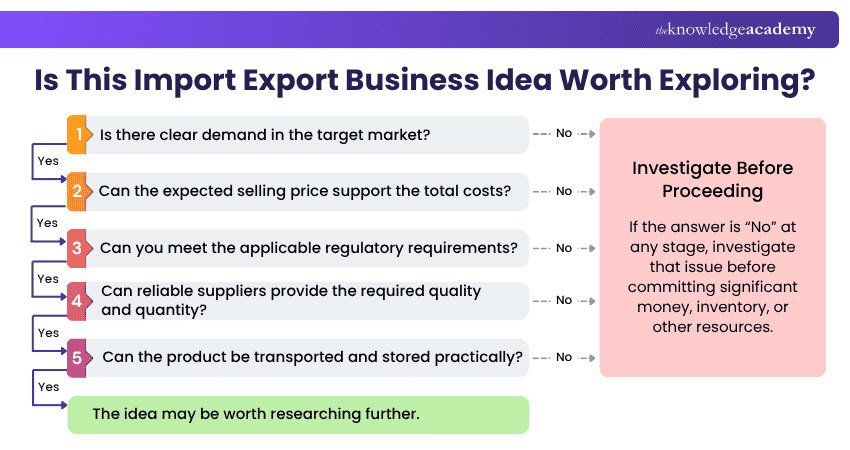
Choosing an import export business idea requires more than identifying a popular product. The right opportunity should fit the target market, available capital, supplier network, logistics capabilities and applicable regulations. Consider the following factors before selecting a product:
a) Market Demand: Research whether the target market needs the product by assessing demand trends, competitors and potential customers.
b) Costs and Potential Margin: Consider freight, insurance, customs duties, taxes, storage and other expenses that affect landed cost and margins. Correct commodity classification is also important for determining duties and customs requirements.
c) Regulations and Compliance: Check whether the product requires licences, certificates, testing, specific markings, labelling or other controls. Requirements differ between countries and product categories.
d) Supplier Reliability: Assess whether suppliers can consistently provide the required quality, quantity, documentation and delivery performance. A commercially attractive product can still become problematic if supply is unreliable.
e) Logistics and Storage: Consider the product's size, weight, fragility, shelf life, temperature requirements and storage needs. These factors can significantly influence cost and operational complexity.
Bridge the gap between learning and real-world performance with Industry Training today!
Your Next Steps
1. Shortlist 2–3 ideas from this list that genuinely interest you or match a market you already understand.2. Run the numbers on each: estimate landed cost, likely margin and minimum order quantities before committing.3. Check the regulatory picture for your shortlisted products in both the sourcing and target countries.4. Talk to a potential supplier before you talk to a customer, reliability issues surface faster than demand issues.5. Start small with a trial shipment or minimum order rather than committing full capital to an untested idea.

Aishwarya Unni is a Copywriter with 2+ years of experience in reporting, web content, blogs, email marketing, and case studies. Her journalism background, combined with her research and writing experience across Business Skills and Human Resources, helps her create clear, engaging content for different audiences.
View Detail

 If you wish to make any changes to your course, please


