


 Top Rated Course

We may not have the course you’re looking for. If you enquire or give us a call on 01344203999 and speak to our training experts, we may still be able to help with your training requirements.
How to Solve a Rubik's Cube? Explained in 3 Easy Steps
Michael Jones 16 July 2026To Solve a Rubik's Cube, beginners follow a layer-by-layer method. This approach breaks the solution into manageable steps that use specific sequences of moves. Starting with one layer and moving upward, learners use specific move sequences to align colours systematically until all six sides are completely solved.

Training Outcomes Within Your Budget!
We ensure quality, budget-alignment, and timely delivery by our expert instructors.
Table of Contents
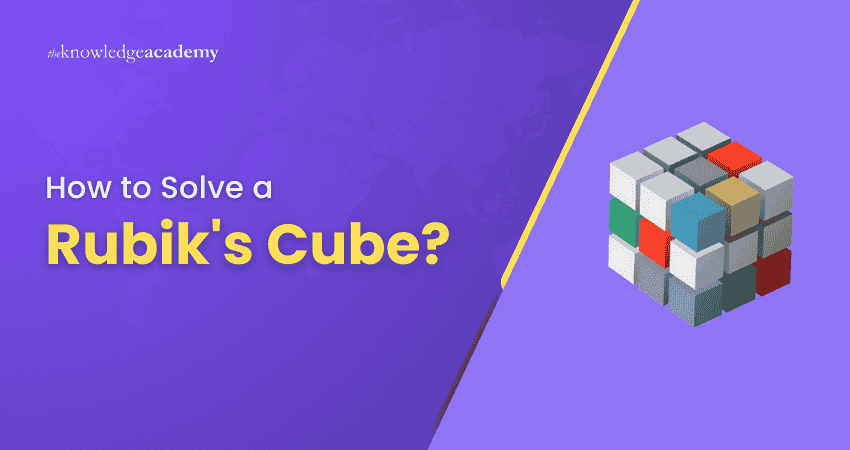
How to Solve a Rubik's Cube? Three billion combinations and just one solution make this little cube both mysterious and exciting. It has fascinated millions for decades, sparking curiosity and playful competition around the world. Don’t let the numbers fool you, though. Solving a Rubik’s Cube isn’t some secret reserved for maths whizzes.
With a little patience and a clear method, anyone can crack the colourful challenge and enjoy that satisfying “aha!” moment. In this blog, we’ll walk through the simple steps for How to Solve a Rubik’s Cube. With the right twists, turns, and a dash of fun, you’ll see how this puzzle becomes less of a headache and more of a delightful victory. Let’s get started!
Table of Contents
1) Understanding the Rubik's Cube
2) Steps to Solve a Rubik's Cube
3) How to Solve 3 into 3 Cubes?
4) How to Solve a Rubik's Cube in 20 Moves?
5) Conclusion
Understanding the Rubik's Cube
The Rubik’s Cube is a 3D puzzle built around a fixed core, with 20 movable pieces including 8 corners and 12 edges. Each piece rotates around the centrepieces, which remain in place. Understanding this structure is key before learning the beginner’s method, which solves the cube layer by layer.
The Basics of a Rubik’s Cube
If you are learning How to Solve a Rubik's Cube, it helps to understand its structure. The Rubik’s Cube is built around a spherical core that holds all the moving parts together. Each of the six centrepieces is fixed to this core, while the other pieces rotate around it.
The cube has 20 movable pieces: 8 corner pieces with three colours each and 12 edge pieces with two colours each. These parts move smoothly using springs and screws attached to the core.
Beginners usually follow a layer-by-layer method. The process starts with forming a cross on the base layer, then completing all first-layer corners. Next, the second layer is aligned, and finally, the top layer is solved step by step until the cube is complete.

Steps to Solve a Rubik’s Cube
Solving the Rubik’s Cube may look tricky, but with a structured approach, anyone can do it. The beginner’s method breaks the puzzle into small, easy steps so you can progress layer by layer. So, let’s dive in and learn How to Solve a Rubik’s Cube:
Step 1: Complete the First Layer Cross
a) Keep the white centre on top.
b) Place the green centre in front.
c) Find the green and white edge piece (it has only two colours).
d) Turn it to the correct position while keeping white on top and green in front.
e) Repeat this process for the other edges until the white cross is complete.

Step 2: Complete the First Layer Corners
a) Keep the white cross on top.
b) Place the green centre in front.
c) Find the green, white, and red corner piece (it has three colours).
d) Position it between the green and red centres without disturbing the cross.
e) If the piece is in the wrong place, move it to the bottom layer, then try again.
f) Repeat until the entire white layer is solved.
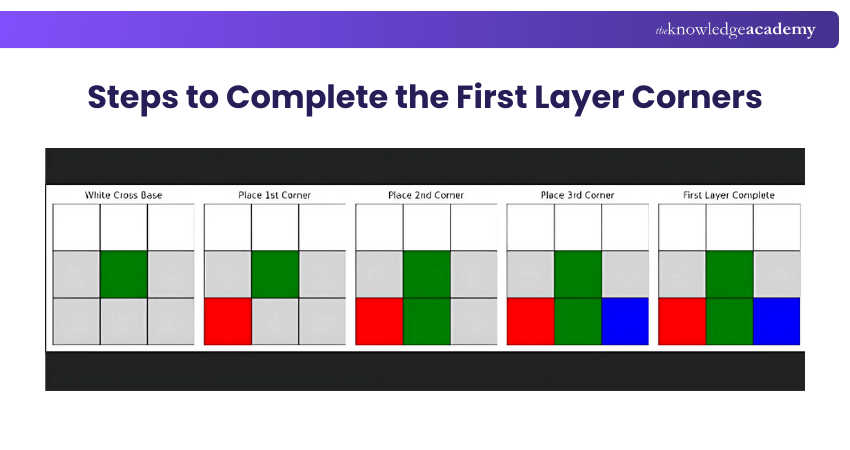
If the corner is in the top layer but incorrectly placed or rotated, here's the fix:
a) Turn the cube so that this corner is in the front-right top position
b) Follow the steps to move it to the bottom layer.
c) Afterwards, use the three steps mentioned above to reinsert it correctly.
Boost focus and reduce stress with our Mindfulness Training - Sign up Now!
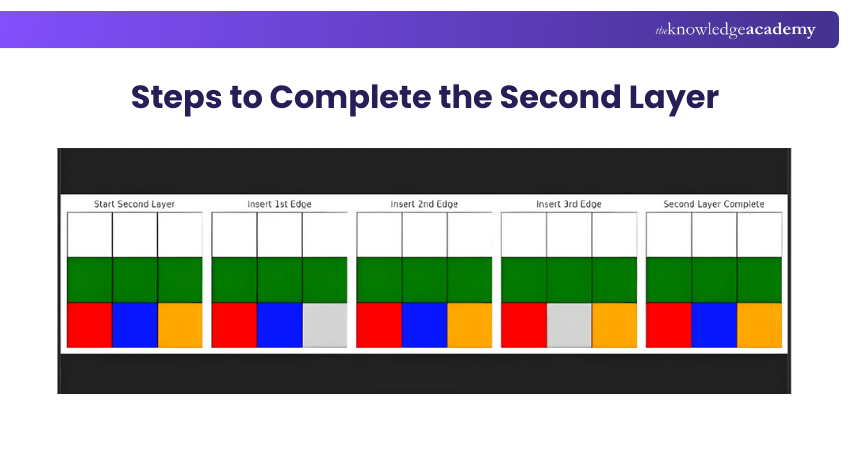
Step 3: Complete the Second Layer
a) Keep the white face on top.
b) Find the correct edge piece for the second layer.
c) If it is in the bottom layer, align it with the centre colour.
d) Place it either to the left or right using the correct sequence of moves.
e) If an edge is stuck in the wrong place, move it down first, then reposition.
f) Continue until the second layer is complete.
If the desired edge piece is already in the second layer but incorrectly oriented, here's the fix:
a) Rotate the cube so the edge is in the front layer
b) Perform one of the earlier algorithms to move it down to the bottom layer.
c) Afterwards, return to Step
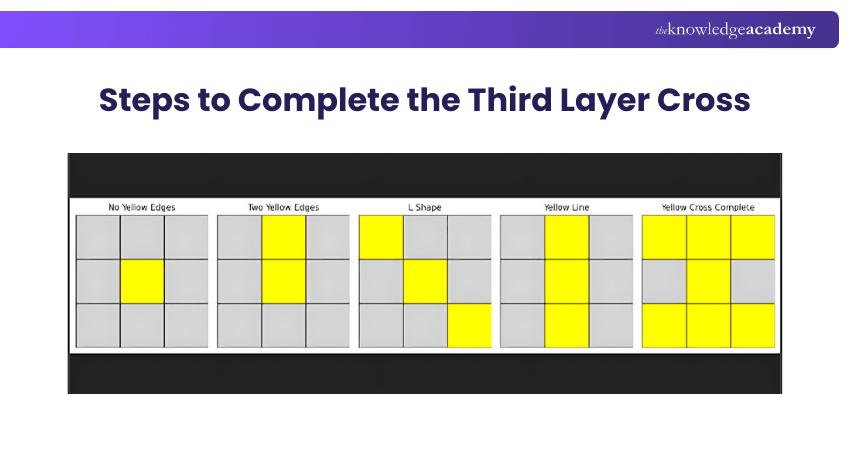
Step 4: Complete the Third Layer Cross
a) Turn the cube so the yellow centre is on top.
b) You may see no yellow edges, two yellow edges, or four.
c) Apply the moves to form the yellow cross.
d) Rotate the top layer until at least two edges match their centre colours.
e) Hold the cube so the correct edges are at the back and right, then perform the sequence to fix the others.
If the two correct edge pieces are opposite each other, perform the algorithm once, rotate the cube as shown and then repeat it again.
Step 5: Complete the Third Layer Corners
a) First, place all four corners in the correct position, even if they are twisted.
b) If one corner is correct, keep it in the top right position and perform the moves until all corners are positioned correctly.
c) Next, rotate each corner piece until the yellow face is complete.
d) The cube may look scrambled during this step, but it will align perfectly once the last corner is solved.
But if no corners are in the correct position, try this fix:
a) Perform sequence a) once with any face toward you (yellow on top).
b) This will place one corner correctly.
c) Then continue with step (A) to fix the rest.
Once all corners are in their places, follow the final steps to rotate them correctly and fully solve the cube.

How to Solve 3 Into 3 Cubes?
Start by solving the white cross, then solve the white corners. Next, complete the middle layer by positioning the edge pieces. Lastly, solve the yellow cross, orient the yellow corners, and permute them to solve the cube completely. Use algorithms for each stage to simplify the process.
Crack the code of challenges and turn every problem into possibilities with our Problem Solving Course - Sign up now!
How to Solve a Rubik's Cube in 20 Moves?
Solving in 20 moves is known as "God’s Number." Using advanced algorithms, optimising each step, and understanding cube theory, you can reduce moves. Focus on efficient edge orientation, corner positioning, and utilise pre-solved patterns to minimise the moves while completing the cube.
Conclusion
Solving a Rubik’s Cube becomes much simpler when you follow a clear, step-by-step approach. With patience and practice, anyone can master the puzzle and enjoy the satisfaction that comes with each solved layer. Whether for fun, focus, or personal achievement, learning how to solve a Rubik’s Cube turns a classic challenge into a rewarding experience.
Discover the science of behaviour and thinking with our Psychology Course - Sign up now!
Frequently Asked Questions
How to Tell if a Rubik's Cube is Unsolvable?

You can check for the following conditions to determine if a Rubik's Cube is unsolvable:
a) The cube is unsolvable if any two pieces have been switched in an odd number of swaps.
b) The cube is unsolvable if the centre pieces appear rotated.
c) Two same-coloured corner pieces facing each other could make the cube unsolvable.
How Long Does it Take the Average Person to Solve a Rubik's Cube?
For a beginner using a step-by-step method, it typically takes between 20 and 30 minutes to solve a Rubik’s Cube for the first time. With regular practice, most people can reduce this time significantly as they become familiar with the solving process.

Michael Jones


Health and Safety Consultant and Compliance Trainer
Michael Jones is a seasoned health and safety expert with more than 15 years of experience in workplace safety, risk management, and compliance training. He has worked across construction, manufacturing, and corporate sectors, helping organisations meet legal requirements and create safer working environments. Michael’s training and writing are known for being practical, clear, and aligned with UK regulations.
View Detail


 If you wish to make any changes to your course, please


