


 Top Rated Course

We may not have the course you’re looking for. If you enquire or give us a call on 01344203999 and speak to our training experts, we may still be able to help with your training requirements.
How to Pass PMI PBA? A Quick Guide
David Evans 14 July 2026This blog explains how to Pass the PMI-PBA exam by providing details on aspects such as exam format, time management, and study materials to consider.

Training Outcomes Within Your Budget!
We ensure quality, budget-alignment, and timely delivery by our expert instructors.
Table of Contents
How to pass the PMI PBA® Exam is a common question asked by Business Analysts who want to enhance their skills to advance in their careers. PMI PBA is a valuable certification demonstrating your knowledge and expertise in Business Analysis, Project Management, and Agile methodologies. To pass the PMI PBA® Exam, you must have a solid understanding of the exam content, format, and test-taking strategies.
Following the tips discussed in this blog and leveraging the available resources can increase your chances of passing the PMI PBA® Exam on your first attempt. In this blog, you will learn how to pass the PMI-PBA® Exam and be prepared for a globally recognised credential that certifies your proficiency in Business Analysis.
Table of Contents
How to Pass the PMI PBA® Exam?
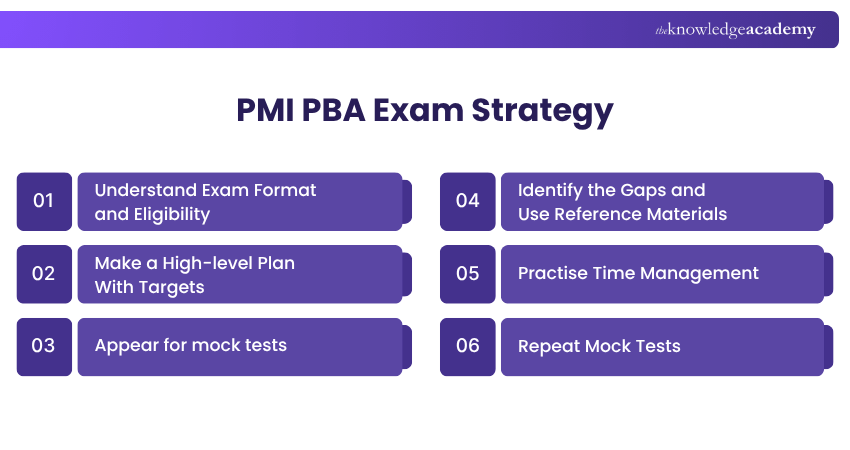
a) Understand the Exam Format and Structure
b) Set Targets With High-end Goals
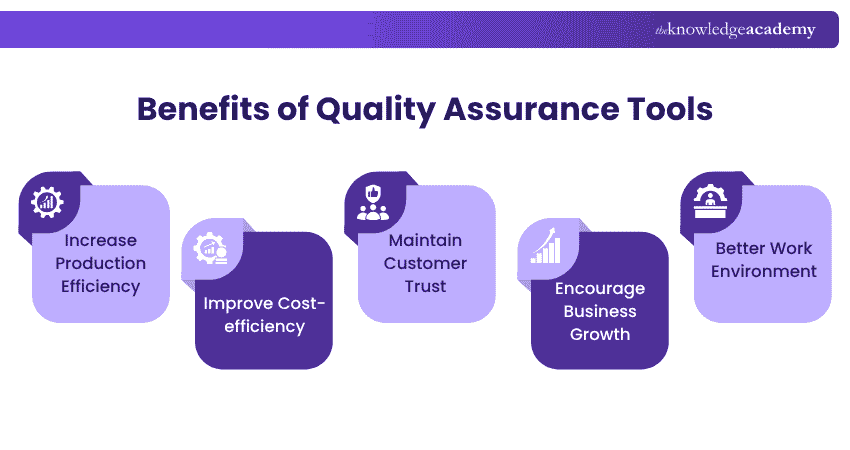
c) Usage of Quality Assurance Tools for Exam Preparation
d) Understanding Testing Concepts
e) Focus on Key Terms and Context
f) Appear for Mock Tests
g) Identify the Gaps and Use Reference Resources
h) Understanding Who are Your Stakeholders
i) Time Management
j) Use More Study Materials
k) Measuring the Effectiveness of a Solution
l) Take Mock Retests
2) Conclusion
How to pass the PMI PBA® exam?
The PMI PBA® certification exam is a challenging and comprehensive exam that tests your knowledge of Business Analysis principles, techniques, and tools, highlighting the Benefits of PMI-PBA Certification Exam for career advancement. Here are 13 ways to increase your chances of passing the PMI PBA® Exam:
Understand the Exam Format and Structure
The PMI PBA® Exam consists of 200 multiple-choice questions you must answer within four hours. Knowing the format and structure of the exam will help you prepare. But before starting to prepare for the exam, check your eligibility.
Eligibility criteria:
1) Secondary Degree, High School Diploma, Associate Degree, or Equivalent Qualification:
a) At least 60 months of Business Analysis experience gained within the last 8 years
b) A minimum of 35 contact hours of Business Analysis education
OR
2) Bachelor's Degree or Higher (or Global Equivalent):
a) At least 36 months of Business Analysis experience gained within the last 8 years
b) A minimum of 35 contact hours of Business Analysis education
OR
3) Bachelor's or Postgraduate Degree from a GAC-Accredited Programme:
a) At least 24 months of unique, non-overlapping professional Business Analysis experience
b) A minimum of 35 contact hours of formal education

2) Set targets with high-end goals
It's common for humans to require a specific objective and a clear direction towards achieving that objective. As the popular saying goes, nothing gets accomplished without setting deadlines or time constraints. If you don't set a date for taking the PMI-PBA exam, you may continuously postpone your study to the next feasible opportunity. Hence, it's crucial to establish a specific target date or month for the exam and work backwards from that date to create a plan. If there isn't any immediate urgency, you could set this date as X+5 months, where X represents the current day, giving you ample time to prepare and study for the exam.
3) Usage of quality assurance tools for exam preparation
The PMI PBA® Exam covers a variety of quality planning, assurance, and control tools, including figures, charts, and graphs from the Project Quality Management knowledge area. It is particularly important to be familiar with the basic quality tools, as they usually appear on exams. These tools include a range of techniques for analysing and improving quality, such as histograms, Pareto charts, and scatter diagrams.
By studying and mastering these tools, you can increase your chances of success on the PMI PBA exam and demonstrate your proficiency in quality management. Therefore, you should pay close attention to the figures, charts, and graphs from the Project Quality Management knowledge area. Additionally, take the time to practice using the basic quality tools to ensure that you are well-prepared for the exam.
4) Understanding Testing Concepts
While testing may not be a core responsibility of most Business Analysts, it is still an important topic covered in the PMI PBA® Exam. Although the PMBOK provides limited information on this area, it is still important to understand the basics of testing. You don't necessarily need to have a deep understanding but should be familiar with it at a high to intermediate level. By doing so, you can ensure that you understand testing well and are prepared for any related questions on the exam.
Step into Project Management with a strong foundation by joining the PMI Project Management Ready Training now!
5) Focus on Key Terms and Context
The PMI-PBA exam contains scenario-based questions that require careful analysis of the information provided. You should pay close attention to key terms, stakeholder requirements, business objectives, and contextual details within each question. Understanding what the question is asking can help you eliminate incorrect options and select the most appropriate answer. This approach improves accuracy and supports effective exam performance.
6) Appear for mock tests
After studying the PMBOK and other reference materials, testing your knowledge through full mock tests is important. These tests evaluate your knowledge and learning and your ability to sit for a 4-hour exam without losing focus. Taking 1-2 mock tests is recommended to build up your endurance for the actual exam, and these mock tests will help you prepare for the exam in multiple ways. Additionally, it's important to repeat this step after every mock test to ensure that you continuously improve your performance and identify any areas where you may need extra study hours.
By registering in our PMI Professional in Business Analysis PMI-PBA® Course right away, you can grow your business analysis profession and discover a world of potential.
7) Identify the gaps and use reference resources
Merely taking mock tests without proper analysis will not yield positive results. To effectively utilise the benefits of mock tests, it is essential to identify areas of improvement, and neglecting this analysis will not serve the purpose of taking mock tests.
It is crucial to pinpoint the areas that require revision and identify the reasons for incorrect answers. PMI-PBA Exam Difficulty varies based on individual preparation, making it essential to focus on weak areas. To enhance understanding, one should refer to various sources such as the internet, YouTube, LinkedIn, blogs, etc. It usually takes around 3-4 mock tests to identify and prepare for weak areas. It is important to focus on these areas and work on them before attempting the next mock test. By doing so, you will be able to enhance your overall performance and improve your chances of success.
8) Understanding Who are Your Stakeholders
Most Business Analysis reference books provide an extensive discussion of the tasks required to identify and analyse stakeholders for a project. It's important to use the PMBOK's terminology when studying this topic, and it's also helpful to refer to a few books from the reading list to gain a comprehensive understanding of the subject.
Specifically, books such as Software Requirements 2, The Software Requirements Memory Jogger, and Unearthing Business Requirements: Elicitation Tools and Techniques can provide valuable insights into stakeholder analysis. By studying these resources, you can ensure that you have a thorough understanding of this important topic for the PMI PBA exam.
Deliver multi-project leadership and deliver organisational value with Program Management Professional (PgMP)® Certification Training – Join now!
9) Time management
It is very important to stick to strict time deadlines to learn time management effectively while studying and taking up practice tests. Figure out the speed of answering the questions, allowing you to finish the exam successfully and on time. The PMI-PBA exam is strictly time-bound, and therefore it is advisable to practice matching the time and pace of answering all the questions so that you are left with sufficient time to revise them.
10) Use More Study Materials
PMI provides various study materials such as online courses, practice exams and study groups. Referring to multiple study resources will help you analyse and validate the information related to different topics. Additionally, this will provide you with a comprehensive understanding of the key concepts and terminologies.
11) Measuring the Effectiveness of a Solution
Assessing the solution's effectiveness in meeting the business value is crucial to the exam. To understand how the business case influences project selection methodology, it's advisable to review the initial sections of the PMBOK. It's also essential to understand the "Develop Project Charter" process. Additionally, candidates should explore other resources in the reading list that discuss the business case. By doing so, they can enhance their understanding of this important topic.
Prepare smarter and pass faster with intensive exam prep by joining the PMP® Exam Prep Boot Camp Training – Sign up now!
Take Mock Retests
It's advisable to repeat mock tests until you achieve a score of 90% for two consecutive tests, although this target is not mandatory. After attempting a few mocks, candidates usually gain clarity and score better. Achieving a score between 85% to 90% for two consecutive mocks indicates that you are prepared. If not, you must identify the areas that require improvement and keep practising. You can repeat this step as many times as needed to gain confidence and ensure readiness for the exam.
Conclusion
We hope this blog helps you understand How to Pass PMI PBA® Exam. It requires a comprehensive and focused approach to studying and preparing for the exam. Additionally, leveraging study resources such as PMI PBA exam prep books, study groups, and online courses can supplement and enhance your exam preparation. By following these strategies, candidates can increase their chances of passing the PMI PBA® Exam and obtaining the PMI-PBA certification, demonstrating their proficiency in Business Analysis.
Enhance your understanding of Project Management, its tools, and practises with PMP® Training – Join now!
Frequently Asked Questions
Is the PMI-PBA® Exam Mostly Theoretical or Practical?

The PMI-PBA® Exam is largely practical and scenario-based. While it requires theoretical knowledge, the focus is on applying concepts, tools, and techniques to real-world Business Analysis situations and project environments.
Can I Pass the PMI-PBA® Exam Without Formal Training?
You cannot skip the required 35 contact hours for the PMI Professional in Business Analysis (PMI-PBA) exam, but you can complete them through flexible online courses. While experience helps, success depends on studying PMI’s framework, not simply practical knowledge.

David Evans


Certified Project Trainer and Agile Delivery Expert
David Evans brings over a decade of hands-on experience in project delivery, Agile transformation, and team leadership. With a background in technology and business consulting, David has led cross-functional teams through Agile and Waterfall projects in both public and private sectors. He combines technical knowledge with practical insights to help readers navigate the challenges of modern project environments.


 If you wish to make any changes to your course, please


