


 Top Rated Course

We may not have the course you’re looking for. If you enquire or give us a call on 01344203999 and speak to our training experts, we may still be able to help with your training requirements.
How to Motivate Yourself: 12 Proven Tips for Success
The Knowledge Academy 16 July 2026Break tasks into small steps, use if-then plans, start with 5 minutes, reward progress, improve your environment, and stay focused on your purpose. Staying motivated becomes easier when you set clear goals and break tasks into small steps. This builds consistent habits, helping you stay focused, overcome challenges, and achieve success.

Training Outcomes Within Your Budget!
We ensure quality, budget-alignment, and timely delivery by our expert instructors.
Table of Contents

Staying motivated isn’t always easy. You may start a goal with excitement, only to lose momentum when things get difficult, or progress feels slow. This is a common experience, which is why understanding How to Motivate Yourself is essential to keep moving forward, even on the days when you feel stuck or distracted.
The good news is that motivation is something you can build through simple and practical habits. By taking small steps, creating the right environment, and staying connected to your purpose, you can stay consistent over time. In this blog, you’ll learn about Motivation, effective tips on How to Motivate Yourself and more to help you turn your goals into real results.
Table of Contents
1) What is Motivation?
2) What Causes a Lack of Motivation?
3) Effective Ways to Motivate Yourself
4) What is the Role of Mindset in Motivation?
5) Conclusion
What is Motivation?
Motivation is the driving force that influences why people act and how much effort they put into achieving their goals. It plays a key role in both personal and professional settings, as a lack of motivation can reduce productivity, focus, and overall performance.
The term comes from the word “motive,” meaning movement, which highlights that motivation is about taking action. It reflects an internal desire to achieve something important, helping individuals move forward, fulfil goals, and turn intention into meaningful results.

What Causes a Lack of Motivation?
A lack of motivation stems from mental, emotional, or physical factors that affect your energy and focus. Identifying these causes is the first step towards regaining your drive. Let’s explore the key underlying reasons below:
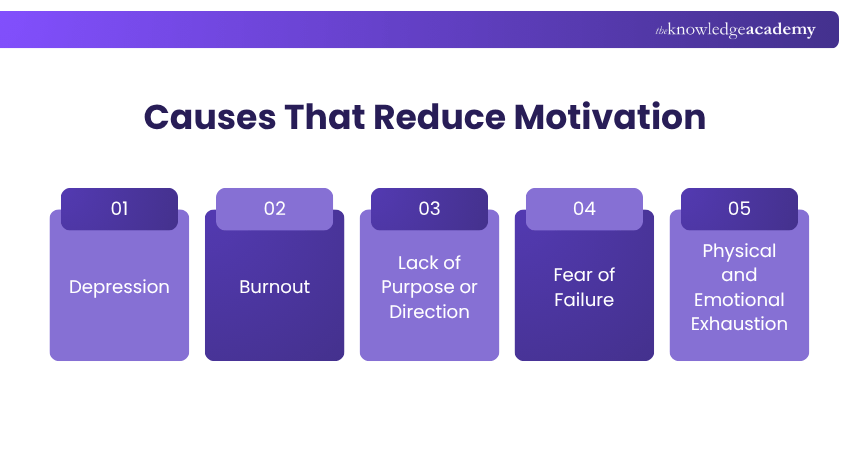
1) Depression
Depression is one of the most common causes of low motivation. It leads to persistent sadness, low energy, and a loss of interest in activities that once felt enjoyable. When nothing feels rewarding, it becomes difficult to take initiative or stay productive.
2) Burnout
Burnout develops after prolonged stress or overwork, especially in demanding roles. It is marked by chronic fatigue, reduced job motivation, and a negative attitude towards work and people. Over time, this can make even routine tasks feel overwhelming.
3) Lack of Purpose or Direction
When you do not have a clear vision or meaningful goals, it can lead to confusion and stagnation. You may feel like you are going through life without direction, where everything feels “fine” but not fulfilling, making it harder to stay motivated.
4) Fear of Failure
Fear of facing rejection can stop you from taking action. This fear often leads to avoiding opportunities, staying in your comfort zone, and missing chances to grow, which further reduces motivation over time.
5) Physical and Emotional Exhaustion
Poor sleep, unhealthy routines, or excessive stress can drain your physical energy. At the same time, emotional strain from conflicts or difficult relationships can make it hard to focus, reducing both productivity and motivation.
Bounce back stronger from every challenge with Resilience Training – Join now!
Effective Ways to Motivate Yourself
During tough times, staying motivated can be really challenging. Here are some practical ways on How to Motivate Yourself below:
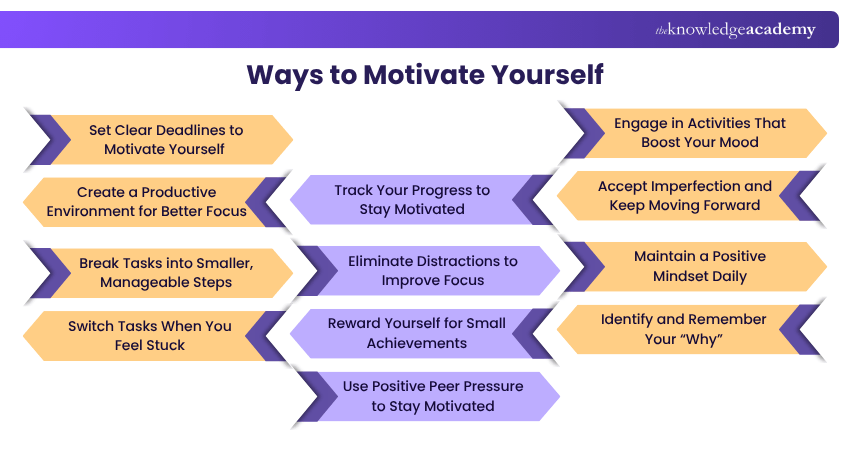
1) Set Clear Deadlines to Motivate Yourself
Establishing deadlines is essential for reaching your goals as they generate a feeling of urgency that motivates us to act. Having a designated timeframe can help you maintain your concentration. Divide big tasks into smaller tasks with specific deadlines. This reduces the feeling of being overwhelmed and makes tasks easier to handle.
For example, establish small deadlines for every stage if you aim to finish a project. Adhering to these deadlines can increase motivation by holding yourself accountable. Make sure to note your deadlines and have them in sight. This continual reminder can help keep you focused. Inform others about your deadlines to increase accountability. Sharing your deadlines with others can help you remain dedicated.
2) Create a Productive Environment for Better Focus
Your environment plays a key role in shaping your motivation and focus. A cluttered or distracting space can reduce concentration, while a well-organised and inspiring setup can improve productivity. Creating a workspace that feels comfortable and motivating helps you stay engaged with your tasks.
Start by keeping your workspace neat and free from distractions. Add elements that inspire you, such as quotes or images that reflect your goals. Use natural light where possible to boost your mood and consider soft background sounds or music to enhance focus. Personal touches that make you feel positive can also increase motivation.
3) Break Tasks into Smaller, Manageable Steps
Slicing and dicing the tasks into smaller, more manageable steps is essential for keeping your Motivation. Daunting tasks can make people procrastinate. Begin by laying out the required actions to accomplish your objective. Develop a precise action plan describing every single step.
Concentrate on finishing each task one at a time to create progress. This method allows you to experience a sense of achievement while you move forward. Furthermore, acknowledge and rejoice in your small accomplishments throughout your journey. Acknowledging your accomplishments helps to sustain your level of motivation.
4) Switch Tasks When You Feel Stuck
It is common to feel stuck or lose momentum when working on a task for too long. Instead of forcing progress, switching to a different task can help refresh your mind and maintain motivation. This change allows you to return with a clearer perspective.
Taking a short break or shifting to a task that uses different skills can spark new ideas. Even small changes, like adjusting your workspace, can help reset your thinking. Staying flexible in your approach not only improves focus but also encourages creativity and productivity.
Boost your focus with our Attention Management Training - Join now!
5) Track Your Progress to Stay Motivated
Tracking your progress helps you stay motivated by showing how far you have come. Regularly reviewing your achievements builds confidence and keeps you committed to your goals. Also, it helps you stay accountable and focused on your priorities.
You can use tools like checklists, journals, or apps to monitor your progress. Visual methods such as charts or trackers can make your improvements more visible and encouraging. Reflect on what is working well and where you can improve, then adjust your approach to stay on track.
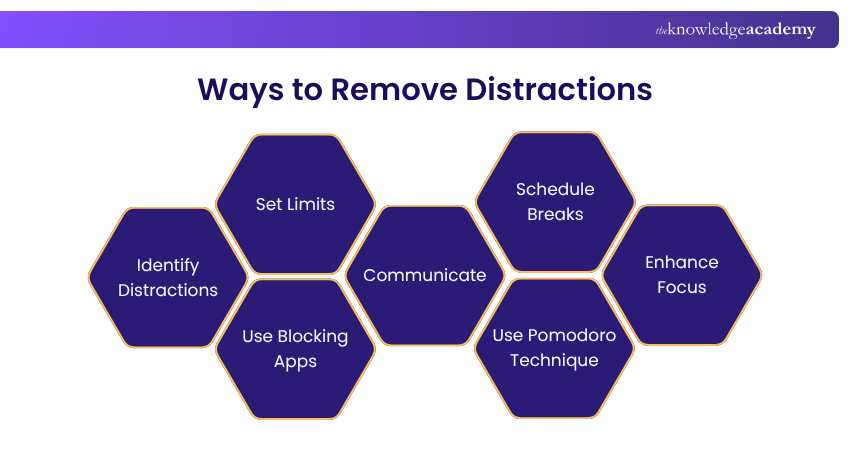
6) Eliminate Distractions to Improve Focus
Distractions have the potential to spoil your motivation and productivity. Recognising and removing these distractions is essential to remain focused. Begin by evaluating your surroundings for possible disturbances. This could involve loud environments, social networking sites, or a messy room. Establish limits to reduce disruptions while you work.
Think about utilising applications that prevent you from accessing distracting websites while you are trying to focus on your work. Discuss with the people around you the importance of concentrating on your work. Establish exact times for breaks to prevent getting distracted without purpose.
7) Reward Yourself for Small Achievements
Adding rewards to your daily schedule can significantly enhance your motivation. Establish a system of rewards for accomplishing tasks or achieving goals. Incentives, no matter how small, can be effective rewards without being overly extravagant. Reward yourself with something pleasant once you complete a difficult job.
Rewards help to build positive connections with your hard work, strengthening your dedication. Think about changing up your rewards to maintain excitement. As you reach your objectives, increase your incentives. This sequence can assist in maintaining your motivation for an extended period. Don't forget to acknowledge and celebrate accomplishments, even minor ones.
Strengthen your mindset, strengthen your future with Building an Empowering Mindset Training today!
8) Use Positive Peer Pressure to Stay Motivated
Encircling yourself with like-minded individuals can boost your motivation. Interact with colleagues who have common goals and ambitions. Their excitement has the power to spread and motivate you to remain dedicated. You can create a study group or find an accountability partner to drive yourself. Consistently communicate to update each other on achievements and obstacles, fostering a feeling of unity and responsibility.
Celebrate one another's accomplishments to create a supportive atmosphere. Positive peer pressure motivates you to exceed your boundaries. Moreover, letting others know about your goals can enhance your dedication. Having your goals known by others increases the chances of keeping focus.
9) Engage in Activities That Boost Your Mood
Engaging in mood-enhancing activities can significantly increase your motivation and unwind you from the daily grind. For instance, physical activities like yoga, walking, or dancing can elevate your mood by triggering the release of endorphins.
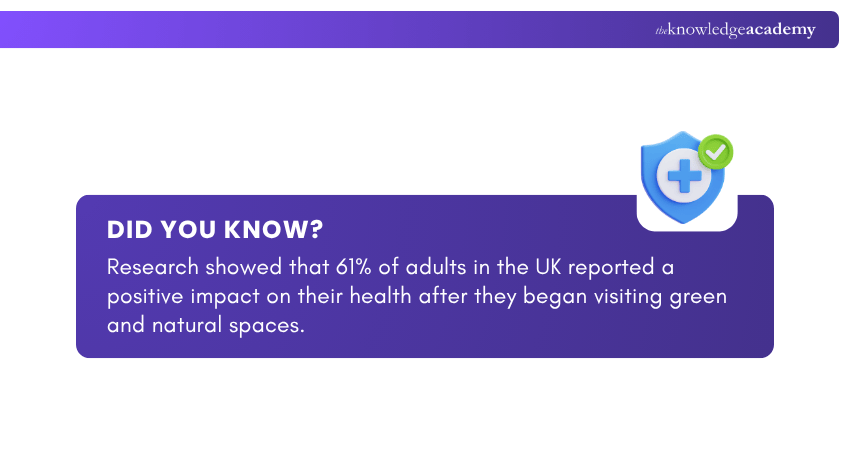
Additionally, engage in creative activities like writing or drawing to stimulate creativity. Don’t forget to take pauses to revive your soul. Apart from this, be in nature to rejuvenate your brain. Remember, prioritising self-care is also a form of motivation that reaps good results in the long term.
10) Accept Imperfection and Keep Moving Forward
It is important to understand that not everything will go as planned. Accepting imperfections allows you to stay motivated even during difficult days. Instead of expecting perfection, focus on making steady progress towards your goals.
Planning for potential challenges can help you stay prepared and confident. Identify possible obstacles and create simple solutions in advance, so you can handle disruptions without losing momentum. By adapting your approach and continuing forward, you build resilience and maintain long-term motivation.
Refine your planning abilities with our comprehensive Strategic Thinking and Planning Course - Sign up now!
11) Maintain a Positive Mindset Daily
It's commonly stated that experiencing failure is a natural part of the process; what counts is how you react to it. It is essential to pursue your goals regardless of what others think. Comparing your own experiences with those of other people can result in unnecessary feelings of doubt and insecurity.
Concentrate on your strengths and abilities instead of dwelling on your shortcomings. Developing self-esteem involves identifying your strengths and actively supporting them. By embracing what makes you unique, you build the self-assurance and determination required to move towards success. Remember, every small step you take contributes to your development and success.
12) Identify and Remember Your “Why”
Knowing your 'why' for doing something is crucial for maintaining your drive. You can keep your passion alive by reflecting on the reasons for doing it. Jot down your triggers of motivation and keep them in sight like a reminder. Motivational Interview Questions often touch on these triggers, as they can serve as a crucial source of motivation in difficult times.
You can better understand your motives by aligning with your fundamental beliefs and goals. When faced with challenges, remember your motivation triggers to revive your dedication. Ensuring your purpose remains central will strengthen your commitment to your objectives. You establish a solid base for lasting drive by recalling the reason behind your actions.
What is the Role of Mindset in Motivation?
Mindset plays a key role in shaping your motivation by influencing how you think about your abilities and potential. A fixed mindset can limit motivation, as it makes challenges feel like barriers, while a growth mindset encourages you to see challenges as opportunities to learn and improve.
When you adopt a growth mindset, you are more likely to stay committed, act, and keep progressing even when things become difficult. This belief in improvement helps sustain motivation, supports long-term success, and boosts self-understanding in How to Motivate Yourself.
Conclusion
Staying motivated is about taking small, consistent actions every day. By building the right habits, creating a supportive environment, and developing a strong mindset, you can overcome challenges and keep moving forward. When you truly understand How to Motivate Yourself, you gain the ability to stay focused, adapt to setbacks, and turn your goals into lasting success.
Transform your potential into real progress with Personal Development Courses now!
Frequently Asked Questions
What are the Benefits of Self-motivation?

Self-motivation is required to maintain focus, direct actions toward goals, and overcome obstacles so that we can remain dedicated to our personal and professional aspirations.
What are the Best Tools to Stay Motivated?
Some of the best tools to stay motivated include:
1) Use time-blocking to plan tasks
2) Track progress with checklists, spreadsheets, or Trello
3) Use Pomodoro timers to improve focus
4) Stay accountable with a partner or mentor
5) Apply visualisation, rewards, and if-then plans

The Knowledge Academy


Global Training Provider
The Knowledge Academy is a world-leading provider of professional training courses, offering globally recognised qualifications across a wide range of subjects. With expert trainers, up-to-date course material, and flexible learning options, we aim to empower professionals and organisations to achieve their goals through continuous learning.


 If you wish to make any changes to your course, please


