




We may not have the course you’re looking for. If you enquire or give us a call on +44 1344 203 999 and speak to our training experts, we may still be able to help with your training requirements.
How to Improve Creative Writing with Practical Methods?
ByThe Knowledge AcademyLast updated on: 22 September 2026
Improve Creative Writing with practical tips and techniques. Discover ways to develop ideas, strengthen storytelling, and write more engaging content. Creative Writing helps you express ideas with confidence and originality. By developing strong writing habits and refining your style, you can create content that connects with readers.

Creative Writing does more than tell a story; it captures attention, sparks imagination, and leaves a lasting impression. However, many writers find it difficult to develop fresh ideas, maintain a strong narrative, or bring their thoughts to life on the page. Understanding How to Improve Creative Writing can help overcome these common challenges.
Fortunately, Creative Writing is a skill that can be developed over time. By learning How to Improve Creative Writing skills, you can strengthen your storytelling, refine your writing style, and create content that engages readers from beginning to end. This blog will explain the importance of Creative Writing, practical ways to improve it, its different types, and more. Let’s begin!
Why Creative Writing is Important?
Creative Writing is more than a hobby; it is a powerful way to express ideas, emotions, and experiences. It supports personal growth, strengthens communication skills, and helps writers connect with readers through stories, poems, and other forms of creative expression. Thus, it plays an important role in both personal and professional development.
In a world driven by logic and routine, Creative Writing encourages imagination and original thinking. It challenges writers to explore new ideas, create compelling narratives, and view situations from different perspectives. Thus, it not only enhances creativity but also supports innovation, problem-solving, and effective communication.

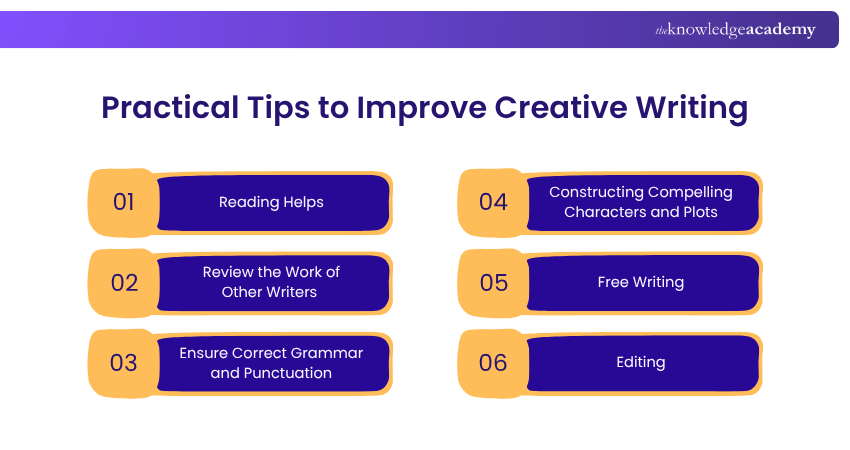
Practical Tips to Improve Creative Writing
If you want to know How Improve Creative Writing, then consider reviewing essential Creative Writing Tips and practising the following:
1) Reading Helps
Reading is one of the most effective ways to Improve Creative Writing. It exposes you to different vocabularies, sentence structures, and writing styles, helping you develop a stronger understanding of language. For anyone looking to understand How to Improve Creative Writing, regular reading provides valuable insights into effective storytelling, language use, and narrative structure.
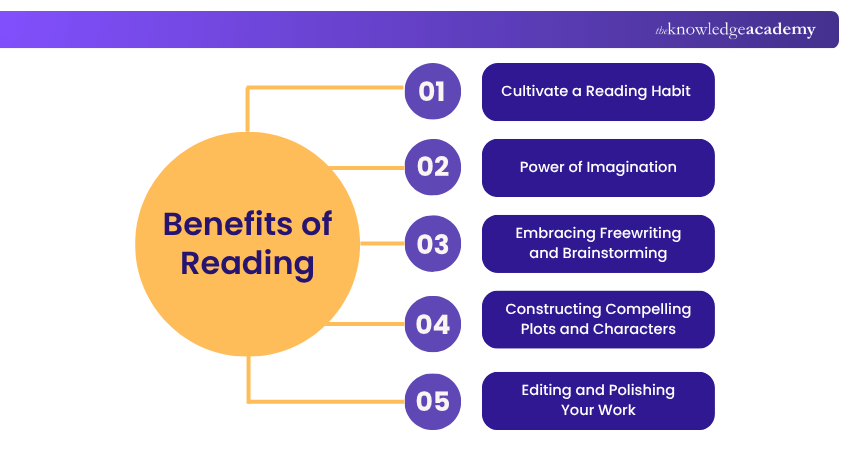
Reading also sparks imagination by introducing you to new characters, settings, perspectives, and storylines. It encourages you to think beyond everyday experiences and explore fresh ideas in your own work. The following are some key benefits of reading:
2) Review the Work of Other Writers
Besides reading widely, study how experienced writers develop characters, build suspense, describe settings, and create engaging dialogue. Pay attention to their storytelling techniques, pacing, and writing style. Analysing these elements can inspire fresh ideas while helping you develop your own unique voice without copying their work.
Moreover, engaging in this kind of review not only enhances your comprehension of their techniques but also sparks a wealth of ideas for your own creative endeavours. This process of critical evaluation can be a rich source of inspiration, helping you to identify both potential themes for your writing and areas to avoid. By exploring the depths of their work, you gain insights that can significantly influence and shape your own creative journey.
3) Ensure Correct Grammar and Punctuation
A writer’s command of grammar and vocabulary forms the foundation of clear, engaging, and impactful storytelling, highlighting the Importance of Storytelling in conveying ideas and emotions effectively. Mastering these elements helps writers use language with precision while ensuring their sentences remain clear, coherent, and easy for readers to understand.
A varied vocabulary and an understanding of sentence structures enable you to create a rhythmic flow in your Writing. It keeps readers engaged, making your narrative a pleasure to read. The right word at the right time can evoke powerful emotions in your readers. A rich vocabulary allows you to paint vivid imagery and convey the nuances of emotions, immersing your audience in your story's world.
Learn to write clear, structured, and well-referenced academic papers and essays with our Academic Writing Course – Join now!
4) Constructing Compelling Characters and Plots
A strong command of language helps writers create distinct character voices, realistic dialogue, and engaging narratives. Vocabulary choices and descriptive language shape the atmosphere of a story, allowing readers to visualise settings and connect more deeply with the narrative. Additionally, grammar helps ensure clarity and precision, enabling writers to deliver their intended message effectively.
Every day of life is another valuable source of inspiration for Creative Writing. Drawing from ordinary experiences makes stories more relatable and authentic, helping readers connect with characters, situations, and emotions. When writers capture the details of real-life moments, their work feels more genuine and resonates more strongly with their audience.
5) Free Writing
Free Writing and brainstorming open the floodgates of your mind, allowing your thoughts to spill onto the page without self-censorship. This process often leads to unexpected and innovative ideas.
When you're stuck in a creative rut, free Writing and brainstorming can be the catalyst to break through the barriers of Writer's block. Putting pen to paper generates momentum and reignites your creative spark.
6) Editing
Editing and polishing are essential steps in the Creative Writing process. While the first draft captures your ideas, editing helps refine them into clear, engaging, and impactful content. For writers exploring How to Improve Creative Writing, editing is a crucial practice that helps transform rough drafts into polished and compelling pieces of work.
Editing also strengthens the emotional impact of your writing, allowing characters and key moments to resonate with readers. Simultaneously, it is important to remember that first drafts are not meant to be perfect. Fear of making mistakes, overthinking every sentence, or experiencing mental fatigue can limit creativity. Giving yourself time to revise and rest can help ideas flow more naturally and improve the quality of your work.
Ready to elevate your skills to achieve optimum work-life balance? Explore Personal Development Training - Register now!
What are the 5Cs of Creative Writing?
The 5Cs of Creative Writing are:
1) Character: The central person or people in the story. Strong, relatable, and evolving characters help readers form an emotional connection with the narrative.
2) Conflict: The challenge, problem, or tension that drives the story forward. Conflict creates interest and tests the characters throughout the plot.
3) Climax: The turning point of the story where tension reaches its peak. It is often the most dramatic and impactful moment in the narrative.
4) Context: The setting, time, and circumstances in which the story takes place. Context helps establish the world and background of the narrative.
5) Closure: The resolution of the story. Closure ties up loose ends, answers key questions, and provides readers with a sense of completion.
What are the Four Types of Creative Writing?
For those interested in How to Improve Creative Writing, understanding the different forms of creative expression can help develop a broader range of writing skills and techniques. The four most common and widely recognised types of Creative Writing are:
1) Fiction: Fiction involves creating imaginary stories, characters, and settings. This category includes novels, short stories, and novellas designed to entertain, inspire, or explore ideas.
2) Poetry: Poetry uses rhythm, imagery, and carefully chosen words to express emotions, experiences, and ideas in a creative and artistic way.
3) Creative Non-fiction: Creative non-fiction is based on real events and experiences but uses storytelling techniques to make factual content engaging. Examples include memoirs, personal essays, and travel writing.
4) Scriptwriting: Scriptwriting focuses on creating scripts for films, television programmes, theatre productions, and other performances. It relies heavily on dialogue, action, and visual storytelling.
Learn to create characters readers love and build worlds that feel real with the Fiction Writing Course – Sign up now!

The Knowledge Academy develops accessible learning content across Project Management, IT, Cybersecurity, Data Science, Business Analysis, HR, Accounting and Finance, Leadership and Health and Safety. Its resources combine subject research with clear explanations to help professionals build practical knowledge across a wide range of disciplines.
View Detail

 If you wish to make any changes to your course, please


