




We may not have the course you’re looking for. If you enquire or give us a call on +61 272026926 and speak to our training experts, we may still be able to help with your training requirements.
How to Become a Compliance Officer: A Complete Guide
BySubiksha ArulprakashLast updated on: 03 October 2026
To become a Compliance Officer, build relevant knowledge, gain audit or risk experience, build analytical skills, and add certifications. In this role, you will typically oversee the implementation of compliance programmes, conduct risk assessments, and monitor activities to identify potential violations.
What You'll Learn
1. Compliance Officers help organisations understand and meet relevant regulatory and internal requirements.2. Analytical thinking, communication, risk assessment and attention to detail are important skills for the role.3. Experience in audit, risk, legal support or internal controls can provide a pathway into compliance.4. Relevant qualifications and certifications can support professional development.5. Continuous learning is important because regulations, standards and business risks can change over time.
Being an organisation is not just about getting the work done; it's also about being on the right side of the law. So, ever wonder who ensures that businesses play by the rules? That responsibility is handled by Compliance Officers. Think of them as watchdogs for ethics, law, and good governance.
If you’re detail-driven, ethically minded, and interested in turning rules into profitable results, this could be the right career path for you. Consider this blog as your ally as it walks you through the steps on how to become a Compliance Officer. So read on and become the sought-after rule-keeper every organisation needs!
How to Become a Compliance Officer?
Becoming a Compliance Officer involves gaining the right mix of education, regulatory knowledge, and practical experience. It requires understanding industry laws, developing strong analytical skills, and relevant knowledge to handle compliance responsibilities confidently.
Let’s dive into how to become a Compliance Officer with each necessary step detailed:
Step 1: Selecting Specialisation
Compliance Officers play a pivotal role in confirming that various businesses and industries follow the relevant rules and standards. Different industries have different requirements and expectations, so it is beneficial to decide on an area of expertise early on. Some of the most common industries that hire Compliance Officers are as follows:
1) Manufacturing
2) Public sector
3) Finance
4) Healthcare
Compliance Officers can also focus on specific domains, such as environmental compliance or corporate compliance.

Step 2: Education and Qualifications
Many employers prefer or expect a degree in areas such as business, finance, accounting, economics, IT or law, although apprenticeships and progression from related roles can also provide routes into compliance. Additionally, obtaining relevant certifications related to compliance or business ethics can boost prospects in this field.
Step 3: Gaining the Relevant Experience
Internships are a practical way for individuals to gain valuable experience in different businesses and industries before entering the job market. They also help individuals explore their career interests and preferences. Consider these points:
1) Internships range from part-time to full-time and can be either paid or unpaid.
2) Interns gain exposure to different aspects of compliance, depending on the company and role.
3) Common tasks include learning software tools, documenting policies, conducting research, and supporting managers with projects.
4) On-the-job training is another way for graduates to enter the field without prior experience.
5) Graduates with a bachelor’s degree can begin with Client Support or Analyst roles and then move into the compliance department over time.
Step 4: Developing Key Skills
Developing the key skills is essential for success as a Compliance Officer. Here are the points to remember:
1) Strong analytical and problem-solving skills help in effectively spotting and resolving compliance issues.
2) Excellent interpersonal and communication skills are must-haves for explaining policies, training employees, and collaborating with diverse teams.
3) Attention to detail is crucial for ensuring regulatory compliance and conducting accurate audits.
4) The ability to work independently and make sound decisions is essential for handling complex situations with integrity.
5) Knowledge of regulatory frameworks, best practices, and risk management supports sound compliance strategies.
Compliance Officer Skills Checklist
□ Regulatory research and interpretation□ Risk Assessment□ Analytical thinking and attention to detail□ Written and verbal communication□ Policy understanding□ Investigation and problem-solving□ Business and technology awareness□ Ethical judgement□ Reporting and documentation
Step 5: Staying Updated with Regulatory Changes
Staying updated with regulatory changes is a critical aspect of being a Compliance Officer. The compliance landscape is dynamic. Consider these points:
1) Compliance Officers must stay updated on the latest laws, regulations, and guidelines as they are introduced.
2) Staying informed helps them ensure the organisation remains compliant with current legal standards.
3) Compliance professionals may need to update policies, controls and monitoring processes when relevant requirements change.
4) Continuous learning and awareness help them reduce risks and avoid violations.
Make sure the field of medicine is safe, legal and trusted with Medical Compliance Training - Sign up now!
Step 6: Job Search and the Application Process
The job search and application process for a Compliance Officer can be summarised as follows:
1) Conduct thorough research on job boards, professional networking platforms and company websites to find positions in a Compliance Officer career.
2) Customise your resume and cover letter to highlight relevant skills, experiences, and understanding of compliance regulations.
3) Follow every instruction provided by the employer and submit your application through the designated email or platform.
4) Research the organisation, practice answering common compliance-related interview questions, and dress professionally.
5) Send a thank-you email or letter after the interview to express your gratitude and reiterate your interest in the position.
6) If selected, carefully review the job offer, negotiate terms if necessary, and accept the position.
7) Complete any required documentation, attend orientation sessions, and familiarise yourself with the organisation's compliance policies and procedures.
Step 7: Landing Your First Job as a Compliance Officer
Landing your first job as a Compliance Officer requires a strategic approach and determination. Here are some key factors to consider:
1) Consider starting in entry-level roles, such as Compliance Analyst or Assistant, to gain practical experience and learn the ropes.
2) Stay updated with the top industry trends, attend training programmes, and obtain relevant certifications to enhance your skills and marketability.
3) Stay determined and continue applying for suitable positions, leveraging your network and showcasing your passion for compliance.
4) Demonstrate professionalism, integrity, and commitment to ethical practices throughout the job search process.
5) Once in the role, be proactive, take on additional responsibilities, and demonstrate your value to advance your career as a Compliance Officer.
Compliance Officer Career Progression
An example pathway could be:Compliance Assistant / Junior Analyst↓Compliance Analyst↓Compliance Officer↓Senior Compliance Officer↓Compliance Manager↓Senior Compliance Leadership Roles
The Role of a Compliance Officer
Now that we’ve explored how to become a Compliance Officer, let’s brush up on what this role entails. A Compliance Officer upholds ethical and regulatory standards within an organisation. They help monitor compliance with relevant requirements, advise the business and support the development and maintenance of appropriate policies and controls. When these rules aren’t met, businesses risk significant penalties, making the Compliance Officer essential across almost every sector.
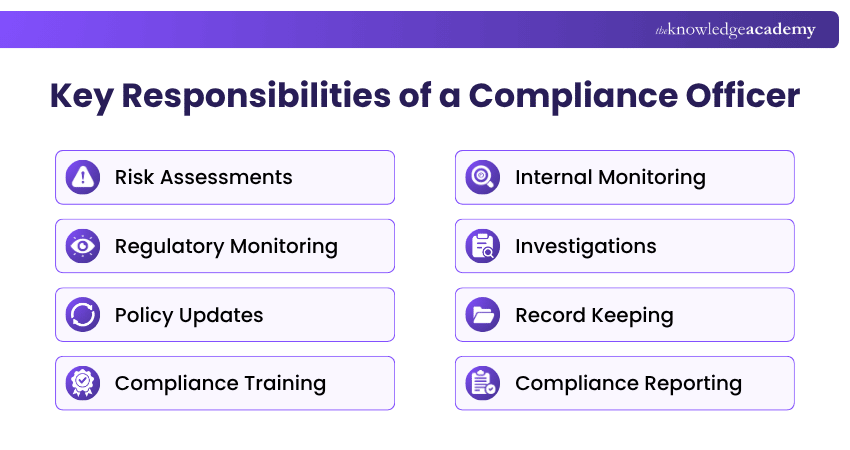
Their typical duties include:
1) Conducting risk assessments
2) Staying updated on relevant laws and regulations
3) Reviewing relevant communications, policies or business materials where required
4) Guiding and educating staff on legal requirements
5) Investigating concerns or irregularities
6) Reporting non-compliant behaviour
7) Promoting a culture built on accountability and compliance
Trainer's Insight
When considering an entry-level opportunity, look beyond the job title. Roles that expose you to policies, controls, audits, monitoring, investigations or regulatory requirements can provide useful compliance experience.
Useful Skills for Compliance Officers
To become a Compliance Officer, you need a strong foundation in the field, along with specific skills. Here’s a simple breakdown of the essential skills:
1) Communication
a) Good speaking and writing skills are important.
b) Compliance Officers must clearly explain rules and processes to both company leaders and employees at all levels.
c) Strong communication builds trust and ensures everyone understands their responsibilities.
2) Understanding of Risk Assessment
a) As a Compliance Officer, you must know how to identify, plan for, and handle risks.
b) Understanding the laws and being able to apply them is key to managing risk properly.
c) This helps prevent legal issues and protects the company from potential threats.
3) Good Attention to Detail
a) Since compliance involves reviewing numerous rules and policies, it's essential to pay attention to even the smallest details to avoid mistakes.
b) Missing small errors can lead to big problems or penalties later on.
4) Understanding of Regulations and Controls
a) Compliance Officers need to understand the laws, regulations, internal controls and industry standards relevant to their sector.
b) In some roles, this may include areas such as data protection, cybersecurity or ISO standards.
c) This knowledge helps create safer systems and prevent security breaches.
5) Business and Technology Awareness
Understanding how business and IT systems work enables you to perform more effectively during audits and utilise tools to reduce risks effectively. Understanding the bigger picture helps align compliance with business goals.
6) Analysis
a) You’ll need to understand and analyse complex issues, utilise data and research.
b) This helps them inform decisions and devise effective solutions for challenging problems.
c) These skills help turn confusing information into clear actions and plans.
Required Credentials for Compliance Officers
Employers may look for a combination of education, practical experience and relevant professional development, although requirements vary by sector and role. Employers generally require the following:
1) Bachelor's Degree: Many employers value degrees in areas such as business, law, finance, accounting, economics or IT, although a degree is not the only route into compliance.
2) Higher Education: A master’s degree or postgraduate qualification in compliance, risk, law or a related field may support career development, particularly in specialist or senior roles.
3) Professional Certifications: Relevant compliance, risk, audit or industry-specific certifications can strengthen your knowledge and demonstrate continued professional development. Their value depends on the sector, role and regulatory environment you want to work in.
4) Work Experience: Hands-on experience in compliance, auditing, risk assessment, or any regulatory work can assist the candidate in putting knowledge into practice and become memorable during recruitment.
5) Continued Education: A lot of professionals engage in continuing education by attending workshops, specialised courses, and industry associations, as a way of keeping abreast of changes in regulations and best practices.
These qualifications enable compliance officers to make sure that organisations comply with legal requirements, risk mitigation and ethical standards.
Pro Tip
For a Compliance Officer interview, prepare examples that demonstrate your reasoning, not simply the outcome. Be ready to explain how you identified an issue, analysed the requirement and decided what action to take.
What Experience do You Need to Become a Compliance Officer?
Practical experience in regulatory, legal or risk-oriented roles is important in addition to formal education to become a compliance officer. According to career guidance on how to enter this field, employers look for professionals who have demonstrated their ability to handle compliance responsibilities and understand regulatory environments.
1) Relevant Industry Exposure: It is helpful to provide future compliance officers with some experience in the field of auditing, risk management, regulatory analysis, or legal support as well, so that they can use the concept of compliance in the actual business context.
2) Hands-on Regulatory Involvement: Experience with internal controls, policy enforcement, or compliance monitoring equips candidates to manage risk and interpret laws effectively once hired.
3) Technical Systems Familiarity: Candidates will have practical knowledge of how organisations implement and automate compliance through the administration of compliance systems, reporting software, and monitoring software.
4) Progressive Responsibility: Employers value candidates who have progressed through roles with increasing regulatory or operational responsibility, showing readiness for decision-making and leadership in compliance.
This experience can be built up through internships or low-level jobs in related departments, and this will build credibility and make you eligible to succeed in compliance jobs.
Learn how organisations protect cardholder data and strengthen payment security with the PCI DSS Foundation Course – Sign up now!

Subiksha Arulprakash is a Copywriter with 5+ years of experience in content writing, editing, content development and digital marketing. Her experience researching and writing about Business Skills, ISO standards and compliance enables her to produce clear, accessible content for different audiences.
View Detail

 If you wish to make any changes to your course, please


