




We may not have the course you’re looking for. If you enquire or give us a call on 01344203999 and speak to our training experts, we may still be able to help with your training requirements.
What is Dynamic Memory Allocation in C? An Overview
ByRichard HarrisLast updated on: 16 July 2026
Dynamic Memory Allocation in C allows programs to request memory during runtime using functions and enables efficient memory use by allocating space as needed. Functions such as malloc(), realloc(), calloc(), and free() are used to allocate and deallocate memory, giving programmers fine-grained control over how memory is used.

Dynamic Memory Allocation in C is like giving your program the power to adapt on the fly. Instead of locking in memory limits at compile time, it lets you request, and release memory as needed during runtime.
So, whether you're building flexible arrays or managing large data structures, this approach offers the freedom to scale at will. This blog explores how dynamic memory allocation works, why it matters and how functions like malloc(), realloc(), and free() come into play. So read on and master the art of memory management in your hands, the C way!
Table of Contents
1) Understanding Dynamic Memory Allocation in C
2) malloc() Function
3) realloc() Function
4) Free() Function
5) Static Memory Allocation vs Dynamic Memory Allocation
6) Conclusion
Understanding Dynamic Memory Allocation in C
Dynamic memory allocation in C is a powerful technique that allows programs to request memory during runtime rather than at compile time. This flexibility helps developers manage memory more efficiently, particularly when the size of data structures such as arrays is not known beforehand.
Functions like malloc(), calloc(), realloc(), and free() are used to allocate, initialise, resize, and deallocate memory blocks, respectively. Properly managing dynamically allocated memory is crucial to preventing memory leaks and ensuring efficient program execution. Incorrect usage can lead to errors and instability.

malloc() Function
This function is used to dynamically allocate memory at runtime. Unlike static or stack memory allocation, malloc() allows you to request memory from the heap. This is useful when the size of data structures (like arrays or linked lists) isn't known at compile time.
Syntax
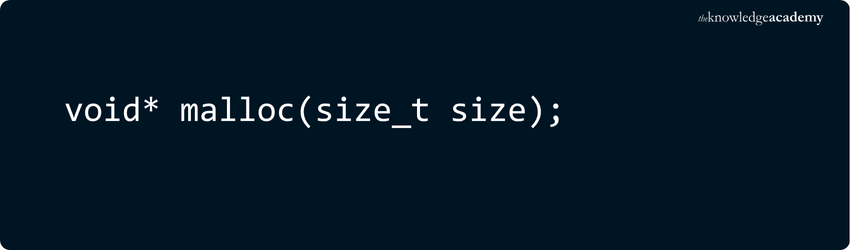
Here’s the syntax for the malloc () function:
Examples
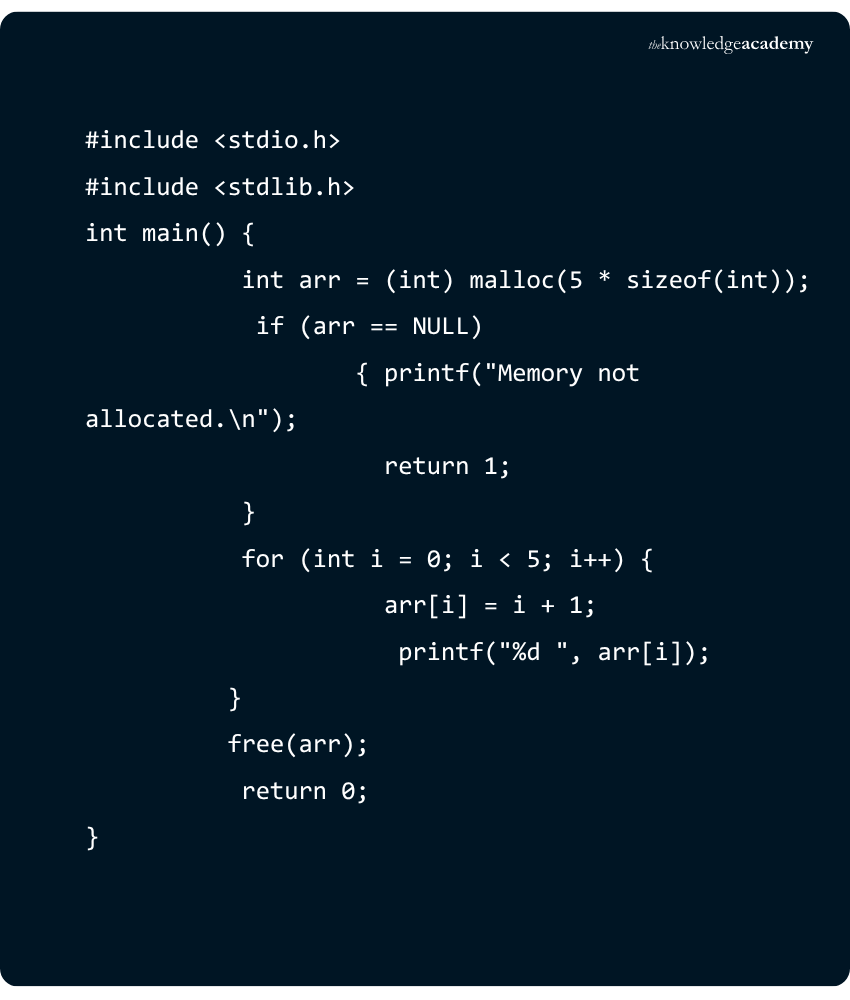
Here are two examples to illustrate this function:
Example 1: This shows how to allocate memory for an integer array.
Example 2: This example shows how to allocate memory for a single float.

realloc() Function
The realloc() function allows you to change the size of an existing memory block that was previously allocated using malloc(), calloc() or another realloc(). This is especially useful when you're working with growing data sets, such as dynamically expanding arrays.
Be a pro at sharp code for smarter solutions. Register for our C Programming Training now!
Syntax
Here’s the syntax for the C realloc () function:

Examples
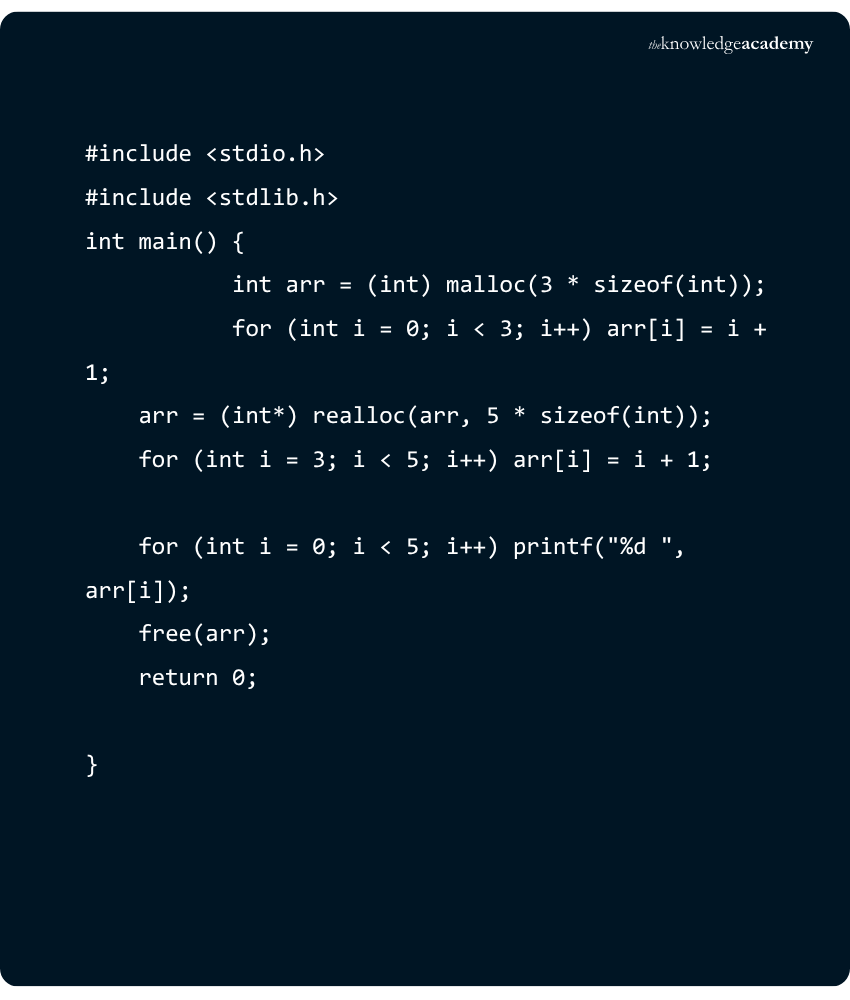
Here are two examples to illustrate this function:
Example 1: This example will show you the process of expanding an array
Example 2: This example will show you the process of shrinking an array

Free() Function
The free() function in C is used to release memory that was previously allocated using dynamic allocation functions like malloc(), calloc() or realloc(). When you no longer need the dynamically allocated memory, calling free() helps prevent memory leaks. In this situation, the memory is consumed but never released.
C# is like the symphony of modern coding. Master it by signing up for our C# Programming (C Sharp) Course now!
Syntax
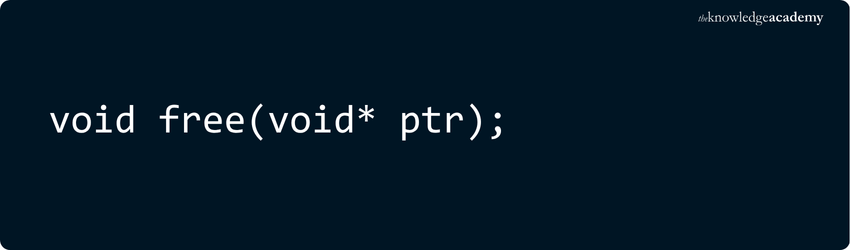
Here’s the syntax for the Free() function in C:
Examples
The following two examples will illustrate the working of the Free() function in C:
Example 1: This will show you the process of freeing allocated memory.

Example 2: This will show you how to free memory and nullify the pointer

Static Memory Allocation vs Dynamic Memory Allocation
Here are the key differences between static and dynamic memory allocation:

1) Allocated Time
Static memory is allocated at compile time and stays fixed throughout program execution, making it predictable. Dynamic memory is allocated at runtime based on program needs. It offers flexibility but requires manual handling through functions like malloc or new.
2) Memory Size
Static memory has a fixed size defined before execution, which can lead to unused reserved space. Dynamic memory allows flexible sizing during runtime. This helps optimise memory usage based on actual requirements rather than estimated needs during development.
3) Store Memory
Static memory gets stored in the stack or data segment depending on usage. Dynamic memory is stored in the heap, allowing developers to request and release memory manually when needed. This offers more control over memory distribution.
4) Deallocated
Static memory is automatically deallocated when the program ends or the scope exits. Dynamic memory must be manually freed using free or delete, otherwise it may lead to memory leaks and inefficient resource usage during runtime.
5) Data Size
Static allocation requires knowing data size beforehand, making it ideal for fixed-size structures. Dynamic allocation allows handling variable or unknown data sizes. This makes it suitable for data structures like linked lists, trees, and resizable arrays.
6) Processing Time
Static allocation is faster since memory is predefined and doesn’t require runtime processing. Dynamic allocation takes slightly more time because it involves system-level requests during execution to reserve and manage memory blocks in the heap.
Conclusion
Understanding What is Dynamic Memory Allocation in C is important because it gives your programs the agility to handle unpredictable data and grow as needed. It also helps you write cleaner programs that make the best use of system resources while improving overall performance and stability. By mastering different Dynamic Memory Allocation functions, you unlock more efficient, scalable, and responsive code.
Discover how Embedded C powers everything from smart devices to industrial automation in our Introduction of Embedded C Programming Course - Sign up now!

Richard Harris is a highly experienced full-stack developer with deep expertise in both frontend and backend technologies. Over his 12-year career, he has built scalable web applications for startups, enterprises and government organisations. Richard’s writing combines technical depth with clear explanations, ideal for developers looking to grow in modern frameworks and tools.


 If you wish to make any changes to your course, please


