


 Top Rated Course

We may not have the course you’re looking for. If you enquire or give us a call on 01344203999 and speak to our training experts, we may still be able to help with your training requirements.
What Is Digital Entrepreneurship and Why It Matters Today
The Knowledge Academy 15 July 2026Digital Entrepreneurship is about creating, managing, and scaling online businesses using digital tools to sell products or services globally. It empowers innovators to reach global markets with minimal investment and flexible models. From eCommerce and digital services to content platforms, it fuels growth and modern careers today.

Training Outcomes Within Your Budget!
We ensure quality, budget-alignment, and timely delivery by our expert instructors.
Table of Contents
The business landscape is shifting, and the internet is the new frontier for success. What is Digital Entrepreneurship? It’s the process of building, launching, and growing a business using digital tools and platforms. Whether it’s e-commerce, online services, or content creation, digital entrepreneurs leverage technology to reach global audiences and scale faster than ever.
But digital entrepreneurship isn’t just about opportunities—it comes with challenges too. What is Digital Entrepreneurship without risks? From fierce competition to constantly evolving trends, adaptability is key. Yet, for those who embrace innovation, the digital world offers limitless potential to create, grow, and thrive.
Table of Contents
1) What is Digital Entrepreneurship?
2) Who is a Digital Entrepreneur?
3) Types of Digital Entrepreneurship
4) How Digital Entrepreneurship Operates?
5) What Skills Do You Need to be a Digital Entrepreneur?
6) Digital Entrepreneurship vs Traditional Entrepreneurship
7) Benefits of Digital Entrepreneurship
8) Challenges of Digital Entrepreneurship
9) Conclusion
What is Digital Entrepreneurship?
Digital Entrepreneurship is the creation and running of a business on the internet with the help of digital technologies. This comprises e-commerce, digital marketing, online learning, and software development. Entrepreneurs working online take advantage through the use of the internet to exploit global markets, innovate, and scale business models with lower costs and flexible business models. Through Corporate Entrepreneurship, these online ventures can also leverage the strengths of established corporations to accelerate their growth and impact.

Who is a Digital Entrepreneur?
A Digital Entrepreneur is an individual who creates, operates, and develops a business through digital platforms, technologies, and tools. They use the internet to develop online products, services, or content that are accessed by people all over the world.
Through e-commerce, digital marketing, SaaS, or content creation, they innovate and evolve with the changing digital environment for business success. The Objectives of Entrepreneurship for digital entrepreneurs include reaching a global audience, harnessing the power of technology for scalability, and driving digital transformation.
Types of Digital Entrepreneurship
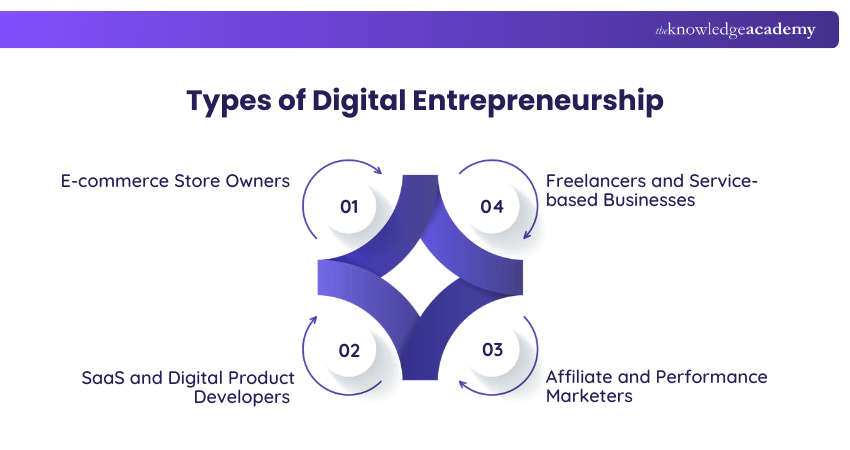
There are many forms of Digital Entrepreneurship, and it all depends on the business model and how skills are applied, and the tools used by a business in digital space the most common types are as follows:
1) E-commerce Store Owners
E-commerce entrepreneurs operate online shops and sell physical or digital goods to customers. They will be able to expand their reach to international buyers with platforms and tools that make it easy to set up and refine their store experience to increase sales and loyalty.
2) SaaS and Digital Product Developers
SaaS founders and digital creators develop software, applications or downloadable resources, which address the problems of users via the internet. This model is easy to scale because the products do not require a stock and can be used by customers all over the world and the more people use the solution, the more successful it will be.
3) Affiliate and Performance Marketers
Affiliate and performance marketers make their money by marketing the products or services of others and encouraging quantifiable actions such as clicks, leads or purchases. They are able to do this because they know their audiences, develop trust, and suggest products that can actually benefit their followers.
4) Freelancers and Service-based Businesses
Freelancers and service based digital entrepreneurs market their skills, such as design, writing, consulting or virtual assistance, straight to customers. This route allows people to get started fast with the knowledge they already possess and expand through reputation and customer referrals.
Optimise time management with Effective Planning and Scheduling Course – Register now!
How Digital Entrepreneurship Operates?
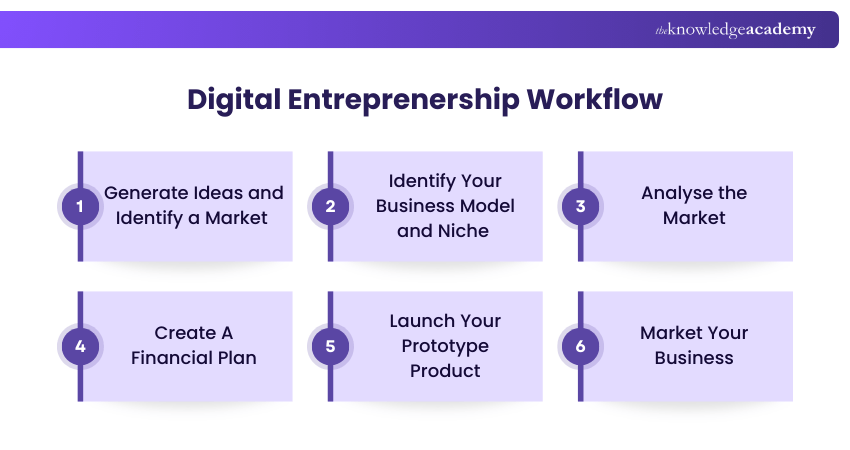
The most important steps to be followed in the construction and development of a digital business are as follows:
1) Generate Ideas and Identify a Market
The process starts with brainstorming business ideas that are in line with what you like and then balancing these ideas with what customers really need. Early idea validation is useful to determine whether there is actual demand before investing in time and resources.
2) Identify Your Business Model and Niche
The second step is to determine your digital business monetisation strategy: products, services, subscriptions, affiliates. Meanwhile, you can focus on a certain niche target that you are interested in serving.
3) Analyse the Market
Market analysis assists you in knowing your prospective customers and competitors. Creating customer personas, trend research, and market demand analysis will help you understand where your business fits and how to position your business to be successful.
4) Create A Financial Plan
An excellent financial plan includes your startup expenses, recurrent expenses, and anticipated revenues. Planning necessities such as web development, advertising, and instruments will be budgeted to see you through as you head towards profitability.
5) Launch Your Prototype Product
After planning, create and launch a prototype or minimum viable product (MVP) to your audience. An initial test and feedback can focus on perfecting your offering, making it better and then launching it.
6) Market Your Business
Once you start up, concentrate on marketing your business using digital marketing techniques such as email, social media, and content marketing in an attempt to acquire and keep your customers. Good promotion transforms awareness into sales and growth.
Enhance your relationship-building skills with our Building Business Relationships Course – Join today!
What Skills Do You Need to be a Digital Entrepreneur?
Explore the world of Social Entrepreneurship, Social Entrepreneurship and learn how you can create impactful, sustainable change today!
To be a successful Digital Entrepreneur, you have to be conversant in a variety of skills:
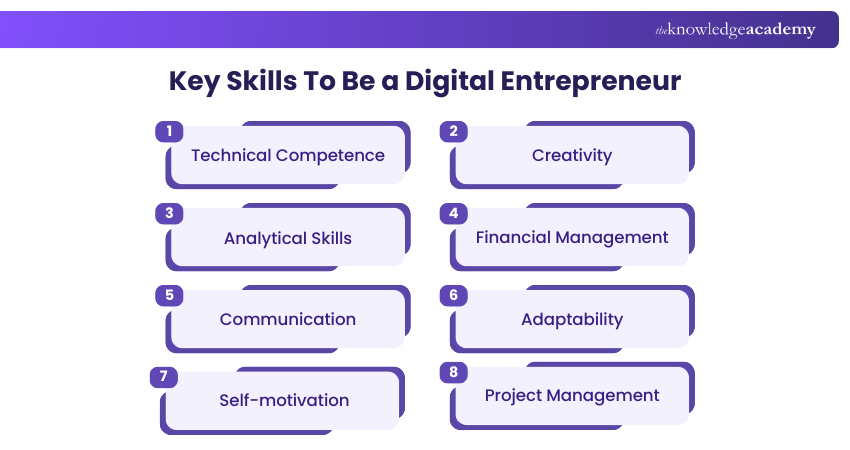
1) Technical Competence: Web Development, Digital Marketing, and e-commerce platform knowledge. In addition, knowledge about SEO, Social Media Management, and analytical tools will be contributive in promoting and optimising your online presence effectively.
2) Creativity: You need to be an innovator and creative in developing unique products or services that will attract and retain customers with content. Above all, one needs to be creative in problem-solving, which pops up in the process, and in a position to draw the line to the next opportunity.
3) Analytical Skills: Involves the ability to interpret and gather data and metrics to come up with logical business decisions. Part of it involves the ability to understand website traffic, customer behaviour, and market trends in making adjustments and improvements to strategies for better performance.
4) Financial Management: The ability to manage your budget, cash flow, and financial planning in running and scaling your business. Some basic accounting principles and the use of financial tools can help you have your finances in order and make wise financial decisions.
5) Communication: Strong written and verbal communication skills are required for marketing, customer service, and networking. This assists in building good relationships with customers, partners, and other stakeholders.
6) Adaptability: Things change very fast in the digital world. It is required to be adaptable to change and open to learning new technologies and trends to remain competitive.
7) Self-motivation: Entrepreneurship calls for high self-discipline and motivation. Setting goals, time management, and staying focused can drive your business forward.
8) Project Management: The ability to organise, schedule, and make use of resources properly ensures that projects are completed on time and within budget.
Digital Entrepreneurship vs Traditional Entrepreneurship
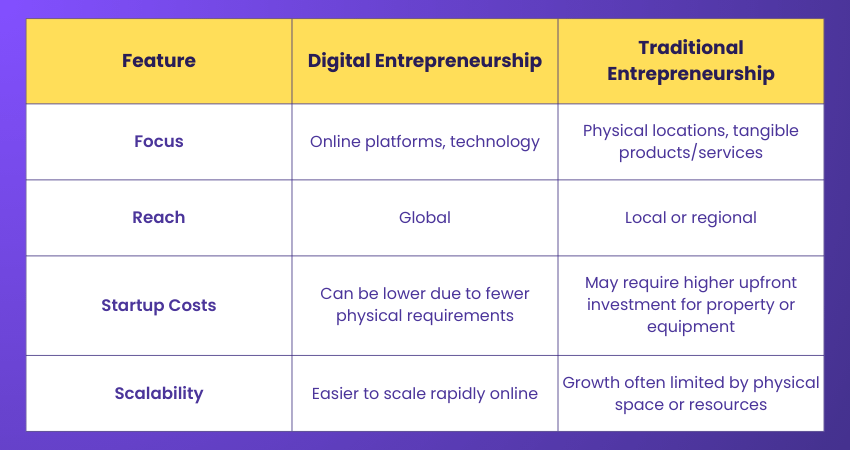
Digital Entrepreneurs are those individuals who set and run businesses utilising the power of the internet and technology; think of online platforms, mobile apps, or digital products. Think of e-commerce stores, social media influencers, or SaaS companies. Traditional entrepreneurs are those who would set up businesses that basically reside in the physical world: a local service provider, a restaurant, or a brick-and-mortar store.
Turn your ambitions into action and build unstoppable motivation with Motivation and Goal Setting Training now!
Benefits of Digital Entrepreneurship
There are a number of strong advantages to Digital Entrepreneurship that make it an appealing direction to business builders in the modern world:
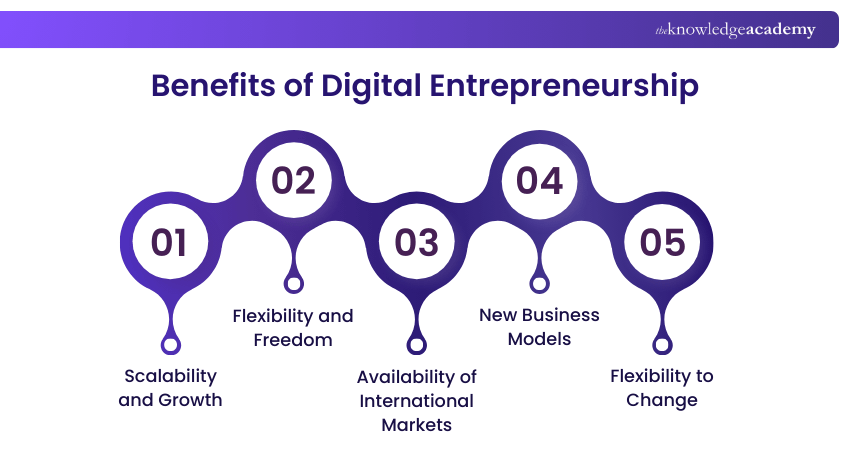
1) Scalability and Growth: The digital nature of businesses allows them to grow fast without the physical constraints of traditional businesses and allows the business owner to be able to serve more customers as they increase in demand.
2) Flexibility and Freedom: Entrepreneurs have the freedom to work anywhere and usually choose their own schedules, which promotes better work-life balance and lifestyle flexibility.
3) Availability of International Markets: Selling online removes geographical boundaries, allowing a company to access customers worldwide through appropriate marketing and electronic instruments.
4) New Business Models: Digital entrepreneurship promotes new forms of operation, such as distinct pricing, customer engagement, and value delivery models that would not be possible in a physical setting.
5) Flexibility to Change: Digital operations can easily make adjustments to offerings, prices, and tactics in response to market tendencies or consumer comments without the time lags of physical operations.
Challenges of Digital Entrepreneurship
While Digital Entrepreneurship opens many doors, it also brings several challenges that modern founders must navigate to succeed:
1) Rapid Technological Change: Tools, platforms, and digital trends kept changing, as entrepreneurs have to constantly learn and adapt or risk losing their competitiveness.
2) Skill Gaps and Resources Requirements: Digital founders with a lack of tech- skills, strategies, or management experience, often slow down growth and implementation.
3) Competition and Market Saturation: The accessibility of digital markets intensifies competition, and it becomes difficult to become recognisable and gain loyal customers without effective branding and differentiation.
4) Operational and Security Risks: The process of managing digital operations, customer data and online infrastructure also present risks associated with cybersecurity, data protection, and compliance that should be planned and invested carefully.
5) Uncertain Regulation and Market Dynamics: The changing digital regulations, platform policies, and changing consumer behaviours can introduce uncertainty, and require the entrepreneur to adapt flexibly and with strength.
Conclusion
Now, empowered with this comprehensive blog to Digital Entrepreneurship, you're ready to launch your online adventure! Remember, the digital world offers endless possibilities. So, embrace your creativity, leverage the tools at your disposal, and transform your passion into a flourishing digital enterprise.
Strive to be the better version of yourself with our Personal Development Courses, Sign up today!
Frequently Asked Questions
What Is the Future of Digital Entrepreneurship?

The future of Digital Entrepreneurship is driven by emerging technologies like AI, automation, and advanced analytics. As digital adoption grows globally, more entrepreneurs will build scalable, tech-enabled businesses that prioritise innovation, flexibility, and personalised customer experiences.
What Role Does Technology Play in Digital Entrepreneurship?
Technology enables Digital Entrepreneurship by providing tools for online marketing, e-commerce, data analytics, and automation. It facilitates global reach, enhances efficiency, and supports innovation and scalability.

The Knowledge Academy


Global Training Provider
The Knowledge Academy is a world-leading provider of professional training courses, offering globally recognised qualifications across a wide range of subjects. With expert trainers, up-to-date course material, and flexible learning options, we aim to empower professionals and organisations to achieve their goals through continuous learning.


 If you wish to make any changes to your course, please


