




We may not have the course you’re looking for. If you enquire or give us a call on 01344203999 and speak to our training experts, we may still be able to help with your training requirements.
Difference Between Import and Export: A Complete Breakdown
ByVidhya NairLast updated on: 12 October 2026
Explore the nuanced world of global trade with our comprehensive blog on the difference between import and export. Gain insights into trade policies, motivations, and their impact on the trade balance. Uncover the diverse spectrum of products and services involved. Keep reading for a thorough understanding.
If you are an international trade enthusiast, you might have heard about the terms of imports and exports. But there’s a huge difference between import and export. These two terms refer to exchanging goods and services across national borders.
Importing refers to bringing goods or services into your country from another country, while exporting means sending goods or services to another country. However, this is just scratching the surface: import and export differ based on various parameters. In this blog, you will learn the difference between import and export in more detail and how they affect the economy, the environment, and society.
What is Import?
In the context of trade, import refers to bringing goods or services into a country from abroad for consumption, distribution, or resale. It is a fundamental aspect of international commerce, contributing to the global exchange of products and fostering economic interdependence among nations.
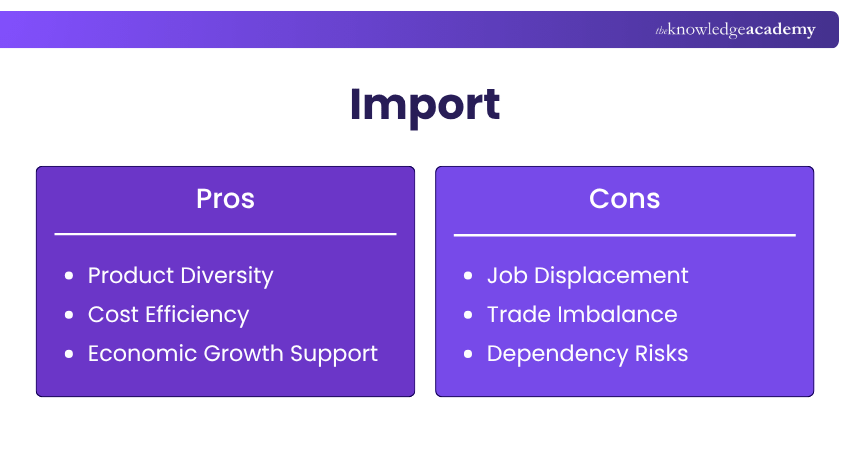
Imports encompass various goods, including raw materials, finished products, and services, fulfilling domestic demand and supplementing local industries. However, imports can have the following pros and cons:
For imported goods, the process commonly involves customs clearance, compliance with applicable trade regulations, and the payment of duties and taxes where required. Nations engage in imports to access resources not readily available domestically, capitalise on comparative advantages, and diversify their markets. This contributes to the richness and complexity of the global economic landscape.
What is Export?
Export means selling goods or services produced within one country to buyers located in another nation. It is a core component of international trade, contributing to economic growth and fostering global business relationships.
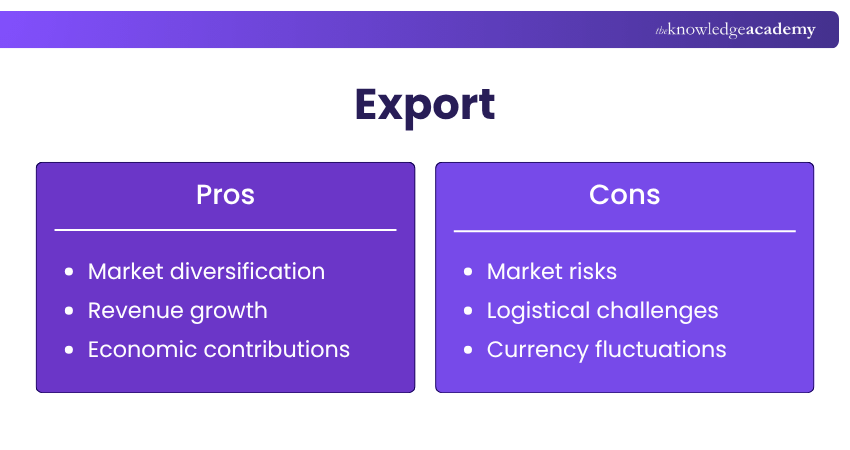
In exporting, businesses aim to capitalise on comparative advantages, leveraging their expertise, resources, or technology to offer products or services in foreign markets. However, exports can have the following pros and cons:
Governments often play a role in regulating exports through trade policies and agreements. Exporting not only enhances a country's economic vitality but also encourages cultural exchange and cooperation on a global scale. Successful export practices require businesses to navigate diverse regulations, logistics, and market dynamics, emphasising adaptability and strategic planning.
What is the Difference Between Import and Export?
Imports and exports are crucial elements of international trade, which includes the exchange of goods and services across borders. Both play vital roles in shaping the economic landscapes of nations, influencing trade balances, fostering economic growth, and facilitating global cooperation.
However, import and export processes differ in their direction, objectives, motivations, and effects on trade. These differences are as follows:
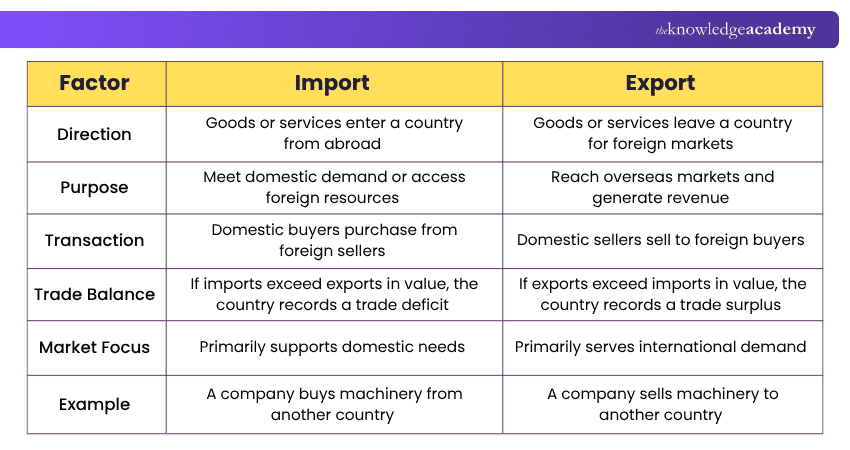
1) Trade Direction
Imports and exports form the lifeline of global trade, delineating the movement of goods and services across international boundaries. Imports constitute the procurement of goods or services produced abroad, enriching a country's domestic supply with diverse foreign products. This infusion contributes to economic diversity and meets the demands of consumers who seek access to international offerings.
On the flip side, exports involve selling domestically produced goods or services to overseas markets. This outbound flow fulfils international demand and positions a country within the intricate web of global commerce. Thus, it helps enhance economic growth and fosters bilateral and multilateral trade relationships.
2) Effect on Trade Balance
A nation's trade balance, a pivotal economic indicator, is intricately tied to the dynamics of imports and exports. A trade deficit materialises when the value of a country's imports exceeds the value of its exports. This scenario indicates that the nation imports more goods and services by value than it exports. However, a trade deficit is not necessarily harmful on its own. Its economic implications depend on factors such as domestic savings and investment, competitiveness, economic conditions, and the reasons behind the imbalance.
Conversely, a trade surplus happens when the value of a nation's exports exceeds the value of its imports. A trade surplus is not automatically a sign of a stronger or healthier economy. Like a trade deficit, its significance depends on the economic circumstances and the factors causing the imbalance.
Trainer’s Tip:
When comparing trade figures, check whether the data covers goods only or both goods and services. The reported balance can differ depending on which measure is being analysed.
3) Objective
Imports are a strategic means for a country to bolster its domestic supply by acquiring goods or services that may be unavailable or in insufficient quantities domestically. The primary aim is to efficiently meet the demands of consumers and industries, ensuring a well-rounded and diverse array of products.
Conversely, exports are crafted to capitalise on a nation's production capabilities. Through selling products or services in foreign markets, exports can stimulate economic growth, generate substantial revenue, and strengthen a nation’s global market presence. These reciprocal activities contribute to the intricate tapestry of international commerce, fostering economic interdependence and cooperation among nations.
4) Purpose and Motivation
Imports help countries and businesses meet domestic demand, obtain resources that are unavailable or insufficient locally, and source goods or services that are more economical abroad.
Exports allow businesses to serve foreign demand, generate revenue, and make use of areas such as comparative advantage, specialised expertise, technology, or production capability.
5) Market Focus
Imports primarily serve domestic consumers and businesses by bringing in goods or accessing services from foreign suppliers. They can help meet local demand or supplement domestic production.
Exports focus on customers and markets abroad by supplying domestic goods or services internationally. They can help businesses reach new markets and generate revenue from foreign demand.
Challenges in Import and Export
Imports and exports are integral to the global economy, facilitating the exchange of goods and services across borders. While this process contributes significantly to economic growth and international cooperation, it has challenges:
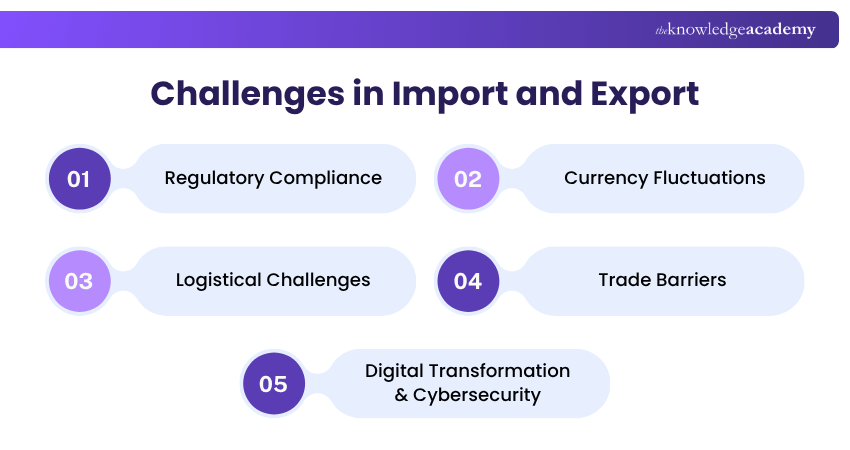
1) One prominent challenge in international trade is regulatory compliance. Each country has its own set of regulations, tariffs, and trade barriers, creating a complex web of compliance requirements. For businesses, navigating these regulations is essential to ensure adherence to legal frameworks, which often requires a deep understanding of international trade laws and local regulations.
2) Another significant challenge is currency fluctuations. The value of currencies in the foreign exchange market can be volatile, influencing the costs and profitability of imported or exported goods. Exchange rate fluctuations can therefore create financial uncertainty for businesses engaged in cross-border trade, making appropriate risk-management strategies important.
3) Logistical hurdles also play a crucial role in the challenges faced in import and export. Efficient transportation, warehousing, and supply chain management are vital for the smooth movement of goods across borders. Delays, disruptions, or inefficiencies in logistics can lead to increased costs, delayed deliveries, and potential damage to goods, impacting the overall trade process.
4) Trade barriers and protectionist measures adopted by certain countries can pose challenges for businesses seeking to expand their international footprint. Tariffs, quotas, and other restrictions can hinder the free flow of goods and services, limit market access and affect the competitiveness of products in foreign markets.
5) Emerging technologies and digital transformation bring opportunities and challenges to the import and export landscape. While blockchain and digital documentation can streamline processes, they require adaptation and investment. Also, ensuring cybersecurity and data protection is crucial in an increasingly interconnected and digitised trade environment.
Know the rules before you cross borders with the Export and Trade Compliance Training now!
Import and Export Risk Checklist
Before entering an international trade transaction, consider:1. Regulatory Requirements: Are there specific rules, licences, or documentation requirements?2. Tariffs and Taxes: Could duties or other charges affect the overall cost?3. Currency Exposure: Could exchange-rate movements affect profitability?4. Logistics: Are transportation, warehousing, and delivery arrangements reliable?5. Trade Restrictions: Are quotas, sanctions, or other restrictions relevant to the transaction?
Trade Policies in Import and Export
International trade is governed by national policies that regulate imports and exports. These policies are pivotal in shaping a country's economic landscape. So, let’s have a quick look at each of these policies:
1) Import Policies
Import policies are a set of regulations and measures a country implements to control or regulate the inflow of foreign goods and services. These policies can be used to safeguard domestic industries, protect health, safety, the environment or national security, administer quantitative restrictions, generate revenue, or pursue other national policy objectives.
Key components of import policies include the following:
1) Tariffs: Tariffs are taxes imposed on imported goods, influencing their cost and competitiveness in the domestic market. Governments may use tariffs strategically to protect local industries, generate revenue, or address trade imbalances.
2) Quotas: Quotas limit the quantity or value of specific goods imported within a specified period. Governments may use quotas to restrict or manage the number of products entering a market.
3) Licensing Requirements: Import licensing requires importers of certain products to submit an application or specified documentation to the relevant authority before importation. Depending on the country and product, licensing may be used for purposes such as administering quotas or implementing health, environmental, security, or other regulatory measures.
2) Export Policies
Export policies govern the conditions under which goods and services are sold to foreign markets. They can support international trade and market access while also imposing controls for purposes such as national security, sanctions, international obligations, or other policy objectives.
1) Export Incentives: Governments may use permitted support measures, such as export-promotion services, financing programmes, or certain tax measures, subject to applicable national and international trade rules. These incentives are designed to boost the competitiveness of domestic products in the global market.
2) Trade Agreements: Countries engage in trade agreements to facilitate smoother exports by reducing trade barriers, tariffs, and bureaucratic hurdles. Bilateral and multilateral agreements can create more favourable conditions for trade between participating countries.
3) Export Licensing: Export licensing may be required for certain goods, depending on national laws and the products or destinations involved. Such controls may be used to address requirements related to security, sanctions, international obligations, or other regulatory considerations.
Keep This in Mind
Importing and exporting are two sides of the same international transaction, but the requirements can differ significantly depending on the product, country, and direction of trade. Before entering a new market, check the applicable regulations, duties, documentation, logistics, and potential currency risks.

Vidhya Nair is a Senior Copywriter with 7+ years of experience across copywriting, content writing and communication. Her extensive research and editorial experience supports her ability to present topics across Business Skills and Human Resources with clarity and purpose.
View Detail

 If you wish to make any changes to your course, please


