




We may not have the course you’re looking for. If you enquire or give us a call on 01344203999 and speak to our training experts, we may still be able to help with your training requirements.
Customer Service vs Customer Experience: What’s the Difference?
ByGaurav KalitaLast updated on: 24 September 2026
Customer Service vs Customer Experience highlights two key aspects of customer engagement. CX covers the entire journey from awareness to loyalty, while customer service focuses on post-purchase support. Together, they shape brand perception, improve satisfaction, build trust, and encourage long-term customer loyalty.
Customer Service and Customer Experience both influence how customers perceive a business, but they serve different purposes. Customer Service focuses on assisting customers before, during, and after a purchase, while Customer Experience encompasses every interaction a customer has with a brand throughout their journey.
Understanding the difference between Customer Service vs Customer Experience is essential for organisations looking to improve customer satisfaction, strengthen loyalty, and build lasting relationships. In this blog, we explore the key differences between Customer Service vs Customer Experience and why both are important for business success.
What is Customer Service?
Customer service is the support a business provides to its customers before and after they purchase and use its products or services. It focuses on helping customers have a smooth and positive experience with the brand by answering queries, solving problems, and offering guidance.
Today, customer service goes beyond just resolving issues. It involves delivering timely, personalised, and proactive support across different channels such as phone, email, and chat, ensuring customers feel valued and satisfied throughout their journey.
What is Customer Experience?
Customer Experience (CX) is a comprehensive concept that encompasses every interaction and touchpoint a customer has with a brand. It goes beyond individual transactions, focusing on the overall journey and emotions that customers experience throughout their interactions with the company. Let's delve into the core aspects of Customer Experience:
Difference between Customer Service and Customer Experience
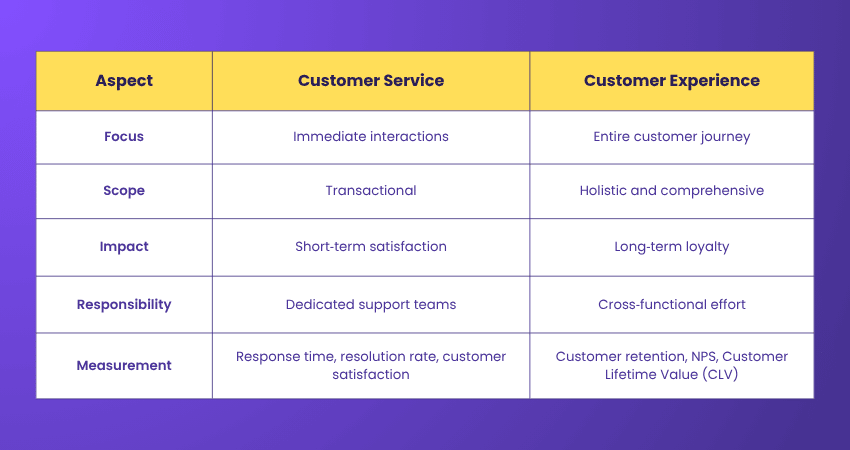
Customer Service and Customer Experience are distinct aspects of a customer's journey with a brand, each serving unique purposes and encompassing different scopes. Let's explore the key differences between these two crucial elements:
Holistic Experience Vs Specific Interaction
Customer experience focuses on the complete journey a customer has with a brand. It includes every stage, from first awareness to post-purchase support, covering all touchpoints that shape how a customer feels about the business.
Customer service, on the other hand, deals with specific interactions at a particular moment. It usually involves helping customers with queries, complaints, or support needs during a single point of contact.
Reactive Vs Proactive
Customer service is generally reactive. It comes into action when a customer faces a problem or reaches out for help, aiming to resolve the issue quickly and effectively.
Customer experience is proactive in nature. Businesses work to anticipate customer needs, improve processes, and create smooth journeys to prevent issues before they arise.
Ongoing Relationship Vs Isolated Event
Customer experience focuses on building long-term relationships with customers. It shapes how customers perceive a brand over time through consistent and positive interactions.
Customer service is often an isolated event. It concentrates on resolving a single issue and may not always influence the overall relationship unless supported by a strong experience strategy.
Fascinated by fiction and literary works? Try our Creative Writing Course! Join today.
Departmental responsibility
Customer Service is often the responsibility of a dedicated customer support team within the organisation. It deals with day-to-day interactions with customers and focuses on providing immediate assistance and resolutions.
In contrast, Customer Experience is a cross-functional effort that involves multiple departments, including marketing, sales, product development, and customer support. Achieving a seamless and exceptional Customer Experience requires collaboration and alignment across the entire organisation, which highlights the Difference Between Customer Service and Customer Support.
Measuring success
The success of Customer Service is often measured through metrics such as response time, resolution rate, and customer satisfaction scores. These metrics provide insights into how well the support team addresses customer inquiries and concerns.
In contrast, measuring the success of Customer Experience involves assessing customer loyalty, brand perception, and long-term customer value. Metrics like customer retention, customer lifetime value and Net Promoter Score (NPS) are used to gauge the effectiveness of the overall Customer Experience strategy.
Enhance your Customer Experience with our Customer Experience Training – Sign up now!
Integrating Customer Service and Customer Experience
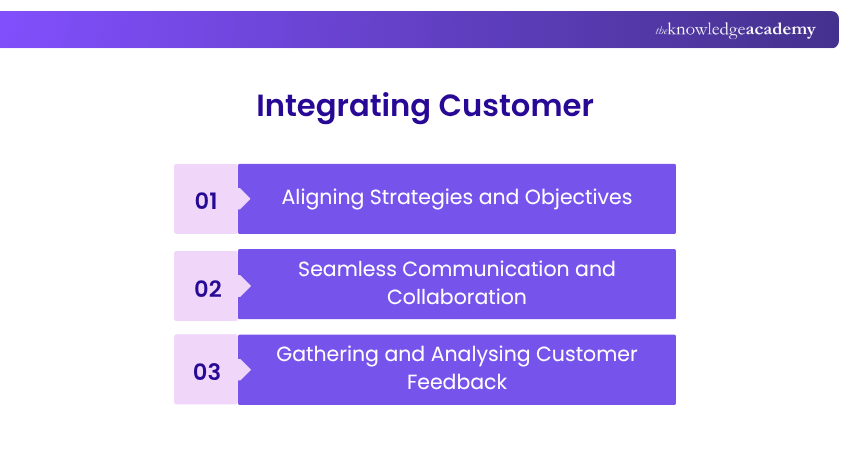
When it comes to creating a truly outstanding customer journey, aligning Customer Service and Customer Experience strategies is paramount. Here are essential ways to achieve seamless integration:
Aligning strategies and objectives
To create a cohesive experience, aligning both the Objectives of Customer Service and Customer Experience initiatives is necessary. Ensure that the teams work towards common goals, emphasising customer satisfaction, loyalty, and long-term relationships. By sharing a unified vision, all departments can contribute to enhancing the overall customer journey.
Seamless communication and collaboration
Effective communication and collaboration between Customer Service and Customer Experience teams are essential. Encourage open channels for sharing customer insights, feedback, and pain points. Seamless collaboration enables swift problem-solving and the implementation of improvements that lead to enhanced Customer Experiences.
Gathering and analysing customer feedback
Customer feedback is a valuable resource in understanding their needs and expectations. Regularly gather feedback from various touchpoints, such as surveys, social media, and direct interactions. Analyse this data to identify patterns, pain points, and areas for improvement. By using customer feedback as a foundation, both Customer Service and Customer Experience teams can make informed decisions to optimise the overall journey.
Unlock the power of Emotional Intelligence (EI) with our Emotional Intelligence Training – Sign up now!
Which Is More Important: Customer Service or Customer Experience?
Customer service and customer experience are both essential for business success, but they serve different roles. Customer experience has a broader impact because it covers the entire journey a customer has with a brand, influencing how they feel at every stage. Even if customer service is excellent, a poor overall experience such as a difficult website or delayed delivery can still drive customers away.
That said, customer service remains equally important as it plays a critical role in shaping key moments. It is often the final opportunity to resolve issues and turn a negative situation into a positive one. When both customer service and customer experience work together, they help build trust, improve satisfaction, and create long-term customer loyalty.

Gaurav Kalita is a Content Writer with 2+ years of experience in content development, research and storytelling. His background in English literature and teaching, combined with his growing interest in AI and Machine Learning, supports his writing across Business Skills and IT and Tech.
View Detail

 If you wish to make any changes to your course, please


