




We may not have the course you’re looking for. If you enquire or give us a call on 01344203999 and speak to our training experts, we may still be able to help with your training requirements.
10 Characteristics of an Effective Team Explained
ByThe Knowledge AcademyLast updated on: 10 October 2026
Characteristics of an effective team include clear purpose, trust, communication, defined roles, accountability, adaptability, and strong collaboration. These traits help teams stay focused, handle challenges, and achieve shared goals efficiently. When members feel valued and aligned, teamwork becomes truly effective.

The Rundown
1. Team effectiveness depends on how well individual strengths are combined.2. Trust encourages people to contribute ideas, questions, and concerns openly.3. Constructive feedback helps teams learn from experience and improve how they work.4. Healthy conflict resolution allows disagreements to be addressed without damaging working relationships.5. Effective leadership helps provide direction while encouraging participation and responsibility.
Have you ever been part of a team where everything just clicked? The conversations flowed, ideas built on each other, and even tough tasks felt surprisingly easy. What makes experiences like this possible is often how well team members connect, respond to one another, and bring their individual strengths together.
In this blog, we’ll uncover the top 10 characteristics of an effective team, explore their benefits, share practical tips, and highlight the golden rule of teamwork. Let’s get started!
Top 10 Characteristics of an Effective Team
Effective teams share key attributes that drive collaboration, productivity, and a positive work environment. Here are some essential characteristics of an effective team:
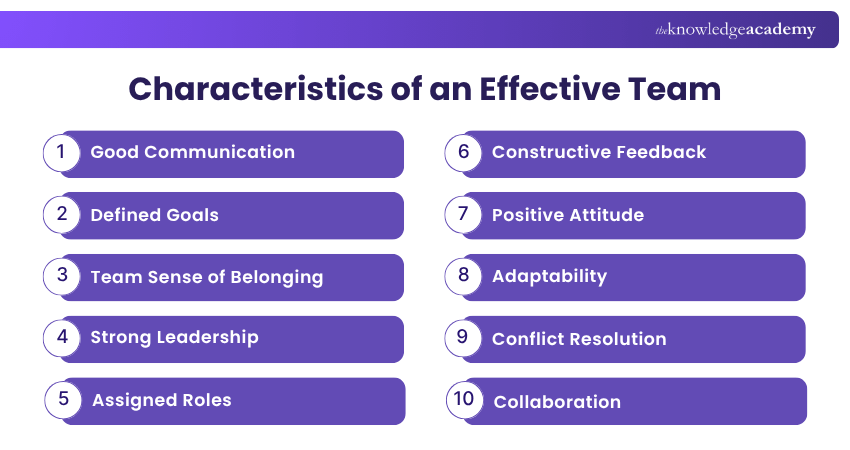
1) Good Communication
Open and honest communication is the heart of strong teamwork. It helps team members share ideas freely and feel valued. When everyone listens and respects each other, the team solves problems better, builds trust, and works together smoothly for great results.

2) Defined Goals
Establishing clear, purpose-driven, and attainable goals is crucial. When team members understand their objectives, they stay focused, work efficiently, and contribute toward meaningful outcomes.
3) Team Sense of Belonging
A team that fosters trust and mutual respect enhances engagement and commitment. Creating psychological safety also helps members feel comfortable sharing ideas, asking questions, raising concerns and acknowledging mistakes without fear of embarrassment. When members feel valued and connected, they are more likely to contribute actively to the team’s success.
4) Strong Leadership
Effective leadership goes beyond managing tasks. An effective leader can inspire the team, clearly communicate direction, and encourage everyone to work towards shared goals. They lead by example, build trust, and guide the team to stay focused and perform effectively together.
5) Assigned Roles
Assigning specific responsibilities and roles ensures accountability and prevents confusion. Clarity in roles allows each team member to concentrate on their responsibilities and contribute effectively.
Trainer’s Insight
Team effectiveness rarely depends on one characteristic alone. Clear goals are more useful when responsibilities are understood, while defined roles work better when team members communicate and hold themselves accountable. Think of these characteristics as connected parts of an effective team rather than separate qualities.
6) Constructive Feedback
Regular, constructive feedback helps teams learn, grow, and work better together. It guides members to understand their strengths and areas for improvement. When leaders and team members exchange feedback regularly and constructively, it can support learning, build trust, and create a more supportive working environment.
7) Positive Attitude
Confidence and positivity can spread quickly through a team. When leaders and team members believe in their goals and the mission of the business, it can encourage people to contribute their best. This shared optimism can strengthen relationships, support motivation, and help the whole team work together towards success.
Gain knowledge on how to manage and deal with various kinds of people. Join the Introduction to Managing People Training today!
8) Adaptability
In a fast-paced work environment, adaptability is key. Effective teams embrace change, remain flexible, and adjust their strategies as needed. A willingness to learn and evolve can support long-term effectiveness and help teams respond more effectively when facing challenges.
9) Conflict Resolution
Effective teams handle conflicts calmly and respectfully. They listen to each other, find fair solutions, and learn from disagreements. Instead of seeing conflict as a problem, they use it to build stronger teamwork and make better decisions.
10) Collaboration
True collaboration uses diverse skills and ideas to reach shared goals. It can support creativity, problem-solving, and innovation by bringing different perspectives together. When members contribute effectively, the team can make better use of its collective knowledge and skills.
What Effective Teamwork Looks Like in Practice
|
Area
|
What You Might See
|
|
Communication
|
Members share information openly
|
|
Goals
|
Everyone understands the shared objective
|
|
Roles
|
Responsibilities and ownership are clear
|
|
Feedback
|
Improvements are discussed constructively
|
|
Adaptability
|
The team adjusts when priorities change
|
|
Collaboration
|
Members contribute and support each other
|
Benefits of an Effective Team
Effective teamwork is essential for organisational success through maximised team performance. Some of those benefits include:
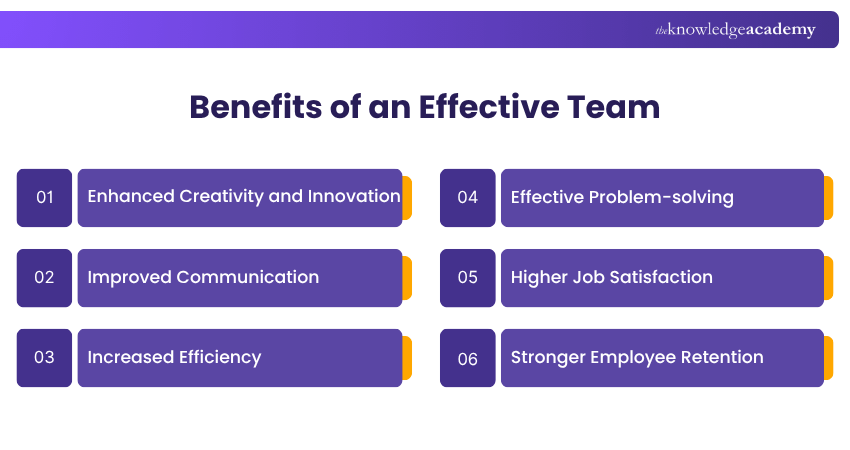
1) Enhanced Creativity and Innovation: Collaborative environments can encourage team members to share different knowledge, experiences, and perspectives, helping generate a wider range of ideas and potential solutions.
2) Improved Communication: Teamwork fosters open dialogue, ensures clarity, helps reduce misunderstandings, and promotes a more cohesive work environment.
3) Increased Efficiency: Teams can divide tasks based on individual strengths. This helps streamline processes and facilitate more effective project completion.
4) Effective Problem-solving: Different skills, knowledge, and perspectives can help teams examine problems from multiple angles and develop more informed solutions.
5) Higher Job Satisfaction: A supportive team culture can strengthen motivation, engagement, and job satisfaction, which may contribute to greater commitment and productivity.
6) Stronger Employee Retention: A positive team environment can foster trust and belonging, support employee retention, and contribute to a more stable and experienced workforce.
Improve decision-making and problem-solving at senior levels. Join the Senior Management Training today!
Tips for Ensuring Effectiveness Within a Team
Ensuring team effectiveness is pivotal for achieving organisational success. Implementing the following strategies can help uplift the team’s performance. Let's look at them below:
1) Make Collaborative Decisions
Involving relevant team members in appropriate decisions can create a stronger sense of ownership and commitment. When individuals have an opportunity to contribute to decisions that affect their work, they are more likely to understand and support the team’s objectives.
Bonus Tip
Before making an important team decision, make sure everyone understands the goal and has an opportunity to contribute. You may not use every suggestion, but involving relevant team members can reveal useful perspectives and strengthen commitment to the final decision.
2) Celebrate Achievements Together
Recognising and celebrating both individual and collective accomplishments can support morale and reinforce a positive team culture. Furthermore, acknowledging achievements can help motivate team members and contribute to a supportive, success-driven environment.
3) Give and Receive Constructive Feedback
Encouraging open, constructive feedback promotes continuous improvement. When team members provide and accept feedback respectfully, it can support personal growth and contribute to improved overall performance.
What is the Golden Rule of Teamwork?
There is no single universally recognised “golden rule” of teamwork, but a useful principle is to work together towards a shared goal while supporting and respecting one another. Teams become stronger when members collaborate, communicate openly, fulfil their responsibilities, and stay focused on shared outcomes.
Build stronger teams and sharpen your leadership skills by joining the Management Courses today!
Quick Team Effectiveness Checklist
Ask whether your team can confidently answer yes to these questions:
□ Do we understand our shared goals?□ Does everyone know their responsibilities?□ Can members raise concerns openly?□ Do we give and receive constructive feedback?□ Can we handle disagreements respectfully?□ Do we collaborate effectively?□ Can we adapt when priorities change?

The Knowledge Academy develops accessible learning content across Project Management, IT, Cybersecurity, Data Science, Business Analysis, HR, Accounting and Finance, Leadership and Health and Safety. Its resources combine subject research with clear explanations to help professionals build practical knowledge across a wide range of disciplines.
View Detail

 If you wish to make any changes to your course, please


