


 Top Rated Course

We may not have the course you’re looking for. If you enquire or give us a call on 01344203999 and speak to our training experts, we may still be able to help with your training requirements.
Bookkeeper Job Description: Duties, Skills, and Requirements
Olivia Taylor 15 July 2026A Bookkeeper records daily transactions, manages invoices and payroll, reconciles accounts, and prepares financial reports for accountants. They also maintain accurate records to ensure financial data is up to date and organised. This helps businesses track cash flow, avoid errors, and support better financial decisions.

Training Outcomes Within Your Budget!
We ensure quality, budget-alignment, and timely delivery by our expert instructors.
Table of Contents

A strong financial foundation relies on accuracy and consistency. Understanding the Bookkeeper Job Description will help in understanding how this position contributes to both the stability and the growth of a business.
A Bookkeeper Job Description indicates much more than just doing routine transactions; it also signifies being liable for compliance and facilitating intelligent decision-making. Let's have a look at the main responsibilities and the essential qualifications involved below.
Table of Contents
1) Who is a Bookkeeper?
2) Bookkeeper Duties and Responsibilities
3) Bookkeeper Requirements
4) Skills Needed to be a Bookkeeper
5) Bookkeeper Job Description Examples
6) Salary Range for Bookkeepers
7) What Makes a Good Bookkeeper?
8) Conclusion
Who is a Bookkeeper?
A Bookkeeper Job Description involves recording and maintaining a business’s financial transactions, including purchases, expenses, sales revenue, invoices, and payments. Bookkeepers enter this data into general ledgers, which are used to prepare key financial statements such as the balance sheet and income statement.
They typically manage the first six steps of the Accounting cycle, such as identifying, recording, and classifying transactions. Accountants usually handle the final steps, including adjustments and closing entries. While bookkeepers focus on accurate recordkeeping, Accountants analyse the data for compliance, performance insights, and strategic planning.

Bookkeeper Duties and Responsibilities
The responsibilities and duties of a bookkeeper revolve around the production of precise financial documents and the facilitation of daily financial activities in an uninterrupted manner.
a) Record financial transactions, including invoices, payments, income, and receipts
b) Maintain accurate records using accounting software and spreadsheets
c) Reconcile bank accounts and identify discrepancies
d) Prepare financial statements such as profit and loss reports and balance sheets
e) Manage accounts payable and receivable to track cash flow
f) Complete VAT returns and supports regulatory financial submissions
g) Process payroll, expenses, and employee wages accurately
Support accountants with audits and year-end accounts preparation.
Join the Bookkeeping Course to develop practical accounting skills and strengthen your finance career with confidence.
Bookkeeper Requirements
The following are the key requirements needed to become an effective Bookkeeper. These help ensure accuracy, compliance, and smooth financial operations within an organisation.
1) A basic educational background such as a high school diploma; some roles may prefer a degree in accounting, finance, or business
2) Strong understanding of basic accounting principles and financial processes
3) Proficiency in accounting software, spreadsheets, and bookkeeping tools
4) Excellent attention to detail and accuracy when handling financial data
5) Good numerical and analytical skills for managing transactions and reports
6) Strong organisational and time management skills to handle multiple tasks and deadlines
7) Effective communication skills for interacting with clients, vendors, and team members
8) High level of integrity and trustworthiness when dealing with sensitive financial information
9) Ability to work independently and meet deadlines consistently
10) Willingness to learn new tools, technologies, and financial regulations
Skills Needed to be a Bookkeeper
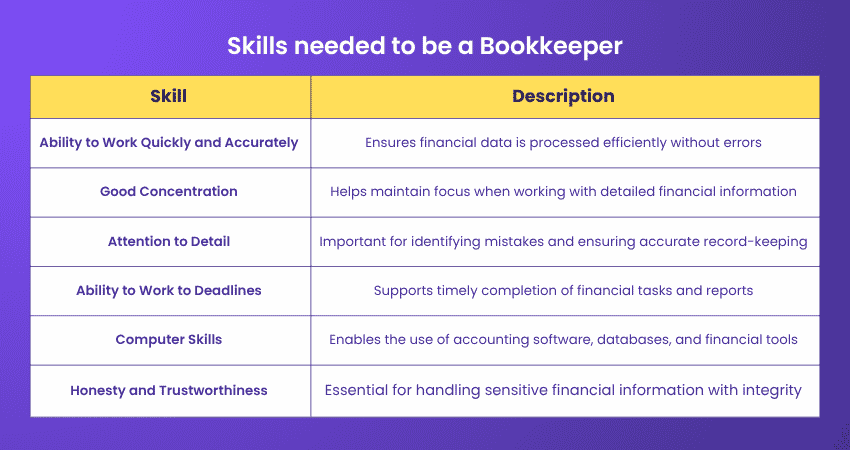
Bookkeepers need a strong combination of accuracy, focus, and technical ability to handle financial tasks effectively. The following are the key skills that help Bookkeepers perform their role efficiently and maintain reliable financial records:
Register for our Introduction to Credit Control Course to excel the art of managing credit and boosting financial stability!
Bookkeeper Job Description Examples
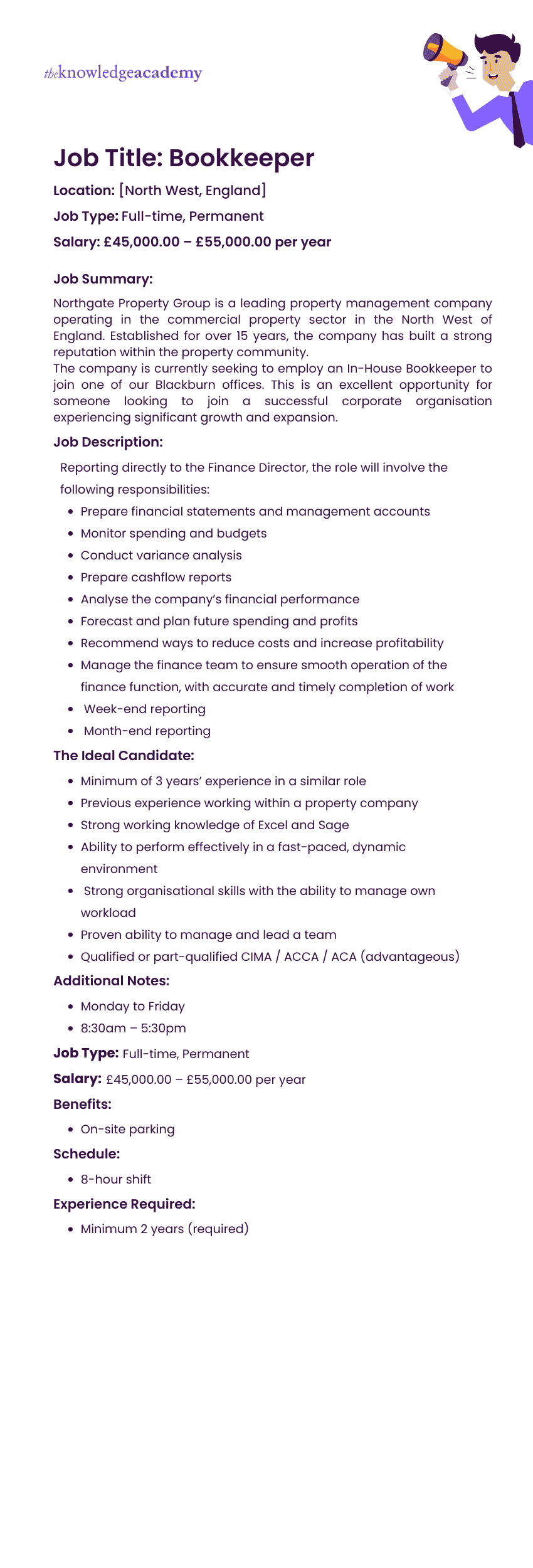
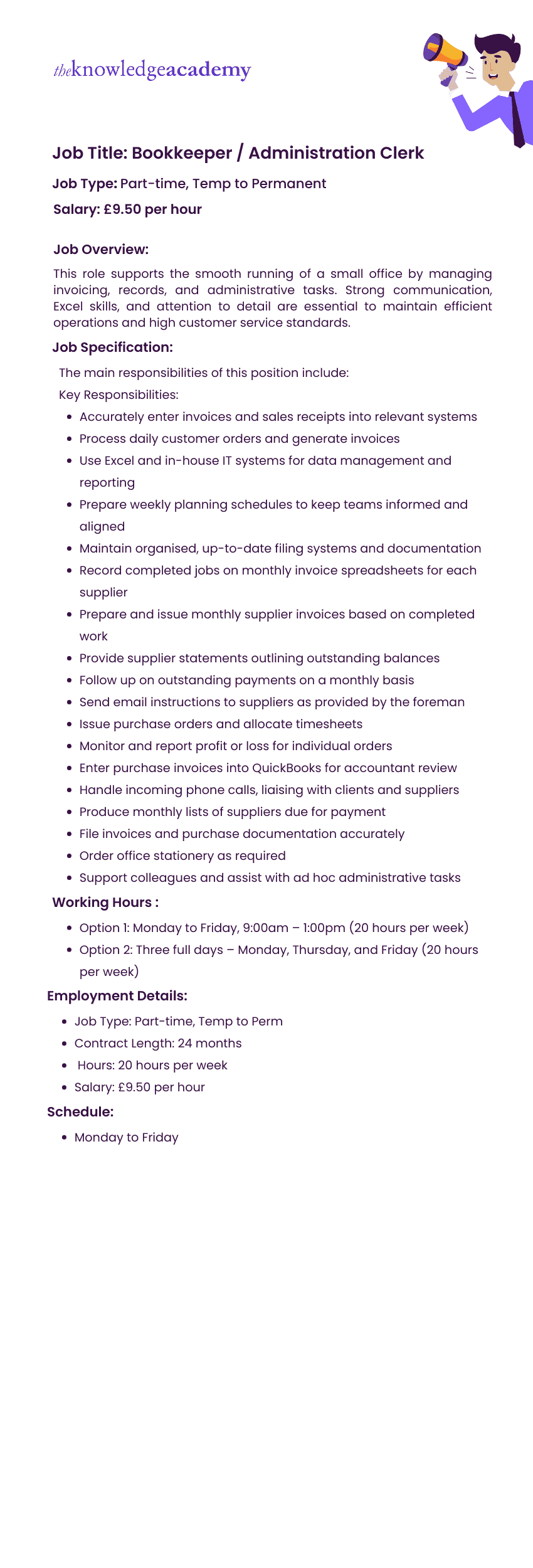
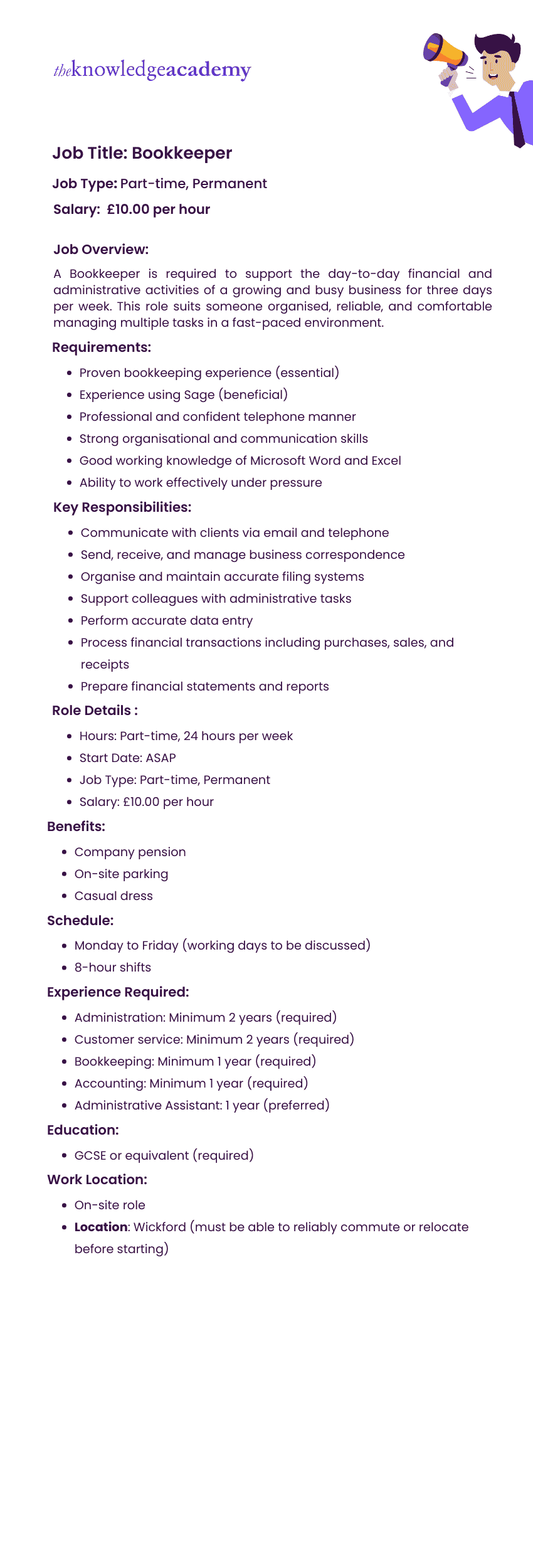
Bookkeeper Roles can vary depending on the size and nature of the organisation. Below are two examples that highlight the responsibilities and requirements for bookkeepers in different business settings.
Example 1
Example 2
Example 3
Salary Range for Bookkeepers
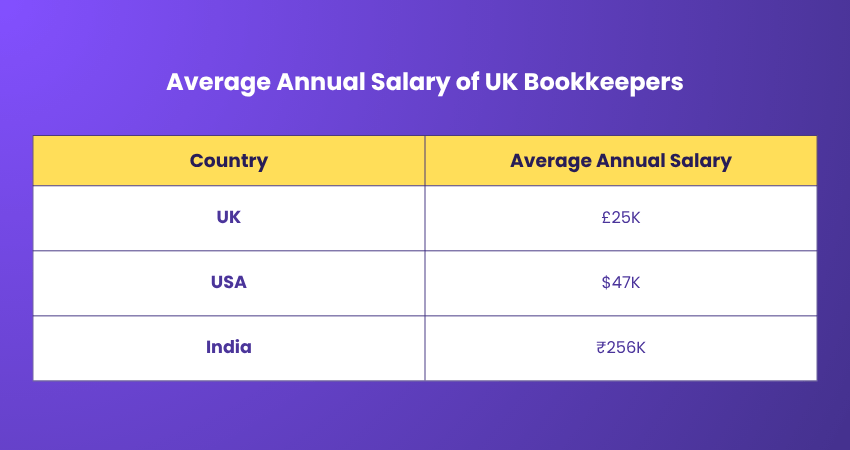
Bookkeeper salaries can vary depending on factors such as geographical locations, experience, certification, and industry. Here are the average annual salaries across three major regions:
What Makes a Good Bookkeeper?
A good Bookkeeper combines strong technical knowledge with key personal qualities to manage financial records accurately and efficiently. They must be highly organised, detail-oriented, and comfortable working with numbers to ensure all financial data is correct and up to date.
In addition, effective Bookkeepers have strong communication and collaboration skills, allowing them to work closely with accountants, clients, and other team members. They are also trustworthy and maintain confidentiality when handling sensitive financial information, while staying focused and meeting deadlines in a fast-paced environment.
Take control of your financial future! Join our Financial Management Training now!
Conclusion
A Bookkeeper plays a vital role in maintaining accurate financial records and supporting the financial health of a business. From tracking transactions to preparing reports, their responsibilities help ensure smooth day-to-day operations and informed decision-making. Understanding a Bookkeeper Job Description can help employers hire the right talent and guide aspiring professionals towards a rewarding career in finance and accounting.
Join our Cash Flow Training and enhance your expertise for a brighter financial future!
Frequently Asked Questions
What are the Two Kinds of Bookkeeping?

The two kinds of Bookkeeping are single-entry and double-entry. Single-entry is a simple system for small businesses, recording one side of each transaction. Double-entry records both debit and credit sides, ensuring accuracy and balancing the books.
Why is Hiring a Bookkeeper Important?
Hiring a Bookkeeper ensures accurate financial records, timely reporting, and better cash flow management. They help businesses stay organised, support compliance with tax laws, reduce errors, and allow owners to focus on growth rather than daily financial tasks.

Olivia Taylor


Chartered Accountant and Financial Training Specialist
Olivia Taylor is a qualified chartered accountant with over a decade of experience in financial management, auditing and corporate reporting. Having worked with leading firms in both the public and private sectors, Olivia brings clarity to complex financial topics. Her writing focuses on helping professionals build confidence in key areas of accounting, compliance and financial planning.
View Detail

 If you wish to make any changes to your course, please


