


 Top Rated Course

We may not have the course you’re looking for. If you enquire or give us a call on 01344203999 and speak to our training experts, we may still be able to help with your training requirements.
Benefits of PCI DSS Compliance for Modern Businesses
Hailey Davis 17 July 2026Benefits of PCI DSS Compliance include protecting payment data, reducing breach risks, ensuring security standards, and building customer trust and credibility. Any organisation that handles cardholder data must comply with PCI DSS. This includes merchants, payment processors and service providers that store or transmit cardholder data.

Training Outcomes Within Your Budget!
We ensure quality, budget-alignment, and timely delivery by our expert instructors.
Table of Contents
Every time you tap your card, shop online or make a digital payment, you trust that your details are safe. But what keeps that data protected? That’s where the Benefits of PCI DSS Compliance come in. It acts as a strong shield that secures your payment information, prevents fraud, and ensures every transaction is safe and reliable.
In this blog, you’ll discover the key Benefits of PCI DSS Compliance, its six main principles, and why it matters for every business. Whether you run a small shop or a large company, these standards help protect customer data, build trust, and strengthen payment security.
Table of Contents
1) Benefits of PCI DSS Compliance
a) Enhanced Data Security
b) Minimised Risk of Data Breaches
c) Consumer Trust and Confidence
d) Financial Benefits
e) Streamlined Operations
f) Regulatory and Legal Advantages
g) Cost Savings
h) Long-term Sustainability
i) Building Trust with Partners and Vendors
2) What are the Six Major Principles of PCI DSS?
3) Conclusion
Benefits of PCI DSS Compliance
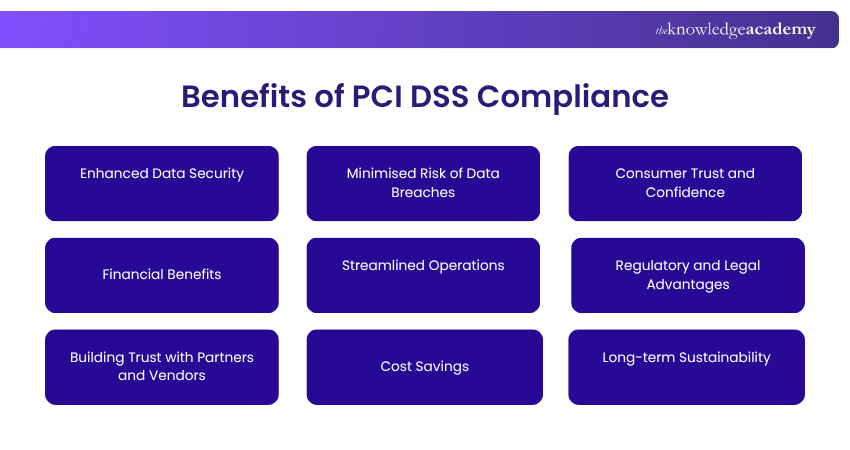
There are several PCI DSS benefits to enterprises that participate in credit card transactions containing sensitive consumer data once they implement the PCI DSS Compliance standards. Ensuring such benefits through PCI DSS Compliance protects the sensitive cardholder data, which ensures key PCI DSS History and the Benefits of PCI DSS Compliance:
1) Enhanced Data Security
This is among the biggest Benefits of PCI DSS Compliance. PCI DSS strengthens data security by protecting personal and financial information. With encryption, access controls, and Firewalls, companies can reduce unauthorised access and data breaches while building customer trust through strong information protection. It also ensures that businesses meet industry standards and maintain a secure payment environment.
2) Minimised Risk of Data Breaches
One of the major advantages of PCI DSS Compliance is reduced exposure to potential security threats. By following strict security standards, businesses can limit vulnerabilities and restrict access to cardholder data, protecting it from attacks. This approach also enhances overall system reliability and helps companies maintain continuous trust with customers.

3) Consumer Trust and Confidence
PCI DSS compliance helps build customer trust by demonstrating a commitment to protecting sensitive payment information. As consumers become more aware of data security risks, compliance reassures them that their data is handled securely, strengthening customer confidence, loyalty, and long-term business relationships.
4) Financial Benefits
PCI DSS compliance can deliver significant financial benefits by helping organisations avoid the costs associated with data breaches, regulatory penalties, and reputational damage. While achieving compliance requires an initial investment, it can reduce long-term financial risks and may even lead to lower cyber insurance premiums, contributing to overall cost savings.Understand the importance of adherence to legal requirements with our Effective Compliance Training – Register today!
5) Streamlined Operations
Adhering to PCI DSS Compliance requirements has become even more streamlined, making way for that business-as-usual nature. Organisations can streamline security workflows by standardising security practices and procedures, thereby eliminating redundancies and improving operational efficiency. This lets enterprises concentrate on doing only business while their data is taken care of well.
6) Regulatory and Legal Advantages
PCI DSS compliance helps organisations meet data protection and payment security requirements while supporting adherence to evolving regulatory standards. By maintaining compliance, businesses can reduce legal and compliance risks, strengthen their credibility with regulators, and demonstrate a commitment to safeguarding sensitive customer information.
7) Cost Savings
While achieving and maintaining PCI DSS Compliance may seem costly at first, it delivers significant long-term financial benefits. By reducing the risk of data breaches, legal penalties, and investigation expenses, businesses can avoid substantial losses. Additionally, many insurers offer better rates to compliant organisations, recognising their lower security risk and stronger data protection measures.
Acquire best practices for compliance and data protection with our PCI DSS Foundation Training – Join now!
8) Long-term Sustainability
Adhering to standards means a continuous commitment to data security. This will allow businesses to maintain not only long-term security, but also sustainability in the face of ever-changing threats. Businesses will be able to keep up with new threats and avoid potential vulnerabilities by manually conducting regular security assessments, audits and updates.
9) Building Trust with Partners and Vendors
As per the requirement of PCI DSS Compliance, build trust between you, partners, and vendors. If organisations can show their dedication to securing data, it is also a nod of assurance for partners and vendors that the information they share with them will be safe. It creates long-lasting business relationships, fosters collaboration, and leads to new opportunities.
What are the Six Major Principles of PCI DSS?
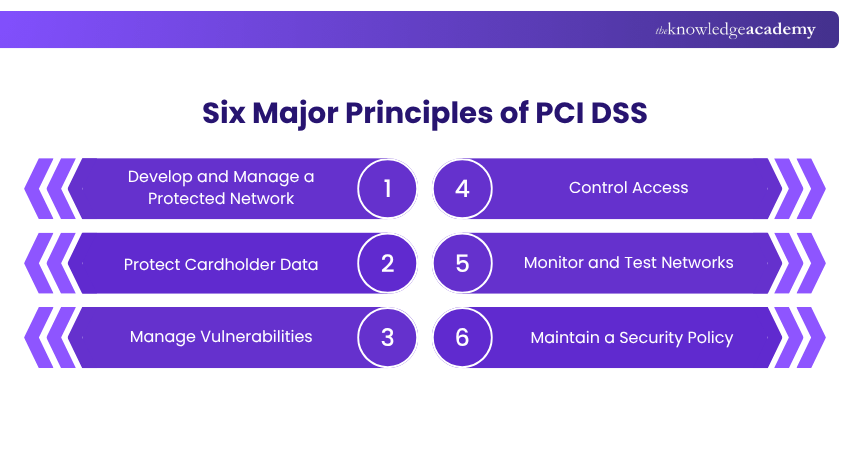
The six main principles of PCI DSS are:
1) Develop and Manage a Protected Network: Use firewalls and change default passwords to keep systems safe.This helps prevent unauthorised access and strengthens your overall network security.
2) Protect Cardholder Data: Encrypt stored and transmitted card information.Secure data handling reduces the risk of breaches and protects customer trust.
3) Manage Vulnerabilities: Keep antivirus software and security patches up to date.Regular updates help defend systems against emerging cyber threats and malware.
4) Control Access: Allow only authorised people to access cardholder data.Use role-based permissions and strong authentication to minimise unauthorised access.
5) Monitor and Test Networks: Check systems regularly to find and fix security issues. Continuous monitoring can help identify vulnerabilities before they can be exploited.
6) Maintain a Security Policy: Create clear rules so everyone understands how to protect payment data. Regular training and policy reviews ensure employees follow security best practices.
Conclusion
Understanding and following PCI DSS standards is vital for any business that handles card payments. The Benefits of PCI DSS Compliance include stronger data protection, lower fraud risk, and higher customer trust. Staying compliant helps businesses protect sensitive information, improve daily operations, and build a reputation for safety and reliability in today’s digital payment world.
Learn effective strategies to implement and manage compliance systems with our Compliance Training – Join now!
Frequently Asked Questions
What are the Main Objectives of PCI DSS?

The main objectives of PCI DSS are to protect cardholder data and ensure secure payments. It focuses on maintaining strong networks, preventing unauthorised access, and managing vulnerabilities. Also, enforcing access controls, and regularly monitoring and testing systems to detect and fix security risks.
What Competitive Advantages do Companies Gain by Being PCI DSS Compliant?
PCI DSS Compliance boosts credibility, builds customer trust, and differentiates businesses in a competitive market. It signals a commitment to data security, reduces the risk of costly breaches, and can lead to lower transaction fees and insurance premiums.

Hailey Davis


Compliance Officer
Hailey Davis is an ISO compliance expert with over 10 years of experience in audit, quality management systems (QMS), and regulatory compliance. She has worked with various industries, including manufacturing, healthcare, and technology, ensuring organisations achieve and maintain ISO certifications. Hailey’s content provides practical, actionable insights on navigating compliance challenges and improving business processes.
View Detail

 If you wish to make any changes to your course, please


