




We may not have the course you’re looking for. If you enquire or give us a call on 01344203999 and speak to our training experts, we may still be able to help with your training requirements.
Advantages and Disadvantages of a Partnership: Explained
ByAishwarya UnniLast updated on: 18 September 2026
A partnership is a business arrangement in which two or more people work together and typically share profits, responsibilities and business decisions. Discover the key advantages and disadvantages of a partnership, including shared responsibility, profit-sharing, and liability risks.

Imagine running a business where you’re not handling everything alone. Instead, you’re supported by someone who shares your vision and goals. A partnership offers the chance to share ideas, tasks and decisions with someone just as invested as you are. It can make things smoother, quicker, and even more enjoyable.
But it’s not always easy; there are pros and cons to consider. In this blog, we will discuss the advantages and disadvantages of partnership, so you can decide if working side by side with a partner is the right fit for your business journey.
Advantages of a Partnership
A partnership is a business structure where two or more individuals jointly own and manage a business while sharing its responsibilities, profits, and risks. It can offer several advantages, particularly for businesses that benefit from shared resources, skills, and decision-making. Here are the key benefits of running a business through a partnership:
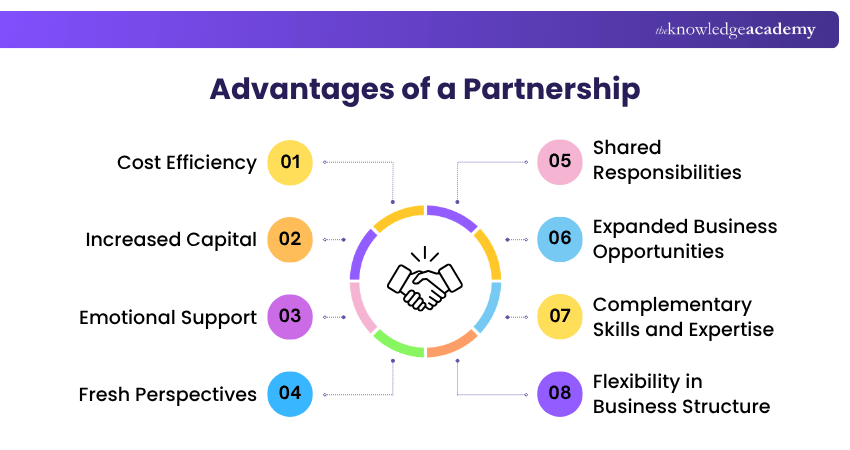
1) Cost Efficiency
Partnerships allow people to share business costs, which makes things more affordable. From rent to marketing, expenses can be divided among partners. This helps reduce the financial pressure on just one person.
a) Share office or equipment costs
b) Split advertising or promotion budgets
c) Partners may cover different business functions internally

2) Increased Capital
Having multiple partners can increase the capital available to the business, particularly when each partner contributes funds or other resources. This can provide additional financial resources to help the business start, operate or expand.
a) Pool resources for bigger investments
b) Improve cash flow for daily needs
c) Potentially reduce reliance on external borrowing
Trainer’s Insight
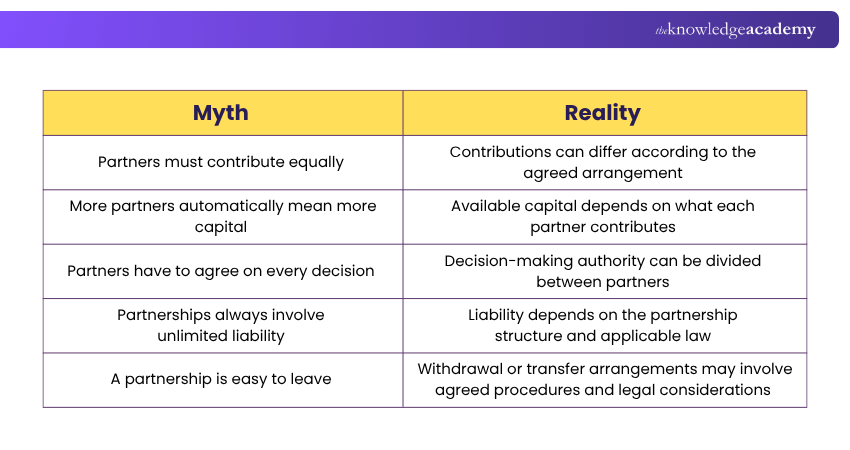
More partners do not automatically mean stronger finances. Agreeing on how much each partner will contribute, when additional funding may be required and how profits will be distributed can help prevent financial disagreements later.
3) Emotional Support
Having a supportive business partner can also make it easier to discuss challenges and manage the pressures of running a business. This support keeps you going during tough times.
a) Talk through problems together
b) Reduce stress by sharing concerns
c) Encourage each other during setbacks
4) Fresh Perspectives
Partners often have different ideas and ways of thinking. This can support problem-solving and encourage creative solutions. Different perspectives may also help partners identify new ways to improve the business.
a) Get different opinions on key decisions
b) Avoid one-sided thinking
c) Find new and better ways to work
5) Shared Responsibilities
In a partnership, partners can divide responsibilities and workloads according to their roles and strengths. This can make tasks easier to manage and allow each person to focus on what they do best.
a) One partner handles sales, and another handles finance
b) Reduce pressure by dividing tasks
c) Reduce the immediate need for additional support in some areas
Real-world Example
Imagine two partners running a small consultancy. One manages clients and business development, while the other handles finance and operations. Dividing responsibilities according to their strengths can improve efficiency while keeping both partners accountable for agreed business goals.
6) Expanded Business Opportunities
Partners can bring different professional networks, contacts and ideas to the business. This can lead to new customers, suppliers, or projects. This can create opportunities that may be harder to access when working alone.
a) Use each partner’s network
b) Explore new markets together
c) Attract different kinds of clients
7) Complementary Skills and Expertise
Each partner brings different strengths to the table. One may be good at planning, while another is great with people. This mix helps the business run smoothly.
a) Combine creative and practical skills
b) Cover more business areas with ease
c) Learn from each other’s strengths
Pro Tip
Look beyond whether a potential partner has different skills from you. Consider whether those skills address genuine business needs and whether your working styles, expectations and long-term goals are compatible.
8) Flexibility in Business Structure
Partnerships can offer flexibility in how partners divide roles, responsibilities and profits, subject to their partnership agreement and applicable law. This can make it easier to adapt roles and arrangements as business needs change.
a) Choose how profits are shared
b) Change roles based on strengths
c) Review agreed terms as the business grows
Gain analytical capabilities for strategic decision-making with the BCS Certificate in Business Analysis Practice Training – Register now!
Disadvantages of a Partnership
While partnerships offer shared responsibilities and resources, they can also create challenges related to decision-making, liability, profit sharing, and differences between partners. Here are the common disadvantages you should know:
1) Shared Liability
Partners may share responsibility for business debts and certain legal obligations, depending on the applicable law. This can be risky for personal finances.
a) General partners may be personally responsible for partnership debts and obligations
b) One partner’s mistake can affect everyone
c) Personal assets may be at risk where partners have personal liability
2) Complex Exit
Leaving a partnership is not always easy. It can involve legal steps, money issues, or even disputes. Withdrawal, ownership transfer or dissolution can involve financial, contractual and legal considerations.
a) The partnership agreement may set out procedures for a partner’s withdrawal
b) Disagreements can slow the exit process
c) Transferring a partnership interest may require agreement from the other partners
3) Securing Capital
Some partnerships may find it harder to raise substantial external capital because they cannot issue shares in the same way as companies. Their financing options may depend heavily on partner contributions, retained profits and borrowing.
a) May struggle to attract large investors
b) Harder to grow without extra money
c) Lenders may request personal guarantees
4) Personal Tax Obligations
Tax treatment varies depending on the jurisdiction and type of partnership. In many traditional partnerships, partners are taxed individually on their allocated share of business profits, which can affect their personal tax liabilities.
a) Partners may have individual tax reporting responsibilities
b) Tax liability can depend on each partner’s share of profits
c) Certain deductions, allowances, or tax reliefs may apply differently to each partner
5) Unequal Workload and Contributions
Partners may not always contribute the same amount of time, money or effort to the business. If expectations are unclear, differences in workload or contributions can lead to frustration, conflict or resentment.
a) One partner may take on more work
b) Financial contributions may differ
c) Unequal effort can affect motivation and working relationships
6) Decision-making Authority
Major decisions may require consultation or agreement between partners, depending on how decision-making authority is structured.
a) Slower decision-making process
b) Disagreements may block progress
c) Hard to act quickly in urgent times
7) Loss of Autonomy
Partners may have less individual control over major business decisions, particularly where decisions require consultation or agreement.
a) May need to consult partners on major decisions
b) Less independence over shared strategic decisions
c) Shared decision-making may delay some plans
Partnership: Myth vs Reality
Keep This in Mind
A successful partnership depends on more than shared goals. Clear roles, open communication and agreed responsibilities can help prevent misunderstandings. Before entering a partnership, consider how profits, decisions, liabilities and potential exits will be handled, as legal and tax requirements can vary by partnership type and jurisdiction.
Identify business needs and deliver effective solutions with the Business Analysis Courses – Join now!

Aishwarya Unni is a Copywriter with 2+ years of experience in reporting, web content, blogs, email marketing, and case studies. Her journalism background, combined with her research and writing experience across Business Skills and Human Resources, helps her create clear, engaging content for different audiences.
View Detail

 If you wish to make any changes to your course, please


