


 Top Rated Course

We may not have the course you’re looking for. If you enquire or give us a call on 01344203999 and speak to our training experts, we may still be able to help with your training requirements.
Key Benefits of Mentoring for Individuals and Organisations
Charlotte Wilson 31 August 2026Mentoring supports career growth, confidence, skills, knowledge sharing and stronger workplace relationships. Explore the key Benefits of Mentoring for mentees, mentors and organisations.

Training Outcomes Within Your Budget!
We ensure quality, budget-alignment, and timely delivery by our expert instructors.
Table of Contents

Key Takeaways
1. Mentoring supports personal and professional development by providing guidance, encouragement and practical insights.2. Mentees can develop skills and confidence while learning from someone with relevant experience.3. Mentors can strengthen leadership and communication skills while sharing their knowledge and experience.4. Strong mentoring relationships can improve motivation, engagement and workplace connections.5. Organisations can use mentoring to support development, knowledge transfer and a supportive culture.
You can search “How do I become a better leader?” and get millions of results.
But a search engine cannot say, “I faced exactly this situation. Here is what worked, what failed and what I would do differently.”
That is the difference Mentoring can make. It turns lived experience into practical guidance, creating opportunities for individuals and organisations to learn and grow. So, what makes Mentoring so valuable? Let’s explore the key Benefits of Mentoring and the impact it can create at every level!
What is Mentoring?
Mentoring is a practice where a more experienced person shares knowledge, guidance and practical insights with someone looking to develop personally or professionally. The mentor can offer perspective, answer questions and help the mentee approach challenges and opportunities with greater awareness.
Mentoring can take place in workplaces, educational settings or professional networks and may focus on areas such as career growth, leadership, skills development or confidence. Effective Mentoring encourages reflection, learning and independent decision-making.

Myth vs Fact
Myth: Mentoring only benefits the mentee.Fact: Mentors can also develop leadership, feedback and communication skills while gaining new perspectives.
Benefits of Mentoring
Mentoring can support development in several ways, from building confidence to strengthening workplace relationships. The following benefits show how mentoring can create value for individuals and organisations:
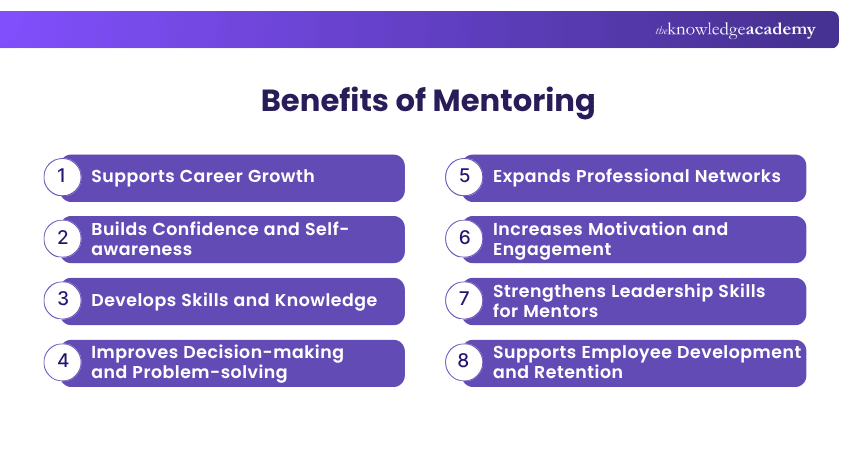
1) Supports Career Growth
Mentors can help mentees clarify career goals and understand possible development opportunities. Their experience can also provide useful guidance when considering career decisions or workplace challenges.
This guidance can help mentees evaluate their priorities and consider suitable next steps. It can also encourage more purposeful professional development over time.
2) Builds Confidence and Self-awareness
Constructive feedback from mentors can help mentees recognise their strengths and identify areas for improvement. Regular reflection with a mentor can also build greater confidence in their skills and decisions.
Greater self-awareness can help mentees understand how their behaviours and abilities influence workplace performance. This understanding can support more informed personal and professional development.
3) Develops Skills and Knowledge
Mentors can share practical knowledge, industry insights and lessons gained through experience. This guidance can help mentees strengthen existing abilities and develop new professional skills.
Mentees can also learn practical approaches that may not be gained through formal learning alone. Applying these insights can strengthen their capabilities in real workplace situations.
4) Improves Decision-making and Problem-solving
Mentors offer different perspectives when mentees face difficult choices or workplace challenges. Thoughtful questions and shared experience can help mentees develop stronger judgement and problem-solving skills.
Discussing different options can help mentees consider situations from multiple perspectives before acting. Over time, this approach can encourage more independent and considered decision-making.
Trainer's Tip:
A good mentor should guide thinking rather than providing every answer. Asking thoughtful questions can help mentees develop the confidence to make independent decisions.
5) Expands Professional Networks
Mentors may introduce mentees to useful contacts and wider professional communities. These connections can expose mentees to new perspectives, opportunities and industry knowledge.
A broader network can also help mentees understand different roles, industries and professional experiences. These relationships may provide valuable insights that support their ongoing development.
6) Increases Motivation and Engagement
Mentoring can provide greater direction by helping mentees set meaningful goals and recognise their progress. Encouragement and regular support can also strengthen motivation during challenging periods.
Moreover, having someone to discuss progress with can help mentees remain focused on their development priorities. Recognising achievements can also reinforce commitment to continued learning and improvement.
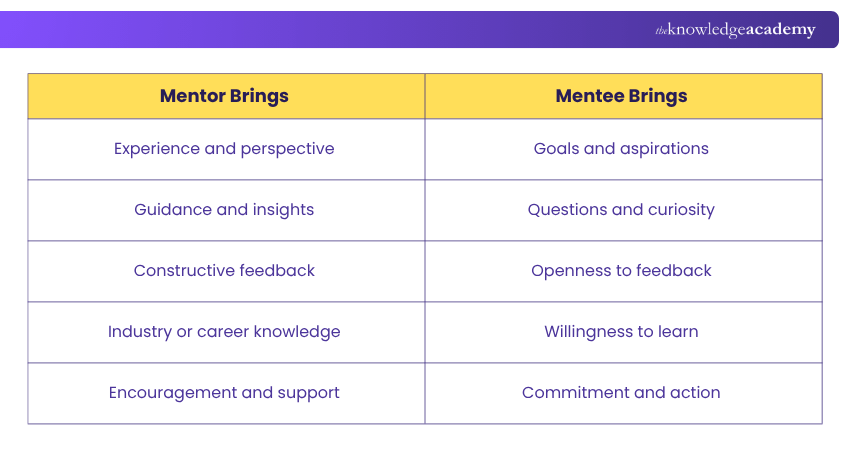
7) Strengthens Leadership Skills for Mentors
Mentoring gives mentors opportunities to practise active listening, constructive feedback and guidance. These experiences can strengthen their ability to support, develop and lead other people effectively.
Mentors can also learn how to adapt their communication when supporting people with different needs and perspectives. This experience can strengthen their approach to leadership and people development.
8) Supports Employee Development and Retention
Mentoring can show employees that an organisation is invested in their continued development. Stronger workplace relationships and clearer progression opportunities can also support wider retention efforts.
Structured mentoring can complement wider learning and career development initiatives within an organisation. It can also help employees better understand potential development pathways and available support.
Transform your leadership impact with the Coaching and Mentoring Training and drive success today.
9) Strengthens Knowledge Sharing and Organisational Culture
Mentoring encourages experience and knowledge to move between people, teams and levels of seniority. This can support a more collaborative workplace where learning and development are actively encouraged.
Sharing knowledge through mentoring can help organisations retain valuable experience and make it accessible to others. It can also encourage employees to learn from colleagues across different roles and seniority levels.
10) Encourages Fresh Perspectives
Mentoring creates opportunities for people with different experiences and viewpoints to exchange ideas. These conversations can challenge assumptions and encourage both mentors and mentees to consider alternative approaches.
Even more, fresh perspectives become particularly valuable when addressing familiar workplace challenges or exploring new ideas. This exchange can encourage more open-minded thinking and continuous learning.
11) Strengthens Communication Skills
Regular mentoring conversations encourage both mentors and mentees to express ideas, questions and feedback clearly. They also create opportunities to practise active listening and thoughtful communication.
Stronger communication can make development conversations more productive and reduce misunderstandings. These skills can also support effective interactions with colleagues and other workplace stakeholders.
12) Encourages Accountability and Goal Progress
Mentoring can help mentees turn broader development ambitions into clearer and more manageable goals. Discussing progress with a mentor can encourage greater focus and personal accountability.
Regular conversations also provide opportunities to review progress and adjust priorities when circumstances change. This can help mentees maintain direction while taking greater ownership of their development.
The Mentoring Echo
A useful lesson rarely has to stop with one person. Mentoring can create a ripple of knowledge that continues as people apply what they learn and later share their own experience with others.
Mentor shares experience↓Mentee gains insight↓Insight is applied at work↓Experience grows↓Knowledge is shared again
Who Benefits from Mentoring?
Mentoring creates value for more than just the person receiving guidance. Mentees, mentors and organisations can all benefit from the exchange of knowledge, experience and perspectives. While mentees gain support for their development, mentors strengthen their own capabilities, and organisations can build stronger skills and knowledge-sharing cultures.
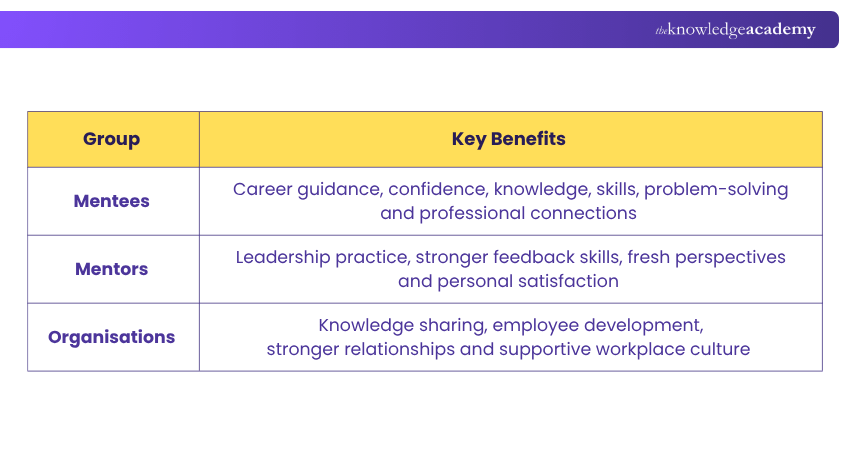
The strongest mentoring relationships recognise that learning can flow in both directions. Mentees receive guidance, while mentors and organisations can also gain meaningful developmental value.
Conclusion
Mentoring creates value by turning experience into meaningful learning and development. When built on clear goals, open communication and mutual commitment, Mentoring can become a powerful way to develop people, share valuable knowledge and support long-term growth. Ultimately, the Benefits of Mentoring can extend beyond individual relationships to create a more connected and supportive learning culture.
Gain practical tools and techniques to create interactive learning experiences with the Train the Trainer Course – Join now!
Frequently Asked Questions
What Skills do You Need to be a Good Mentor?

A good mentor needs active listening, communication, empathy and questioning skills. They should be able to provide constructive feedback, share relevant experience and encourage independent thinking. Patience, reliability and the ability to build trust are also important for effective Mentoring.
How Does Mentoring Differ from Coaching?
Mentoring typically focuses on long-term development, with an experienced mentor sharing knowledge, perspectives and guidance. Coaching is generally more goal or performance-focused, using structured conversations and questioning to help individuals identify solutions, improve performance and achieve specific outcomes.
How Long Should a Mentoring Relationship Last?
There is no fixed duration for a Mentoring relationship. It may last a few months, a year or longer, depending on the goals and needs of those involved. Setting clear objectives and reviewing progress regularly can help determine when the relationship should conclude.

Charlotte Wilson


Soft Skills and Business Training Manager
Charlotte Wilson is an expert in soft skills development, with over 14 years of experience helping individuals and teams improve communication, productivity and emotional intelligence in the workplace. Her training content is focused on enhancing interpersonal effectiveness and fostering positive, collaborative environments across all levels of an organisation.
View Detail

 If you wish to make any changes to your course, please


