


We may not have the course you’re looking for. If you enquire or give us a call on 01344203999 and speak to our training experts, we may still be able to help with your training requirements.
Key Benefits of Managing People for Workplace Success
ByThe Knowledge AcademyLast updated on: 11 November 2026
Effective people management supports employee productivity, engagement and organisational performance. Explore the key benefits of managing people, including talent retention, professional development, stronger teamwork and a positive workplace culture.

At a Glance
Here's a quick look at the major benefits of managing people effectively:1. Employee Productivity: Clear expectations and regular feedback can help improve individual performance.2. Talent Retention: Supportive management and career opportunities can encourage employees to stay.3. Professional Development: Training, mentoring and challenging assignments help employees develop valuable skills.4. Team Collaboration: Open communication and knowledge-sharing support stronger teamwork.5. Employee Wellbeing: Manageable workloads and appropriate support can contribute to a healthier working environment.
Managing people effectively plays an important role in organisational success. From improving employee productivity to building a sense of belonging, good people management helps organisations foster a workplace where employees feel valued and motivated.
But effective management goes beyond assigning tasks and monitoring performance. It involves understanding employees' needs, supporting their development and encouraging collaboration. So, what makes these practices valuable for organisations? Let's explore the key benefits.
Top Benefits of Managing People
Effective people management can influence several aspects of workplace performance and employee experience. Here are seven key benefits:
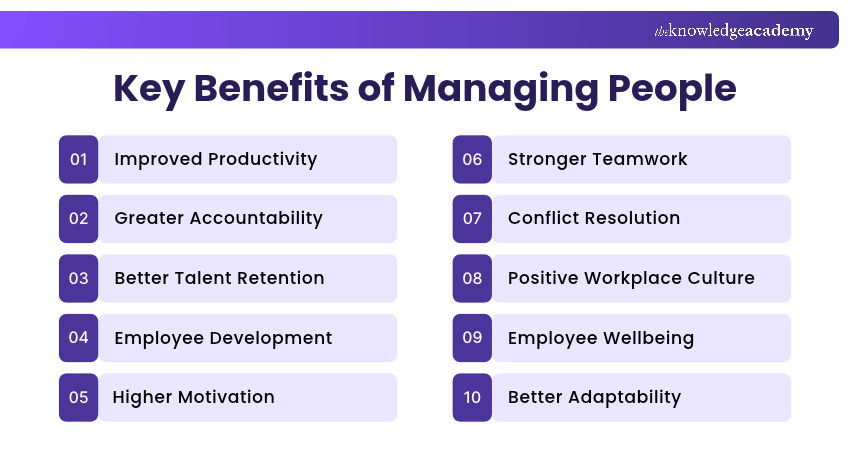
1) Improved Employee Productivity and Performance
Effective people management helps employees understand their responsibilities and perform their tasks more efficiently. Managers who prioritise open communication, regular check-ins and constructive feedback can identify challenges early and provide the support employees need.
By setting clear expectations and recognising achievements, organisations can improve individual performance and encourage employees to work towards shared goals.

2) Greater Accountability and Employee Ownership
Effective people management encourages employees to take responsibility for their work and understand how their contributions support organisational objectives. By giving employees ownership of decisions and encouraging them to follow through on commitments, Managers can promote accountability across teams.
When employees understand the impact of their actions and take responsibility for outcomes, they are better equipped to address problems, learn from setbacks and contribute to shared goals.
3) Better Talent Attraction and Retention
Attracting and retaining skilled employees is important for maintaining organisational performance. While recruitment and reward policies influence attraction, effective People Managers contribute by creating supportive working environments and positive employee experiences.
By offering career progression opportunities, recognising employee contributions and encouraging continuous learning, organisations can strengthen employee loyalty and reduce avoidable staff turnover.
4) Enhanced Employee Development and Career Growth
Employee development helps individuals improve their skills, strengthen job performance and prepare for future responsibilities. People Managers can identify training needs, provide mentoring and coaching and encourage employees to explore new opportunities.
Career development plans, challenging assignments and internal progression opportunities can also help employees grow professionally while supporting organisational goals.
Trainer’s Insight
Career development does not always require an immediate promotion. Giving employees opportunities to lead small projects, mentor colleagues or take on new responsibilities can help them build leadership skills and prepare for future roles.
5) Increased Employee Motivation and Engagement
Successful people management encourages employees to feel valued and take pride in their contributions. By recognising achievements, acknowledging employee contributions and involving employees in relevant decisions, Managers can strengthen motivation and engagement.
A supportive environment also encourages employees to share ideas, take initiative and contribute towards organisational objectives.
6) Stronger Teamwork and Collaboration
Effective people management promotes communication, knowledge-sharing and cooperation among employees. Managers can encourage teamwork by establishing clear responsibilities, addressing communication barriers and creating opportunities for collaboration.
Bringing together different skills and perspectives helps teams solve problems, exchange ideas and work more effectively towards common objectives.
7) Better Conflict Resolution and Workplace Relationships
Effective people management helps organisations address workplace disagreements before they develop into larger problems. Managers can encourage open discussions, listen to different perspectives and resolve concerns fairly to maintain healthy professional relationships.
By addressing disagreements promptly, identifying their underlying causes and agreeing on practical solutions, Managers can prevent recurring disputes and reduce disruption to daily work.
8) A Positive and Inclusive Workplace Culture
Effective People Managers help create a positive and inclusive workplace by building trust, encouraging inclusive behaviour and promoting fairness and respect among employees.
By addressing workplace concerns and ensuring individuals feel heard and included, organisations can strengthen professional relationships and create a more supportive working environment.
9) Improved Employee Wellbeing and Work-life Balance
Good people management contributes to employee wellbeing by encouraging manageable workloads, flexibility and a healthy work-life balance. Managers who listen to employee concerns, recognise signs of excessive pressure and provide appropriate support can help reduce workplace stress.
These practices can help employees manage work-related pressure while maintaining their wellbeing and ability to perform effectively.
Pro Tip
During regular team check-ins, ask employees which tasks are creating the most pressure and whether deadlines are realistic. Reviewing workloads early can help you identify problems before they begin affecting performance and wellbeing.
10) Improved Adaptability and Change Management
Effective people management helps employees adapt to organisational changes, new technologies and evolving workplace expectations. Managers can communicate the reasons behind changes, address employee concerns and provide guidance throughout transitions.
By encouraging flexibility, involving employees where appropriate and offering relevant support, organisations can reduce uncertainty and help teams adjust to new ways of working.
Keep This in Mind
Effective people management is not just about achieving targets. It also involves supporting employee growth, encouraging collaboration and creating a workplace where individuals feel valued. By combining clear communication, constructive feedback and appropriate support, organisations can build stronger teams and improve workplace outcomes over time.
Learn to turn employee engagement into everyday excellence with the Employee Engagement Training – Sign up now!

The Knowledge Academy develops accessible learning content across Project Management, IT, Cybersecurity, Data Science, Business Analysis, HR, Accounting and Finance, Leadership and Health and Safety. Its resources combine subject research with clear explanations to help professionals build practical knowledge across a wide range of disciplines.
View Detail

 If you wish to make any changes to your course, please


