


We may not have the course you’re looking for. If you enquire or give us a call on 01344203999 and speak to our training experts, we may still be able to help with your training requirements.
Essential Workplace Safety Tips to Prevent Accidents and Injuries
ByThe Knowledge AcademyLast updated on: 05 November 2026
Workplace safety tips help employees and organisations reduce accidents, prevent injuries and maintain safer working conditions. From identifying hazards to using protective equipment, discover practical ways to improve safety, manage risks and build a responsible workplace culture.
At a Glance
1. Purpose: Workplace safety involves recognising risks and taking practical steps to protect people at work.2. Daily Practices: Proper safety gear, hygiene, housekeeping and safe working procedures support safer operations.3. Preventive Measures: Risk assessments, equipment inspections and safety training help identify and control hazards.4. Shared Responsibility: Employers and employees both contribute to maintaining safe working conditions.
A minor spill, a damaged piece of equipment or an overlooked warning sign can turn an ordinary working day into a serious safety incident. Recognising these everyday risks and responding appropriately can make a significant difference to workplace safety.
However, maintaining a safe workplace requires more than recognising hazards. It involves consistent awareness, clear communication and a commitment to following safe working practices. In this blog, we explore 17 essential workplace safety tips that employees and organisations can apply to reduce workplace risks.
Essential Workplace Safety Tips
Creating a safer workplace involves identifying hazards, following established procedures and taking preventive action before incidents occur. The following measures can help protect employees, visitors and others involved in daily operations.
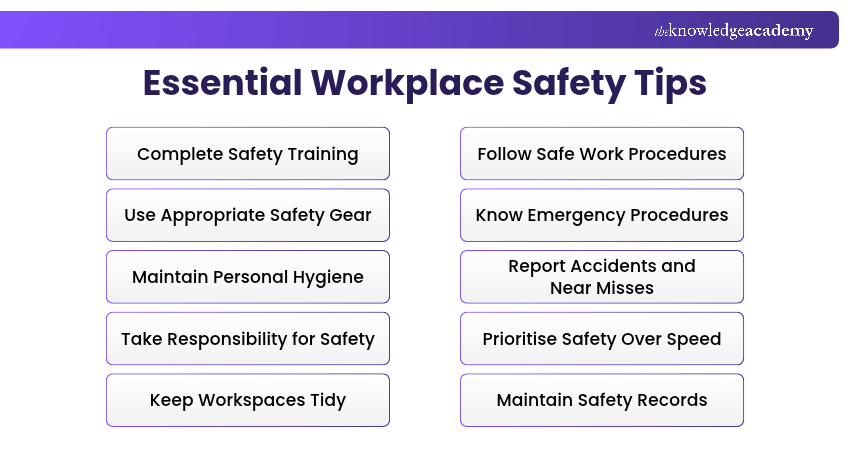
1) Complete Workplace Safety Training
Workplace safety training helps employees understand potential hazards, follow safe working practices and respond appropriately to emergencies. Training should be relevant to the tasks performed and the risks present in the working environment.
Employees should participate in required training, follow safety instructions and seek clarification when procedures are unclear. Employers must provide suitable training and supervision, particularly when employees take on new responsibilities, use unfamiliar equipment or encounter changes in working practices.

2) Utilise Safety Gear as Required
Safety gear helps protect employees from workplace hazards such as excessive noise, flying particles and falling objects, reducing the risk of injury or illness. The correct selection, use and maintenance of protective equipment are essential to ensure its effectiveness.
Personal Protective Equipment (PPE), such as helmets, gloves and safety glasses, should be selected according to workplace hazards and used when risks cannot be adequately controlled by other measures. Employers must provide suitable PPE free of charge where required, while employees should check for damage and use it correctly.
3) Uphold Personal Hygiene Standards
Personal hygiene helps maintain cleanliness and reduce the spread of harmful microorganisms, including bacteria, viruses and certain parasites. Following good hygiene practices also helps protect the health of employees and visitors.
Therefore, follow basic cleanliness and hygiene practices, such as washing your hands, covering your mouth and nose when coughing or sneezing, and disposing of used tissues or wipes properly. Workplaces with specific hygiene risks should also follow the relevant infection prevention and sanitation procedures.
4) Assume Accountability for Your Safety
Taking responsibility for workplace safety involves being aware of your actions, understanding the risks associated with your tasks, and following appropriate safety requirements. Employees contribute to a safer workplace by making responsible decisions and recognising when an activity may be unsafe.
Follow your workplace's safety policies and procedures and report any unsafe conditions or behaviours. Learn from mistakes or incidents, follow appropriate corrective procedures and communicate safety concerns to the relevant personnel. Employers remain responsible for providing safe working conditions and managing workplace risks.
5) Ensure the Tidiness of Your Workspace
Ensuring the tidiness of your workspace is essential for minimising hazards and maintaining a safe environment for all employees. A neat workspace reduces the risk of slips, trips and falls, while organised equipment and materials help prevent accidents.
Proper storage of tools and supplies also helps prevent obstructions, reduce hazards and maintain a clean and orderly working environment.
Enhance workplace safety with the IOSH Managing Safely Course and develop essential risk management skills.
6) Abide by Established Work Procedures
Abiding by established work procedures is crucial for maintaining consistency and safety in daily operations. Clear and standardised procedures help employees perform tasks correctly, reducing the risk of errors or accidents.
By following established protocols, employees can manage potential hazards safely and efficiently. They should also seek clarification when instructions are unclear and report procedures that appear unsafe or unsuitable. Adherence to safe working procedures promotes accountability and professionalism while supporting safer daily operations.
Pro Tip
Use simple language, visual instructions and multilingual safety materials where necessary. Employees are more likely to understand important precautions when information is accessible and suited to their communication needs.
7) Understand Emergency Procedures
Understanding emergency procedures is essential for protecting employee well-being and minimising the impact of unforeseen events. By learning emergency protocols, employees can respond appropriately to situations such as fires, medical emergencies or natural disasters.
Appropriate training helps employees understand evacuation procedures, emergency communication methods and the responsibilities of designated responders. Employees should also know the location of emergency exits and first-aid facilities, how to contact designated first aiders or appointed persons, and where to assemble during an evacuation.
8) Report Accidents and Near Misses Promptly
Reporting accidents and near misses is critical for addressing safety concerns and preventing future incidents. Timely reporting allows management to investigate underlying causes, implement corrective measures and reduce the likelihood of similar incidents occurring.
Reporting promotes accountability and a strong safety culture. In the UK, certain work-related injuries, occupational diseases and dangerous occurrences must be reported by the responsible person under the Reporting of Injuries, Diseases and Dangerous Occurrences Regulations (RIDDOR). However, not all accidents or near misses require statutory reporting.
9) Emphasise Safety Over Speed
Emphasising safety over speed encourages employees to prioritise their well-being and exercise caution in their work activities. While efficiency is important, rushing through tasks can increase the risk of accidents and injuries.
Organisations can show their commitment to employee health and well-being by promoting a culture where safety takes precedence. Encouraging employees to work at a safe and manageable pace helps reduce accidents and supports effective task completion without compromising safety.
10) Maintain Safety Records
Maintaining safety records is important for tracking workplace safety practices and identifying areas for improvement. These records may document incidents, near misses, risk assessments and implemented safety measures, providing valuable information about the effectiveness of existing controls.
By analysing safety data, organisations can identify trends, assess risks and implement targeted improvements. Accurate records also support safety reviews and help organisations demonstrate the actions taken to manage workplace risks. Employers should follow applicable legal recordkeeping requirements.
11) Prioritise Proper Ergonomics
Prioritising proper ergonomics involves adapting workspaces, equipment and tasks to employees' physical capabilities and needs. This helps to reduce the risk of musculoskeletal disorders and supports more comfortable working conditions.
Measures may include adjusting chairs, desks and computer monitors, providing suitable ergonomic equipment and allowing appropriate breaks or changes in activity. Ergonomic improvements can also address repetitive movements, awkward postures and physically demanding tasks.
Strengthen workplace safety leadership with our NEBOSH HSE Certificate in Health and Safety Leadership Excellence Training – Join now!
12) Prioritise Mental and Physical Health
Protecting employees' mental and physical well-being is an important part of workplace safety. This includes promoting a supportive working environment that encourages work-life balance, stress management and access to appropriate mental health support.
Organisations can offer employee assistance programmes, wellness initiatives and flexible working arrangements where suitable. They should also assess work-related stress risks, including excessive workloads and unclear responsibilities, and take appropriate action to address factors that may affect employee well-being.
Trainer's Insight
Employees are more likely to raise concerns when they believe questions and constructive criticism will be welcomed. Building trust through respectful communication can improve the quality of feedback and help organisations recognise operational weaknesses earlier.
13) Conduct Regular Workplace Risk Assessments
Workplace risk assessments help employers identify potential hazards, evaluate the chance and severity of harm, and determine suitable control measures. These assessments involve examining work activities, equipment, environmental conditions and other factors that may expose employees or visitors to risks.
Employers should implement suitable control measures and review risk assessments when conditions change, new hazards arise or existing controls become ineffective. Reviews may also be needed after accidents or near misses to help prevent future injuries.
14) Inspect and Maintain Tools and Equipment
Regular inspection and maintenance of workplace tools and equipment help prevent accidents caused by mechanical failures, damaged components or malfunctioning safety devices. Equipment should be checked according to the manufacturer's instructions and appropriate workplace maintenance schedules to ensure it remains suitable for use.
Employees should report unusual noises, visible damage or operational problems promptly. Faulty equipment should be removed from use or safely isolated until it can be inspected and repaired by authorised personnel, reducing the likelihood of injuries and unexpected breakdowns.
15) Ensure Exits Are Unobstructed
Ensuring exits are unobstructed is essential for facilitating safe evacuation during an emergency. This involves keeping emergency exits, escape routes and access pathways clear of clutter, debris or other obstacles that could delay evacuation.
By maintaining unobstructed exits, organisations support swift and orderly evacuation. Regular inspections, appropriate signage and suitable maintenance help ensure that emergency escape routes remain accessible and usable when needed.
16) Follow Safe Manual Handling Procedures
Safe manual handling practices help reduce the risk of musculoskeletal injuries when lifting, carrying, pushing, pulling or moving heavy or awkward objects. Before handling a load, employees should consider its weight, size, stability and the distance it needs to be moved.
Where reasonably practicable, organisations should avoid hazardous manual handling by redesigning tasks or using mechanical aids such as trolleys, hoists or lifting equipment. If hazardous manual handling cannot be avoided, employers should assess the risks, implement suitable measures to reduce them and provide relevant instruction and training.
17) Use Workplace Warning Signs Appropriately
Warning signs help communicate hazards and risks in the workplace. They alert employees and visitors to potential dangers, including electrical hazards, slippery surfaces, moving machinery and restricted areas.
Organisations should ensure that necessary warning signs are clearly visible, understandable and positioned where they can provide timely information. However, warning signs should support appropriate safety controls rather than replace measures needed to eliminate or reduce hazards.
Keep This in Mind
Workplace safety requirements vary by industry, working conditions and regulations. Measures suitable for an office may not work in construction or manufacturing. Organisations should adapt their safety practices to workplace risks and review them as requirements change.
Enhance awareness and reduce risks of workplace accidents with our Health and Safety in the Workplace Training – Sign up today!

The Knowledge Academy develops accessible learning content across Project Management, IT, Cybersecurity, Data Science, Business Analysis, HR, Accounting and Finance, Leadership and Health and Safety. Its resources combine subject research with clear explanations to help professionals build practical knowledge across a wide range of disciplines.
View Detail

 If you wish to make any changes to your course, please


