


 Top Rated Course

We may not have the course you’re looking for. If you enquire or give us a call on 01344203999 and speak to our training experts, we may still be able to help with your training requirements.
Stress Management Techniques: Practical Ways to Manage Stress
The Knowledge Academy 31 August 2026Stress Management Techniques are practical ways to manage everyday pressure and support mental and physical well-being. From grounding and mindfulness to exercise, healthy boundaries, and better sleep, these techniques can help you respond to stressful situations more effectively.

Training Outcomes Within Your Budget!
We ensure quality, budget-alignment, and timely delivery by our expert instructors.
Table of Contents
Key Takeaways
1. Stress Management Techniques can help reduce everyday pressure and support overall well-being.2. Grounding and breathing techniques can help you regain focus during stressful moments.3. Exercise, quality sleep, nutrition, and social connection can support long-term stress management.4. Different stressful situations may require different techniques, from relaxation to boundary setting.5. Building small, consistent habits can make stress easier to recognise and manage over time.
Ever had one of those days when everything feels like too much at once? Deadlines, responsibilities, messages, and everyday worries can quickly add up.
While stress cannot always be avoided, the way we respond to it can make a difference. In this blog, we explore practical Stress Management Techniques to help you handle pressure, regain balance, and support your well-being.
What is Stress Management?
Stress Management is about recognising what creates pressure and finding healthy ways to respond to it. Rather than trying to avoid stress completely, it helps you manage its effects and handle challenging situations more effectively.
It can involve quick techniques such as breathing and grounding, along with everyday habits like exercise, quality sleep, healthy eating, social connection, and setting boundaries.
Practical Stress Management Techniques
Stress can show up in different ways. Sometimes you need something that helps you settle down in the moment, while at other times you need habits that reduce everyday pressure and make it easier to cope.
Here are practical Stress Management Techniques you can use depending on what you need:
1) Use the 5-4-3-2-1 Grounding Technique
When your thoughts feel overwhelming, grounding can help bring your attention back to what is happening around you.
Pause and identify:
a) 5 things you can see
b) 4 things you can feel
c) 3 things you can hear
d) 2 things you can smell
e) 1 thing you can taste
Focusing on your senses can help shift your attention away from stressful thoughts and towards the present moment.
2) Slow Down Your Breathing
Stress can make breathing feel quicker or shallower. Taking slow, controlled breaths gives you an opportunity to pause before reacting to a stressful situation.
Try focusing on each breath for a few minutes without worrying about doing it perfectly. The aim is simply to slow down and give yourself a moment to reset.
Quick Tip
A stress-free life is not always realistic. Deadlines will appear, plans will change, and challenges will happen.Instead of trying to remove every source of pressure, focus on building healthier ways to respond when stress appears.
3) Get Your Body Moving
Physical activity can provide a useful break from mental pressure while supporting your overall well-being.
You can go for a walk, stretch, cycle, swim, practise yoga, dance, or choose another activity you enjoy. Even small amounts of movement can help break up a stressful day.
4) Release Physical Tension
Stress does not only affect your thoughts. You may notice yourself tightening your shoulders, clenching your jaw, or holding tension elsewhere in your body.
Progressive Muscle Relaxation involves gently tensing and relaxing different muscle groups. It can help you notice where tension is building and consciously allow those areas to relax.
5) Bring Your Attention to the Present
When your mind is jumping between past problems and future worries, mindfulness can help bring your attention back to what is happening right now.
You can practise mindfulness while breathing, walking, eating, or simply sitting quietly and noticing your surroundings.
Need a Quick Reset?
Don't choose a technique at random. Start with what you notice:
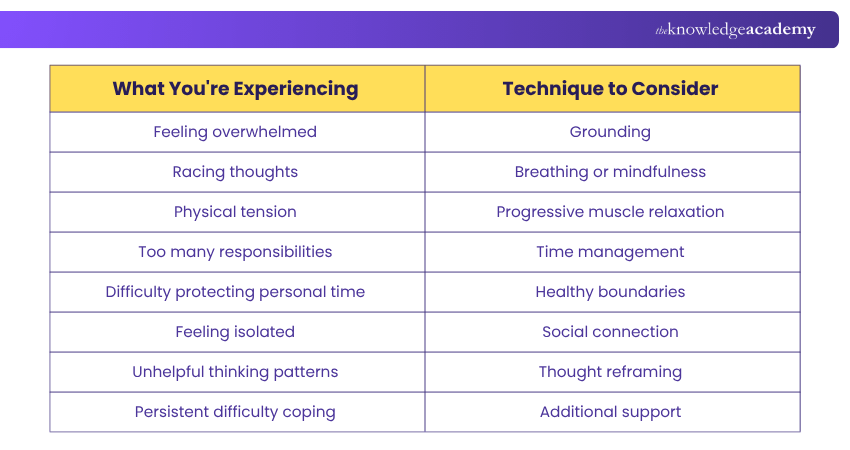
Racing thoughts? Focus on your breath.Feeling overwhelmed? Try grounding.Tense body? Try muscle relaxation.Restless? Get moving.Your stress can sometimes give you a clue about what you need.
6) Set Boundaries Before You Feel Overloaded
Stress can build when you continually say yes despite already having too much to manage.
Setting boundaries might mean declining an unnecessary commitment, communicating when you are unavailable, or protecting time for rest. A clear boundary can prevent additional pressure before it starts.
7) Eat Regularly and Stay Hydrated
Busy or stressful days can make it easy to skip meals or forget to drink enough water.
Regular meals, a varied and balanced diet, and adequate hydration support normal physical and mental functioning. Treat these as basic parts of looking after yourself, especially during demanding periods.
8) Make Your To-do List More Realistic
A long list of unfinished tasks can become a source of stress itself.
Identify what genuinely needs attention first, divide larger tasks into manageable steps, and avoid treating everything as equally urgent. A shorter realistic plan can be more useful than an impossible to-do list.
9) Talk to Someone You Trust
You do not always have to solve a stressful situation before talking about it.
A conversation with a friend, family member, colleague, or someone else you trust can provide emotional support, help you see the situation differently, or simply give you space to express what you are experiencing.
Build self-awareness and manage emotions more effectively with our Emotional Intelligence Training - Join now!
10) Protect Your Sleep
Stress and sleep are codependent and can influence each other. Stress may make sleeping difficult, while insufficient sleep can make everyday challenges feel harder to handle.
Try maintaining a regular sleep routine and creating a comfortable environment for rest. Giving yourself time to wind down before bed may also make it easier to switch off from the day.
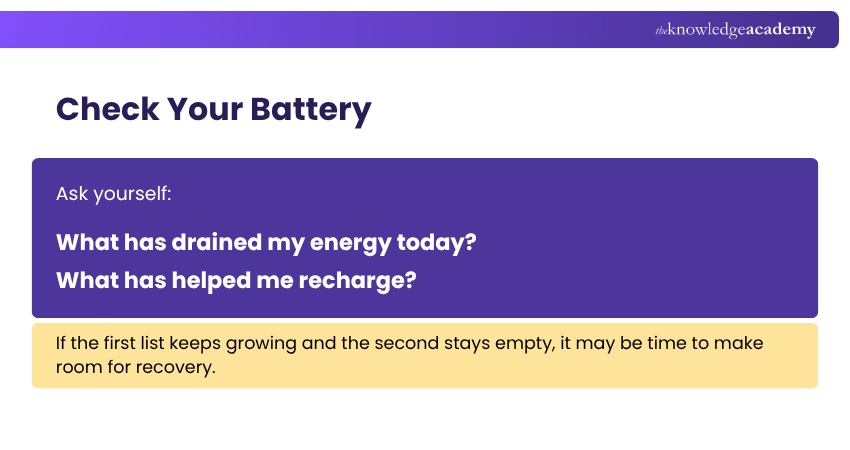
11) Make Time for Things You Enjoy
Not every part of your day needs to be productive.
Reading, listening to music, gardening, cooking, journalling, spending time outdoors, or enjoying a hobby can give your mind space away from everyday demands.
12) Ask for Support When Stress Feels Too Much
You do not have to manage every stressful situation alone. Speaking with someone you trust can provide emotional support, while professional guidance may be useful when everyday techniques are not enough.
13) Challenge Unhelpful Thoughts
Stress can sometimes make a difficult situation appear even worse than it is.
When you notice an unhelpful thought, ask yourself:
Is this definitely true?
Am I assuming the worst?
Is there another way to look at this situation?
The aim is not to force positive thinking. It is to develop a more balanced and realistic perspective.
One Technique Won't Fit Every Day
Yesterday, you may have needed a break.Today, you might need a boundary.Tomorrow, you may need support.Stress Management is not about finding one perfect technique. It is about having different ways to respond when life demands something different from you.
How to Choose the Right Stress Management Technique?
There is no single Stress Management Technique that works for every situation. Consider what is causing the pressure and how you are experiencing it before deciding what might help.
Stress Has Clues
Instead of immediately asking:
“How do I stop feeling stressed?”
Try asking:
“What is my stress telling me I need right now?”
Sometimes the answer is rest. Sometimes it is support, movement, a boundary, or simply a pause.
How to Make Stress Management Part of Your Daily Routine?
Stress Management can be more useful when healthy habits become part of everyday life rather than something you consider only when pressure becomes overwhelming.
1) Start Small: Choose one technique that feels manageable rather than trying to change several habits at once.
2) Identify Your Stress Triggers: Notice situations, responsibilities, or environments that regularly increase your stress.
3) Schedule Time to Pause: Short breaks during busy periods can provide opportunities to reset and refocus.
4) Protect Healthy Habits: Make space for sleep, physical activity, meals, social connection, and activities you enjoy.
5) Notice What Works: Different techniques work for different people and situations. Pay attention to which approaches genuinely help you manage pressure.
When Should You Seek Additional Support for Stress?
Everyday Stress Management Techniques can be helpful, but they are not a substitute for professional support when stress becomes persistent or difficult to manage.
Consider speaking with a qualified healthcare or mental health professional if stress is significantly affecting your daily life, work, relationships, sleep, or ability to cope. Seeking appropriate support can help you understand what you are experiencing and identify suitable ways forward.
Conclusion
Stress cannot always be avoided, but you can develop healthier ways to respond to it. The Stress Management Techniques covered in this blog offer different approaches, from grounding and breathing to physical activity, better sleep, healthy boundaries, and social support.
You do not need to practise every technique at once. Start with what suits your situation, notice what helps, and gradually build habits that make everyday pressure easier to manage.
You may not get to choose when stress appears, but you can build better ways to meet it.
Learn to recognise emotional triggers and respond more constructively with our Anger Management Training - Register today!
Frequently Asked Questions
How Long Do Stress Management Techniques Take to Work?

It depends on the technique and the individual. Grounding or controlled breathing may provide support during a stressful moment, while habits such as exercise, better sleep, and boundary setting generally require consistent practice.
Can Stress Management Techniques Be Used at Work?
Yes. Techniques such as short breathing exercises, prioritising tasks, taking appropriate breaks, managing time, and setting healthy boundaries can be incorporated into the working day.
Can I Combine Different Stress Management Techniques?
Yes. Different techniques can complement each other. For example, you might use exercise and healthy sleep habits regularly while turning to grounding or breathing exercises during particularly stressful moments.

The Knowledge Academy


Global Training Provider
The Knowledge Academy is a world-leading provider of professional training courses, offering globally recognised qualifications across a wide range of subjects. With expert trainers, up-to-date course material, and flexible learning options, we aim to empower professionals and organisations to achieve their goals through continuous learning.


 If you wish to make any changes to your course, please


