


We may not have the course you’re looking for. If you enquire or give us a call on 01344203999 and speak to our training experts, we may still be able to help with your training requirements.
Essential Supervisory Skills for Effective Team Management
ByThe Knowledge AcademyLast updated on: 23 October 2026
Supervisory skills help professionals guide employees, manage responsibilities and support team performance. This blog explores essential supervisory skills, explains their importance and provides practical ways to strengthen them for effective team management.
A Quick Look
1. Communication and Leadership: Supervisors need to balance clear direction with opportunities for employees to contribute.2. Performance and Accountability: Setting expectations, monitoring progress and delegating responsibilities support effective supervision.3. Problem-solving and Conflict Resolution: Analytical thinking and fair decisions help supervisors address workplace challenges.4. Employee Development: Coaching, constructive feedback and learning opportunities encourage professional growth.5. Continuous Improvement: Self-reflection, training and practical experience help strengthen supervisory abilities.
Imagine you're given five minutes to handle three situations:
1) An employee needs urgent guidance
2) A deadline has unexpectedly changed
3) Two colleagues disagree over responsibilities
Where would you begin?
There may not be one perfect answer, but your response reveals how you approach supervision. Strong supervisory skills help professionals assess priorities, communicate clearly and make fair decisions while keeping employees supported. So, how can you develop the skills needed to handle these situations confidently? Let's explore the essential supervisory skills that make a difference in everyday team management.
Top 12 Supervisory Skills
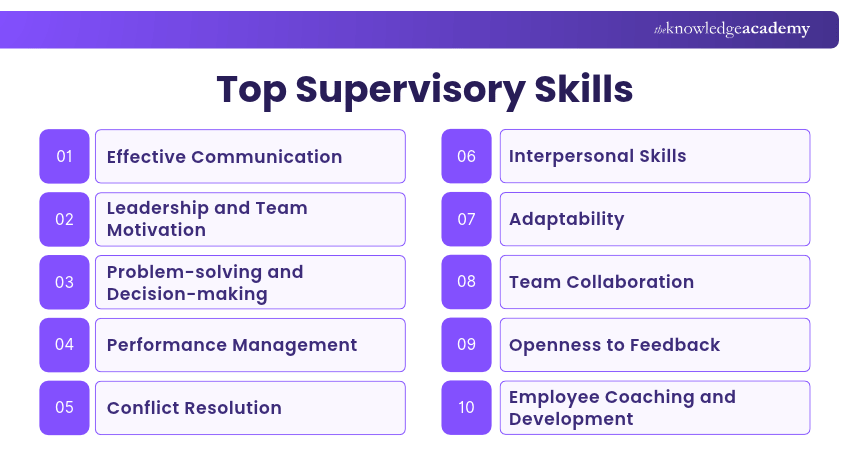
Effective supervision requires a combination of interpersonal, leadership and organisational abilities. The following 12 skills help supervisors coordinate work, support employees and respond to workplace challenges.
1) Effective Communication
Effective communication allows supervisors to explain responsibilities, share important updates and ensure employees understand what is expected of them. It involves clear verbal and written instructions, active listening and the ability to adapt messages to different situations. Supervisors should also encourage questions and confirm understanding to reduce confusion and prevent avoidable mistakes.

2) Leadership and Team Motivation
Leadership involves guiding employees towards shared objectives while creating an environment where they feel supported and valued. Supervisors demonstrate leadership by setting a positive example, communicating priorities and recognising individual contributions. Understanding what motivates different team members also helps supervisors provide appropriate encouragement and support during challenging periods.
For Example
When a team faces a demanding deadline, a supervisor can explain the priorities, recognise progress and offer practical assistance instead of simply increasing pressure.
3) Problem-solving and Decision-making
Supervisors regularly encounter challenges involving workloads, resources, processes and employee concerns. Strong problem-solving skills help them identify issues, examine possible causes and develop practical solutions. Decision-making involves evaluating available information, considering potential consequences and choosing an appropriate course of action within their authority.
Quick Decision Guide
When a workplace problem arises, consider the following:
a) Identify the Problem: What happened, and who or what is affected?b) Examine the Cause: Is the issue related to communication, resources, processes or employee responsibilities?c) Evaluate Options: Which solutions are practical, fair and consistent with organisational policies?d) Decide or Escalate: Can the issue be resolved within supervisory authority, or does it require management or specialist support?e) Review the Outcome: Did the solution address the problem, and is further action needed?
Important: Safety concerns, potential misconduct and other matters requiring formal procedures should be escalated according to organisational policies.
4) Performance Management
Performance management helps supervisors establish clear expectations, monitor progress and support employees in meeting agreed standards. It also involves recognising achievements and addressing performance concerns constructively. Regular conversations allow supervisors to identify difficulties early and provide guidance before problems become more serious.
Practical Insight
Feedback is most useful when it describes a specific action and its effect. Instead of saying, "Your work needs improvement," explain what needs to change, why it matters and what support is available.
5) Conflict Resolution
Disagreements can arise from differences in opinions, workloads, expectations or working styles. Conflict resolution requires supervisors to listen impartially, understand the underlying issue and facilitate respectful discussions.
By focusing on facts, considering different perspectives and exploring appropriate solutions, supervisors can address disagreements while maintaining professional relationships. Serious concerns should follow the organisation's formal procedures.
Workplace Scenario
Two employees disagree about task ownership. Rather than assigning blame, the supervisor reviews their responsibilities, listens to both perspectives and clarifies who is accountable for each activity.
6) Interpersonal Skills
Interpersonal skills help supervisors build professional relationships based on trust, respect and understanding. These abilities include empathy, emotional awareness, patience and sensitivity to individual needs.
Supervisors who recognise different personalities and communication preferences are better positioned to support employees, handle sensitive conversations and maintain a respectful working environment.
Develop communication and interpersonal skills to build relationships with our Interpersonal Skills Training – Register now!
7) Adaptability
Workplace priorities, technologies and procedures can change unexpectedly. Adaptability enables supervisors to adjust plans, revise working methods and support employees through uncertainty. An adaptable supervisor remains open to alternative approaches, communicates changes clearly and helps the team understand how new expectations affect their responsibilities.
8) Team Collaboration
Team collaboration involves encouraging employees to share knowledge, coordinate responsibilities and contribute towards common objectives. Supervisors support collaboration by establishing shared goals, encouraging participation and removing barriers between team members. Recognising individual strengths also helps them bring together people with complementary abilities when completing complex tasks.
9) Openness to Feedback
Effective supervisors should be willing to receive feedback about their own leadership and working methods. Listening to employees, colleagues and managers can reveal communication gaps, process difficulties or areas for personal improvement. Responding constructively rather than defensively encourages more open conversations and demonstrates a willingness to learn.
10) Employee Coaching and Development
Employee development involves helping team members strengthen existing abilities and acquire new skills. Supervisors can identify development needs through regular discussions, performance observations and employee feedback. Coaching, mentoring, relevant training and practical learning opportunities can help employees build confidence and prepare for additional responsibilities.
11) Time and Priority Management
Supervisors must balance deadlines, daily operations and unexpected requests while ensuring important tasks receive appropriate attention. Time and priority management involves evaluating urgency, planning workloads, allocating resources and setting realistic schedules. These skills also help supervisors recognise when deadlines need to be renegotiated or additional support is required.
Quick Tip – The Priority Check
Before allocating work, consider:
a) Urgency: Does the task require immediate attention?b) Importance: How strongly does it contribute to team objectives?c) Resources: Are the necessary people, tools and time available?d) Dependencies: Will delaying the task affect other activities?
This helps supervisors make more considered decisions rather than treating every request as equally urgent.
12) Delegation and Accountability
Delegation involves assigning tasks according to employees' strengths, experience and available capacity. Supervisors should explain the expected outcome, deadline and level of responsibility while providing the necessary resources. Accountability means following up on commitments, reviewing progress and addressing problems without excessive monitoring or micromanagement.
Elevate your chances for higher-level positions and responsibilities with our Delegation Training – Sign up now!
Why are Supervisory Skills Important?
Supervisory skills are essential for managing daily operations, supporting employees and maintaining a productive work environment. Here are some key reasons why these skills matter:
a) Improve Team Productivity: Help supervisors organise workflows, allocate responsibilities and ensure tasks are completed efficiently.
b) Strengthen Workplace Communication: Encourage clear expectations, open discussions and better understanding between employees and management.
c) Support Employee Development: Enable supervisors to identify individual strengths, address skill gaps and provide opportunities for professional growth.
d) Build Positive Workplace Relationships: Promote trust, cooperation and mutual respect, creating a supportive environment for employees.
e) Improve Decision-making: Help supervisors assess challenges, resolve workplace issues and make informed decisions that support team objectives.
f) Encourage Accountability: Establish clear responsibilities and help employees take ownership of their tasks and performance.
Supervisory Skills in Practice
|
Workplace Situation |
Relevant Skill |
How It Helps |
|---|---|---|
|
An employee is unsure about a task |
Effective communication |
Clarifies instructions and expectations |
|
Two team members disagree |
Conflict resolution |
Supports fair and constructive discussions |
|
Workload exceeds available capacity |
Time and priority management |
Helps reorganise tasks and deadlines |
|
An employee struggles with performance |
Performance management |
Identifies concerns and provides support |
|
A team member who wants to develop a new skill |
Employee coaching and development |
Identifies appropriate learning opportunities |
How to Improve Your Supervisory Skills?
Developing supervisory skills requires regular practice, self-awareness and a willingness to learn. Whether you are preparing for your first supervisory role or looking to strengthen your existing abilities, the following approaches can help.
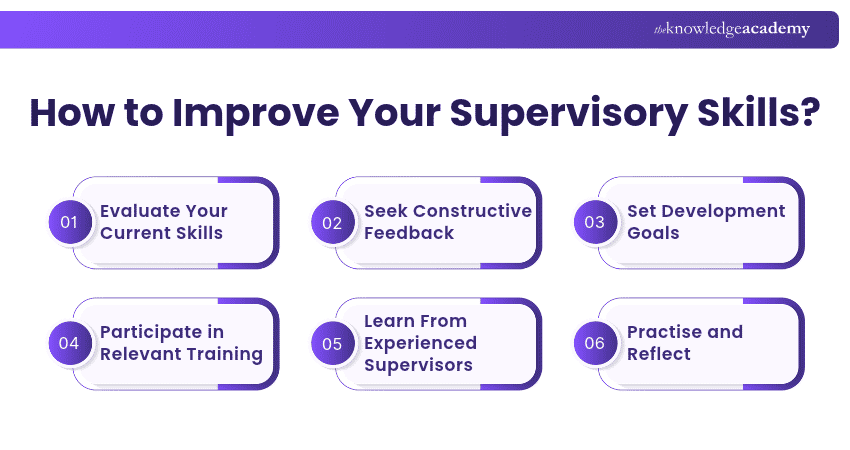
a) Evaluate Your Current Skills: Reflect on how you communicate, delegate, make decisions and manage employees. Identify the responsibilities you handle confidently and those requiring improvement.
b) Seek Constructive Feedback: Ask team members, colleagues and managers for specific feedback on your supervisory approach. Use their observations to identify areas you may have overlooked.
c) Set Development Goals: Choose realistic objectives, such as improving delegation, handling difficult conversations or managing priorities. Establish practical steps and review your progress regularly.
d) Participate in Relevant Training: Attend supervisory training, leadership workshops or professional development programmes that strengthen your understanding of people management and workplace responsibilities.
e) Learn From Experienced Supervisors: Seek guidance from a mentor or experienced manager. Discuss challenging situations, observe effective approaches and consider how their experiences apply to your own responsibilities.
f) Practise and Reflect: Apply new techniques in everyday situations and evaluate their effectiveness. Reviewing what worked and what could improve helps turn learning into practical supervisory habits.
Your Four-week Supervisory Skills Improvement Plan
Use this simple plan to turn the development approaches into practical actions.
|
Week |
Development Focus |
Suggested Action |
|---|---|---|
|
Week 1 |
Self-assessment |
Identify two supervisory strengths and two areas for improvement |
|
Week 2 |
Communication |
Practise clearer task instructions and ask for feedback |
|
Week 3 |
Delegation and performance |
Delegate a suitable task and agree on expectations and progress checks |
|
Week 4 |
Reflection and improvement |
Review the outcomes, identify lessons and set the next development goal |
Learn how to maximise your potential, leading to a more fulfilling life with our Personal Development Courses – Register now!

The Knowledge Academy develops accessible learning content across Project Management, IT, Cybersecurity, Data Science, Business Analysis, HR, Accounting and Finance, Leadership and Health and Safety. Its resources combine subject research with clear explanations to help professionals build practical knowledge across a wide range of disciplines.
View Detail

 If you wish to make any changes to your course, please


