


We may not have the course you’re looking for. If you enquire or give us a call on 01344203999 and speak to our training experts, we may still be able to help with your training requirements.
15 Essential People Management Skills for Effective Leadership
ByNilotpal SarmahLast updated on: 13 November 2026
People management skills help managers guide employees, build stronger relationships and support team performance. This blog explores 15 essential people management skills, their importance and practical ways to develop them for effective leadership.
Managing tasks keeps work moving. Managing people makes progress possible.
A manager can set deadlines, assign responsibilities and monitor performance. But what happens when employees lose motivation, conflicts arise or communication breaks down? That's when managing people becomes the real challenge.
Effective leadership requires more than authority. It takes the ability to understand, guide and support different individuals. This blog explores essential people management skills that can help you turn everyday challenges into opportunities for stronger teamwork and better performance.
Top 15 People Management Skills
Successful people management requires a combination of leadership, communication and interpersonal abilities. These skills help managers understand team requirements, make informed decisions and support employees in achieving their objectives.
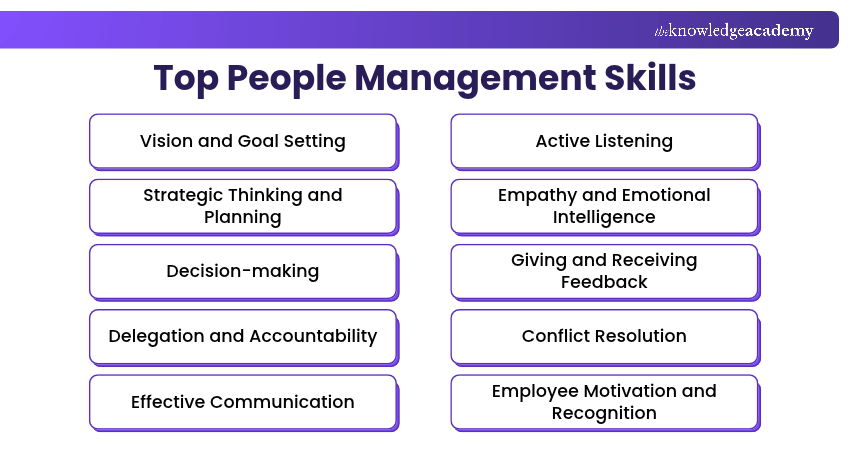
The following 15 skills explain how managers can apply these abilities in different workplace situations.
1) Vision and Goal Setting
Vision and goal setting help managers establish a clear direction for their teams and align everyday responsibilities with organisational objectives. By setting realistic and measurable goals, managers can ensure employees understand their priorities and how their contributions support wider business outcomes.
Regularly reviewing progress and communicating expectations also helps managers identify challenges, adjust priorities and keep employees focused on shared objectives.
Example: A Customer Service Manager sets a goal to reduce customer response times while maintaining service quality. They communicate individual responsibilities and review team progress weekly.

2) Strategic Thinking and Planning
Strategic thinking and planning help managers anticipate future challenges, assess available resources and prepare their teams to achieve long-term objectives. This involves understanding business priorities, evaluating employee capabilities and workloads, and identifying potential risks that could affect team performance.
Managers can apply this skill by developing realistic action plans, assigning responsibilities and adjusting their approach when organisational requirements or circumstances change.
Example: A Department Manager anticipates an increase in seasonal demand and adjusts staffing schedules, workloads and resources to ensure the team can manage the additional work.
3) Decision-making
Decision-making involves evaluating relevant information, considering available options and choosing appropriate actions to address workplace situations. Managers use this skill when allocating resources, resolving operational issues and making decisions that affect employees and team performance.
Effective decision-making requires managers to consider possible outcomes, employee wellbeing and organisational priorities before taking action. Reviewing the results of their decisions also helps them learn from experience and improve future judgement.
Example: When two projects require the same employee's support, a manager evaluates deadlines, priorities and available resources before deciding how to allocate their time.
4) Delegation and Accountability
Delegation and accountability help managers distribute responsibilities effectively while maintaining ownership of team outcomes. Successful delegation involves assigning suitable tasks based on employees' capabilities, workloads and development needs, along with clear expectations, deadlines and the authority required to complete them.
Managers should provide appropriate support and allow employees to work independently without unnecessary interference. Regular progress reviews help identify challenges, maintain accountability and ensure responsibilities are completed effectively.
Example: A Marketing Manager assigns a campaign report to a team member, explains the expected outcome and deadline, and allows them to choose how to complete the work.
Trainer Insight: Delegate Outcomes, Not Every Action
Effective delegation does not require managers to control every step of a task. When employees understand the expected outcome, available resources and boundaries, they can choose suitable ways to complete their responsibilities. Managers should agree on appropriate check-ins while allowing employees to exercise judgement.
5) Effective Communication
Effective communication helps managers explain expectations, share important information and maintain clear workplace interactions. It involves using straightforward language, selecting appropriate communication channels and ensuring employees understand instructions, decisions and organisational changes.
Managers can strengthen communication by encouraging questions, providing timely updates and checking that important messages have been understood. This helps reduce misunderstandings and supports better coordination across the team.
Example: When introducing a new working process, a manager explains the changes during a team meeting and shares written instructions so employees can refer to them later.
6) Active Listening
Active listening helps managers understand employees' concerns, perspectives and ideas before responding or making decisions. It involves giving employees appropriate attention, avoiding unnecessary interruptions and asking relevant questions to clarify information.
Managers can improve this skill by acknowledging different viewpoints and summarising important points to confirm their understanding. They should also consider individual communication preferences and cultural differences to support respectful and meaningful conversations.
Example: When an employee raises concerns about their workload, the manager listens without interrupting, asks questions to understand the challenges and discusses possible adjustments.
7) Empathy and Emotional Intelligence
Empathy and emotional intelligence help managers understand employees' experiences, recognise emotional responses and handle workplace situations thoughtfully. These skills involve remaining calm during difficult conversations, respecting different perspectives and recognising that employees may face different pressures or challenges.
Managers can demonstrate empathy by offering appropriate support while maintaining professional boundaries and respecting personal privacy. This allows them to address workplace concerns fairly without avoiding difficult decisions or performance discussions.
Example: When an employee appears overwhelmed by deadlines, the manager discusses their workload calmly and explores suitable support while maintaining clear performance expectations.
Learn how to support employee growth and career development effectively with our Talent Management Training – Sign up now!
8) Giving and Receiving Feedback
Giving and receiving feedback helps managers recognise employee achievements, address concerns and improve workplace performance. Constructive feedback should focus on specific actions or outcomes rather than personal judgements, allowing employees to understand what they are doing well and where improvements are needed.
Managers should provide feedback at appropriate times, explain its impact and encourage employees to share their perspectives. Following up on agreed actions also helps monitor improvements and supports open communication about performance.
Example: Instead of telling an employee to improve their communication, a manager identifies a specific issue in recent project updates and suggests ways to make future reports clearer.
Pro Tip: Focus on Behaviour and Impact
Instead of saying, "You need to be more professional", a manager could say, "During the last two meetings, the project updates were not available. This made it difficult to review progress. How can we ensure the updates are ready before our next meeting?"Specific feedback makes expectations clearer and encourages a constructive conversation.
9) Conflict Resolution
Conflict resolution helps managers address workplace disagreements fairly and prevent misunderstandings from affecting team relationships. Conflicts may arise from unclear responsibilities, communication difficulties or competing priorities, making it important to understand the situation before deciding how to respond.
Managers can resolve disagreements by listening to everyone involved, considering the available information and identifying practical solutions. They should also clarify responsibilities and agree on appropriate next steps. Serious concerns involving bullying, harassment, discrimination or misconduct must be handled through relevant organisational procedures.
Example: Two employees disagree about responsibility for a client report. Their manager listens to both perspectives, clarifies task ownership and establishes a process to prevent similar disagreements.
Real-world Scenario: Two Employees, One Responsibility
Two employees disagree about responsibility for a monthly client report, causing delays. Their manager listens to both perspectives, clarifies task ownership and agrees on a process for future updates. This shows how clear responsibilities can help resolve workplace disagreements.
10) Employee Motivation and Recognition
Employee motivation and recognition help managers encourage involvement, acknowledge achievements and create a supportive working environment. Understanding what motivates individual employees allows managers to provide meaningful responsibilities, suitable development opportunities and appropriate recognition for their contributions.
Managers can strengthen motivation by recognising achievements fairly, involving employees in relevant decisions and helping them understand the value of their work. Providing reasonable workloads and necessary support also contributes to a positive employee experience.
Example: A manager acknowledges an employee's contribution to a successful project during a team meeting and offers them an opportunity to develop additional responsibilities.
11) Coaching and Mentoring
Coaching and mentoring help managers support employees in developing their skills, confidence and professional capabilities. Coaching generally focuses on improving specific abilities through guidance, practice and reflection, while mentoring provides broader advice based on professional experience.
Managers can support development by identifying learning needs, setting achievable goals and encouraging employees to explore solutions independently. Sharing relevant experience and reviewing progress can also help employees strengthen their abilities and identify further development opportunities.
Example: A manager helps an employee improve their presentation skills through practice sessions, constructive feedback and regular discussions about their progress.
12) Performance Management
Performance management helps managers establish clear expectations, monitor employee progress and support continuous improvement. It involves setting appropriate objectives, conducting regular discussions and recognising achievements while identifying areas that require additional guidance or resources.
When performance concerns arise, managers should understand the possible causes, including workload, skills gaps or changing circumstances, before deciding on suitable actions. Addressing concerns fairly and following organisational procedures helps maintain consistent expectations and support employee development.
Example: When an employee repeatedly misses deadlines, the manager discusses possible challenges, agrees on achievable targets and schedules regular check-ins to review improvement.
13) Building Trust and Team Relationships
Building trust and strong team relationships requires managers to demonstrate honesty, fairness, reliability and respect in everyday interactions. Employees are more likely to feel confident in management when decisions are consistent, commitments are honoured and sensitive information is handled responsibly.
Managers can strengthen trust by encouraging open discussions, acknowledging mistakes and following through on agreed actions. Maintaining these behaviours consistently helps create a respectful workplace where employees feel comfortable raising concerns and sharing ideas.
Example: A manager promises to review an employee's suggestion for improving a process. They follow up with a clear explanation of the decision, demonstrating reliability and respect.
14) Adaptability and Resilience
Adaptability and resilience help managers respond effectively to changing priorities, unexpected challenges and workplace pressure. Adaptability involves adjusting plans or approaches when circumstances change, while resilience supports clear judgement and constructive responses during difficult situations.
Managers can develop these skills by remaining open to alternative approaches, setting realistic expectations and learning from setbacks. Seeking appropriate support and ensuring employees have manageable workloads and sufficient resources also helps teams navigate change effectively.
Example: When a project deadline unexpectedly changes, a manager reassesses priorities, redistributes tasks and communicates the revised plan without placing unreasonable pressure on employees.
Understand workforce planning and labour market change in the organisations with our Workforce Planning Training – Register now!
15) Creative Problem-solving
Creative problem-solving helps managers develop practical solutions when existing methods are ineffective or workplace challenges require a different approach. It involves understanding the underlying problem, encouraging new ideas and exploring alternatives before choosing a suitable solution.
Managers can strengthen this skill by involving employees in discussions, testing promising ideas where appropriate and reviewing the results. This encourages practical innovation while ensuring solutions remain realistic, achievable and aligned with team requirements.
Example: When team meetings regularly exceed their scheduled time, a manager introduces structured agendas and moves routine updates into written reports to make discussions more focused.
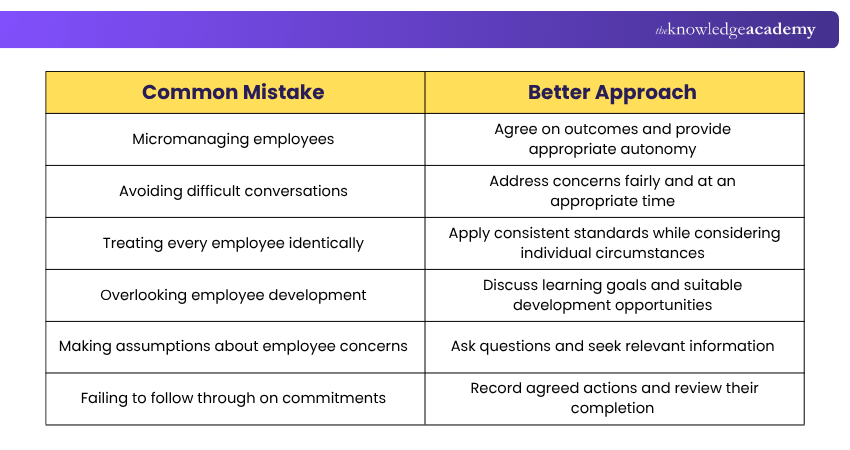
Common People Management Mistakes to Avoid
Even experienced managers can develop habits that make team management less effective.
Boost team performance and productivity with our Successful People Management and Team Leadership Training – Join now!

Nilotpal Sarmah is a Senior Content Writer with 11+ years of overall experience spanning engineering, operations and content development. His technical knowledge and extensive writing experience enable him to simplify specialised topics across IT and Tech, Business Skills, Project Management, Health and Safety, and ISO and Compliance.
View Detail

 If you wish to make any changes to your course, please


