


We may not have the course you’re looking for. If you enquire or give us a call on 01344203999 and speak to our training experts, we may still be able to help with your training requirements.
Top 15 Mentoring Skills to Become an Effective Mentor
ByCharlotte WilsonLast updated on: 22 October 2026
Discover the top 15 mentoring skills that can help you become an effective mentor. From empathy and active listening to constructive feedback and goal setting, explore essential skills for guiding people towards personal and professional growth.
At a Glance
1. Effective mentoring requires strong communication, interpersonal and leadership skills.2. Empathy, active listening and emotional intelligence help build trust and understanding.3. Constructive feedback and coaching techniques encourage independent thinking and growth.4. Goal setting, adaptability and time management support structured mentoring.5. Encouragement and a supportive environment help mentees build confidence and achieve their goals.
Have you ever received advice from someone that completely changed how you approached a challenge? Sometimes, a little guidance from the right person can make a lasting difference. That's what mentoring is all about.
However, becoming a supportive and effective mentor requires more than simply sharing experiences. It takes the right mentoring skills to understand, encourage, and guide others.
Whether you're supporting a colleague, helping someone navigate their career or guiding a less experienced professional, these skills can make your mentoring conversations more meaningful. So, what does it take to become a mentor who genuinely makes a difference? Let's find out!
Top 15 Mentoring Skills
Effective mentoring involves using interpersonal, communication, and leadership abilities to support another person's development. These skills help mentors understand individual needs, share relevant experiences, and encourage independent growth. Here are 15 essential mentoring skills worth developing:
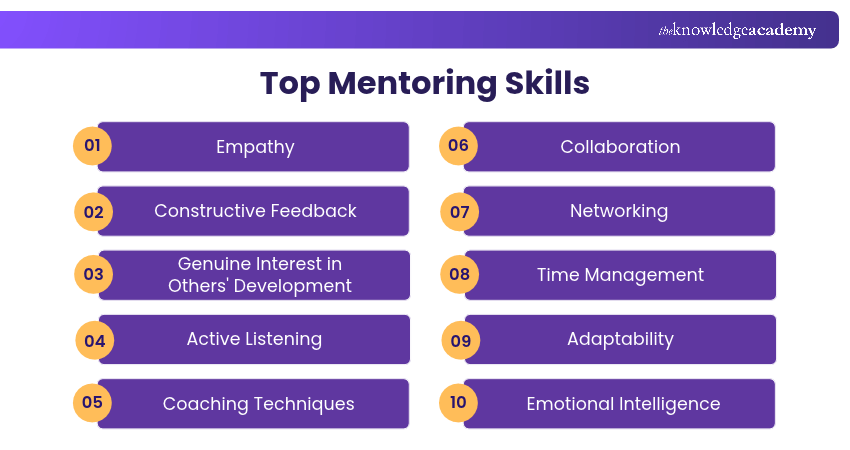
1) Empathy
The role of a mentor is to understand the mentee's experiences, feelings, and challenges from their perspective. They may feel overwhelmed by a new job, uncertain about their career direction or lack confidence in a particular skill.
Showing empathy creates a supportive environment where mentees feel comfortable discussing their concerns and aspirations. This understanding enables mentors to provide guidance that is relevant to each individual's needs.

2) Constructive Feedback
Feedback should not feel like a personal attack. A good mentor delivers constructive feedback respectfully, focusing on specific behaviours and practical improvements rather than personal criticism.
For instance, instead of saying, "Your presentation was bad," you could say, "Adding visual examples could help your audience understand the main points more clearly." This approach helps mentees recognise areas for improvement while maintaining their confidence and motivation.
3) Genuine Interest in Others' Development
Mentoring is about supporting another person's growth rather than prioritising personal recognition or rewards. A good mentor demonstrates genuine interest in the mentee's progress, goals and achievements.
This involves celebrating successes, offering encouragement during setbacks and remaining committed to the mentoring relationship. Genuine interest helps establish trust and makes the experience more meaningful for both individuals.
Pro Tip
Supporting someone's development does not mean always being available. Establish clear expectations about meeting schedules, communication and responsibilities early in the mentoring relationship. This helps maintain mutual respect and consistency.
4) Active Listening
Sometimes, the best kind of support is simply listening. Excellent mentors are active listeners who pay attention to the mentee's words, tone and non-verbal communication.
Active listening involves asking clarifying questions, avoiding unnecessary interruptions and summarising key points to confirm understanding. This helps mentors identify concerns accurately and offer more relevant guidance.
5) Coaching Techniques
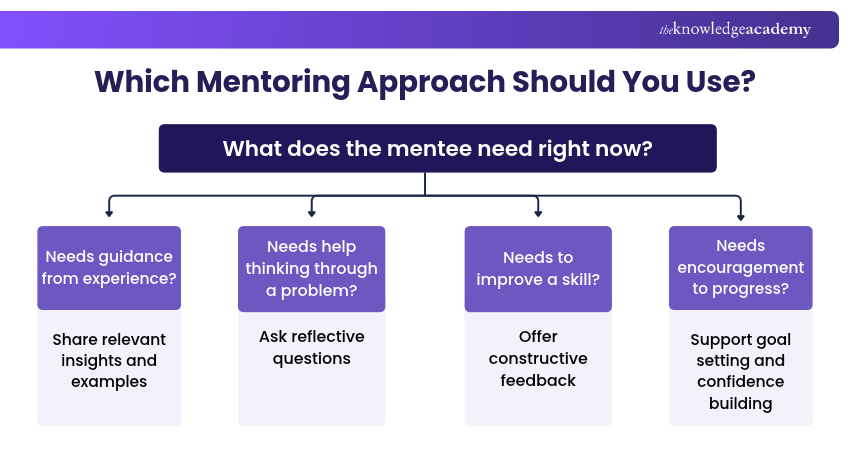
Coaching techniques can complement mentoring by encouraging mentees to reflect, explore solutions and take responsibility for their development.
For instance, a mentor might use open-ended questions to help someone identify obstacles, establish achievable goals and develop an action plan. Rather than always providing direct answers, mentors can encourage individuals to think independently while offering guidance when appropriate.
6) Collaboration
The mentoring process is truly a two-way journey. Good mentors foster a spirit of collaboration and encourage the open exchange of ideas, experiences and perspectives. This could involve jointly solving problems, discussing workplace challenges or exploring different approaches to professional development.
While mentees benefit from the mentor's knowledge and experience, mentors can also gain fresh insights from the individuals they support.
Empower others through meaningful coaching and mentoring conversations with the Coaching and Mentoring Training now!
7) Networking
A strong network can be a game-changer. A good mentor can use relevant professional connections to introduce mentees to industry experts, experienced professionals or potential collaborators.
These connections may provide access to learning opportunities, career guidance and valuable industry insights. Mentors should make introductions thoughtfully, considering the mentee's goals and the willingness of others to connect.
8) Time Management
Effective mentoring requires both mentors and mentees to respect each other's time and commitments. This involves scheduling regular meetings, establishing clear communication expectations and keeping discussions focused on agreed goals.
Good time management also means preparing for sessions, following up on agreed actions and allowing sufficient time to discuss important concerns without rushing the conversation.
9) Adaptability
Professional goals and circumstances can change over time, so effective mentors must remain flexible in their approach. For example, a mentee may change career direction, take on new responsibilities or need guidance on emerging workplace technologies.
Adaptability allows mentors to adjust their advice, communication style and support according to evolving needs, helping mentees navigate change with greater confidence.
10) Emotional Intelligence
Emotional intelligence involves recognising and managing your own emotions while understanding and responding appropriately to those of others. Mentoring conversations may involve excitement, frustration, uncertainty or disappointment.
An emotionally intelligent mentor can recognise these responses, remain composed and provide thoughtful support. This skill strengthens interpersonal relationships and helps mentors handle sensitive conversations with empathy and professionalism.
ScenarioA mentee feels discouraged after being rejected for a promotion. Rather than immediately suggesting another opportunity, the mentor acknowledges their disappointment and listens to their concerns. Once the mentee feels ready, they discuss possible improvements and future career opportunities.Why it Works?The scenario demonstrates how emotional intelligence supports empathy, understanding and constructive guidance.
11) Creating a Supportive Environment
Open communication is essential for building a productive mentoring relationship. Mentors should create an environment where mentees feel respected, heard and comfortable sharing their experiences.
This involves maintaining appropriate confidentiality, avoiding judgement and treating mistakes as opportunities for learning. It also means establishing clear boundaries and being honest about any limits to confidentiality.
12) Effective Communication
Effective mentoring requires clear, respectful and purposeful communication. A good mentor should be able to explain ideas in an understandable way and adapt their communication style to the mentee's needs.
This may involve using practical examples, written feedback, verbal discussions or visual aids to clarify complex concepts. This reduces misunderstandings, establishes clear expectations and ensures that both individuals understand the next steps in the mentoring process.
13) Goal Setting
Clear goals provide direction and help mentees measure their development. Rather than prescribing objectives, effective mentors work collaboratively with individuals to identify realistic short-term and long-term goals.
This involves understanding their aspirations, breaking larger objectives into manageable steps and identifying actions needed to make progress. Mentors can also support accountability through regular progress reviews and by helping mentees adjust their plans when necessary.
14) Ethical Judgement and Professional Boundaries
Ethical judgement helps mentors make responsible decisions while respecting the mentee's privacy, independence and personal circumstances. It involves maintaining confidentiality, recognising conflicts of interest, avoiding inappropriate influence and understanding the limits of the mentoring relationship.
For example, if a mentee shares sensitive workplace concerns, the mentor should handle the information carefully and explain any relevant confidentiality limits. By maintaining professional boundaries and acting with integrity, mentors can build trust and create a respectful mentoring relationship.
15) Building Confidence in Others
Building confidence involves helping mentees recognise their abilities, achievements and potential for growth. Mentors can strengthen confidence by acknowledging progress, highlighting demonstrated strengths and providing encouragement when individuals encounter challenges.
For example, recognising how a mentee successfully handled a difficult task can reinforce their belief in their abilities and encourage them to approach future responsibilities with greater confidence.
Mentoring Skills Self-assessment Checklist
Use this checklist to evaluate your mentoring approach:□ Do I listen carefully and understand the mentee's perspective?□ Do I provide constructive and actionable feedback?□ Do I encourage independent thinking rather than giving every answer?□ Do I maintain clear boundaries and respect confidentiality?□ Do I adapt my guidance to the mentee's changing needs?□ Do I help establish realistic development goals?□ Do I recognise progress and encourage confidence?
Build essential mentoring skills and inspire meaningful professional development with the ILM Level 3 Certificate in Effective Mentoring Training - Sign up today!

Charlotte Wilson creates Business Skills content that helps professionals communicate more effectively, manage workplace pressures and collaborate with others. Her practical resources support stronger professional relationships, individual effectiveness and positive team behaviour.
View Detail

 If you wish to make any changes to your course, please


