


We may not have the course you’re looking for. If you enquire or give us a call on 01344203999 and speak to our training experts, we may still be able to help with your training requirements.
Top Facility Manager Skills for Career Success
ByThe Knowledge AcademyLast updated on: 11 November 2026
Facility Manager skills are essential for maintaining safe, efficient and well-organised workplaces. Explore the key skills required for this role and practical ways to develop them.
At a Glance
1. Technical Expertise: Understand building systems, maintenance requirements and relevant technologies.2. Leadership: Coordinate teams, contractors and workplace services effectively.3. Maintenance Management: Plan maintenance activities and monitor building assets.4. Workplace Safety: Support compliance arrangements, risk management and emergency preparedness.5. Professional Development: Strengthen skills through training, practical experience and constructive feedback.
Think about a workplace where everything runs smoothly. The lights work, the indoor temperature is comfortable, safety measures are in place, and every space functions as expected. Keeping such environments efficient and well-organised requires strong Facility Manager skills that support daily operations.
These skills help professionals manage budgets, coordinate teams, resolve issues and maintain safe workplaces. So, what does it take to manage facilities effectively? Let's look at the essential skills that help Facility Managers handle everyday challenges and succeed in their roles.
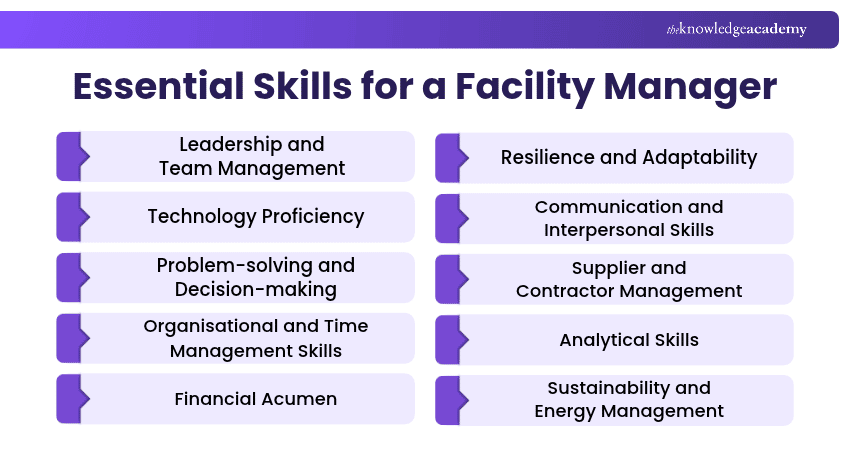
Essential Skills for a Facility Manager
A Facility Manager is responsible for overseeing the maintenance, safety and day-to-day operations of buildings and facilities. The role requires a combination of technical knowledge, organisational abilities and interpersonal skills to manage resources, coordinate teams and maintain efficient operations.
Here are 15 essential skills that help Facility Managers perform their responsibilities effectively:
1) Leadership and Team Management
Leadership is an essential skill for Facility Managers who oversee maintenance teams, cleaning staff and other service personnel. Effective leadership involves providing clear direction, assigning responsibilities and motivating team members to perform their duties.
Good team management also requires understanding employees' strengths, offering guidance and monitoring performance. This helps teams work together effectively and maintain consistent service standards.

2) Technology Proficiency
Technology plays an important role in modern facility management. Facility Managers may use Computerised Maintenance Management Systems (CMMS), building management systems and energy monitoring tools to oversee operations.
Understanding how to use relevant technologies helps them track maintenance activities, monitor building performance and identify opportunities for improvement. Staying informed about technological developments also supports better operational decisions.
3) Problem-solving and Decision-making
Facility Managers face unexpected problems, such as equipment failures, maintenance delays or service disruptions. They must assess situations, identify possible causes and make informed decisions to address these challenges.
Effective problem-solving also involves investigating recurring issues and choosing suitable solutions. When specialist expertise is required, Facility Managers must coordinate with qualified personnel to resolve problems safely and efficiently.
4) Organisational and Time Management Skills
Facility Managers coordinate several activities, including maintenance schedules, inspections, contractor visits and workplace services. Strong organisational skills help them prioritise responsibilities and maintain accurate records.
Time management is equally important when handling urgent requests alongside planned activities. By organising tasks and setting realistic schedules, Facility Managers can reduce avoidable delays and maintain operational efficiency.
5) Financial Acumen
Financial acumen refers to the ability to understand and manage the financial aspects of facility operations. Facility Managers use this knowledge to prepare budgets, forecast expenses, and identify opportunities to control operational costs.
They must also evaluate spending decisions while considering maintenance requirements and service quality. This helps organisations use resources responsibly and plan for future facility needs.
6) Resilience and Adaptability
Facility Managers must remain composed when dealing with unexpected incidents, changing priorities and operational pressures. Resilience helps them respond to challenges while maintaining sound judgement and supporting their teams.
Adaptability also allows them to adjust plans when workplace requirements change. Whether responding to new occupancy needs or operational disruptions, they must remain flexible without overlooking safety and essential services.
7) Communication and Interpersonal Skills
Facility Managers communicate regularly with employees, contractors, suppliers and senior management. They must clearly explain maintenance schedules, service requirements and operational changes to the people involved.
Strong interpersonal skills also help them understand concerns, manage expectations and maintain professional relationships. This encourages cooperation and reduces misunderstandings during daily operations.
8) Supplier and Contractor Management
Facility Managers often work with external suppliers and contractors responsible for maintenance, cleaning, security and other workplace services. They need to understand service requirements, coordinate activities and monitor contractor performance.
Effective contractor management involves assessing contractor competence, reviewing agreed standards, addressing service issues and coordinating relevant safety arrangements. This helps maintain reliable services and supports responsible use of organisational resources.
Coordinate contractors with clarity and confidence, and build stronger contractor relationships with the Managing Contractors Training today!
9) Analytical Skills
Analytical skills help Facility Managers interpret maintenance records, energy consumption, occupancy information and operational costs. Examining this data allows them to identify trends and assess how effectively facilities are performing.
They can use these findings to prioritise improvements, evaluate service performance and support informed decisions. This helps ensure that facility operations remain aligned with organisational requirements.
10) Sustainability and Energy Management
Sustainability is an important consideration in facility management. Facility Managers encourage responsible practices such as improving energy efficiency, reducing waste and monitoring resource consumption.
They may also review energy usage, identify opportunities to reduce environmental impacts and support organisational sustainability targets. These efforts can help improve resource efficiency while maintaining appropriate building performance.
11) Strategic Planning
Strategic planning involves looking beyond daily maintenance activities and considering the future needs of a facility. Facility Managers must understand organisational priorities, changing space requirements and the long-term condition of building assets.
This helps them plan upgrades, anticipate future maintenance needs and support improvements that align with business objectives. Effective planning can also reduce reliance on reactive decision-making.
12) Technical Expertise
Technical expertise is fundamental for Facility Managers responsible for overseeing building operations. They need a working understanding of systems such as heating, ventilation and air conditioning, electrical installations, plumbing and security systems.
This knowledge helps them identify maintenance requirements, assess technical reports and coordinate suitable repairs. Although specialist work must be carried out by competent personnel, Facility Managers need sufficient technical understanding to oversee these activities.
13) Health, Safety and Regulatory Compliance
Facility Managers need to understand the health, safety and regulatory requirements relevant to the buildings they manage. This includes supporting workplace risk assessments, safety inspections, maintenance records and applicable building safety procedures.
They must also work with relevant dutyholders and competent specialists to support the implementation and maintenance of appropriate safety and compliance arrangements. Strong compliance awareness helps identify hazards and supports safer workplace operations.
Trainer's Insight
A Facility Manager does not need to personally carry out every technical inspection or repair. Their responsibility often involves coordinating competent specialists, maintaining appropriate records and supporting compliance arrangements. Understanding the limits of their authority is just as important as knowing the relevant safety procedures.
14) Maintenance and Asset Management
Maintenance and asset management skills help Facility Managers keep buildings, equipment and infrastructure in suitable working condition. They must coordinate preventive maintenance, monitor asset condition and plan necessary repairs or replacements.
Maintaining accurate asset records and reviewing maintenance requirements helps them identify priorities and reduce avoidable equipment failures. This also supports long-term planning and more effective use of maintenance budgets.
Bonus Tip
Prioritise maintenance based on how critical each asset is to safety and daily operations. For example, a faulty fire safety system will generally require urgent attention, while the priority of a non-essential lighting fault depends on its location and associated risks. Always follow applicable safety requirements and maintenance schedules when setting priorities.
15) Emergency Preparedness and Risk Management
Facility Managers must understand the operational risks that could affect workplace safety and business continuity. These may include equipment failures, fires, utility interruptions and other emergencies.
They help coordinate emergency procedures, support the maintenance of relevant response arrangements and work with designated emergency teams and responsible personnel. Regular reviews and suitable exercises can help organisations identify weaknesses and improve their response to unexpected incidents.
Make safety everyone's everyday priority and lead with awareness by joining the IOSH Managing Safely Course now!
How to Improve Facility Manager Skills?
Developing Facility Manager skills requires continuous learning, practical experience and adapting to changing workplace needs. Here are some effective ways to strengthen these abilities:
a) Strengthen Workplace Communication: Communicate regularly with employees, contractors and stakeholders to understand their needs and address concerns. Clear communication and active listening help build professional relationships.
b) Pursue Relevant Professional Qualifications: Consider recognised facilities management qualifications or training programmes to strengthen your expertise. They can help you develop industry-relevant skills.
c) Develop Technical and Digital Expertise: Improve your knowledge of building systems, maintenance processes and facility management software. Practical training and hands-on experience help you manage operations and make informed decisions.
d) Monitor Facility Performance and Seek Feedback: Review maintenance records, service performance and operational data to identify areas for improvement. Seek feedback from colleagues and building users to refine your skills and management practices.

The Knowledge Academy develops accessible learning content across Project Management, IT, Cybersecurity, Data Science, Business Analysis, HR, Accounting and Finance, Leadership and Health and Safety. Its resources combine subject research with clear explanations to help professionals build practical knowledge across a wide range of disciplines.
View Detail

 If you wish to make any changes to your course, please


