


 Top Rated Course

We may not have the course you’re looking for. If you enquire or give us a call on 01344203999 and speak to our training experts, we may still be able to help with your training requirements.
Essential DevOps Skills Every Professional Should Develop
Lily Turner 05 September 2026Explore the essential DevOps skills professionals should develop, practical ways to strengthen them, and trainer insights for building capabilities that stay useful as tools and technologies evolve.

Training Outcomes Within Your Budget!
We ensure quality, budget-alignment, and timely delivery by our expert instructors.
Table of Contents
Key Takeaways
1. DevOps skills combine technical knowledge with communication, collaboration, and problem-solving.2. Linux, Git, scripting, CI/CD, cloud computing, containers, and IaC form key technical foundations.3. Monitoring, networking, and security skills help maintain reliable and secure environments.4. Communication and collaboration help development, operations, and security teams work towards shared goals.5. Hands-on projects and continuous learning are effective ways to strengthen DevOps capabilities.
It’s Friday afternoon. The latest update is ready to go live. Then the deployment fails.
Is it the code? The pipeline? The server? Or the configuration?
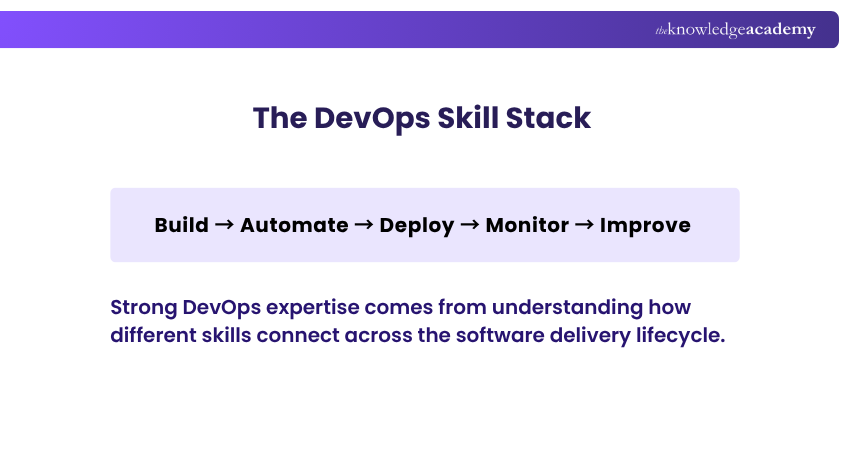
Finding the answer requires more than knowing one tool. It takes the right DevOps skills to troubleshoot problems, automate processes, manage infrastructure, and work across teams. Let’s explore the skills that make it all possible.
What are DevOps Skills?
DevOps skills are the capabilities professionals use to support faster, more reliable software development and delivery. They cover everything from automation and infrastructure management to monitoring, troubleshooting, security, and teamwork.
What makes DevOps different is the range of skills involved. On the same day, a professional might automate a repetitive task, investigate a failed deployment, monitor system performance, and collaborate with development or security teams.

Essential DevOps Skills Every Professional Should Develop
DevOps requires more than expertise in a single technology. Professionals work across software, infrastructure, automation, security, and teams, making a combination of technical and professional capabilities essential.
Here are the essential DevOps skills worth developing:
1) Linux and Operating Systems
Linux is widely used across servers, cloud environments, containers, and DevOps tools. Understanding file systems, processes, permissions, services, and command-line operations helps professionals configure environments and troubleshoot system-level issues. Familiarity with Windows can also be valuable in enterprise environments.
2) Scripting and Automation
Automation reduces repetitive manual work and creates more consistent processes. Languages such as Python, Bash, and PowerShell help DevOps professionals automate routine tasks, configure environments, process information, and support deployment workflows.
3) Version Control
Version Control helps teams track, manage, and collaborate on changes to code and configuration files. DevOps professionals should understand Git concepts such as repositories, commits, branches, merging, and pull requests, particularly as Version Control also supports CI/CD and Infrastructure as Code.
4) Continuous Integration and Continuous Delivery/Deployment (CI/CD)
CI/CD skills help professionals automate how software changes are integrated, built, tested, prepared for release, and, where appropriate, deployed. Understanding pipelines, automated testing, deployment stages, and tools such as Jenkins, GitHub Actions, GitLab CI/CD, and Azure Pipelines is valuable for building reliable delivery workflows.
5) Infrastructure as Code (IaC)
Infrastructure as Code allows infrastructure to be defined and managed through code or configuration files. Knowledge of technologies such as Terraform, OpenTofu, and AWS CloudFormation helps professionals create repeatable environments, track infrastructure changes, and reduce reliance on manual configuration.
6) Containerisation
Containerisation helps package applications and their dependencies into container images that can run consistently across different stages of delivery. DevOps professionals benefit from understanding container images, registries, networking, storage, and technologies such as Docker.
7) Container Orchestration
Running containers at scale requires skills in coordinating their deployment, networking, scaling, and availability. Kubernetes knowledge, including pods, deployments, services, configuration, and scaling, helps professionals manage complex containerised environments.
8) Cloud Computing
DevOps professionals frequently work with cloud platforms such as Amazon Web Services (AWS), Microsoft Azure, and Google Cloud. Understanding compute, storage, networking, identity, scalability, and resource management helps them deploy and operate applications effectively in cloud environments.
9) Configuration Management
Configuration Management helps maintain consistent settings across servers and environments. Knowledge of tools such as Ansible, Puppet, and Chef enables professionals to automate configuration tasks and reduce inconsistencies caused by repeated manual changes.
10) Monitoring and Observability
Monitoring and observability help professionals understand the health and behaviour of applications and infrastructure. DevOps professionals should understand metrics, logs, traces, dashboards, and alerts so they can detect issues, investigate failures, analyse performance, and support reliable services.
Familiarity with observability standards such as OpenTelemetry can also help professionals collect and work with metrics, logs, and traces across different tools and platforms.
11) Networking Fundamentals
Networking knowledge helps DevOps professionals understand how applications, services, databases, and infrastructure communicate. Familiarity with DNS, IP addressing, ports, protocols, routing, firewalls, load balancing, and HTTP/HTTPS is particularly useful when diagnosing connectivity and deployment issues.
12) Security and DevSecOps
Security and DevSecOps skills help professionals integrate security considerations throughout software development and delivery. This includes secure configuration, access control, secrets management, vulnerability scanning, software supply chain security, and automated security checks within CI/CD workflows.
13) Troubleshooting, Incident Response and Problem-solving
When a deployment fails or a service becomes unavailable, professionals need to respond effectively and work systematically towards the cause. Troubleshooting involves gathering evidence, testing assumptions, isolating problems, identifying contributing factors or root causes, and implementing effective solutions.
14) Analytical Thinking
Logs, metrics, alerts, and system events contain valuable information about how an environment is behaving. Analytical thinking helps DevOps professionals recognise patterns, investigate incidents, identify bottlenecks, and make decisions based on available evidence.
15) Communication
DevOps involves regular interaction between technical and business teams. Strong communication skills help professionals explain technical issues, share updates, clarify requirements, coordinate changes, and communicate effectively during deployments and incidents.
16) Cross-functional Collaboration
DevOps brings development, operations, testing, security, and other functions closer together. Collaboration helps professionals share knowledge, coordinate responsibilities, solve problems collectively, and work towards common software delivery goals.
17) Adaptability and Continuous Learning
DevOps tools, platforms, and practices continue to evolve. Adaptability helps professionals work effectively across changing environments, while continuous learning allows them to strengthen existing knowledge and understand new technologies as they become relevant.
Think Like a DevOps Professional
When something goes wrong, a strong DevOps mindset follows the problem before reaching for a tool:
What happened?↓What evidence do we have?↓What caused it?↓How do we fix it and prevent a repeat?The best tool depends on the problem. Knowing how to find that problem is the real skill.
Build advanced DevOps capabilities with our Certified DevOps Professional (CDOP) Course - Join today!
How to Improve Your DevOps Skills
Knowing the tools is one thing. Knowing how to connect them, troubleshoot problems, and apply them in real situations is what turns knowledge into practical DevOps capability.
Here are some effective ways to strengthen your DevOps skills:
1) Strengthen Your Technical Foundations
Build confidence in Linux, networking, Git, and scripting before moving into more complex technologies. These foundations appear across cloud platforms, containers, automation, and CI/CD, making them useful starting points for further development.
2) Build Hands-on DevOps Projects
Put your knowledge into practice by automating a task, containerising an application, provisioning infrastructure with code, or creating a complete delivery pipeline.
For example:
Code → Version Control → Build → Test → Containerise → Deploy → Monitor
Following an application through this process helps you understand how individual DevOps skills connect in practice.
3) Gain Practical Cloud Experience
Experiment with cloud environments by creating Virtual Machines (VMs), configuring networks, managing storage, setting identities and permissions, and monitoring resources. As your confidence grows, explore automated provisioning, containers, and other cloud-native technologies.
4) Practise Troubleshooting Real Problems
Practise diagnosing problems as well as building systems. Work through failed deployments, incorrect configurations, connectivity issues, or resource problems, and use logs and metrics to determine what went wrong.
Troubleshooting develops the analytical thinking needed to handle situations where the solution is not immediately obvious.
5) Learn the Problem Before the Tool
Instead of trying to memorise a long list of DevOps products, understand the problem each type of technology is designed to solve.
Track code changes? → Version Control
Create repeatable infrastructure? → Infrastructure as Code
Automate software delivery? → CI/CD
Understand system behaviour? → Monitoring and Observability
Manage containers at scale? → Container Orchestration
This makes it easier to transfer your knowledge when organisations use different tools for similar purposes.
6) Strengthen Collaboration Skills
Practise explaining technical issues clearly, documenting changes, sharing knowledge, and working with people across development, operations, testing, and security.
DevOps relies on collaboration as much as technology, so learning how to solve problems with other teams is an important part of developing your skills.
7) Adopt Continuous Improvement
Regularly examine the way software is built, tested, deployed, monitored, and maintained. Look for repetitive work that could be automated, recurring failures that need deeper investigation, and processes that could become faster or more reliable.
Small improvements made consistently reflect the continuous improvement mindset at the heart of DevOps.
Which DevOps Skills Should You Learn First?
A long list of DevOps skills can make it difficult to decide where to begin. Instead of trying to learn everything simultaneously, build your knowledge in stages where each capability supports the next.
One Way to Build Your DevOps skills
Linux & Networking↓Git & Version Control↓Scripting & Automation↓CI/CD↓Containers↓Cloud & Infrastructure as Code↓Container Orchestration↓Monitoring & Security
Start With the Foundation, Not the Tool
For example, understanding containers before Kubernetes makes orchestration concepts easier to grasp. Similarly, learning Git before CI/CD helps you understand how code changes trigger automated workflows.
There is no single learning order that suits every DevOps role or environment. Use this path as a guide, then adjust it according to the technologies you work with and the direction you want your DevOps career to take.
Conclusion
Developing strong DevOps skills is a journey of learning, applying, and improving. The more you practise these skills in real environments, the easier it becomes to tackle challenges, adapt to new technologies, and contribute confidently to DevOps teams.
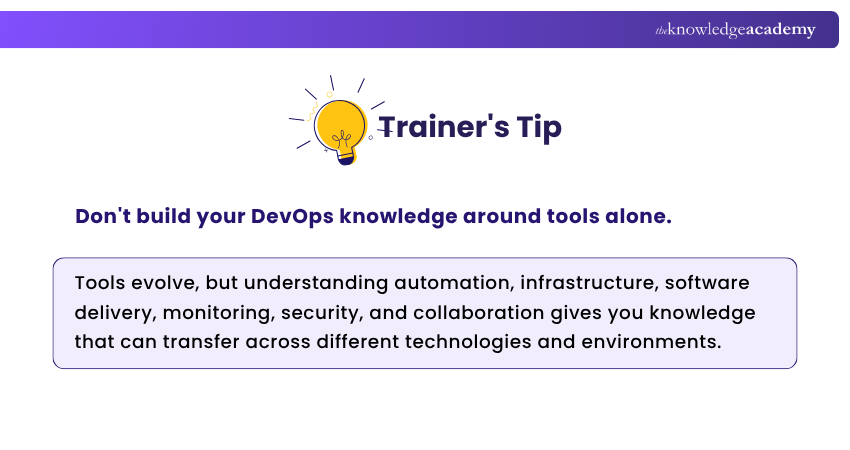
The goal is not to master as many tools as possible, but to build capabilities that remain useful even as those tools evolve. Learn the foundations well, stay curious, and let practical experience turn knowledge into expertise.
Strengthen secure delivery practices with our Certified DevOps Security Professional (CDSOP) Course - Join today!
Frequently Asked Questions
Does DevOps Require Coding Skills?

DevOps does not require the same level of coding expertise as every Software Development role, but scripting and basic programming knowledge are highly valuable. Languages such as Python, Bash, and PowerShell can help professionals automate tasks, manage workflows, and troubleshoot systems.
Is Linux Important for DevOps?
Yes, Linux knowledge is highly valuable because many servers, cloud environments, containers, and DevOps technologies operate on Linux-based systems. Understanding commands, processes, permissions, networking, and system administration can provide a strong foundation for DevOps work.
Can You Learn DevOps Without an IT Background?
A technical background can make some DevOps concepts easier to understand, but it is possible to start by building foundational knowledge in Linux, networking, Git, scripting, and cloud computing. Hands-on practice can then help you gradually develop more advanced DevOps skills.

Lily Turner


Senior AI/ML Engineer and Data Science Author
Lily Turner is a data science professional with over 10 years of experience in artificial intelligence, machine learning, and big data analytics. Her work bridges academic research and industry innovation, with a focus on solving real-world problems using data-driven approaches. Lily’s content empowers aspiring data scientists to build practical, scalable models using the latest tools and techniques.
View Detail

 If you wish to make any changes to your course, please


