


We may not have the course you’re looking for. If you enquire or give us a call on 01344203999 and speak to our training experts, we may still be able to help with your training requirements.
Top 10 Ways to Develop Leadership Skills
ByVishnu SankarLast updated on: 29 October 2026
This blog explores the significance of Developing Leadership Skills and the qualities required for an effective Leader and practical tips for developing them. From communication to adaptability, learn how developing these essential qualities can propel you to Leadership success. Let's dive in deeper to learn more!

At a Glance
1. Adapt Your Approach: Understand different leadership styles and recognise when each may be appropriate.2. Develop Core Abilities: Strengthen communication, decision-making, delegation and problem-solving.3. Learn From Others: Use mentoring, coaching and professional relationships to gain new perspectives.4. Gain Practical Experience: Apply leadership behaviours through real responsibilities and workplace challenges.5. Track Your Development: Use clear objectives, feedback and reflection to assess improvement.
The best leader in the room might not have a leadership title!
Imagine a team struggling to meet a deadline. One person steps forward, listens to everyone's concerns, organises the remaining tasks and helps the team regain focus.
They aren't the manager. Yet, their actions demonstrate leadership.
That's the interesting thing about leadership. It isn't limited to job titles or years of experience. Developing leadership skills involves learning how to guide decisions, support others and respond effectively when challenges arise.
But where should you begin? And how can you turn everyday workplace experiences into opportunities for growth? Let's explore ten practical approaches in this blog!
10 Ways to Develop Leadership Skills
Leadership abilities can be developed through learning, observation, feedback and practical experience. Whether you're preparing for a management position or looking to contribute more effectively to your team, the following approaches can support your professional development.
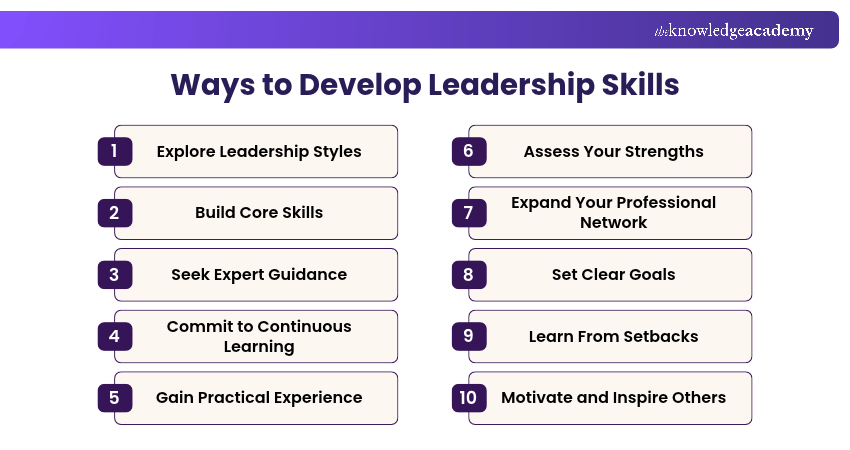
1) Understand Different Leadership Styles
Different leadership styles influence how individuals communicate, make decisions and support their teams. Common approaches include transformational, democratic, coaching and directive leadership. Understanding these styles can help you recognise which behaviours may be suitable for different situations.
For example, a coaching approach may help an employee develop new skills, while a more directive approach may be necessary when an urgent situation requires immediate coordination. Rather than relying on one style, adapt your approach to the team, task and circumstances.

2) Strengthen Essential Leadership Skills
Effective leadership involves communication, decision-making, emotional intelligence, problem-solving, adaptability and delegation. Identify which abilities are most relevant to your current responsibilities and focus on strengthening them through regular practice.
Choose one or two skills to develop at a time. For example, improve communication by listening actively, explaining expectations and confirming understanding during meetings. To strengthen decision-making, compare available options, consider their consequences and explain your reasoning.
3) Seek Guidance from a Coach or Mentor
Coaching and mentoring can support leadership development by providing guidance, fresh perspectives and opportunities for reflection. Mentoring often involves sharing experience and offering broader professional guidance, while coaching typically focuses on particular development goals. However, both approaches may overlap.
Choose a coach or mentor whose experience aligns with your needs. For example, a coach may help you practise difficult conversations, while a mentor may share insights into broader leadership responsibilities. Discuss specific challenges, ask questions and apply useful guidance in your workplace.
Pro Tip: Put Your Guidance into Action
After each coaching or mentoring conversation, identify one action to practise before your next meeting. Discuss what happened, what you learned and where further guidance may be needed.
4) Commit to Continuous Learning
Continuous learning helps you explore new leadership approaches and respond to changing workplace needs. Reading relevant books, attending workshops, researching leadership practices and participating in structured training can strengthen your understanding of managing people and situations.
Apply what you learn instead of focusing only on acquiring information. For example, after learning about active listening, practise summarising a colleague's viewpoint before responding. Reflect on the experience to understand what worked and what you could improve.
5) Put Your Leadership Skills Into Practice
Applying leadership skills in real situations helps you develop confidence and practical experience. You don't need a formal management position to begin. Taking responsibility for a suitable task, facilitating a meeting or supporting a colleague can provide opportunities to practise leadership behaviours.
For example, coordinating a team project may involve clarifying objectives, assigning responsibilities, monitoring progress and addressing obstacles. Start with manageable responsibilities and gradually take on more complex activities as your experience develops.
Empower your team to be at their best by creating a positive business environment with our Leadership and Management Course – Join now!
6) Identify Your Strengths and Areas for Improvement
Self-awareness helps you understand how your behaviour affects colleagues and team performance. Recognising your strengths allows you to use them effectively, while identifying areas for improvement helps you make informed development choices.
Reflect on situations you handled well and those you found challenging. For example, you may communicate confidently but struggle with delegation. Ask colleagues or managers for specific feedback to identify patterns you might otherwise overlook.
7) Expand Your Professional Network
Building professional relationships can introduce you to different leadership experiences, perspectives and working methods. Connecting with people across teams, organisations and industries can broaden your understanding of workplace challenges.
Participate in professional communities, industry events and workplace discussions that encourage knowledge sharing. For example, speaking with a manager from another department may introduce new approaches to cross-team communication. Focus on meaningful exchanges rather than simply increasing your number of contacts.
8) Set Clear Leadership Development Goals
Clear leadership development goals help you focus on particular behaviours and measure your progress. Rather than trying to improve every ability simultaneously, identify a relevant skill and define the change you want to achieve.
The SMART framework can help you set Specific, Measurable, Achievable, Relevant and Time-bound goals. For example, practise delegation by assigning one suitable task each week for four weeks. Review whether responsibilities were understood, appropriate support was provided and feedback indicates improvement.
9) Learn From Mistakes and Setbacks
Leadership decisions do not always produce the expected results. Missed deadlines, unclear instructions or unsuccessful initiatives can reveal opportunities to improve planning, communication and coordination.
After a setback, examine what happened, identify factors within your control and consider what you could do differently. Discuss lessons constructively without automatically assigning blame, and apply relevant changes when similar situations arise.
Trainer Insight: Make It Safe to Raise Concerns
Invite team members to flag emerging problems early, even when they do not yet have a solution. Respond with curiosity, clarify the next steps and follow up on concerns raised. This can help teams identify issues before they become more difficult to manage.
10) Motivate and Inspire Others
Develop your ability to motivate others by understanding what encourages different team members to perform well. Practise recognising individual contributions, communicating meaningful goals and providing opportunities for employees to take ownership of their work.
For example, when leading a team project, acknowledge employees' achievements, encourage them to share ideas and involve them in relevant decisions. Observe how they respond to different approaches and use their feedback to improve your leadership style.
How to Measure and Improve Your Leadership Skills Over Time?
Developing leadership skills requires regular evaluation to understand how effectively you apply them in the workplace. The following four steps can help you assess your progress and identify areas for further improvement.
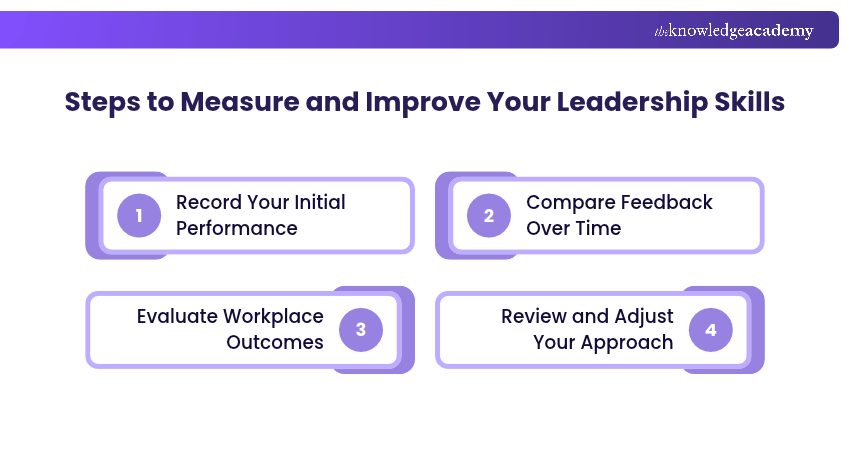
1) Record Your Initial Performance: Document how you currently handle a particular leadership responsibility. For example, note how frequently team members request clarification after meetings to establish a starting point for comparison.
2) Compare Feedback Over Time: Review feedback collected at different stages of your development. Look for recurring changes in how colleagues experience your communication, decision-making or team support.
3) Evaluate Workplace Outcomes: Look for changes that may indicate improvement, such as clearer task ownership, fewer misunderstandings or better coordination. Consider other factors that may have influenced these outcomes before attributing them to your leadership development.
4) Review and Adjust Your Approach: Compare the evidence with your original development objectives. Identify what has improved, what remains challenging and whether your current approach needs adjustment.
Common Mistakes New Leaders Should Avoid
Taking on leadership responsibilities can present new challenges. Here are four common mistakes to avoid:
a) Taking Over Every Task: Limits others' independence and developmentb) Avoiding Difficult Conversations: Allows unresolved issues to affect teamworkc) Making Assumptions: Can lead to decisions based on incomplete informationd) Overcommitting: Makes it harder to manage priorities and support others
Strengthen teamwork, collaboration, and people management skills with our Leadership Courses – Register now!

Vishnu Sankar is a Senior Content Writer with 5+ years of experience across content development, software development, web development and system administration. His technical background and professional training support his expertise in IT and Tech, while his extensive research and writing experience covers Project Management and Health and Safety.
View Detail

 If you wish to make any changes to your course, please


